






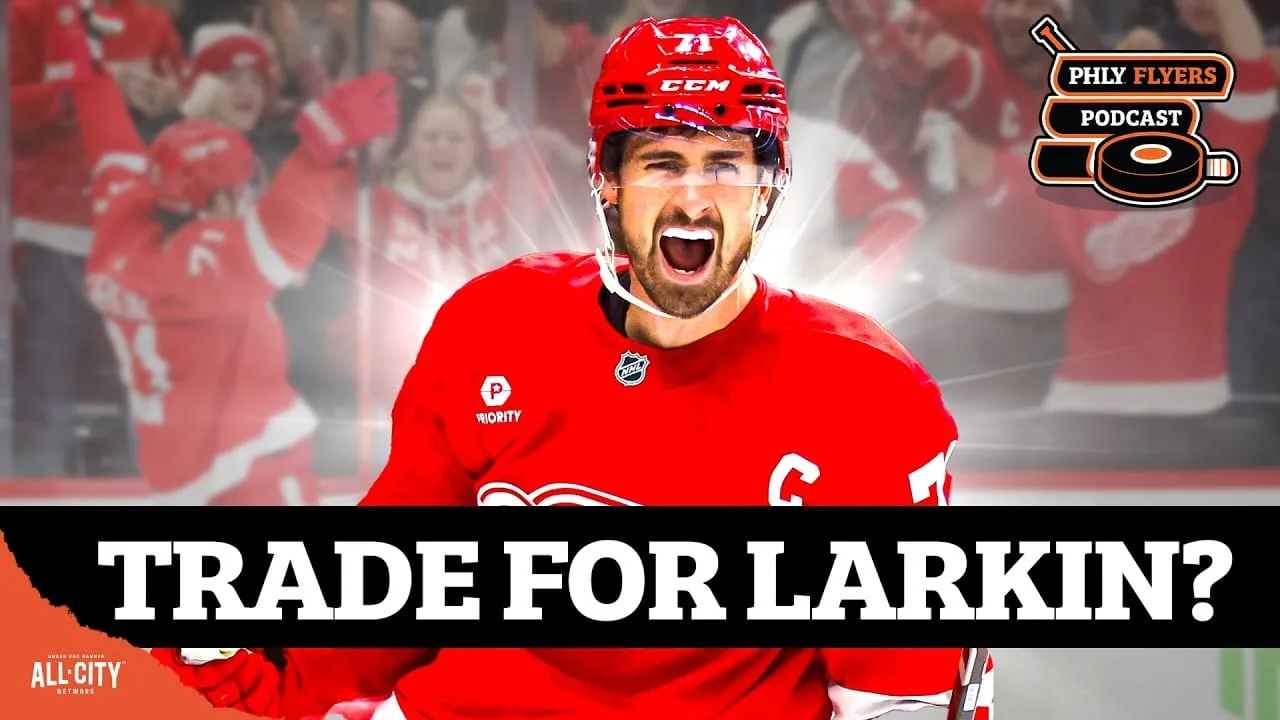
Dylan Larkin remains a Red Wing more than a week after Steve Yzerman acknowledged his trade request following the team’s 10th straight playoff miss.
The weight of an untraded request
Larkin submitted the formal request early in the 2026 off-season after Detroit finished outside the playoffs for the tenth consecutive season. Yzerman confirmed the request publicly yet has executed no deal, leaving the captain on the roster into early July.
The Red Wings have already absorbed an extended stretch of 10 missed post-seasons that has tested fan patience and internal morale. Retaining a player who has explicitly asked out adds a new layer of uncertainty measured in daily media cycles rather than on-ice results.
Vancouver faced a comparable situation with Quinn Hughes and elected to trade the star defenseman rather than absorb the distraction of an impending free-agency standoff. The Canucks front office treated Hughes’ refusal to extend as equivalent to a trade request and moved him to reset the room.
A parallel dynamic played out between J.T. Miller and Elias Pettersson; management ultimately shipped Miller to the Rangers instead of forcing an uneasy coexistence that would have divided the locker room further.
Yzerman has stated he will act in the organization’s best interest, yet the optics of Larkin reporting to camp while on the trade block would shift every press conference toward speculation about his future rather than season preparation.
Trade value versus retention cost
Larkin supplied Detroit with a list of preferred destinations that includes more than one club, giving Yzerman leverage to extract at least a serviceable return package even if it falls short of equal value.
Accepting a modest package now preserves draft capital and prospect flexibility that could otherwise be consumed by the fallout of a prolonged stalemate. The alternative, keeping Larkin through training camp, risks turning every practice and game into a referendum on the captain’s commitment.
Historical precedent from the Canucks shows that once a star signals an exit the only realistic path is completion of the deal before training camp begins. Delaying invites the same daily questioning that ultimately forced Vancouver’s hand on both Hughes and Miller.
Yzerman’s public posture that the outcome remains uncertain buys time, yet the underlying dynamic has already shifted: Larkin’s request cannot be walked back without lasting damage to the dressing-room culture.
The distraction timeline
Should no trade occur before September 15 2026, the first day of camp, the media contingent in Detroit will focus on Larkin’s future in every session. That volume of external pressure would exceed the internal tension that prompted the Miller trade and mirror the Hughes situation in Vancouver.
Players and coaches would spend energy managing questions instead of installing systems, a measurable cost measured in lost practice efficiency during the critical first weeks.
The 10-year playoff drought already provides ample external criticism; adding an unresolved captaincy saga would compound the narrative without delivering any on-ice benefit.
Yzerman can still engineer a deal that returns meaningful assets while honoring Larkin’s request, thereby limiting the damage to one off-season rather than an entire campaign.
By the start of training camp on September 15 2026 the daily media scrutiny around an untraded Larkin will exceed the 2019-20 Canucks dressing-room fracture that forced the Miller trade.
Frequently Asked Questions
Sources

Par Mike Jonderson
Mike Jonderson is a passionate hockey analyst and expert in advanced NHL statistics. A former college player and mathematics graduate, he combines his understanding of the game with technical expertise to develop innovative predictive models and contribute to the evolution of modern hockey analytics.