


Looking at the 2026 Milan-Cortina Olympic hockey roster predictions for USA and Canada reveals fascinating insights into how both nations are approaching their team construction. With NHL players returning to the Olympics for the first time since Sochi 2014, the excitement around these rosters has reached fever pitch as the December 31 deadline approaches.
Both teams will carry 25 players each—traditionally 14 forwards, eight defensemen, and three goalies. The first six players for each country were announced on June 16, creating immediate buzz about the depth pieces that would surround these superstars.
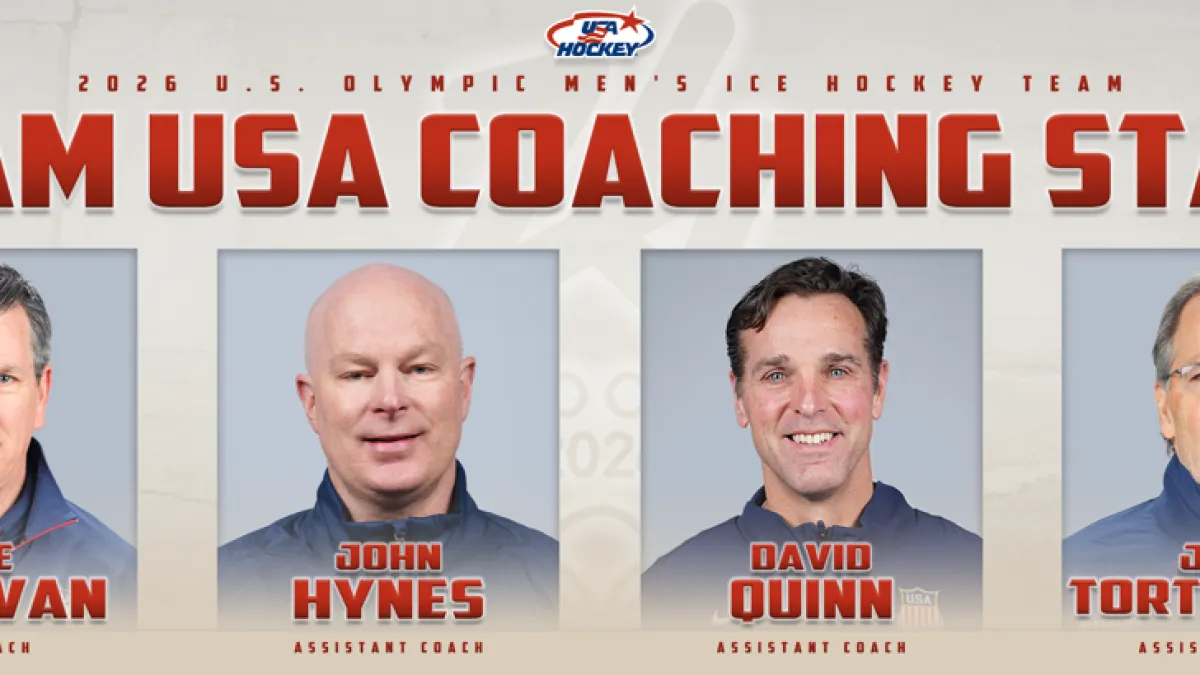
2026 Milan-Cortina Olympic hockey roster predictions for team USA
The United States enters these Olympics with a potent mix of established veterans and emerging stars, headlined by some of the NHL’s most dynamic offensive talents. General manager Bill Guerin faces difficult decisions with a surplus of worthy candidates.
Forwards: A scoring juggernaut
The projected forward group combines elite goal-scorers with versatile two-way players. Auston Matthews, Jack Eichel, Dylan Larkin, and J.T. Miller anchor the center positions with their blend of offensive creativity and defensive responsibility. The wing depth is exceptional, featuring Jake Guentzel, Jack Hughes, Clayton Keller, Jason Robertson, Brady Tkachuk, Matthew Tkachuk, and Tage Thompson.
Conor Hellebuyck’s knee injury creates uncertainty in net for Team USA. However, Jake Oettinger and Jeremy Swayman provide excellent insurance. The goaltending depth remains a strength even if Hellebuyck misses time, with young standouts like Joey Daccord and Spencer Knight pushing for consideration based on their strong early-season performances. The battle for the third goalie spot could come down to health and recent form.
Defense: Balancing skill and shutdown ability
The blue line features Norris Trophy finalists Quinn Hughes and Zach Werenski, who bring elite offensive production. Seth Jones strengthens the group after his Stanley Cup championship run with Florida, joining Charlie McAvoy, Jaccob Slavin, and Jake Sanderson. The emergence of young players like Brock Faber gives the coaching staff enviable flexibility.
Despite this talent, injuries complicate the picture. Adam Fox’s indefinite absence and Charlie McAvoy’s recent injury force Guerin to consider alternatives like John Carlson, whose veteran presence and recent production make a compelling case. The team must balance getting younger with maintaining the experience needed for Olympic pressure.
The Jason Robertson dilemma
Perhaps no player has generated more roster debate than Jason Robertson. Since November 5, only Nathan MacKinnon has more points among all players, and Robertson leads in goals scored. His 6-foot-3, 207-pound frame provides the physical presence valuable in tournament play. However, concerns about his skating speed and defensive consistency persist.
Team USA’s management faces a philosophical question: prioritize pure scoring or defensive responsibility? Robertson’s torrid pace makes him nearly impossible to ignore, but the team must consider overall roster construction. As Guerin noted, decisions could come down to “fit” and what the team needs to compete with Canada’s depth.
Veterans and emerging talent
The forward group also includes players like Vincent Trocheck, whose two-way game and recent point production (0.93 points per game since returning from injury) reinforce his value as a potential fourth-line center. Meanwhile, younger players like Cole Caufield, Will Smith, and Logan Cooley have forced management to pay attention with their offensive outputs, though injuries have complicated evaluations.
The competition remains fierce, with established names like Patrick Kane and Alex Tuch maintaining viability through consistent performance. This depth ensures Team USA can weather injuries while maintaining competitive lineups throughout the tournament.
2026 Milan-Cortina Olympic hockey roster predictions for team Canada
Canada enters as the favorite, boasting unparalleled star power and the continuity from their 4 Nations Face-Off victory. Their roster balances proven champions with emerging superstars ready for the global stage.
Forwards: The deepest talent pool in hockey
Canada’s forward group begins with Connor McDavid and Nathan MacKinnon, arguably the two best players in the world. Sidney Crosby’s inclusion adds championship experience and leadership, while Brayden Point, Sam Reinhart, and Mitch Marner provide exceptional two-way play. The emergence of young stars like Connor Bedard and Macklin Celebrini creates difficult decisions for management.
Mark Stone’s potential inclusion depends on his recovery from injury, but his defensive prowess and leadership could prove invaluable. Meanwhile, physical presences like Tom Wilson (6-foot-4, 225 pounds) give Canada the size needed to match up with any opponent. The forward depth is so impressive that players like Seth Jarvis, Bo Horvat, and Morgan Geekie face difficult paths to make the final roster despite outstanding NHL performance.
Defense: Maintaining championship chemistry
The defensive corps benefits from keeping most of the 4 Nations Face-Off group intact. Cale Makar and Devon Toews form arguably the world’s best defense pairing, while Josh Morrissey and Colton Parayko provide shutdown ability. Drew Doughty’s veteran leadership becomes even more critical after Alex Pietrangelo’s injury.
Shea Theodore’s injury at 4 Nations opened doors for Thomas Harley and Travis Sanheim, both of whom have cemented their roster spots with strong play. The group combines offensive brilliance with defensive reliability, giving coach Jon Cooper unlimited options for any game situation.
Goaltending concerns: Canada’s potential Achilles heel
Goaltending represents Canada’s biggest question mark. Jordan Binnington, who backstopped Canada to the 4 Nations title, has struggled with a .895 save percentage and ranks 53rd among NHL goalies. His history of performing in big games—2019 Stanley Cup, 2024 4 Nations championship—earns him trust, but his regular-season inconsistency creates nervousness.
Behind Binnington, Adin Hill’s injury issues and Sam Montembeault’s poor performance (worst GSAA in the NHL) have forced management to consider alternatives. Logan Thompson’s exceptional start (first in GSAA) and Scott Wedgewood’s strong play have thrust them into serious contention. The final decisions may come down to who shows the best form in December.
The youth movement vs. veteran presence
Canada must balance integrating emerging superstars with maintaining the veteran core that won at 4 Nations. Bedard and Celebrini represent the future, but players like Brad Marchand (37) continue performing at elite levels. This tension between generations creates fascinating roster debates that will likely continue until the final selections.
2026 Milan-Cortina Olympic hockey roster predictions: Comparative analysis
Comparing these projected rosters reveals contrasting philosophies. Team USA emphasizes offensive firepower and goaltending depth, while Canada relies on superstar talent and defensive continuity. The Americans face more questions about health and chemistry, whereas Canada must solve goaltending uncertainties.
Key matchups to watch
A potential gold-medal game between these rivals would feature fascinating individual battles. McDavid vs. Hughes represents speed and skill personified. Matthews vs. MacKinnon showcases two of hockey’s most complete centers. The goaltending matchup could feature Hellebuyck against Binnington, though both face health and form questions.
The physical element adds intrigue, with players like Brady Tkachuk and Tom Wilson bringing intensity that could tilt games. Special teams will prove crucial, with both teams featuring elite power-play quarterbacks in Makar, Hughes, and Werenski.
Injury implications and roster flexibility
Both teams navigate significant injury concerns. Team USA’s defense corps has been decimated, while Canada monitors goaltending health. This uncertainty forces management to build rosters with flexibility, ensuring they can adapt if key players become unavailable.
The December 31 deadline looms large, with performances in the coming weeks potentially determining final roster spots. Players like Robertson, Thompson, and Wedgewood can cement their Olympic dreams with strong December showings.
The European factor
While focusing on North American rosters, both teams recognize the threat from European powers. Sweden’s Jesper Wallstedt leads all NHL goalies in advanced metrics, while Finland’s injury-plagued roster remains dangerous with players like Aleksander Barkov waiting in the wings. These nations cannot be overlooked in any championship discussion.
The path to gold runs through these European contenders, making roster construction about more than just matching up with each other. Both USA and Canada must build teams capable of winning different styles of games against varied international competition.
The 2026 Milan-Cortina Olympics promise to showcase the best hockey talent in the world, with these roster predictions highlighting the incredible depth both North American powers possess. The final selections will shape not just Olympic medal hopes, but potentially alter legacies for players seeking to add international glory to their NHL accomplishments. As December 31 approaches, the hockey world waits to see which superstars will represent their nations on Italy’s biggest stage.
Frequently Asked Questions

Par Mike Jonderson
Mike Jonderson is a passionate hockey analyst and expert in advanced NHL statistics. A former college player and mathematics graduate, he combines his understanding of the game with technical expertise to develop innovative predictive models and contribute to the evolution of modern hockey analytics.