










The St. Louis Blues have officially ended their experiment with veteran forward Milan Lucic, terminating his American Hockey League professional tryout with the Springfield Thunderbirds after just five games. The announcement, made Tuesday by Blues President of Hockey Operations and General Manager Doug Armstrong, brings an abrupt conclusion to Lucic’s attempted comeback after more than a year away from professional hockey.
The 37-year-old power forward, who carved out a reputation as one of the NHL’s most feared enforcers during his 16-season career, failed to make a significant impact during his brief stint in the AHL. With only one assist and four penalty minutes to show for his time with the Thunderbirds, the writing was on the wall for a player whose physical style of play has become increasingly difficult to maintain as the league prioritizes speed and skill over brute force.
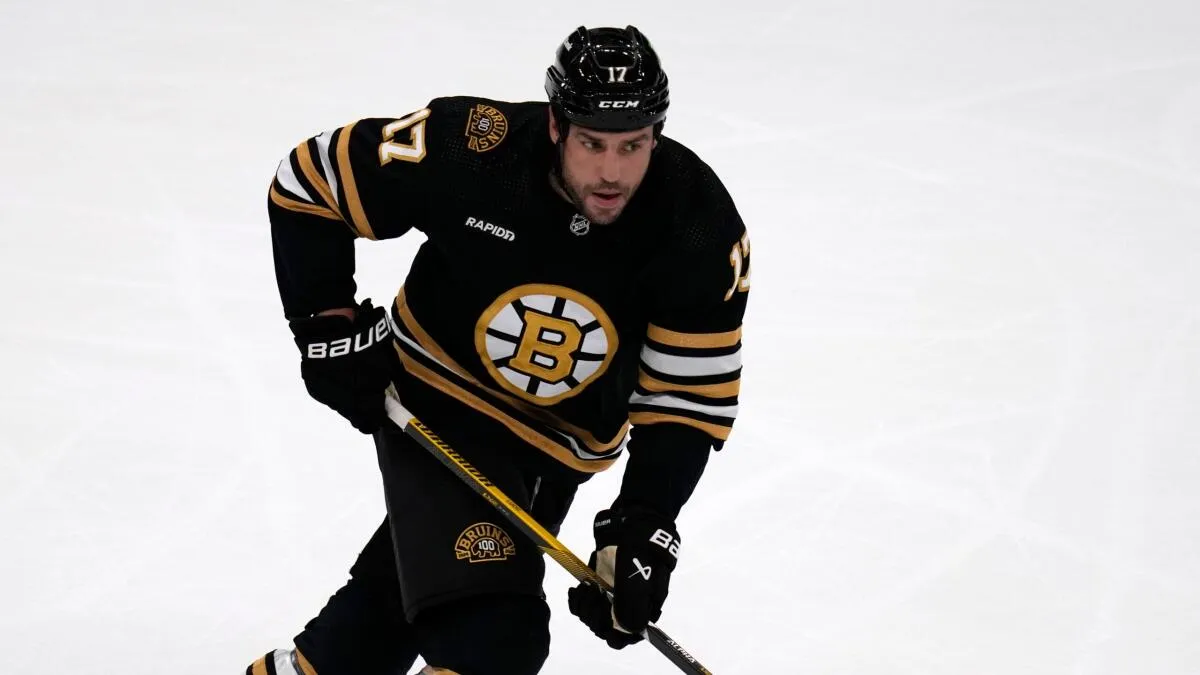
What led to Lucic’s release from the Blues organization
Initial signing and preseason performance
Lucic originally caught the attention of Blues management during training camp when he signed a professional tryout agreement prior to the 2025 season. Standing at 6-foot-3 and weighing 240 pounds, the hulking winger still possessed the intimidating frame that made him a fan favorite during his prime years with the Boston Bruins. His preseason showing gave reason for cautious optimism – he managed to contribute a goal and an assist across four exhibition games, demonstrating that his hands around the net hadn’t completely deserted him.
However, the veteran’s progress was quickly derailed by a lower-body injury that sidelined him during the critical evaluation period. This setback prevented the Blues coaching staff from getting an extended look at Lucic in game situations and ultimately forced him to start his season in the minor leagues once he recovered his health.
Springfield Thunderbirds stint reveals limitations
Upon receiving medical clearance, Lucic joined the Springfield Thunderbirds with the hope of proving he still belonged at the NHL level. The reality proved starkly different from his celebrated past. In five games with the Blues’ affiliate, Lucic managed just a single assist and failed to record a shot on goal in four of those contests. His minus-7 rating highlighted his struggles to keep pace in a league that demands mobility from every player, regardless of their physical presence.
The statistics tell a sobering story: one point, four penalty minutes, and a growing realization that time waits for no athlete. Lucic’s most recent appearance came on November 21 in the Thunderbirds’ 2-1 victory over the Utica Comets, a game that would mark his final opportunity to salvage his professional tryout.
Career context: From Stanley Cup champion to AHL tryout
The glory years in Boston
Lucic’s journey from cornerstone Bruin to AHL castoff spans nearly two decades of professional hockey. He burst onto the scene as a second-round pick (50th overall) in the 2006 NHL Draft and quickly became an indispensable part of Boston’s 2011 Stanley Cup championship team. That squad ended the franchise’s 39-year championship drought and cemented Lucic’s legacy as a clutch performer who could combine physical intimidation with timely offensive contributions.
During his eight-season tenure with the Bruins, Lucic posted three campaigns with 20 or more goals, establishing himself as one of the league’s premier power forwards. His ability to protect the puck along the boards, create space for skilled linemates, and enforce the unwritten rules of the game made him a coveted asset during an era when enforcers still held significant value.
The nomadic later years
Following his departure from Boston after the 2014-15 season, Lucic embarked on a journeyman phase that saw him suit up for four different organizations:
- Los Angeles Kings (2015-16): One season before being traded
- Edmonton Oilers (2016-2019): Three-year stint that ended with a buyout
- Calgary Flames (2019-2023): Four seasons of declining production
- Boston Bruins (2023-24): Brief, injury-marred return to his original club
The 2023-24 season proved particularly concerning. Lucic signed a one-year, $1 million contract to return to Boston but appeared in only four games, registering two points before a puck to the ankle landed him on long-term injured reserve. Off-ice issues complicated matters further when he was arrested on suspicion of assault and battery on a family member, leading the Bruins to place him on indefinite leave for the remainder of the season.
What Lucic’s release means for both parties
Blues face ongoing roster challenges
The Blues’ decision to part ways with Lucic reflects the organization’s pressing need to address more immediate concerns. With a 7-10-6 record through the first quarter of the season, St. Louis finds itself seven points behind both the Utah Mammoth and Vegas Golden Knights for the final Western Conference wild-card positions. The team sits just four points above the Nashville Predators, who own the fewest points in the entire NHL.
General Manager Doug Armstrong’s move suggests a pragmatic approach to roster construction. Rather than continuing to invest development resources in a 37-year-old forward whose best hockey is clearly behind him, the Blues can now redirect those opportunities to younger prospects who represent the organization’s future. The AHL affiliate’s roster spots are valuable commodities, particularly for a franchise that should be prioritizing player development over nostalgia.
Uncertain future for a veteran warrior
For Lucic, the termination of his tryout raises difficult questions about his hockey future. At 37 years old, he has already compiled an impressive body of work: 1,177 career NHL regular-season games, 586 points (233 goals, 353 assists), and 1,301 penalty minutes. Few players reach these milestones, and his 2011 Stanley Cup ring ensures his place in hockey history.
However, the modern NHL has little room for players who can’t keep up with the accelerating pace of play. Lucic’s inability to generate shots in 80% of his AHL games indicates that even at the minor league level, his legs and hands are no longer in sync. Teams increasingly value defensive responsibility and transition speed over pure physicality, leaving limited options for a player whose primary calling card has always been intimidation.
The Vancouver, British Columbia native must now weigh whether continuing his career overseas or accepting a role in broadcast media or player development makes more sense than chasing one final NHL opportunity. His agent will likely make calls around the league, but the market for a 37-year-old enforcer with recent off-ice baggage and diminishing on-ice returns appears exceedingly thin.
Lessons from Lucic’s attempted comeback
The evolution of the NHL enforcer
Lucic’s failed comeback attempt serves as a case study in how dramatically the NHL has transformed over the past decade. During his prime, teams willingly rostered players whose primary job was to protect star players and enforce physical accountability. Today’s game prioritizes four-line speed, special teams versatility, and defensive awareness above all else.
The numbers paint a clear picture: Lucic’s 1,301 career penalty minutes reflect a style of play that front offices now view as a liability rather than an asset. Modern analytics emphasize puck possession and expected goals, metrics where slow-footed enforcers consistently grade poorly. Even a player with Lucic’s pedigree and championship experience couldn’t overcome these fundamental shifts in roster construction philosophy.
When to say goodbye
Professional athletes face an unforgiving reality – the body inevitably betrays even the most determined competitor. Lucic’s lower-body injury during training camp, followed by his inability to generate offense in Springfield, suggests that his physical gifts have deteriorated beyond the point of NHL viability. His situation echoes that of other veteran enforcers who hung on too long, hoping for one last shot at glory.
The Blues’ decision, while likely difficult on a personal level, represents the cold calculus that defines professional sports management. Organizations must balance loyalty and sentimentality against the harsh realities of the salary cap and competitive pressure. For Lucic, the termination of his tryout may ultimately provide clarity about his next chapter, even if that chapter lies outside the world of professional hockey.
The veteran’s journey from 2011 Stanley Cup champion to AHL tryout player serves as a reminder that every athlete’s clock runs out eventually. While Lucic’s competitive fire may burn as brightly as ever, the NHL has moved forward, leaving behind the style of play that once made him one of the league’s most feared and respected competitors.
Frequently Asked Questions

Par Mike Jonderson
Mike Jonderson is a passionate hockey analyst and expert in advanced NHL statistics. A former college player and mathematics graduate, he combines his understanding of the game with technical expertise to develop innovative predictive models and contribute to the evolution of modern hockey analytics.