The 2026 Stanley Cup playoffs have arrived with an unusual twist. Back-to-back champions Florida Panthers are absent, while long-dormant Buffalo Sabres claim the top Atlantic seed. Toronto Maple Leafs miss out after nine straight postseasons, and expansion Utah Mammoth enter the fray.[1] ESPN senior NHL writer Greg Wyshynski has laid out his complete bracket predictions, from first-round thrillers to the Final.
Unpredictability defines this tournament, where a hot goalie or bad bounce can shift momentum. Wyshynski’s picks favor experience and depth, projecting the Colorado Avalanche to hoist the Cup. For the full official bracket and schedule, check ESPN’s playoff hub.[1]
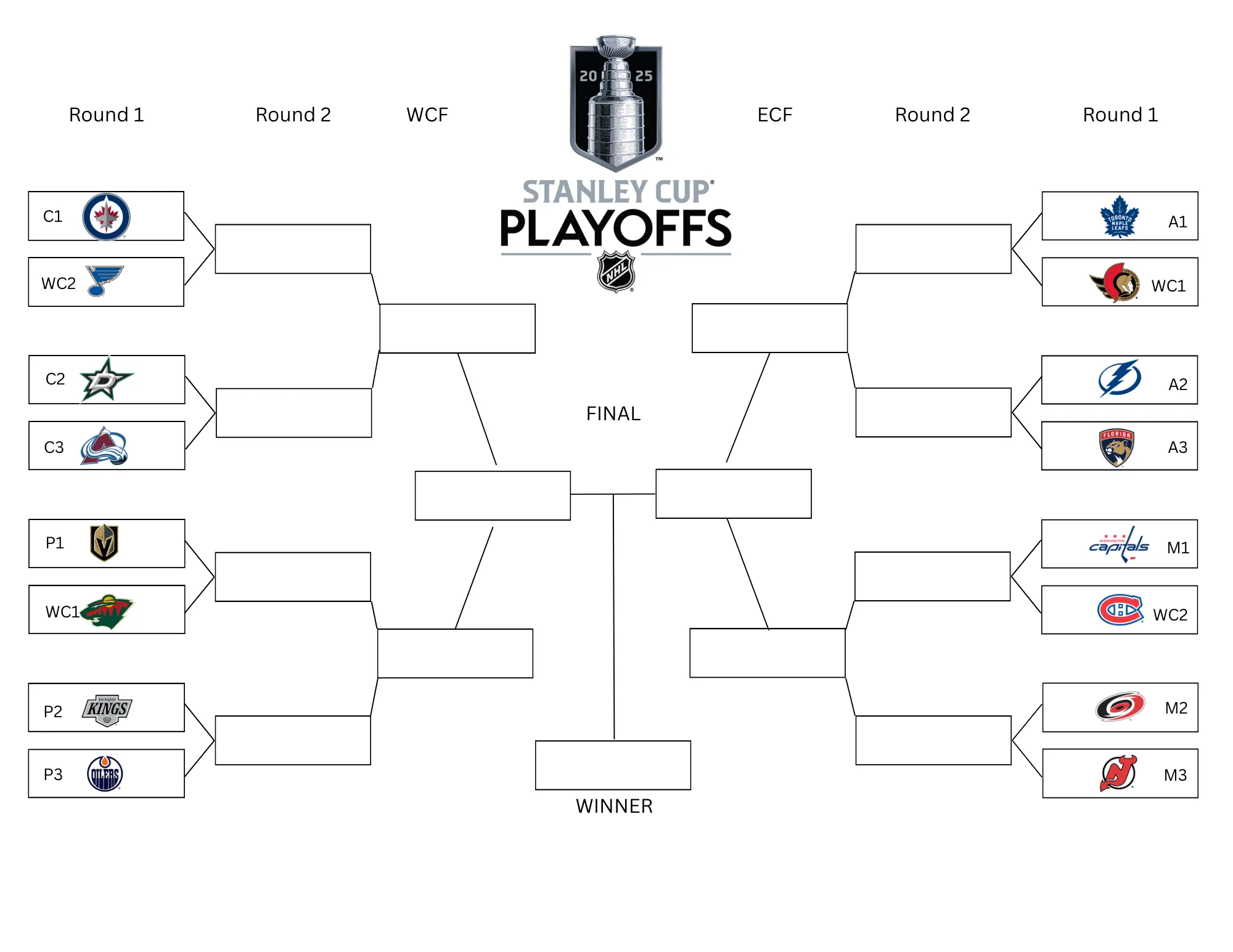
Eastern Conference first round
Buffalo Sabres (A1) face Boston Bruins (WC1) in a clash of youth versus fading pedigree. The Sabres lack playoff experience, but their home-ice edge and speed should overwhelm Boston’s inconsistent defense. Jeremy Swayman shone regularly, saving 28.8 goals above expected, yet Buffalo’s depth prevails.[2]
Bruins coach Marco Sturm boasts, “We are bigger, stronger, and more physical.” Roster glances dispute that claim. Pittsburgh Penguins legend Alex Tuch imparts wisdom from Golden Knights runs, preparing Buffalo for intensity. Wyshynski predicts Sabres in five.
Tampa Bay Lightning (A2) meet Montreal Canadiens (A3), pitting Nikita Kucherov’s scoring prowess against Montreal’s elite top line. Nick Suzuki, Cole Caufield, and Juraj Slafkovsky dominated at 69.9% goals-for share. Caufield’s 51 goals and Suzuki’s Selke case highlight their threat.
Lightning depth and Andrei Vasilevskiy’s goaltending tip the scales. Jon Cooper’s physical game plan targets fragile Habs like Lane Hutson. Victor Hedman’s status looms, but Tampa advances in six. As NHL insiders predict, Lightning’s pedigree shines.
Carolina Hurricanes (M1) versus Ottawa Senators (WC2) promises a stylistic showdown. Both emphasize balanced attacks and defensive forwards. Linus Ullmark’s postseason woes—.885 save percentage—undermine Ottawa despite strong underlying metrics.
Rod Brind’Amour’s first-round mastery endures; Hurricanes never lost an opener. Jake Sanderson and Thomas Chabot’s health concerns favor Carolina. Prediction: Hurricanes in seven.
Pittsburgh Penguins (M2) battle Philadelphia Flyers (M3) in a rivalry reborn. Penguins’ offense ranks third league-wide at 3.54 goals per game, led by Sidney Crosby and Evgeni Malkin. Flyers’ stingy defense, anchored by Dan Vladar’s 13.8 goals saved above expected, counters effectively.
Rick Tocchet’s system excels at denying passes. Trevor Zegras, Matvei Michkov, and Porter Martone provide transition sparks. Penguins’ shaky goaltending from Stuart Skinner and Arturs Silovs proves fatal. Flyers in six.[2]
Eastern Conference second round and beyond
Sabres-Lightning rematch evokes their 15-goal regular-season brawl. Buffalo swept season series 3-0-1, absorbing Tampa’s hits. Yet Lightning’s two-way depth and Vasilevskiy grind them down in seven.
Hurricanes dismantle Flyers in five, their counterpunching overwhelming Philadelphia’s maturation gap. Eastern finals pit Carolina against Tampa. Hurricanes’ offensive depth—Jake Guentzel trades, Nikolaj Ehlers, Jackson Blake—finally breaches the conference barrier in six.
Key players for Carolina:
- Taylor Hall and Logan Stankoven: Trade acquisitions boosting scoring.
- K’Andre Miller and Alexander Nikishin: Blue-line offense.
- Brandon Bussi or Frederik Andersen: Goaltending rotation.
Fans eye a banner after years of heartbreak.
Western Conference first round
Colorado Avalanche (C1) dispatch Los Angeles Kings (WC2) in five. Presidents’ Trophy winners dodge the curse early, with Scott Wedgewood’s career year outdueling Kings’ stars like Adrian Kempe and Artemi Panarin.
Dallas Stars (C2) edge Minnesota Wild (C3) in seven. Stars’ power play (28.6%) and Jake Oettinger’s steadiness overcome Wild’s Quinn Hughes boost. Injuries to Miro Heiskanen and Roope Hintz test Dallas, but Mikko Rantanen elevates.
Vegas Golden Knights (P1) school Utah Mammoth (WC1) in six. John Tortorella’s late hiring tightens defense against Utah’s youth like Dylan Guenther and Logan Cooley. Mammoth gain valuable lessons.
Edmonton Oilers (P2) rout Anaheim Ducks (P3) in four. Connor McDavid exploits Ducks’ defensive regression, as Lukas Dostal falters post-Olympics.
Western Conference second round and finals
Avalanche top Stars in seven, Wedgewood improving on last year’s .892 against Dallas. Center depth with Nathan MacKinnon, Nazem Kadri, and Nicolas Roy overwhelms.
Golden Knights upset Oilers in seven, Mitch Marner’s playoff growth key. Western finals see Avalanche’s depth—Valeri Nichushkin, Ross Colton—overpower Vegas in six.
For more previews, see the 2026 NHL playoff bracket preview on our site.
Stanley Cup Final: Avalanche vs. Hurricanes
Wyshynski’s preseason hunch holds: Colorado over Carolina in five. Avalanche’s star power and Wedgewood’s form conquer Hurricanes’ structure. NHL.com’s bracket tracks the path.[3]
This prediction underscores depth’s triumph in playoffs. Avalanche sidestep first-round pitfalls to claim glory. Watch how reality unfolds—unpredictability reigns.[4]
Frequently Asked Questions

Par Mike Jonderson
Mike Jonderson is a passionate hockey analyst and expert in advanced NHL statistics. A former college player and mathematics graduate, he combines his understanding of the game with technical expertise to develop innovative predictive models and contribute to the evolution of modern hockey analytics.