The Montreal Canadiens’ defense has been holding strong without Noah Dobson, stepping up in their first-round series against the Tampa Bay Lightning.[1][2] Lane Hutson sealed a 3-2 overtime win in Game 3 with a shot past Andrei Vasilevskiy at 2:09, but Arber Xhekaj has quietly made his mark despite limited minutes.[1] Xhekaj’s physical presence and composure highlight why he’s fitting into the playoff intensity.
High expectations have followed Xhekaj since his early days, perfectly suiting Montreal’s rebuild turning competitive. His style shines in the playoffs’ heightened physicality. Past seasons saw him benched for overstepping boundaries or skill gaps, but recent games show maturity.
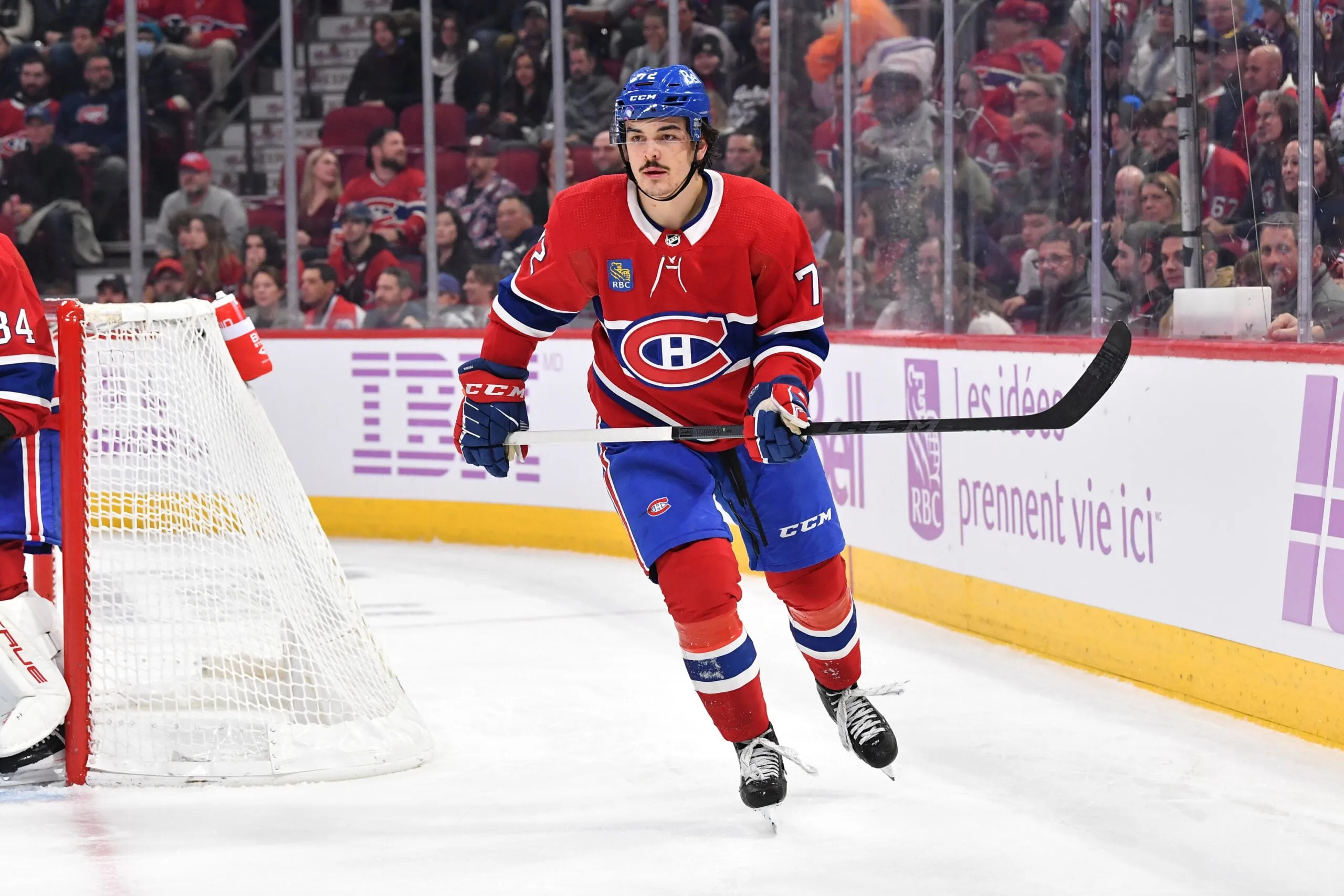
Navigating a crowded blueline
Montreal’s defense is stacked after acquiring Noah Dobson and drafting talents like Logan Mailloux and David Reinbacher. Mailloux now plays in St. Louis following a trade.[2] Mike Matheson’s extension and Alexandre Carrier’s addition pushed Xhekaj to the sixth or seventh spot.
This depth forced Xhekaj to adapt rather than force plays. He focused on his strengths: physicality and reliability. In the Lightning series, he’s avoided penalties while delivering hits.
The playoffs demand smart aggression. Xhekaj has pinched effectively, backed by teammates. His limited ice time—under 11 minutes per game—hasn’t diminished impact.[3]
Game 3 exemplified this. Amid extracurriculars, he defended teammates without crossing lines. Teams coveted him in trades, but Canadiens held firm.
Playing within himself
Jim Biringer of NHLRumors.com captured Xhekaj’s shift on TSN Radio. “Very composed, played within himself. Didn’t do too much,” Biringer said. “That’s when Arber Xhekaj plays the best hockey… throw his body around.”
Xhekaj’s hits and positioning stood out on the road. He understands overreaching leads to trouble, a lesson from prior seasons. Like Kaiden Guhle and Jayden Struble, sticking to roles benefits the team.
This maturity shows in controlled aggression. He reads when to engage or retreat. No stupid penalties, just effective physicality.
Biringer noted: “He was right there to defend his teammates, but he didn’t go over the line. And that’s a very intelligent player.”
Skill development and game reading
Xhekaj worked with skills coaches, boosting his first pass and skating. These tweaks have sharpened his reads. No longer just enforcer, he’s contributing defensively.
Head coach Martin St. Louis emphasized role clarity. Early career, thin depth gave Xhekaj big minutes. Now, competition demands leveling up.
St. Louis said post-practice before Game 4: “Arber knows that when he entered the league, we weren’t deep… Now, with all the defensemen we have, he’s realistic but also a competitor.”
Xhekaj earns trust game-by-game. His growth aligns with Montreal’s plan for contention.
Fitting the playoff mold
- Physical edge: Hits without penalties suit playoff grind.
- Composure: Limited minutes, maximum impact.
- Team defense: Covers for pinches effectively.
- Maturity: Defends without retaliation excesses.
Comparisons to past playoff enforcers highlight his potential. Series tied 1-1 before Game 3 win, Xhekaj’s steadiness aids depth scoring from Hutson.[2]
As Canadiens push forward, his style could lock him in lineups. Recent articles praise his renewed confidence.[3]
Xhekaj continues refining amid pressure. If he sustains this, expect more ice time.
If Arber Xhekaj keeps channeling controlled physicality, he’ll prove indispensable. Montreal’s refusal to trade him validates the bet. With depth and growth, the Canadiens eye deeper playoff runs—what it means for Xhekaj is a solidified role in their contention era.
Frequently Asked Questions

Par Mike Jonderson
Mike Jonderson is a passionate hockey analyst and expert in advanced NHL statistics. A former college player and mathematics graduate, he combines his understanding of the game with technical expertise to develop innovative predictive models and contribute to the evolution of modern hockey analytics.