





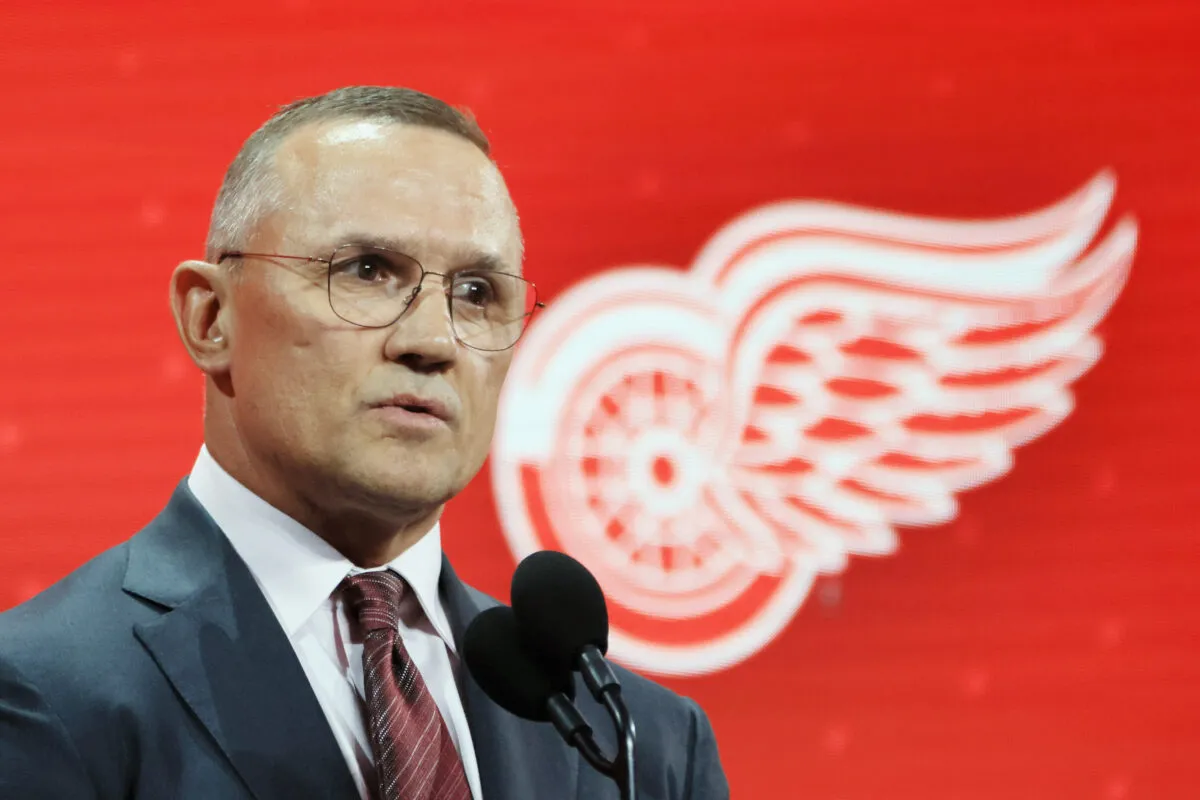
The Detroit Red Wings’ 2025-26 season has reached its critical juncture, with the team fighting for a wild-card spot but facing familiar late-season struggles. General manager Steve Yzerman, now in his seventh year at the helm since April 2019, continues to lead a franchise mired in a decade-long playoff drought.[1][2] After missing the postseason for the ninth straight year in 2024-25, expectations were high for a breakthrough, yet another collapse looms. Yzerman recently addressed the media, expressing disappointment and vowing changes, echoing concerns that have persisted throughout his tenure.[3]
Fans and analysts alike have debated Yzerman’s future, often circling back to a set of “bare minimums” outlined in past evaluations: fully utilizing salary cap space, securing a playoff position by American Thanksgiving, and acquiring generational draft talent. With the current campaign teetering, it’s time to revisit these benchmarks and assess whether Yzerman has met them.
Spending virtually all salary cap space
One core expectation has been for Yzerman to spend aggressively to the cap ceiling, avoiding the pitfalls of leaving millions unused. In previous seasons, including the one prior to his arrival’s full impact, the Red Wings carried over $11.2 million in unspent space, a decision criticized for potentially costing playoff positioning.[4]
For 2025-26, the pattern repeated. The team’s projected cap hit sits at around $84.3 million against a $95.5 million ceiling, leaving approximately $11.1 million in space—mirroring past conservatism. Sites like Puckpedia highlight this gap, with 21 active roster players but room for veteran additions that could have bolstered scoring or depth.[4]
Yzerman’s strategy emphasizes long-term flexibility during the rebuild, prioritizing youth development over short-term splurges. However, with contenders spending to the limit, this approach has drawn fire. Deadline moves like acquiring Justin Faulk and reacquiring David Perron helped, but critics argue bolder trades were needed earlier.
The upcoming offseason offers $21-31 million in projected space for 2026-27, per recent analyses. Yzerman must deploy it decisively—targeting top-six forwards or defensemen—to silence detractors. Failure to do so risks amplifying calls for change.
This metric remains unmet, underscoring a philosophical divide between patience and urgency.
Holding a playoff spot by American Thanksgiving
Historically, teams in playoff positions on U.S. Thanksgiving boast a strong chance of qualifying, with about 75-77% success rates since 2005.[5] For the Red Wings, achieving and maintaining this benchmark has been elusive.
In 2025, Detroit entered the holiday 10th in the Eastern Conference with a .563 points percentage—outside the playoff picture. Articles noted the implications, with 58 games left but a daunting path ahead.[6][7] A promising early streak fizzled, echoing prior late collapses.
The 2025-26 fade has been stark: from a 12-point wild-card cushion in late January to elimination threats by March. They held the first wild-card spot earlier but posted a poor 9-13-2 stretch late.[8]
Yzerman has avoided timelines, but stakeholders demand results. Owner Chris Ilitch remains supportive, yet fan frustration boils over with boos at home losses.
This bare minimum—playoff contention by Thanksgiving and year-end—stays unfulfilled, heightening scrutiny.
Securing generational draft talent
Cup winners rely on elite foundational pieces, and while Moritz Seider qualifies as generational and Lucas Raymond/Dylan Larkin shine as elite, more is needed.
The Red Wings entered the 2025 draft with mid-round odds (around 16th), picking 13th overall: left winger Carter Bear from the Everett Silvertips. Later selections included Eddie Genborg (44th) and others, solid but not franchise-altering without a trade-up.[9] For details, see the NHL.com draft recap.[10]
Yzerman’s draft history yields promise—Seider (2019, 6th), Raymond (2020, 4th)—but recent hauls lack a true game-changer. Trading future assets for top-5/10 could help, yet conservatism prevails.
Rookies like Nate Danielson debuted strongly, aiding early wins, but the core requires elevation.
This area shows progress but falls short of adding another cornerstone.
Yzerman’s vision and path forward
In his April presser—foreshadowing end-of-season talks—Yzerman was candid: “We need better players… improve specifically in certain areas, particularly five-on-five.”[3] He stressed intensity matching playoff foes, placing responsibility on himself.
Best moves include locking Seider (7-year, $8.55M AAV) and Raymond extensions; worst involve stalled progress despite cap flexibility.[11]
With Ilitch’s backing, Yzerman eyes offseason aggression. Trades for scoring winger? Goaltending tweaks?
The “Yzerplan” nears a verdict.
None of the original bare minimums have been consistently hit, fueling debate on Yzerman’s sustainability. A transformative summer—cap spending, bold trades, draft hits—could extend his run. Otherwise, after a decade without playoffs, change may be inevitable. Detroit faithful deserve contention; the clock ticks.
Frequently Asked Questions

Par Mike Jonderson
Mike Jonderson is a passionate hockey analyst and expert in advanced NHL statistics. A former college player and mathematics graduate, he combines his understanding of the game with technical expertise to develop innovative predictive models and contribute to the evolution of modern hockey analytics.