














The Toronto Maple Leafs entered the 2024-25 season with renewed optimism after hiring Craig Berube, a Stanley Cup-winning coach known for his hard-nosed, disciplined approach. Just 18 games into his tenure, however, the conversation in one of hockey’s most demanding markets has taken an uncomfortable turn. With an 8-8-2 record and persistent structural issues plaguing the team, speculation about Berube’s job security has emerged far earlier than anyone anticipated. The pressure is mounting, and the questions are getting louder: How much runway does Berube have to turn this around?
The situation is particularly alarming considering the Maple Leafs’ schedule has been relatively favorable so far. Only four of their first 18 games came against teams that made the playoffs last season, meaning the toughest stretch still lies ahead. As the Atlantic Division continues to separate and Toronto treads water, management faces a critical decision about whether to stay the course or consider a change that few saw coming this soon.
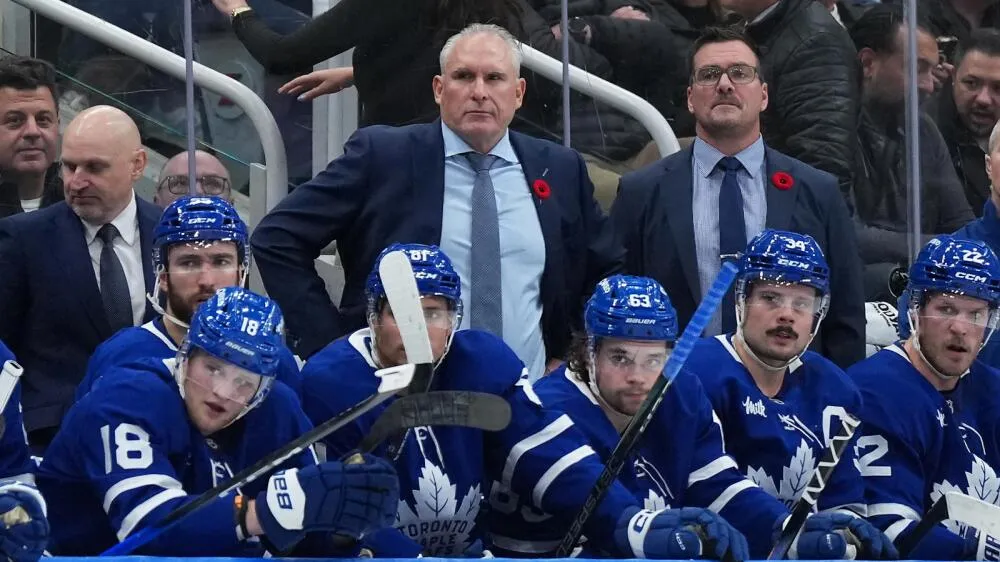
NHL rumors suggest Berube’s hot seat is warming with Maple Leafs struggles
The whispers started gaining traction after Thursday’s 4-3 overtime loss to the Los Angeles Kings, a game that looked respectable in the box score but told a far different story for those who watched. Despite earning a point, Toronto was thoroughly dominated, outshooted 37-15, and kept alive only by Dennis Hildeby’s 33-save performance. Kings defenseman Drew Doughty didn’t mince words in his postgame interview, stating his team “absolutely dominated” the Maple Leafs.
Jonas Siegel of The Athletic was among the first to openly question Berube’s future, writing: “Improvement is going to have to actually show up in the results at some point. And if it doesn’t, management is going to have to decide whether someone else can get this team moving in the right direction.”
The historical precedent in Toronto adds weight to these concerns. Mike Babcock was fired just 23 games into the 2019-20 season despite having won a Stanley Cup with Detroit and being widely respected around the league. The Maple Leafs have shown they’re willing to make swift coaching changes when results don’t materialize, regardless of pedigree or past success.
Berube’s mandate when he arrived was clear: instill accountability, tighten up defensively, and finally break through the playoff barrier that has haunted this core group for years. Through 18 games, none of those objectives appear to be progressing. The team continues to get outshot and outplayed at even strength, defensive breakdowns remain frequent, and the identity Berube was hired to create hasn’t materialized.
What makes the situation particularly precarious is the compressed timeline teams face in today’s NHL. The Edmonton Oilers replaced Jay Woodcroft with Kris Knoblauch after just 13 games in November 2023, and that decision ultimately helped salvage their season. Management groups around the league have learned that waiting too long to make a change can be just as damaging as pulling the trigger too early.
The Maple Leafs’ deeper structural issues beyond coaching
While Berube shoulders responsibility for on-ice performance, placing all the blame at his feet ignores deeper organizational problems that have persisted through multiple coaching regimes. The core group of Auston Matthews, Mitch Marner, William Nylander, and John Tavares has now cycled through Babcock, Sheldon Keefe, and Berube without achieving playoff success.
Craig Berube’s mandate to reshape the Maple Leafs’ leadership was supposed to address the cultural issues that have plagued the franchise, but changing mentality and identity takes time. The question facing general manager Brad Treliving is whether the team has the luxury of that time given their standing in an increasingly competitive division.
The goaltending situation remains unsettled, with neither Joseph Woll nor Ilya Samsonov establishing themselves as the clear starter. Defensive depth has been tested by injuries, and the forward group’s inability to control play at five-on-five has been a recurring theme regardless of who’s behind the bench.
Toronto’s investment in its core four forwards continues to limit roster flexibility. While these players produce offensively, their combined cap hit makes it difficult to build adequate depth and address weaknesses elsewhere in the lineup. This structural challenge won’t disappear with a coaching change, yet when teams struggle, the coach is typically the first casualty.
The athletic and skill level on the Maple Leafs’ roster should produce better results than what’s been seen. Whether that’s a coaching issue, a personnel issue, or both remains the central debate. What’s undeniable is that the current formula isn’t working, and patience in professional sports—especially in Toronto—is a limited resource.
What other NHL teams are monitoring the Maple Leafs situation
The coaching carousel in the NHL moves quickly, and several veteran bench bosses remain available if Toronto decides to make a change. Names like Peter DeBoer, who won 662 games in his NHL coaching career, have already been floated in rumor circles as potential replacements should the Maple Leafs opt for a more experienced option.
According to recent reporting from The Hockey Writers, the pressure on Berube to deliver immediate results is intensifying. Management’s decision to bring him in was predicated on his proven ability to win with the St. Louis Blues, but translating that success to a different market with different personalities has proven more challenging than anticipated.
Other teams around the league are also watching Toronto’s situation closely for different reasons. If the Maple Leafs continue to struggle and eventually decide to shake up the roster rather than the coaching staff, several trade targets could become available. Players like David Kampf have already parted ways with the organization, and speculation about bigger moves could intensify if results don’t improve.
The Vancouver Canucks, facing their own organizational crossroads, and the Buffalo Sabres, dealing with another disappointing start, serve as reminders that Toronto isn’t alone in navigating early-season turbulence. However, few markets create the kind of pressure cooker environment that exists in Toronto, where every loss is dissected and every decision scrutinized.
The reality is that Berube’s job security will ultimately be determined by results over the next few weeks. U.S. Thanksgiving has historically served as a benchmark in the NHL—teams in playoff positions at that point usually stay there, while those on the outside typically miss the postseason. If Toronto finds itself on the wrong side of that divide with no signs of improvement, management may feel compelled to act.
Key indicators that will determine Berube’s future with the Maple Leafs
Several factors will play into whether Berube remains behind the Maple Leafs bench as the season progresses. First and foremost is simple wins and losses. If Toronto goes on a significant losing streak or falls too far behind in the division standings, no amount of context or explanation will save his job.
The team’s underlying metrics tell a concerning story. Possession numbers, expected goals percentages, and shot differential all paint a picture of a team being outplayed most nights. Even when Toronto wins, they often do so despite being dominated territorially. That’s not sustainable over an 82-game season, and it’s not the identity Berube was hired to create.
Player performance will also factor heavily into the evaluation. Toronto Maple Leafs news and developments throughout the season will focus intensely on whether the core players are buying into Berube’s system and showing the improved compete level he demands. If star players appear disconnected or the locker room shows signs of fracture, management will have to decide whom to keep.
The schedule difficulty increases significantly moving forward. Toronto has survived a relatively soft opening stretch with a mediocre record. When they face a steady diet of playoff-caliber opponents, will they rise to the occasion or get exposed further? Those games will serve as crucial measuring sticks.
Berube himself acknowledged the urgency in recent comments, stating: “We have a veteran group, and I have full trust in them… We have to find a way to get better.” That trust, however, needs to be validated by improved performance. Faith only extends so far when results aren’t following, especially in Toronto.
The Maple Leafs’ front office invested heavily in this coaching change, not just financially but also in terms of organizational credibility. Treliving’s tenure as general manager will be defined in large part by whether the Berube hire works out. That creates pressure on both men to make this partnership succeed, but it also means if separation becomes necessary, both sides will need to acknowledge it quickly rather than letting things deteriorate further.
The Craig Berube hot seat conversation represents more than just another coaching rumor in the NHL—it symbolizes the mounting frustration around a franchise that continues searching for answers despite having elite talent. Whether this proves to be momentary growing pains or a fundamental mismatch between coach and team will become clearer in the coming weeks. What’s certain is that time is running short for both Berube and his players to prove this partnership can deliver the success Toronto desperately seeks. The next stretch of games could very well determine whether Berube gets the runway to see his vision through or becomes the latest casualty in Toronto’s endless pursuit of playoff success.
Frequently Asked Questions

Par Mike Jonderson
Mike Jonderson is a passionate hockey analyst and expert in advanced NHL statistics. A former college player and mathematics graduate, he combines his understanding of the game with technical expertise to develop innovative predictive models and contribute to the evolution of modern hockey analytics.