


















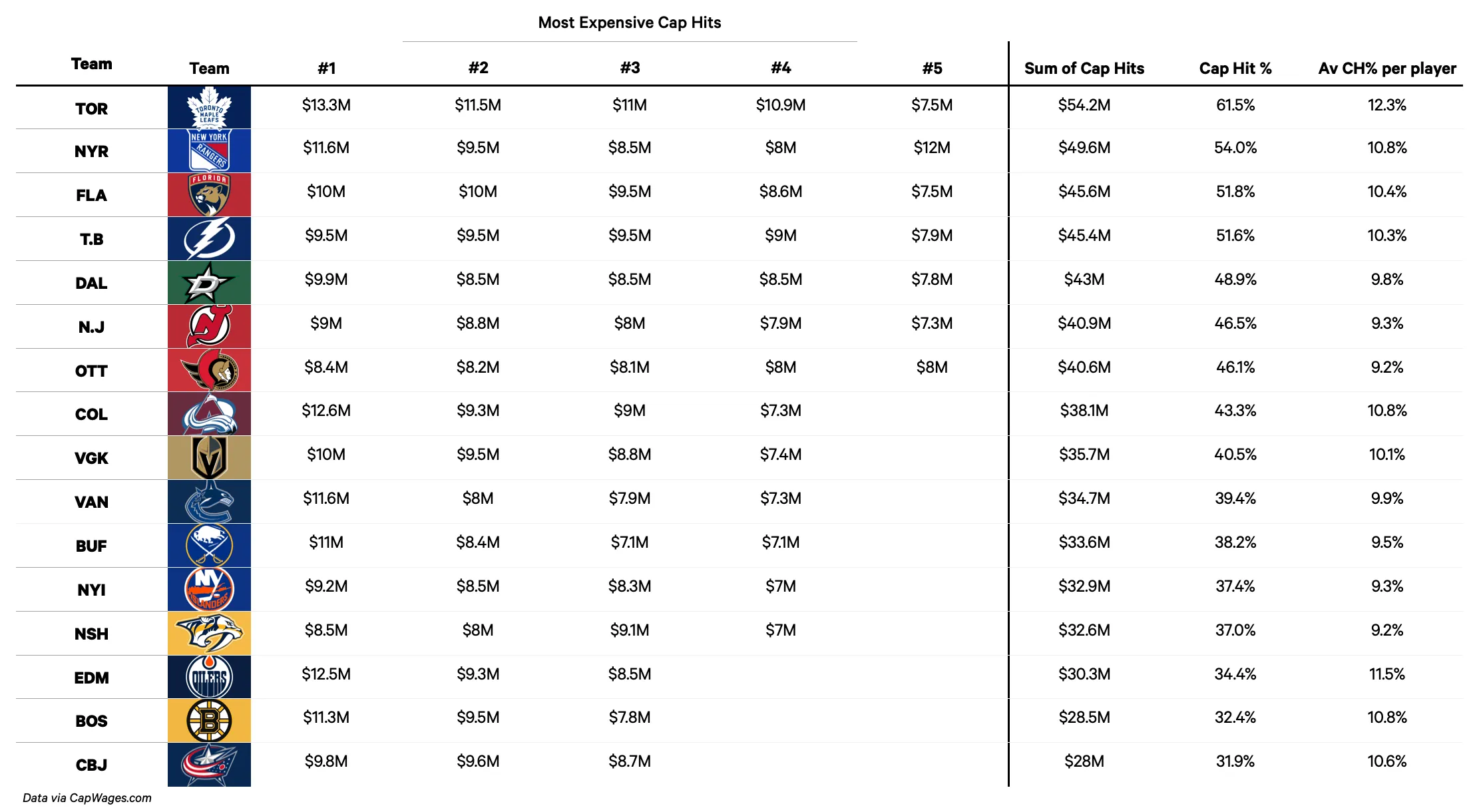
The New York Rangers hold nearly $30 million in projected cap space heading into the 2026 offseason.
Rangers target untapped potential in trade market
The Rangers finished the 2025-26 season with one of the league’s largest projected cap cushions, giving general manager Chris Drury flexibility to absorb contracts while acquiring younger assets. Sources close to the organization told The Athletic that Drury intends to pursue multiple deals rather than rely on a thin free-agent class.
St. Louis enters the same window holding the 11th, 15th and 29th overall selections in the 2026 draft. Current general manager Doug Armstrong stated the club will remain open to trades that improve the roster immediately or stockpile future pieces for successor Alex Steen.
Among the names discussed for a change of scenery are Dallas forward Mavrik Bourque and San Jose winger William Eklund, both still on entry-level or bridge deals and viewed as capable of 50-plus point seasons. Columbus center Kent Johnson and Anaheim pivot Mason McTavish also appear on internal lists circulated in late May 2026.
Detroit prospects Nate Danielson and Marco Kasper represent lower-cost options that could be packaged with retained salary. Toronto’s Matias Maccelli and Nicholas Robertson offer speed that fits the Rangers’ stated desire to add transition skill.
Blues and Rangers pursue contracts teams want to shed
Several clubs appear motivated to move mid-tier contracts before July 1. Detroit’s J.T. Compher and Vancouver’s Jake DeBrusk headline a group that includes Edmonton forward Trent Frederic and Carolina center Jesperi Kotkaniemi.
Anaheim winger Frank Vatrano and Colorado’s Ross Colton sit on shorter deals that could be flipped for draft picks or prospects. The Rangers’ cap room allows them to take on one higher cap hit if sweeteners are attached, a scenario Armstrong referenced when discussing potential mid-July activity.
Blues management has signaled willingness to facilitate three-team deals that move money while acquiring future assets. Armstrong noted the possibility of standing pat at the draft before becoming active once other teams miss on free agency.
Cap flexibility sets up late-summer maneuvering
The $30 million Rangers cushion exceeds the next-closest projected space by more than $12 million, according to figures compiled in early June 2026. That margin lets New York retain salary on multiple deals without immediate roster consequences.
St. Louis’s three first-round picks give the club leverage to extract additional future considerations when facilitating trades for cap-strapped partners. Armstrong and Steen have already mapped scenarios that keep the core intact while adding one or two cost-controlled forwards.
If the free-agent market clears without major signings by mid-July, both organizations are positioned to execute the type of multi-asset swaps that have defined recent offseasons. The combination of draft capital in St. Louis and cap room in New York creates a natural trading partnership unlikely to repeat soon.
By the July 2026 trade deadline the Rangers and Blues could combine for at least four new NHL regulars under age 26.
Frequently Asked Questions
Sources

Par Mike Jonderson
Mike Jonderson is a passionate hockey analyst and expert in advanced NHL statistics. A former college player and mathematics graduate, he combines his understanding of the game with technical expertise to develop innovative predictive models and contribute to the evolution of modern hockey analytics.