


Boston Bruins McAvoy injury impact on Lindholm workload: Analyzing the defensive burden
The Boston Bruins face a significant challenge following Charlie McAvoy’s facial surgery, thrusting Hampus Lindholm into an even more critical role on the blue line. When the alternate captain took a puck to the face in Montreal on November 16, the immediate concern centered on his health, but the ripple effects extend far beyond one player. With McAvoy sidelined indefinitely, Lindholm becomes the anchor of a defensive group that must now compensate for the absence of its most important minutes-eater.
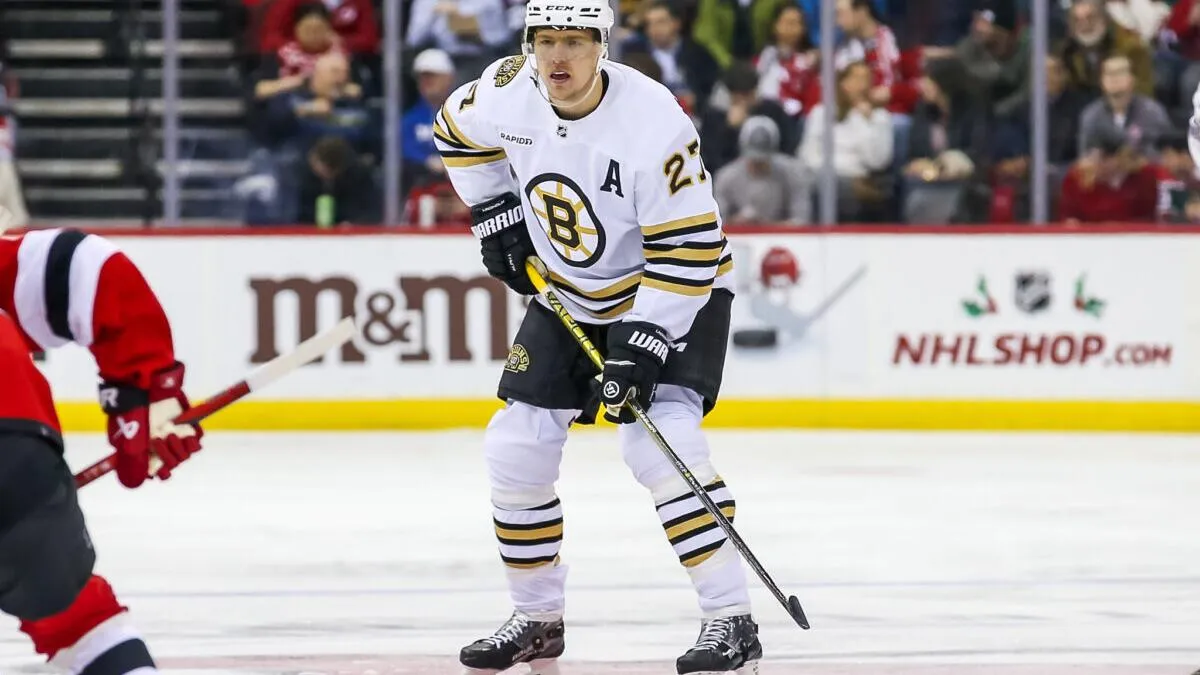
McAvoy’s injury details and timeline uncertainty
The Montreal incident and surgical intervention
The injury occurred during the second period against the Canadiens when a Noah Dobson one-timer struck McAvoy in the face. Blood spurted immediately, and the defenseman dropped to the ice before leaving the game and flying back to Boston with the team. Within 72 hours, the Bruins announced he had undergone facial surgery and would remain behind as the team embarked on their West Coast road trip. Head coach Marco Sturm provided no specific return date, emphasizing the indefinite nature of the recovery process.
Facial surgeries vary widely in recovery time depending on the extent of bone and soft tissue damage. While the organization hasn’t released specifics, medical experts suggest such procedures typically require 4-8 weeks before contact drills resume, with full clearance potentially taking longer. The lack of a concrete timetable creates additional pressure on Lindholm and the defensive corps to prepare for an extended absence.
Olympic participation remains the optimistic target
An ESPN report from Emily Kaplan provided a glimmer of hope, indicating that McAvoy’s recovery timeline “depends” on healing but the “expectation” is he’ll be ready for the 2026 Winter Olympics in February. This suggests the Bruins anticipate roughly a 10-12 week absence at minimum, though the competitive nature of Olympic hockey means he would need full medical clearance well before the tournament begins.
The 27-year-old had been enjoying a potentially career-defining season, averaging nearly 24 minutes while quarterbacking the top pairing and contributing on both special teams units. His 14 assists ranked second on the team behind only David Pastrnak, underscoring his value as a primary play-driver from the back end.
Lindholm’s expanded role and escalating workload
Ice time surge and matchup responsibilities
With McAvoy unavailable, Lindholm’s already substantial 20:46 average ice time per game figures to increase significantly. The Swedish defenseman has historically operated in a 1B role behind McAvoy, allowing him to face secondary matchups and receive more favorable zone starts. That luxury disappears immediately.
The coaching staff must now deploy Lindholm against opposing top lines in all situations. He’ll likely see his power play time jump from 1:49 per game toward the 2:30-3:00 range, while his penalty kill responsibilities (already 2:35 per game) increase. The physical toll accumulates quickly—adding just 2-3 minutes per game over a 10-game stretch equals an extra full game’s worth of wear on his 30-year-old body.
Historical data reveals the stark contrast in Boston’s performance. With both McAvoy and Lindholm healthy this season, the Bruins posted a 9-2-0 record. Without one or both, they dropped to 3-8-0. The correlation extends back to last year’s disastrous campaign when Lindholm appeared in just 17 games and the team missed the playoffs—a worst season in nearly two decades.
The statistics behind the burden
Last season provided a cautionary tale: the Bruins went 10-17-5 in the 32 games McAvoy missed, a 68-point pace over a full season. Lindholm’s individual numbers reveal the strain—his shots per game decreased for three consecutive seasons to 1.36, while his power-play production plummeted from 17 points in 2022-23 to just five last year as injuries mounted.
The underlying metrics tell an equally concerning story. Lindholm’s Corsi For percentage hovered around 53 percent when playing with a healthy defensive group, but individual defensive pairings without McAvoy saw that number drop by 3-4 percentage points. The ripple effect impacts not just Lindholm’s direct contributions but the entire team’s ability to exit the defensive zone cleanly and sustain offensive pressure.
Ripple effects across the Bruins defensive corps
Pairing shakeups and opportunity for younger defensemen
Nikita Zadorov finds himself paired with Henri Jokiharju on the top unit, a significant step up in responsibility for both players. Jokiharju, in particular, must adjust from third-pairing minutes to facing elite competition nightly. Recent Providence call-up Jonathan Aspirot joins Michael Callahan as depth options, each bringing limited NHL experience to a suddenly thin blue line.
Mason Lohrei’s inconsistent play complicates matters further. The coaching staff has already scratched him multiple times this season, and relying on him for top-four minutes represents a gamble. The absence of McAvoy’s stabilizing presence means breakdowns become more frequent, zone exits become chaotic, and goaltender Jeremy Swayman faces higher-quality chances.
The Bruins’ defensive structure relies heavily on having two elite puck-movers who can relieve pressure and initiate transition. With one pillar removed, the entire architecture wobbles. Lindholm’s ability to elevate his partners’ play becomes paramount—he must make both his direct partner and the third pairing better through intelligent positioning and communication.
Special teams reshuffling
McAvoy’s absence devastates special teams symmetry. On the power play, he quarterbacked the top unit, distributing from the point and creating shooting lanes. Lindholm must now assume those duties, though his production history suggests a different style—less explosive, more methodical. The second unit gains importance, potentially featuring Zadorov’s heavy shot or jumping a forward back to the point.
The penalty kill faces equal disruption. McAvoy and Lindholm often formed the shutdown pair, using their mobility and active sticks to disrupt passing lanes. Without his partner, Lindholm must anchor an entirely new configuration, likely alongside a more defensive-minded partner like Andrew Peeke or a forward temporarily moved back. The chemistry requires time to develop, and opponents will test the new grouping aggressively.
Managing workload to prevent cascading injuries
Injury history raises red flags
Lindholm’s recent health record provides legitimate cause for concern. He managed just 73 games last season while battling various ailments, and his career shows a pattern of missing time when overburdened. At age 30, his recovery time slows compared to his mid-20s, making workload management critical.
The previous campaign illustrated the danger—Lindholm’s production dropped to 26 points, his lowest full-season total since 2018-19. His wrist and lower-body injuries limited his effectiveness, and the team learned that asking him to play 25+ minutes regularly leads to diminished returns and eventual breakdown.
The Bruins’ training staff must monitor Lindholm’s practice participation, morning skate intensity, and in-game fatigue indicators. Skating more than 26 minutes in back-to-back games should trigger automatic reduced minutes in the following contest, even if it means leaning more heavily on untested depth.
Strategic rest and rotation considerations
Coach Sturm faces difficult decisions. He could implement a rotation system, periodically sitting Lindholm against weaker opponents to preserve him for divisional games. Alternatively, he might reduce Lindholm’s offensive zone starts, saving his energy for critical defensive situations.
The organization must also evaluate its trade posture. If the team struggles through the next month, general manager Don Sweeney might shift from buyer to seller at the deadline. Players want to prove management wrong, but overextending Lindholm in a lost season represents poor asset management.
Strategic deployment could involve:
- Limiting Lindholm’s offensive zone starts to under 40 percent
- Reducing his power play time when the Bruins hold multi-goal leads
- Scheduling maintenance days every 8-10 games
- Using 11 forwards and 7 defensemen to spread minutes
Conclusion: The path forward for Boston’s blue line
The Boston Bruins McAvoy injury impact on Lindholm workload represents the team’s most significant test of depth and resilience this season. While Lindholm possesses the skill and hockey IQ to handle increased responsibility, history shows that overburdening him risks both individual breakdown and team collapse. The next six weeks will determine whether Boston can maintain its playoff positioning or if management must pivot toward retooling for next season.
Success depends on three factors: Lindholm’s physical durability, the development of younger defensemen, and strategic coaching adjustments. If the Bruins can survive until McAvoy’s potential Olympic return, they’ll emerge battle-tested. If not, the franchise may need to reassess its defensive construction entirely. The data remains clear—Boston is a contender with both elite defensemen healthy, but a lottery team without them.
The upcoming stretch against Western Conference opponents provides a measuring stick. Strong performances could validate the team’s depth; struggles would amplify calls for external reinforcements. Either way, Lindholm’s nightly performance will dictate the narrative, making his workload management the single most important storyline for Bruins fans to monitor.
Frequently Asked Questions

Par Mike Jonderson
Mike Jonderson is a passionate hockey analyst and expert in advanced NHL statistics. A former college player and mathematics graduate, he combines his understanding of the game with technical expertise to develop innovative predictive models and contribute to the evolution of modern hockey analytics.