









The NHL’s 2026 Stadium Series game pits the Boston Bruins against the Tampa Bay Lightning at Raymond James Stadium in Tampa on February 1, starting at 6:30 p.m. ET.[1] What was expected to be a balmy affair with temperatures around 70 degrees has turned into authentic hockey weather, with forecasts dipping below 40 degrees Fahrenheit during the game. This divisional rivalry clash adds high stakes, as both teams vie for crucial points in a tight Eastern Conference race.
Players from both sides are buzzing about the unexpected chill, which promises a more traditional outdoor atmosphere despite the Florida setting. The game coincides with Tampa’s Gasparilla festival, blending pirate-themed festivities with pond-hockey vibes. Fans are advised to bundle up for what could be the coldest outdoor game in Tampa’s history.[2]
Tampa’s surprising cold snap delights hockey purists
Tampa’s weather has defied expectations for this outdoor spectacle. Historical data pointed to mild conditions, but a frigid front has brought Saturday’s temperatures down sharply, with Sunday’s forecast mimicking a northern rink. Lightning coach Jon Cooper noted after practice that last February 1 it hit 81 degrees, but this year marks the coldest in his 13 years with the team.
Lightning center Yanni Gourde captured the excitement, saying, “Last week it was 80 or something, and this week it might be snowing at some point. So that’s crazy, but also that’s super exciting.” Forward Nick Paul added, “We were talking about it yesterday: How cool it’ll be if snow is in Tampa and outdoor game? You tell anyone that, they wouldn’t believe you.”[3]
This marks the second outdoor game in Florida this season, following the New York Rangers’ victory over the Florida Panthers in the Winter Classic at Miami’s LoanDepot Park on January 2. That game clocked in at 63.1 degrees, the warmest Winter Classic ever. Sunday’s chill won’t challenge warmth records but could set a new tone for southern outdoor hockey.
Bruins defenseman Charlie McAvoy welcomed the drop, stating, “I heard it was going to be in the 30s, so let’s hope it’s maybe even colder.” Lightning center Anthony Cirelli agreed, “I think the weather’s been perfect for this outdoor game. You don’t see that in Tampa often.”
The shift has Tampa fans rethinking their game-day plans, trading sunscreen for scarves. As defenseman Ryan McDonagh put it, “Fans too here in Tampa, we obviously get so what’s so-called spoiled with the weather at times here in the winter. So a little bit of chilly temps for a hockey game should do wonders for the crowd.”
NHL innovates with climate-controlled tent for ice integrity
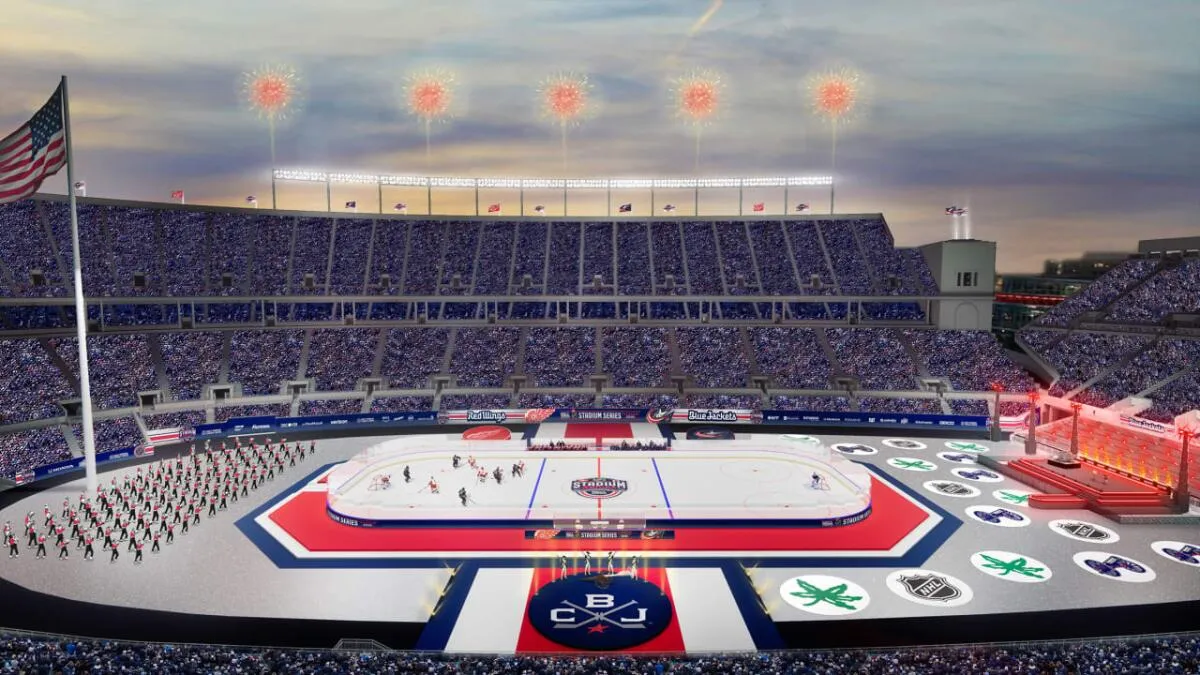
To combat Florida’s typical sunshine, rain, and humidity, the NHL erected a first-of-its-kind climate-controlled tent over the rink at Raymond James Stadium. The 240-foot-long, 34-foot-high steel-framed canopy is air-conditioned, ensuring playable ice conditions. NHL vice president of hockey operations Derek King emphasized, “Sunshine, rain and humidity are all big factors, and controlling these elements for as long as possible while we’re building the ice will be essential.”
Practice sessions revealed some hurdles. The tent shielded the rink, preventing traditional family skates post-practice and limiting acclimation to the stadium’s sight lines. Bruins forward Morgan Geekie described it as “a bit dark under the tent, but I think once the tarp’s off it’ll be cut-and-dry weatherwise.”
Ice quality drew mixed reviews. McAvoy critiqued, “It’s definitely pretty patchy. It’s real soft. We’ll see what they can do between tonight and tomorrow.” Cirelli remained optimistic, “To get out there in warmups would be cool to get a feel for what’s going on. Obviously with the tent it was a little bit different, unique experience.”
For more on the venue setup, check the official 2026 NHL Stadium Series page.[1]
The innovation underscores the league’s commitment to flawless outdoor events, even in challenging climates. Crews worked tirelessly, and players anticipate prime conditions by puck drop.
Players fired up for authentic outdoor intensity
Both teams applauded the weather twist. Cooper highlighted the experiential gap for local fans, “This game is meant to be played in cold weather. I think for 65,000 people… many people that are going to be at this game have not. And I think that’s super cool.”
Bruins players relish the edge. McAvoy pushed for even colder temps to harden the ice and amp the ambience. Lightning stars like Gourde envision snowflakes falling amid the action, turning Raymond James into a winter wonderland.
Here’s a quick look at key player sentiments:
- Yanni Gourde (Lightning): Dreaming of snow in Tampa.
- Nick Paul (Lightning): “Bundle up if you’re a fan and have some fun.”
- Charlie McAvoy (Bruins): Hoping for sub-30s.
- Anthony Cirelli (Lightning): Perfect for ice quality.
- Ryan McDonagh (Lightning): Chilly breath enhances the pond feel.
This buzz contrasts prior warm-weather outlays, like the 65-degree Coors Field game in 2016.
Rivalry heats up under the lights
The Bruins and Lightning enter as scorching hot, with Tampa Bay at 34-14-4 atop the East.[4] Divisional foes, they battle for standings supremacy in a game loaded with points implications. Boston’s sixth outdoor appearance meets Tampa’s second, adding historical weight.
Tickets remain hot via Ticketmaster.[5] For viewing details, see how to watch on ESPN, airing at 6:30 p.m. ET with pregame at 6 p.m.[6]
Expect physical play, sharp rivalries, and crowd energy rivaling northern classics. The cold could favor puck control and speed.
As tarp drops, warmups unveil the spectacle to 65,000. This Stadium Series redefines Florida hockey, blending innovation with raw elements.
The chilly forecast elevates an already electric matchup into potential classic territory. Win boosts playoff positioning; atmosphere delivers lasting memories. Watch for snow-tipped pirates and frozen ponds in Tampa—hockey’s magic shines brightest in the cold.
Frequently Asked Questions

Par Mike Jonderson
Mike Jonderson is a passionate hockey analyst and expert in advanced NHL statistics. A former college player and mathematics graduate, he combines his understanding of the game with technical expertise to develop innovative predictive models and contribute to the evolution of modern hockey analytics.