






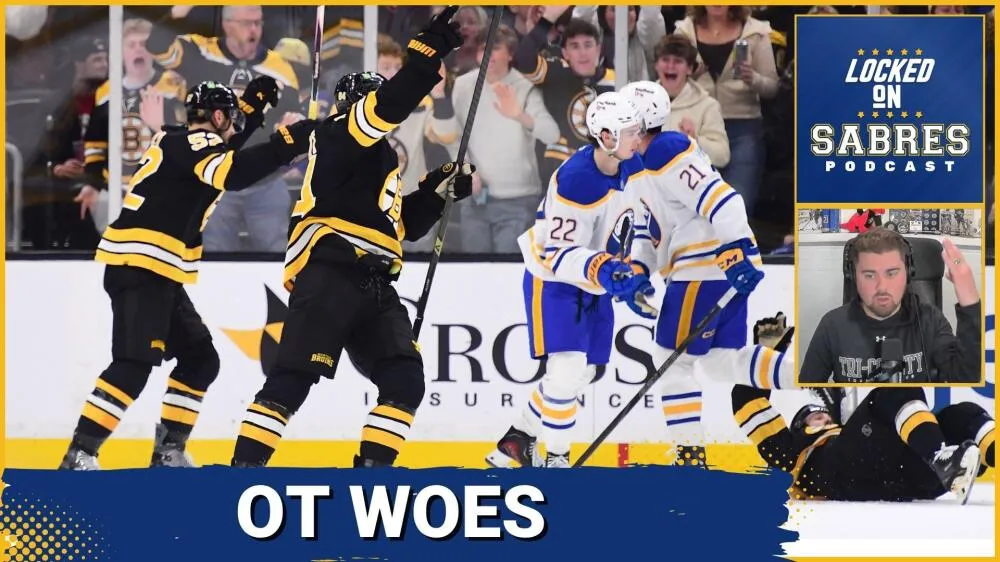
The Buffalo Sabres walked away with just one point in their Tuesday night matchup against the Utah Mammoth, falling 2-1 in overtime at KeyBank Center. Despite another stellar performance from goaltender Alex Lyon and Noah Ostlund’s memorable first NHL goal, the Sabres couldn’t capitalize when it mattered most. Clayton Keller’s decisive strike just 47 seconds into the extra frame extended Buffalo’s frustrating pattern of overtime defeats, marking their fourth consecutive loss in 3-on-3 play. While the team’s seven-game point streak continues, the inability to finish games and secure two points has become a concerning trend early in the 2025-26 season.
This game showcased both the resilience and the limitations of a Sabres squad dealing with significant injury adversity. With six key forwards sidelined, Buffalo leaned heavily on their goaltender and young callups to keep pace with a Utah team finding its identity. The result was a tightly contested defensive battle that ultimately came down to one defensive breakdown and one moment of overtime brilliance from the opposition.
Alex Lyon’s heroics keep the Buffalo Sabres competitive despite the 2-1 overtime loss to Utah Mammoth
Alex Lyon delivered yet another outstanding performance, stopping 33 of 35 shots and keeping the Sabres in a game where they were thoroughly outplayed for large stretches. After a relatively even first period, Utah dominated possession in the second and third frames, outshooting Buffalo 27-8 over those 40 minutes. Lyon’s ability to stand tall against this barrage proved essential to the Sabres even reaching overtime.
The veteran goaltender made 12 high-danger saves according to Natural Stat Trick, denying Utah time and again on quality scoring chances. The Utah Mammoth generated 3.95 expected goals throughout the contest, yet only managed to beat Lyon twice. His positioning and reflexes were on full display throughout the night, particularly during a sequence of Grade-A opportunities that could have blown the game open.
Head coach Lindy Ruff didn’t mince words when assessing his goaltender’s contribution. “Played great,” Ruff said postgame. “With the number of injuries and the pieces we had to move around, we needed our goalie to play well. He played really well for us.” Lyon has now started 10 of Buffalo’s 13 games this season, shouldering a heavy workload as the team navigates its injury crisis.
Lyon himself remained measured about the team’s current trajectory. “If we find a way to keep getting points, find a way to continue to stick around, that’s a good thing,” he noted. “I also think the next step is available for us where maybe we start to take over. But credit to the guys – continued to battle all night with a tough lineup situation.”
The goaltending duel between Lyon and Utah’s Karel Vejmelka defined the evening’s narrative. Both netminders refused to crack under pressure, turning aside breakaways, odd-man rushes, and point-blank opportunities. While Lyon’s performance warranted a better result, the reality is that even elite goaltending can only carry a team so far when offensive production remains limited.
Buffalo’s tendency to rely so heavily on Lyon also raises questions about sustainability. While Devon Levi develops in Rochester and Ukko-Pekka Luukkonen remains sidelined, the Sabres need their starter to maintain this elite level night after night. That’s a tall order for any goaltender, particularly one facing the volume of high-danger chances Lyon has absorbed recently.
Noah Ostlund’s first NHL goal highlights youth stepping up in Buffalo Sabres’ 2-1 overtime loss to Utah Mammoth
With six forwards unavailable due to injury or health issues, the Sabres turned to their organizational depth, and Noah Ostlund delivered in his biggest moment yet. Recalled from Rochester on Tuesday morning, Ostlund found himself in the right place at the right time with 12:10 remaining in regulation, burying his first career NHL goal to tie the game 1-1.
The sequence that led to Ostlund’s historic marker showcased the chemistry developing between him and fellow prospect Isak Rosen. After a nice passing play, Ostlund’s initial shot missed the net entirely. However, Rosen alertly tipped the puck off the top of the net—a legal play since the rule specifies shoulder height, not the crossbar—allowing Ostlund to pounce on the rebound in front of the crease.
“It was a cool moment,” Ostlund said after the game, his 13th in the NHL. “I was a little bit scared from the high stick there by Rosie, but I’m happy for it.” The relief and excitement in his voice captured the significance of the milestone, particularly given the circumstances of his callup and the pressure-packed situation in a tied game late in the third period.
Ostlund’s goal came just one game after Rosen scored his own first NHL tally, marking a promising developmental trajectory for both former first-round picks. With Josh Norris, Jason Zucker, Zach Benson, Jiri Kulich, Tyson Kozak, and Justin Danforth all unavailable, these young players are receiving substantial ice time and meaningful opportunities to prove they belong at hockey’s highest level.
Ruff has been particularly pleased with how his young forwards have responded to increased responsibility. “We need their skill, we need their scoring ability that they’ve shown in the minors,” he explained. “This is the next step for them. This is the opportunity they’re waiting for. All of a sudden, they get 14, 15 minutes, and I think they’ve taken advantage of it. Both guys have played extremely well for us.”
The emergence of Ostlund and Rosen provides a silver lining to Buffalo’s injury situation. While the Sabres certainly miss their veteran depth, these circumstances are accelerating the development of prospects who might otherwise be languishing in Rochester. If they can maintain this level of play and continue contributing offensively, the team’s forward depth will look considerably different—and potentially stronger—when everyone returns to health.
Defensive breakdown costs the Buffalo Sabres in overtime during 2-1 loss to Utah Mammoth
For all the positives Buffalo can take from pushing a quality opponent to overtime while shorthanded, the game ultimately ended in disappointment due to a preventable defensive mistake. Just 47 seconds into the 3-on-3 extra period, Clayton Keller exploited a coverage breakdown to secure the victory for Utah, extending Buffalo’s frustrating overtime losing streak to four consecutive games.
The sequence began promisingly enough for the Sabres, with Alex Tuch generating an early scoring chance that was denied by Vejmelka. However, instead of maintaining offensive pressure or properly transitioning defensively, Buffalo’s structure collapsed in a matter of seconds. As Clayton Keller leads the Utah Mammoth, his hockey IQ was on full display as he identified and attacked the space created by Buffalo’s poor positioning.
Ruff was clearly frustrated with his team’s execution in the overtime period. “After the shot on goal, instead of Tuch backing out, I’d like to see him stay in,” the coach explained, diagnosing the breakdown. “We were still above the puck. We backed out and said, ‘Here, you guys come at us.’ We had our chance, and then our coverage wasn’t good enough. We lost coverage again on the high cycle, and we let Keller walk in. He shouldn’t get that easy a look.”
The mental error was particularly glaring given how well Buffalo had defended for most of the evening. Despite being outshot 27-8 over the final two periods of regulation, the Sabres had maintained their defensive structure and relied on Lyon to bail them out when necessary. Yet when the ice opened up and decision-making became paramount, Buffalo reverted to passive play that invited pressure rather than maintaining an aggressive posture.
Jack Quinn’s positioning proved particularly costly on the game-winning goal. While he was properly positioned to deny a shot from Utah’s Mikhail Sergachev in the slot, his stationary stance meant he couldn’t rotate quickly enough when Tuch fell behind the play. Keller seized the opportunity, speeding past Quinn’s delayed reaction and racing in on Lyon with far too much time and space.
This marks the Sabres’ first stretch of five consecutive overtime games since March 2022, and they’ve dropped all four that have been decided in the 3-on-3 format during their recent point streak. While collecting points is valuable—particularly in a congested Eastern Conference—the pattern raises legitimate concerns about Buffalo’s ability to execute in situations that require both skill and discipline. The difference between one point and two points accumulates quickly over an 82-game season, and the Sabres can’t afford to keep leaving wins on the table.
Missed opportunities in regulation define Buffalo Sabres’ 2-1 overtime loss to Utah Mammoth takeaways
Beyond the overtime collapse, the Sabres had multiple chances in regulation to put this game away and never needed to face the uncertainty of 3-on-3 hockey. The first period alone featured several golden opportunities that could have changed the entire complexion of the contest.
Jack Quinn found himself alone in front of the Utah net early in the game but couldn’t convert. Michael Kesselring, playing against his former team, had a quality backdoor feed that he couldn’t finish. Perhaps most frustrating was Tage Thompson’s blast from the high slot that beat Vejmelka but struck the far post, inches away from giving Buffalo an early lead.
As the game progressed, the missed chances continued to mount. The Sabres generated a breakaway opportunity that came up empty, failing to capitalize on what should have been a high-percentage scoring chance. They also manufactured a 3-on-1 rush that produced nothing, a particularly deflating result given how difficult it was to generate sustained offensive pressure against Utah’s structured defensive system.
These failures to convert quality chances into goals have become a recurring theme for Buffalo. While Lyon’s goaltending and the young players’ energy are keeping the team competitive, the inability to finish plays at a league-average rate remains a significant obstacle to turning point-streak games into winning streaks.
The contrast between the two teams’ offensive efficiency told the story. Utah needed just 35 shots to score twice, while Buffalo managed only 21 shots and required a late third-period goal to force overtime. Even accounting for the Sabres’ depleted forward group, that level of offensive production won’t be sufficient against most NHL opponents, regardless of how well the goaltender performs.
Looking at the underlying numbers, Buffalo’s expected goals total would have been even lower if not for the quality of their limited chances. They need to find ways to generate more volume while maintaining shot quality, a delicate balance that requires both systematic improvements and individual execution. The return of injured forwards will help, but the players currently in the lineup must find ways to create more consistent offensive pressure.
The overtime execution remains the most pressing concern. Buffalo’s coaching staff must address the mental mistakes and passive play that have plagued them in 3-on-3 situations. Whether that means simplified responsibilities, different personnel combinations, or a more aggressive tactical approach, something needs to change. Four consecutive overtime losses isn’t just bad luck; it’s a pattern that demands correction.
As frustrating as this loss was, perspective matters. The Sabres are staying competitive and collecting points despite significant adversity. If they can clean up the overtime execution, maintain their defensive structure, and get a bit more offensive production from their top players, the two-point nights will come. For now, they’ll take their point, learn from their mistakes, and prepare to host St. Louis with renewed determination to end their game in regulation—with a win.

Par Mike Jonderson
Mike Jonderson is a passionate hockey analyst and expert in advanced NHL statistics. A former college player and mathematics graduate, he combines his understanding of the game with technical expertise to develop innovative predictive models and contribute to the evolution of modern hockey analytics.