







The article text provided is not in markdown format with a main title, so this field is populated with the body content excluding the main title as provided below.
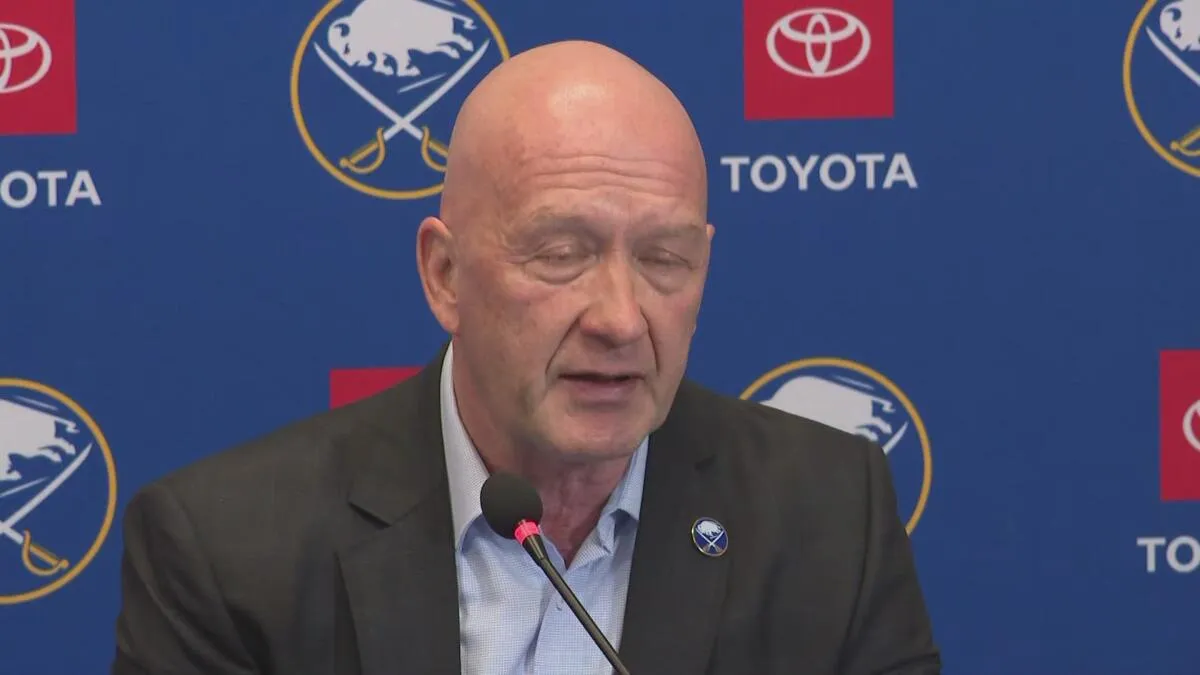
In his first full day as general manager of the Buffalo Sabres, Jarmo Kekalainen delivered a clear and unequivocal message: talent alone won’t end the NHL’s longest playoff drought. Instead, the Finnish executive emphasized building team character and consistency as the foundational elements needed to transform a roster of skilled individuals into a winning organization. Speaking to reporters at KeyBank Center, Kekalainen’s words resonated with a fan base that has endured 14 consecutive seasons without postseason hockey, offering both hope and a reality check about the work ahead.
A new voice in the front office
The promotion of Kekalainen marks a significant shift in Buffalo’s front office philosophy. Originally hired in May as a senior adviser to former GM Kevyn Adams, the 59-year-old brings something the Sabres haven’t had since Scotty Bowman held the job from 1979-1987: prior experience as an NHL general manager. His 11-year tenure with the Columbus Blue Jackets, where he became the league’s first European-born GM, provided him with valuable lessons about roster construction, player development, and organizational culture.
Terry Pegula, who owns the Sabres alongside his wife Kim, expressed confidence in Kekalainen’s leadership capabilities. “Over the last seven months, he’s shown to me that he is capable of leading our organization into the future,” Pegula said during the introductory press conference. “He’s made bold moves in the past… and just has a confidence that I believe will help our organization.” This endorsement comes with full authority over hockey operations and approval to spend to the salary cap limit, resources that previous administrations haven’t always utilized effectively.
Kekalainen’s arrival follows the dismissal of Adams, who oversaw a youth movement that yielded promising pieces but ultimately lacked sustained success. While Adams deserves credit for acquiring talent through the draft and navigating difficult situations with players like Jack Eichel and Sam Reinhart, the team regressed after coming within one point of the playoffs in 2022-23. This inconsistency became the central theme of Kekalainen’s assessment and will shape his approach moving forward.
Character as the cornerstone of success
When Kekalainen addressed the media, he immediately identified the gap between Buffalo’s skill level and its results. “I think character is the biggest part of talent… and that’s the talent we need to focus on,” he explained. This perspective reframes the conversation around team building, suggesting that mental and emotional attributes matter as much as physical abilities. The Sabres have demonstrated undeniable skill on many nights, but have struggled to maintain competitive intensity throughout entire games and seasons.
The new GM pointed to specific examples from the current campaign where effort became the differentiating factor. “There’s been games this year where we looked like it was going to be easy, and then we lost because we got outworked. That’s unacceptable,” Kekalainen stated emphatically. “That’s going to be something that we’re going to focus on each and every day, because the talent, the skill alone is not going to get you wins.” This direct acknowledgment of the team’s work ethic issues signals a culture shift, where accountability will likely become more pronounced.
Kekalainen’s philosophy represents a pragmatic approach to maximizing existing assets. Rather than immediately pursuing blockbuster trades or free agent signings, he wants to extract more value from the current roster by instilling professional habits and competitive drive. This methodology suggests that sustainable success stems from internal development and cultural reinforcement before external additions can truly move the needle.
The talent is there, but something is missing
The Sabres roster features several high-end players who have demonstrated individual excellence. Captain Rasmus Dahlin, the first overall pick in 2018, has evolved into one of the NHL’s premier defensemen. Tage Thompson’s breakout seasons have established him as a legitimate top-line center. Dylan Cozens, Peyton Krebs, and Mattias Samuelsson represent a core of young players entering their prime years. On paper, Buffalo possesses the building blocks of a competitive team.
Yet the results haven’t matched the potential. After reaching 91 points in 2022-23, the team slid backward to 84 points and then 79 points in subsequent seasons. The current campaign shows similar patterns of inconsistency, with the team yo-yoing between impressive winning streaks and demoralizing skids. Following a six-game road trip that began with three consecutive losses but ended with three straight victories—including their first regulation road wins of the season—the Sabres sit at 14-14-4, six points behind Boston for the final wild card spot in the Eastern Conference.
This gap between capability and execution frustrates both the organization and its supporters. Kekalainen validated fan disappointment while maintaining optimism. “(Fans) have every right to be frustrated,” he acknowledged. “(But) we have some really good core pieces here. We’re close. Now we just have to take the next step.” His challenge lies in identifying why a talented group underperforms and implementing systems that maximize collective output rather than individual statistics.
Learning from Columbus
Kekalainen’s tenure in Columbus provides a blueprint for his Buffalo approach, though he must adapt lessons from one context to another. With the Blue Jackets, he demonstrated willingness to make bold decisions. In 2019, he famously held onto pending free agents Artemi Panarin, Sergei Bobrovsky, and Matt Duchene for a playoff push rather than trading them for assets. While Columbus won its first-ever playoff series that spring, all three players departed in free agency, leaving the organization to rebuild.
The following summer, Kekalainen signed Johnny Gaudreau to a massive free agent contract, bringing the star forward to a market not traditionally considered a destination. Though Gaudreau’s tragic passing cut short his impact, the move demonstrated Kekalainen’s confidence and persuasive abilities. “Winning hockey games is the most important ingredient,” he explained when discussing how to attract talent to Buffalo. “Everybody wants to play for a winner.” This philosophy directly counters Adams’ previous comments suggesting that high taxes and cold winters made recruiting difficult.
The Finnish executive’s no-nonsense approach became evident during his Columbus years. He never shied away from difficult conversations or roster decisions, earning a reputation as someone who prioritized organizational health over individual relationships. This trait could prove valuable in Buffalo, where the weight of the playoff drought has sometimes led to panic moves or short-term thinking that compromised long-term stability.
The playoff drought shadow
Fourteen years without postseason hockey creates psychological weight that affects everyone in the organization. Players feel it during slumps, coaches face intensified scrutiny after losses, and management operates under pressure to “just get in” however possible. Kekalainen directly addressed this burden during his initial meeting with players, telling them to ignore the historical context and focus on daily improvement.
“I’m not going to sacrifice the ultimate goal for the sake of making the playoffs and then not having any sustainability for our goal as a team to take the next step,” Kekalainen declared. This statement represents perhaps his most important philosophical stance: building a championship-caliber organization rather than merely ending the drought. While fans desperately want to see postseason hockey, Kekalainen refuses to pursue superficial solutions that might provide temporary relief but compromise future competitiveness.
This long-term vision requires patience and discipline. The Sabres have attempted quick fixes before, whether through expensive free agent signings or trading futures for established veterans. Each approach yielded disappointing results. Kekalainen’s plan emphasizes gradual, sustainable growth that positions Buffalo as a perennial contender rather than a periodic participant. “I told the players to forget about the 14-years thing that’s kind of hanging around like a black cloud. And I’m going to do the same thing,” he said, redirecting focus toward process over outcome.
Immediate priorities and future vision
While Kekalainen preaches patience and culture-building, he faces immediate roster decisions that will shape the season’s trajectory. The most pressing matter involves re-signing Alex Tuch, the veteran forward who leads the top line and provides leadership in the locker room. Tuch enters the final year of his contract, making negotiations a priority for the new administration. Securing his future would signal stability and commitment to the current core.
Between the pipes, Buffalo must resolve its three-goalie logjam. With Colten Ellis on injured reserve, the team currently carries Ukko-Pekka Luukkonen and Alex Lyon at the NHL level. Kekalainen confirmed the organization will eventually reduce to two netminders, though the timing remains flexible. All three goalies require waivers before demotion, complicating roster management decisions.
Beyond specific personnel matters, Kekalainen initiated comprehensive evaluation of the entire hockey operation. “Whether it’s the scouting staff, management, coaches… everybody is under evaluation at this point,” he stated, though he quickly added that many talented people already contribute to the organization. This assessment includes head coach Lindy Ruff, whom Kekalainen publicly supported while reserving the right to make changes if warranted.
The new GM’s championship aspirations extend beyond merely qualifying for the playoffs. “It’s great to make the playoffs, but we’re not just here to make the playoffs, we’re here to try to build a championship team,” he explained. “Winning the Cup is the goal. I think every team in this league is here for the same goal, and that’s the goal that we have with the Buffalo Sabres.” This ambition, while lofty for a franchise mired in a historic drought, sets a standard that could elevate every aspect of the organization.
Buffalo’s path forward requires balancing immediate competitiveness with long-term construction. The Eastern Conference features several elite teams, making postseason qualification challenging. However, the Sabres have demonstrated an ability to play at a high level during their recent three-game winning streak. The question becomes whether they can maintain that standard consistently—a challenge that directly ties back to Kekalainen’s emphasis on character and daily improvement.
The organization’s direction will become clearer as Kekalainen settles into his role following a difficult personal period. His father passed away after a lengthy illness, forcing him to travel to Finland last week before his promotion. “This has been quite a roller-coaster of emotions for me this weekend. So I’m just starting today,” he admitted, bringing humanity to a position often viewed solely through the lens of wins and losses.
What becomes evident through Kekalainen’s early statements is a holistic approach to management that values culture as much as talent. He inherits a team with enough skill to compete but lacking the intangible qualities that separate good teams from great ones. By emphasizing character, consistency, and championship aspirations, the new GM sets expectations that extend beyond the standings. Success won’t be measured solely by ending the playoff drought, but by creating an organization where sustained excellence becomes the standard rather than the exception.
The Sabres face significant challenges ahead, but they now have an experienced leader with clear vision and ownership support. Whether Kekalainen can transform Buffalo’s culture and finally break the postseason drought remains uncertain, but his methodical approach and refusal to compromise long-term goals for short-term relief provide the franchise its best opportunity for meaningful change in years. For a fan base that has waited over a decade for playoff hockey, the focus on building something lasting rather than something immediate might prove worth the continued patience.
Frequently Asked Questions

Par Mike Jonderson
Mike Jonderson is a passionate hockey analyst and expert in advanced NHL statistics. A former college player and mathematics graduate, he combines his understanding of the game with technical expertise to develop innovative predictive models and contribute to the evolution of modern hockey analytics.