













The New York Islanders’ acquisition of Calum Ritchie at the 2025 trade deadline raised eyebrows across the NHL. Sending veteran Brock Nelson to the Colorado Avalanche for a prospect package centered around the 2023 first-round pick represented a clear shift toward youth. Ten months later, that gamble is paying dividends as Ritchie has emerged as one of the most promising rookies in the organization, showcasing a two-way game that belies his 20 years of age.
What makes Ritchie’s breakout particularly compelling is its methodical nature. Unlike flashier rookies who rely solely on offensive explosions, the Oshawa Generals product has built his NHL foundation on defensive reliability first, offensive contributions second. This approach has earned him the trust of Hall of Fame coach Patrick Roy and positioned him as a potential long-term solution down the middle for a franchise in transition.
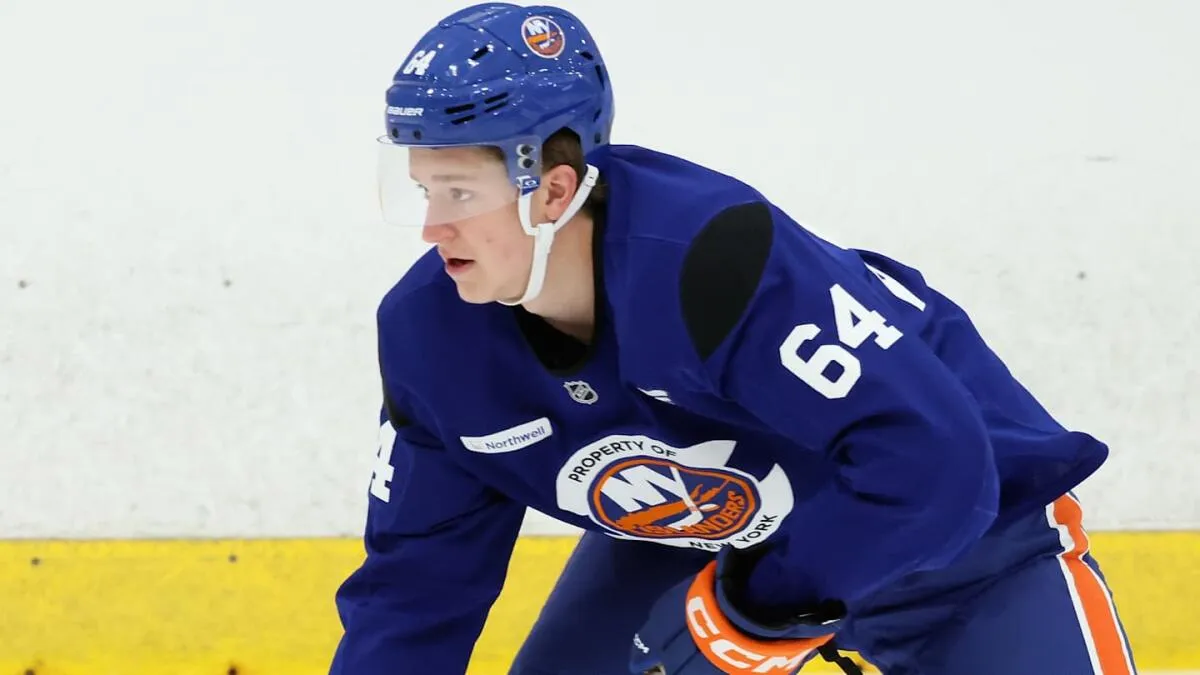
The Brock Nelson trade that reshaped the Islanders’ future
When the Islanders shipped Brock Nelson to Colorado on March 9, 2025, the move signaled more than just a deadline sell-off. Yes, the team was struggling to stay in playoff contention, but general manager Lou Lamoriello’s return package reflected a deliberate pivot toward skill and hockey IQ over physical maturity. Calum Ritchie, selected 27th overall in 2023, immediately became the centerpiece of that vision.
Ritchie’s junior credentials spoke for themselves. During his time with the Oshawa Generals in the OHL, he amassed an impressive 254 points (86 goals, 168 assists) across 221 games. But numbers only tell part of the story. Scouts consistently praised his elite hockey sense, positioning, and ability to make teammates better—traits that don’t always translate immediately to professional production.
The Avalanche’s depth at center made Ritchie expendable, but the Islanders saw a player whose cerebral approach would mesh perfectly with their structured system under Roy. Lamoriello’s scouting staff had been tracking Ritchie since his draft year, and the trade deadline presented an opportunity to acquire him at a moment when his value was highest for Colorado but potentially undervalued in the grand scheme.
Overcoming early setbacks through Bridgeport seasoning
Ritchie’s path to NHL regular wasn’t linear—a reality that has made his eventual success more sustainable. The 2025 training camp opened with the rookie generating legitimate buzz after posting two points in four preseason games and showing chemistry with established veterans. However, a lower-body injury suffered in the preseason finale on October 2 temporarily derailed his momentum.
The Islanders placed Ritchie on non-roster injured reserve to start the regular season, a procedural move that allowed him to rehab properly without burning a roster spot. Once cleared, the organization made the prudent decision to loan him to the Bridgeport Islanders of the AHL rather than thrust him immediately into NHL action.
This assignment proved crucial. Bridgeport head coach Rocky Thompson oversaw Ritchie’s development during a three-game stint, deploying him in top-six minutes and special-teams situations. The rookie centered skilled wingers, learned the professional pace, and most importantly, addressed the defensive deficiencies that had occasionally plagued his junior game.
“I was struggling a lot in the D-zone, giving up chances,” Ritchie candidly admitted during training camp. “This year, I feel way more comfortable in our structure, closing on guys and not giving up much defensively.” That self-awareness, combined with the Bridgeport experience, allowed Ritchie to return to Long Island a more complete player.
Defensive mastery becomes Ritchie’s calling card
What separates Ritchie from many rookie forwards is his immediate impact in his own end. Since making his Islanders debut on Halloween against the Washington Capitals, the 20-year-old has been on the ice for just one even-strength goal against across 11 games—a staggering figure for any player, let alone a rookie adjusting to NHL speed.
To put this accomplishment in perspective, veteran Anthony Duclair, the next closest Islanders forward with at least 11 games played, had been on the ice for seven even-strength goals against in 21 games. Ritchie’s defensive metrics aren’t fluky; they stem from exceptional positioning, active stick work, and an innate understanding of lane disruption.
Head coach Patrick Roy initially deployed Ritchie in limited fourth-line minutes, typically around 13:56 per game, as the rookie acclimated. Even when the entire team struggled—a 5-2 loss to Minnesota being a prime example—Ritchie’s individual defensive responsibilities remained solid. His ability to maintain structure while others faltered earned him line promotion opportunities and power-play time.
Fourth-line duty in today’s NHL isn’t the dumping-ground role it once was, and Ritchie exemplifies this evolution. Casey Cizikas, the veteran anchor of that unit, has taken the rookie under his wing: “Every shift you’re learning. You’re coming back to the bench talking about what just happened, and you’re picking up things every day from those guys.”
The offensive breakthrough Islanders fans have awaited
For his first nine NHL games, Ritchie’s offensive production remained elusive. He flashed the silky hands and vision that made him a first-round pick, but the points column stayed blank. The hockey analytics community wasn’t worried—his underlying shot-creation numbers and individual scoring chances suggested production would follow process.
That patience paid off in games 10 and 11 when Ritchie scored in consecutive contests, adding an assist for good measure. The floodgates didn’t just open; they revealed a player whose confidence had finally caught up to his capability. His goal against the Rangers at Madison Square Garden held special significance—not just for breaking the slump, but because his brother Ethan was in attendance for his first NHL game.
“I have some family coming down. My brother’s coming down. It’ll be his first time watching me play in the show. So that’s pretty cool,” Ritchie shared before the matchup. Ethan, a 23-year-old defenseman studying at Saint Mary’s University in Halifax, had his weekend game canceled, allowing him to witness his younger brother’s breakthrough moment firsthand.
Casey Cizikas noticed the transformation: “The confidence grow. It wasn’t easy at the start. The last few games, we got a little more ice time, and he didn’t let that get to him. He stayed with his game. He stayed with what he knows. His hockey. You can see him flourish right now, and it’s fun to play alongside him and Shabby.”
That power-play goal against New Jersey in preseason now seems like a harbinger rather than a fluke. Ritchie has secured a spot on the second power-play unit, where his vision and puck distribution create opportunities. The points are coming, but they’re built on the foundation of responsible two-way play—a combination that has some comparing his trajectory to Patrice Bergeron, though those comparisons remain premature.
Integration with Islanders’ youth movement
Ritchie’s emergence coincides with a broader infusion of youth throughout the Islanders lineup. While Matthew Schaefer headlines the Islanders’ Calder Trophy contender race with his record-setting defensive numbers at just 18, Ritchie’s more subtle contributions represent another pillar of the rebuild.
The two prospects complement each other perfectly—Schaefer’s offensive explosion from the blue line paired with Ritchie’s steady two-way presence down the middle. Together, they signal a philosophical shift from the Islanders’ traditionally veteran-heavy rosters toward skill development and long-term sustainability.
Ritchie’s versatility has been another asset. While he began as a fourth-line center, Roy has experimented with him alongside Mathew Barzal and Kyle Palmieri during injury situations. That line combination, though temporary, showcased Ritchie’s ability to elevate his play with skilled teammates—a crucial trait for a franchise building around Barzal’s prime years.
What lies ahead for the Islanders rookie
At 20 years old and just 11 games into his NHL career, Ritchie’s trajectory points firmly upward. His ice time has increased incrementally as trust grows, and his role on the second power-play unit suggests the coaching staff sees untapped offensive potential. The defensive reliability is already elite; now the scoring is beginning to match the underlying numbers.
The Islanders’ forward depth chart still features established veterans like Bo Horvat and Anders Lee, creating a perfect mentorship environment. Ritchie doesn’t need to carry the offensive load—he can develop at his own pace, learning from proven professionals while contributing in whatever ways his game allows on a given night.
For fantasy hockey managers and prospect watchers, Ritchie’s slow-burn breakout is a reminder that development isn’t always linear. A player who went pointless in his first nine games is now posting defensive metrics that rival Selke nominees while finding his offensive rhythm. The Brock Nelson trade that seemed like a simple salary dump has become potentially transformative.
As the Islanders navigate the competitive Metropolitan Division, Ritchie’s evolution from trade piece to foundational piece represents their most encouraging storyline. The wins may not come nightly, but the process is working. And in today’s NHL, sustainable process beats fleeting results every time.
Calum Ritchie isn’t just having a rookie breakout—he’s demonstrating that the Islanders’ future is in capable, defensively responsible hands. The points will continue coming, but the defensive conscience he’s already established suggests a 200-foot player who could anchor New York’s middle for a decade.
Frequently Asked Questions

Par Mike Jonderson
Mike Jonderson is a passionate hockey analyst and expert in advanced NHL statistics. A former college player and mathematics graduate, he combines his understanding of the game with technical expertise to develop innovative predictive models and contribute to the evolution of modern hockey analytics.