





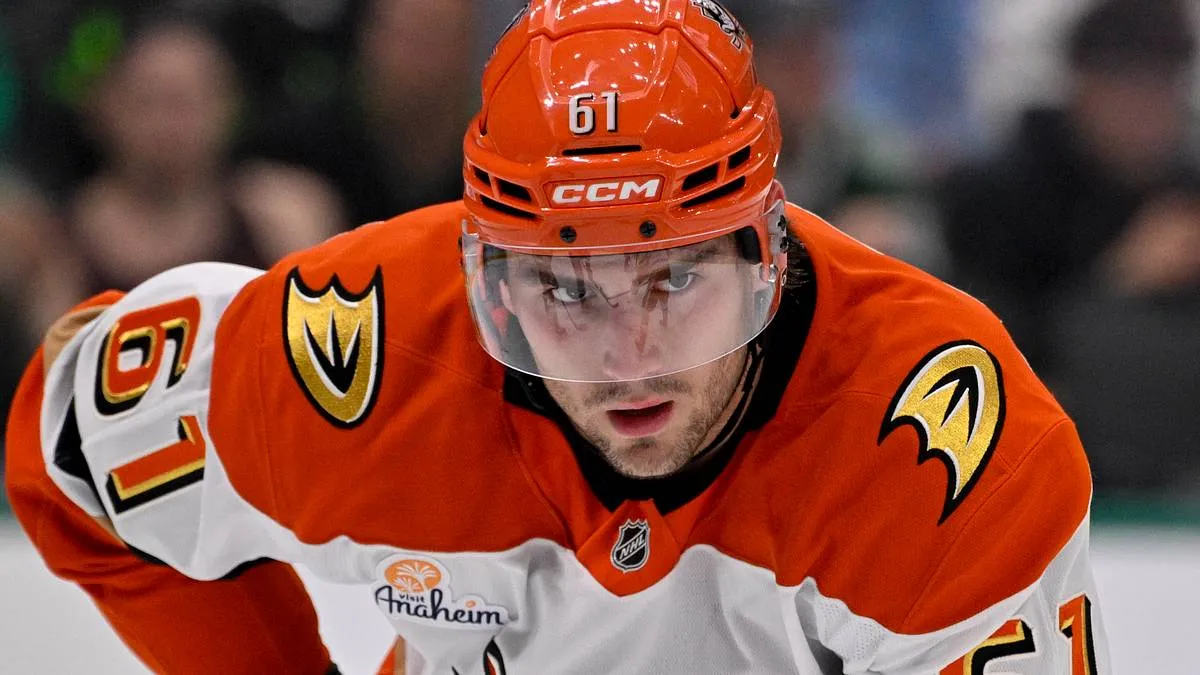
Cutter Gauthier is projected to sign at $16-17 million annually, slotting between Connor Bedard and Leo Carlsson after his agent’s hard line at Carlsson’s level.
Contract Projections Set High Bar
Anthony Di Marco reported on TSN Radio that Gauthier’s number has risen and will likely land between Bedard and Carlsson without reaching the full $18 million offer sheet figure once aimed at Leo Carlsson. The Ducks’ general manager Pat Verbeek faces the immediate task of fitting this new cap hit alongside existing commitments. Gauthier’s agent Kurt Overhardt has earned the nickname Overcharge among league executives for his negotiating stance. This places Gauthier above several established stars while still below Carlsson’s reported threshold. The Ducks retain Gauthier rather than risk an offer sheet battle similar to the one Philadelphia directed at Carlsson.
The financial pressure extends beyond Gauthier. Verbeek must also prepare for Beckett Sennecke’s upcoming extension in two seasons. That timeline creates a 24-month window of overlapping big-ticket young forwards. Anaheim already holds three second-round picks in the 2027 NHL Draft that can serve as trade currency. Those assets become essential if the club needs to shed salary to accommodate the new deal.
Roster Trimming Targets Veterans
Host questions on the same broadcast highlighted likely candidates for movement, including Chris Kreider, Alex Killorn, or Frank Vatrano. Each carries a sizable cap number that could create breathing room. Moving one or more of those forwards would offset part of Gauthier’s hit without touching the core young talent. The Ducks currently project limited cap flexibility once Gauthier signs.
Defense presents a separate challenge. The blue line is expected to lose Olen Zellweger, Radko Gudas, Jacob Trouba, John Carlson, and potentially additional depth. Jackson LaCombe remains one of the stronger young defenders, while Pavel Mintyukov is counted on for growth. Nick Jensen could provide stability but does not replace the collective experience departing. Last season’s defensive inconsistencies were masked by goaltender Lukas Dostal’s performance.
Division Weakness Masks Regression Risk
The Pacific Division’s overall lack of strength offers Anaheim its clearest path back to the playoffs despite internal losses. Di Marco assessed the club as a massive regression candidate once the veteran departures occur. The combination of forward cap maneuvers and defensive turnover creates a thinner roster than the one that competed in 2025-26. Verbeek must balance short-term competitiveness against long-term cap health.
Three 2027 second-round picks give the Ducks draft capital to replenish the blue line. Without swift conversion of those assets into NHL-ready defenders, the 2026-27 group will operate with reduced depth and experience. The trickle-down effect from the Carlsson offer sheet continues to shape Anaheim’s planning.
Frequently Asked Questions
Sources

Par Mike Jonderson
Mike Jonderson is a passionate hockey analyst and expert in advanced NHL statistics. A former college player and mathematics graduate, he combines his understanding of the game with technical expertise to develop innovative predictive models and contribute to the evolution of modern hockey analytics.