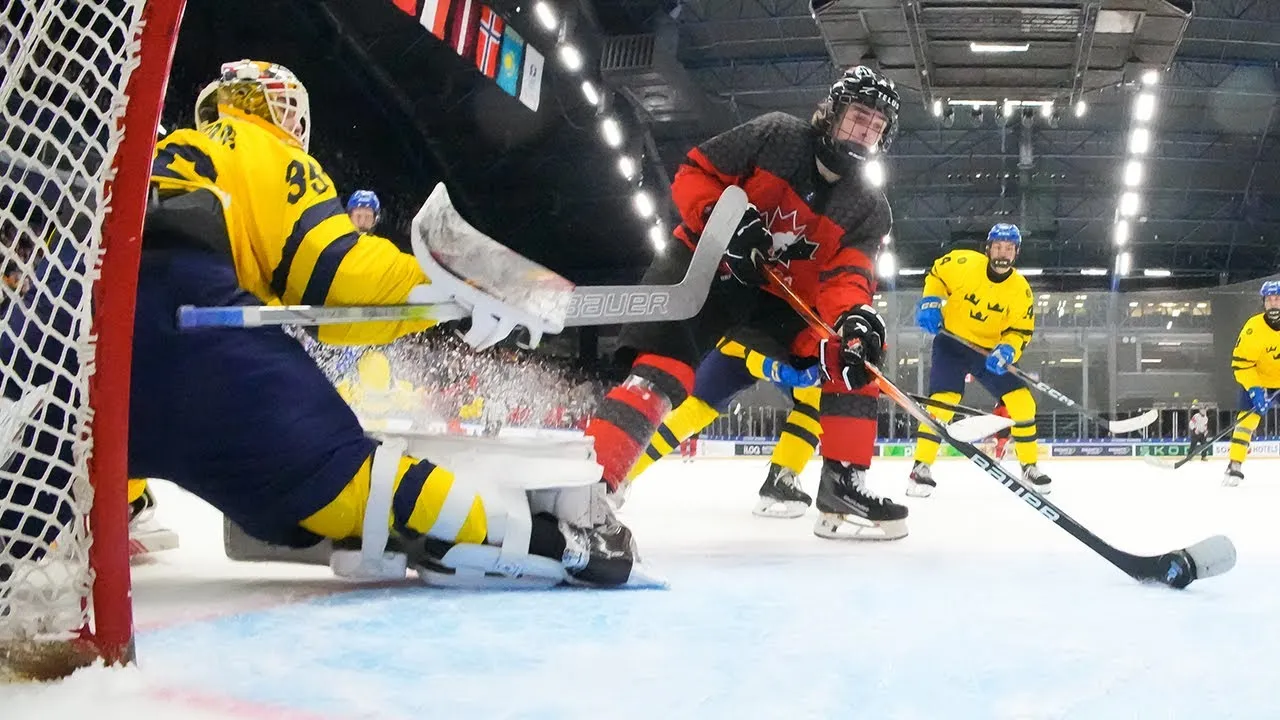
Team Canada, the back-to-back defending champions, suffered a shocking 4-2 quarterfinal loss to Sweden at the 2026 IIHF world under-18 championship in Slovakia. The defeat marks an unceremonious end to their title defense and sends them packing early from the tournament. Despite high expectations, Canada’s lackluster effort against a resurgent Swedish squad exposed critical shortcomings in pace and physicality.[1]
Sweden, who had struggled earlier in the event, flipped the script with a dominant performance. They outworked Canada in key battles and capitalized on open ice. This upset leaves Canadian fans questioning how the powerhouse nation faltered so decisively.
First period: Sweden takes control
Canada started flat, allowing Sweden to dictate the tempo from the opening faceoff. The Swedes won puck races and battles along the boards with ease, showcasing superior speed. Just over two minutes in, Olle Karlsson deflected a shot past goaltender Gavin Betts to open the scoring.
Sweden’s intensity only grew. Ludvig Andersson added a second goal on a crisp passing play later in the frame. Canada managed more shots but fired from poor angles, while Sweden camped in dangerous areas near the net.
The Canadians struggled to match Sweden’s tenacity in open ice. Despite the shot advantage, quality chances eluded them. Betts faced constant pressure, highlighting defensive lapses.
This period set the tone, with Sweden leading 2-0. Canada’s early malaise foreshadowed deeper issues.
Second period controversy and comeback attempt
Canada emerged with more energy in the middle frame, buzzing in the offensive zone. Their first goal came amid debate: Jaxon Jacobson cross-checked a Swede to create a turnover, leading to Mathis Preston’s setup for Maddox Dagenais’ tally. Craig Button called out the missed call on the broadcast.
The period featured wild swings and favorable referee decisions for Canada. They tied the game late when Tynan Lawrence’s shot from below the goal line was deflected by Callum Croskery. Officials reviewed but upheld the goal.
Still, Canada benefited from fortune to enter the third tied at 2-2. Sweden’s skill kept them in it despite the chaos. The tie felt undeserved given the overall flow.
This frame exposed officiating quirks but didn’t mask Canada’s inconsistent execution.
Third period: Momentum slips away
Canada carried early third-period momentum into a power play but failed to convert. Sweden struck back on their own man advantage, with Elton Hermansson finding Nils Bartholdsson in the slot for a 3-2 lead.
The Canadians pushed but generated mostly one-and-done rushes. Sustained pressure never materialized. Sweden defended stoutly, thwarting tie attempts.
Betts made key stops, but the team lacked the desperation needed. Sweden sealed it with an empty-netter, though the source notes 4-2 final.
Canada’s effort waned as fatigue set in. Sweden advanced deservedly to the semifinals.
Key moments and player impacts
- Sweden’s goals: Olle Karlsson (2:xx, deflection), Ludvig Andersson (passing play), Nils Bartholdsson (PP, assisted by Hermansson), fourth unspecified but confirmed 4-2.
- Canada’s goals: Maddox Dagenais (PP setup by Preston after Jacobson cross-check), Callum Croskery (deflection off Lawrence).
- Standouts: Gavin Betts (busy in net), Mathis Preston (playmaker), but overall pace deficient.
In our preview of NHL draft prospects in the quarterfinals, we highlighted Sweden’s depth. Players like Bartholdsson lived up to the hype.[2]
Canada’s top talents showed flashes but couldn’t overcome the group’s flat performance.
What went wrong: Effort and execution
Fundamentally, Canada lacked compete level. They lost too many battles and failed to match Sweden’s speed. Poor shot selection compounded issues.
Coaching adjustments post-preliminaries, including the Slovakia upset, didn’t translate.[3] Historical dominance at U18s makes this sting more.
Fans point to overreliance on skill over grit. Sweden, underdogs, played with house money.
This mirrors occasional Canadian slips, like past junior tournaments.
Road ahead for Canadian hockey
This early exit ends Canada’s U18 medal streak. The men’s world championship remains their last gold shot this season. Rebuilding starts now for 2027.
Young stars like Preston and Dagenais gain valuable lessons. Full tournament details on IIHF site.[4]
Disappointment fuels hunger. Expect a response in future events. Canadian hockey’s pipeline stays deep despite the setback.
Frequently Asked Questions

Par Mike Jonderson
Mike Jonderson is a passionate hockey analyst and expert in advanced NHL statistics. A former college player and mathematics graduate, he combines his understanding of the game with technical expertise to develop innovative predictive models and contribute to the evolution of modern hockey analytics.