












The hockey world was sent into a frenzy late Wednesday night as news broke that the Vancouver Canucks have traded captain Quinn Hughes to the Minnesota Wild in a deal that reshapes the Western Conference playoff picture. The transaction, which multiple sources confirm includes a package of prospects and draft capital heading back to Vancouver, marks the end of Hughes’ brief but memorable tenure wearing the “C” for his childhood team. For a franchise that has struggled to find stability in recent years, this move signals a dramatic shift in philosophy that has fans and analysts scrambling to make sense of the implications.
At just 25 years old, Hughes had established himself as one of the NHL’s premier offensive defensemen, quarterbacking the Canucks’ power play with elite vision and skating ability. His departure creates a massive void on Vancouver’s blue line and in their leadership group, while simultaneously giving Minnesota the transformative puck-moving defenseman they’ve coveted for years. The return package, headlined by top prospect Marco Rossi and a 2025 first-round pick, suggests new Canucks general manager Patrik Allvin is officially hitting the reset button less than two years after taking over hockey operations.
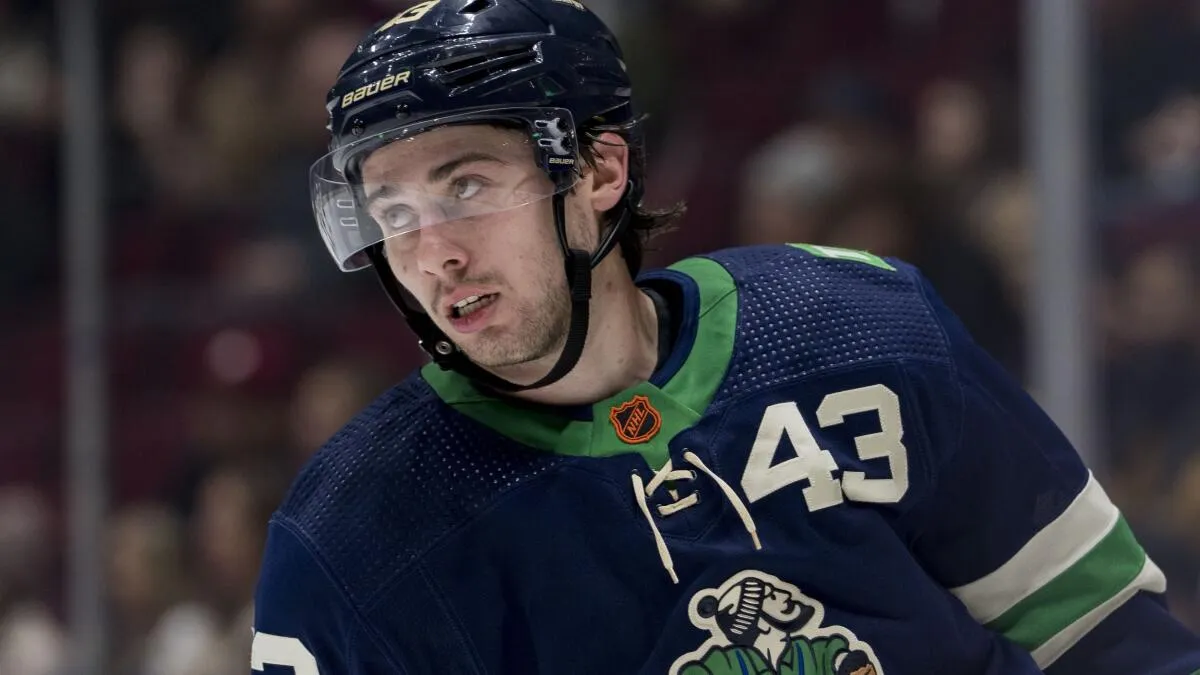
The trade details and what Vancouver receives
The full scope of the trade reveals a classic hockey deal that addresses needs for both franchises. Vancouver ships Hughes and a 2026 third-round pick to Minnesota in exchange for Rossi, defense prospect Daemon Hunt, a 2025 first-round pick, and a 2026 second-round selection. The inclusion of Rossi, who has been stuck behind Minnesota’s deep forward group, gives the Canucks a potential top-six center who can contribute immediately. Hunt, a steady defensive defenseman, helps replenish the organizational depth on the blue line after Hughes’ exit.
Financial considerations played a significant role in this negotiation. Hughes is in the first year of a six-year, $47.1 million contract that carries a $7.85 million cap hit. While reasonable for a player of his caliber, the Canucks have been operating in a tight salary cap environment and reportedly wanted more flexibility moving forward. The Wild, meanwhile, have the cap space to absorb Hughes’ contract after buying out the final years of Ryan Suter’s deal and watching Zach Parise’s contract expire.
The draft pick compensation reflects Vancouver’s commitment to a longer-term rebuild. The 2025 first-round pick is especially valuable in a draft class loaded with high-end talent, potentially giving the Canucks another cornerstone player to build around. Patrik Allvin addressed the media shortly after the trade became official, stating: “This was an extremely difficult decision, but one we believe positions our organization for sustained success. Quinn is a phenomenal player and person, and we wish him the very best in Minnesota.”
How Quinn Hughes fits with the Minnesota Wild
Minnesota’s acquisition of Hughes addresses their most glaring weakness: a lack of elite offensive creativity from the back end. While the Wild have built a solid defensive corps around Jared Spurgeon, Jonas Brodin, and Brock Faber, none possess Hughes’ game-breaking ability with the puck. Hughes’ skating and passing will immediately elevate Minnesota’s transition game and power play, which has languished in the bottom third of NHL efficiency over the past two seasons.
The fit alongside Faber is particularly intriguing. Faber, Minnesota’s rookie sensation, has emerged as a legitimate two-way force with a physical edge that complements Hughes’ skill set perfectly. The pairing would give the Wild a top duo capable of matching up against any line in the league while generating consistent offensive pressure. Head coach John Hynes can now roll out 25-plus minutes of elite puck-moving ability, freeing up Spurgeon and Brodin for slightly reduced minutes and more favorable matchups.
Leadership dynamics will be interesting to monitor in Minnesota’s locker room. Spurgeon has been the Wild’s captain since 2021, and the organization has built its culture around his quiet, lead-by-example approach. Adding Hughes, who was just named Vancouver’s captain last season, creates an unprecedented situation with two recent captains on the same roster. However, sources indicate Hughes was informed he would wear an “A” in Minnesota and that Spurgeon’s role as captain is not in jeopardy. The Wild’s veteran core, including Marcus Foligno and Joel Eriksson Ek, should help ease the transition.
Vancouver’s new direction without their captain
The Canucks now face the daunting task of replacing 60-plus points of offense from the blue line while also identifying their next captain. Oliver Ekman-Larsson, despite his own struggles, becomes the default number one defenseman by default, though his contract remains an anchor on Vancouver’s books. The organization will likely accelerate the development of prospects like Tom Willander and Elias Pettersson (the defenseman), hoping one can develop into a top-pairing option within the next two seasons.
Up front, Rossi’s acquisition provides much-needed center depth behind Elias Pettersson and J.T. Miller. The 22-year-old has flashed brilliance in limited NHL action but struggled to find consistent ice time behind Minnesota’s established veterans. In Vancouver, he projects as the second-line center, potentially skating between Andrei Kuzmenko and Brock Boeser. This role gives him the opportunity to prove he can be a cornerstone piece of the Canucks’ next competitive window.
The leadership vacuum left by Hughes’ departure cannot be overstated. He was hand-picked by the organization to wear the “C” precisely because of his character and connection to the fan base. J.T. Miller, who has alternated between brilliant and erratic during his Canucks tenure, now becomes the favorite to assume captaincy duties. Miller’s intensity and passion are undeniable, though questions remain about his consistency and ability to be the face of a franchise. Elias Pettersson represents another option, though his reserved demeanor and upcoming contract negotiation make that less likely.
Fan reaction and long-term implications
Social media exploded within minutes of the trade announcement, with Canucks fans expressing a mixture of shock, anger, and resignation. The hashtag #ThankYouQuinn began trending across Canada as supporters shared memories of Hughes’ overtime winners and dazzling assists. Longtime season ticket holder and Vancouver resident Sarah Chen captured the sentiment of many: “I was at his first NHL game. He was supposed to be the homegrown star who brought us a Cup. This feels like 2011 all over again—watching our heart and soul leave town.”
Minnesota fans, conversely, greeted the news with cautious optimism. The Wild have made the playoffs consistently but have lacked the high-end talent to advance deep into the postseason. Hughes represents the type of difference-maker that can swing a playoff series, though some supporters worry about the cost of surrendering Rossi and multiple high draft picks. The State of Hockey now has a legitimate superstar to build its marketing around, something the franchise has lacked since the departure of Marian Gaborik over a decade ago.
From a league-wide perspective, this trade resets expectations in the Central Division. Colorado, Dallas, and Winnipeg now face a significantly improved Minnesota squad that can match their offensive firepower. The Canucks, meanwhile, appear to be conceding the next two to three seasons in pursuit of a more sustainable model. This deal could influence how other borderline contenders approach the trade deadline, potentially triggering a domino effect of moves as teams recalibrate their competitive windows.
Market ripple effects and what it means for the NHL trade landscape
The Hughes trade immediately becomes the new benchmark for blockbuster deals involving star defensemen. Any team now looking to move a franchise blueliner—whether it’s Ottawa with Thomas Chabot or Buffalo with Rasmus Dahlin—will point to this package as the starting point for negotiations. The combination of a high-end prospect, multiple draft picks, and a roster player establishes a clear market value for elite puck-movers on long-term contracts.
For Vancouver, this move suggests a willingness to endure short-term pain for long-term gain that the organization has historically avoided. Previous regimes made desperation moves to stay competitive, mortgaging future assets for marginal upgrades. Allvin’s approach mirrors what we’ve seen in Detroit and Ottawa, where patient rebuilding through the draft eventually yields sustainable contention. The true test will be whether ownership and the fan base have the stomach for several more seasons of mediocrity while prospects develop.
Minnesota’s boldness should be commended in a league where many teams operate in perpetual mediocrity. Rather than remaining content with a solid playoff team, general manager Bill Guerin pushed his chips to the center of the table, acquiring a player who transforms their identity. If Hughes elevates the Wild to legitimate Cup contenders, this trade will be remembered as the moment Minnesota’s championship window truly opened. If not, it could set the franchise back years—a gamble Guerin clearly felt was worth taking with his veteran core still in its prime.
The Canucks trade captain Quinn Hughes to Minnesota Wild represents a watershed moment for both franchises and potentially the entire Western Conference. Vancouver embraces a full-scale rebuild that prioritizes draft capital and prospect development over short-term success, while Minnesota acquires the elite talent necessary to elevate from playoff participant to championship contender. The coming seasons will determine whether this deal becomes a cautionary tale or a blueprint for how smart teams navigate the complexities of the modern NHL landscape. For now, both organizations move forward with conviction, knowing the eyes of the hockey world will be watching closely to judge the ultimate winner of this stunning blockbuster.
Frequently Asked Questions

Par Mike Jonderson
Mike Jonderson is a passionate hockey analyst and expert in advanced NHL statistics. A former college player and mathematics graduate, he combines his understanding of the game with technical expertise to develop innovative predictive models and contribute to the evolution of modern hockey analytics.