











The Carolina Hurricanes are navigating an unusual situation that has become both a luxury and a logistical puzzle. With three capable goaltenders vying for ice time in Raleigh, the team has found itself managing what many organizations would envy: too much talent between the pipes. The emergence of waiver claim Brandon Bussi, combined with Pyotr Kochetkov’s return from injury and veteran Frederik Andersen’s steady presence, has created a three-goalie rotation that challenges conventional NHL roster management.
This depth has transformed what was once considered a potential weakness into one of Carolina’s greatest strengths heading into the 2025-26 season. While most teams struggle to find two reliable netminders, the Hurricanes are experimenting with a system that keeps all three goalies sharp while maximizing performance and protecting their aging veteran from the wear and tear of an 82-game schedule.
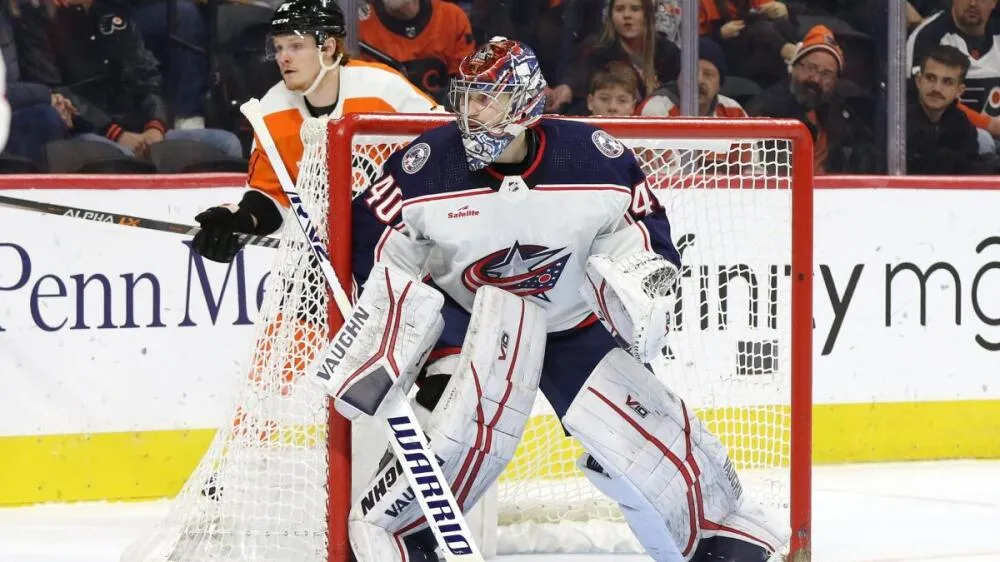
How the Carolina Hurricanes three-goalie rotation came together
The foundation of this unique situation began when the Hurricanes claimed Brandon Bussi off waivers from the Florida Panthers on October 5. Initially viewed as insurance after Toronto claimed Cayden Primeau from Carolina’s waiver wire the following day, Bussi has exceeded all expectations. The 27-year-old southpaw from Sound Beach, Long Island, wasted no time making his case for meaningful playing time.
In his NHL debut against the San Jose Sharks on October 14, Bussi stopped 16 shots in a 5-1 victory, announcing his arrival with authority. Through his first four games, he posted a 3-1 record with a .916 save percentage and a 2.25 goals-against average. These aren’t just serviceable numbers for a third-string goalie—they represent legitimate starting-caliber performance that forced the coaching staff to reconsider their entire rotation strategy.
Goaltending coach Paul Schonfelder had targeted Bussi during the summer, recognizing the potential that Boston had originally signed and Florida briefly retained. When the opportunity arose to claim him, the Hurricanes pounced, and that decision has already paid dividends. As Schonfelder noted during the preseason, Bussi was on his list of desired acquisitions, making the waiver claim feel like destiny rather than desperation.
The timing couldn’t have been better. With Kochetkov sidelined with an injury to start the season and Andersen’s well-documented health concerns, Bussi stepped into the breach and seized his moment. His performances haven’t just kept the Hurricanes competitive—they’ve raised questions about how the organization will manage all three goaltenders once everyone is healthy.
Frederik Andersen’s role in the Carolina Hurricanes three-goalie rotation
Despite any controversy swirling around the crease, Frederik Andersen remains the unquestioned number one when healthy. His experience and track record with Carolina have earned him that distinction, even after a season that saw him post a .899 save percentage in 22 regular-season starts. Context matters: Andersen rebounded in the playoffs with a .907 save percentage and emerged as one of the team’s most reliable performers during their postseason run.
Since joining the Hurricanes, Andersen has delivered consistently strong playoff performances, compiling a 2.16 goals-against average and .909 save percentage across 32 postseason games. His only truly poor series came against the New York Rangers in 2023; otherwise, he’s been the steady presence Carolina has needed when the stakes are highest. That reliability in critical moments cannot be overlooked or easily replaced.
The challenge with Andersen isn’t his ability—it’s his availability. Over the past two seasons, he’s missed more than 70 games due to various ailments, including knee surgery, a blood clotting issue that required extensive recovery time, and an MCL injury. At 36 years old, the wear and tear of an NHL season takes longer to recover from, making load management not just beneficial but essential for the Hurricanes’ playoff aspirations.
This is where the three-goalie rotation becomes strategic rather than merely situational. By having both Kochetkov and Bussi available to handle significant workloads, Carolina can carefully manage Andersen’s starts throughout the regular season. The goal isn’t just to keep him fresh—it’s to ensure he’s healthy and sharp when April arrives. The Hurricanes have learned from experience that a rested Andersen in the playoffs is worth more than an overworked Andersen who limps to the finish line.
The veteran’s presence also provides invaluable mentorship for both younger goaltenders. His playoff experience and calm demeanor under pressure set the standard for what Carolina expects from the position. Frederik Andersen’s performance against Colorado demonstrated his ability to deliver when called upon, making 44 saves in a crucial contest that went to a shootout.
Pyotr Kochetkov’s response to competition in the rotation
For Pyotr Kochetkov, this season represents a crossroads. Once viewed as the heir apparent to Carolina’s starting job, his inconsistent performances have created doubt about his readiness for that role. Last season’s .897 save percentage and 2.60 goals-against average were concerning steps backward after a promising 2023-24 campaign that saw him post a .911 save percentage and 2.33 goals-against average.
When Kochetkov returned from injury, the pressure was palpable. Bussi had performed admirably in his absence, and questions about the Russian netminder’s future in Carolina were beginning to surface. His response? A masterful 3-0 shutout against the New York Rangers in his first game back, becoming the first Hurricanes goaltender to blank an opponent all season. He couldn’t have scripted a better return.
That performance demonstrated Kochetkov’s talent ceiling—the potential that made Carolina believe he could be their franchise goaltender. The challenge has always been consistency. Can he string together quality starts game after game, week after week? The three-goalie rotation might actually help him achieve that. With less pressure to carry the full load and more opportunities to reset between appearances, Kochetkov could find the rhythm that has eluded him during stretches of heavy workload.
The competition from Bussi might also provide the motivational spark Kochetkov needs. No longer is the backup role automatically his when Andersen needs rest. He must earn his ice time, and that internal competition often brings out the best in athletes. The Hurricanes will be watching closely to see which version of Kochetkov emerges: the promising young goaltender with elite reflexes and athleticism, or the inconsistent netminder who struggles to find confidence.
At 26 years old and in the third year of his four-year contract, this season is critical for Kochetkov’s long-term future with the organization. Strong, consistent play will cement his status as Andersen’s successor. Continued struggles could see him supplanted by Bussi or another emerging option from Carolina’s deep goaltending pipeline.
Strategic advantages of the Carolina Hurricanes three-goalie rotation
The unconventional nature of carrying three NHL-caliber goaltenders presents both challenges and significant strategic advantages. Most notably, it allows Carolina to play matchups and hot hands rather than adhering to rigid starter-backup designations. If Bussi continues his strong play, he can handle games against lower-tier opponents while saving Andersen and Kochetkov for divisional rivals and playoff contenders.
This flexibility extends to back-to-back situations, where having three viable options means no goaltender needs to play both games of a set. The physical and mental toll of playing consecutive nights is well-documented, often resulting in diminished performance in the second game. With three capable netminders, Carolina can ensure fresh legs and sharp minds every night, regardless of the schedule.
The rotation also provides insurance against the injury bug that has plagued Andersen in recent years. Rather than scrambling to sign emergency backups or rushing prospects from the AHL when injuries occur, the Hurricanes have built-in depth that can seamlessly step in without disrupting team chemistry or performance. Carolina’s matchup with Dallas highlighted how injuries can force difficult roster decisions, making depth at every position invaluable.
From a development perspective, keeping Bussi on the NHL roster rather than in the AHL accelerates his growth. Practicing with NHL talent daily, studying video with NHL coaching staff, and experiencing the speed and intensity of the highest level will benefit his long-term trajectory. Even if he’s not playing every night, the immersive environment provides lessons that can’t be replicated in the minor leagues.
The psychological impact on opponents shouldn’t be dismissed either. Teams preparing to face Carolina must account for three distinctly different goaltending styles. Andersen’s size and positioning, Kochetkov’s athleticism and aggression, and Bussi’s lateral mobility each present unique challenges. This variety prevents opponents from game-planning specifically against one goaltender’s tendencies.
Potential challenges with managing three goalies
While the benefits are substantial, the Carolina Hurricanes three-goalie rotation isn’t without complications. The most obvious concern is keeping all three netminders sharp when playing time must be divided. Goaltenders typically need regular work to maintain timing, positioning, and confidence. Extended stretches on the bench can lead to rust and mental frustration.
This challenge is particularly acute for Kochetkov and Bussi, who are at different stages of their careers but both need consistent action to develop and prove themselves. Kochetkov requires regular starts to build the consistency that has eluded him, while Bussi is still establishing himself as an NHL-caliber goaltender. Sitting for extended periods helps neither player’s development or evaluation.
The salary cap implications also present complications, though less severe in the short term. With Andersen on a reasonable $2.75 million deal and Kochetkov carrying a cap hit under $3 million, the immediate financial burden is manageable. However, if Bussi continues performing well, he’ll command a significant raise when his current contract expires. Carolina will eventually need to make decisions about which goaltenders to retain and which to move.
Roster flexibility is another consideration. Carrying three goaltenders means one fewer roster spot for a skater, limiting depth at forward or defense. In a league where injuries are inevitable and lineup versatility is valued, dedicating three roster spots to goaltenders constrains other options. The Hurricanes must believe the goaltending depth is worth the trade-off elsewhere.
Managing egos and expectations is perhaps the subtlest but most important challenge. Professional athletes are competitors who want to play. Telling a goaltender who just posted a shutout that he won’t start the next three games is difficult. Maintaining morale and keeping all three netminders engaged and positive requires exceptional communication from the coaching staff.
The future of Carolina’s goaltending situation
The current three-goalie arrangement is almost certainly temporary, though how long it persists remains uncertain. Several scenarios could resolve the situation naturally. If one goaltender struggles significantly, the decision makes itself. If injuries occur—always a possibility with Andersen’s history—the depth becomes necessary rather than excessive.
Trade possibilities also loom on the horizon. Goaltending is a premium asset around the league, and Carolina possesses three tradeable pieces. If a team faces a goaltending crisis or wants to upgrade before the playoffs, the Hurricanes could package one of their netminders for assets that strengthen other areas. Bussi, as the newest acquisition, might be the most logical trade candidate if his value continues rising.
Long-term, Andersen’s age and contract status make him the most transient piece of this puzzle. His one-year deal expires after this season, and while he could return on another short-term contract, Father Time remains undefeated. The Hurricanes are likely using this season to evaluate whether Kochetkov or Bussi (or both) can become the foundation of their goaltending future.
The organizational depth extends beyond the NHL roster. With Cayden Primeau handling AHL duties in Chicago alongside Amir Miftakov, Carolina has built a goaltending pipeline that can sustain roster turnover and injury losses. This depth reflects a broader organizational philosophy: you can never have too much goaltending talent, and investing in the position pays dividends when playoff success requires elite netminding.
For now, the Hurricanes are embracing their embarrassment of riches. Head coach Rod Brind’Amour has shown willingness to ride hot hands and make tactical adjustments based on performance rather than preconceived notions. If the three-goalie rotation continues producing results, he’ll have no incentive to abandon it simply because it’s unconventional.
The Carolina Hurricanes three-goalie rotation represents a fascinating experiment in roster construction and game management. While most teams scramble to find one reliable netminder, Carolina is navigating the complexities of having three. It’s a problem most organizations would love to have, and if managed correctly, it could provide the competitive edge that carries Carolina through the regular season healthy and sharp, ready to make a deep playoff run. The next few months will determine whether this unusual approach is sustainable genius or a temporary solution to unique circumstances. Either way, it’s transformed one of Carolina’s question marks into one of their greatest strengths.

Par Mike Jonderson
Mike Jonderson is a passionate hockey analyst and expert in advanced NHL statistics. A former college player and mathematics graduate, he combines his understanding of the game with technical expertise to develop innovative predictive models and contribute to the evolution of modern hockey analytics.