






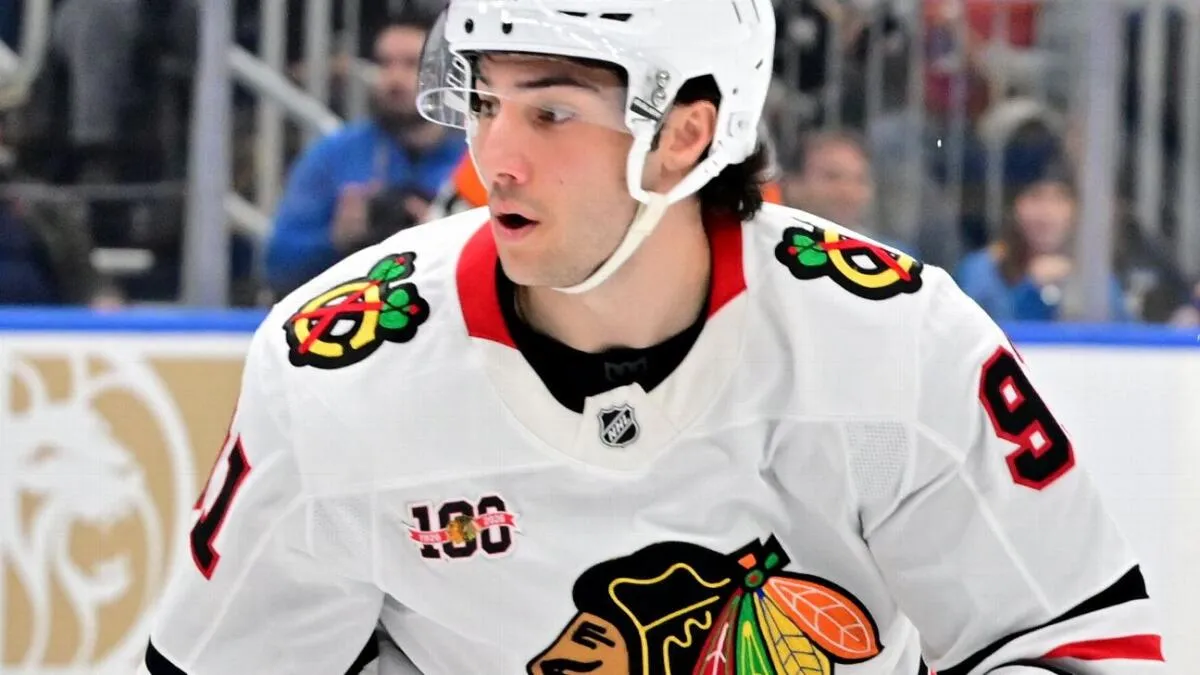
The Chicago Blackhawks placed promising young center Frank Nazar on injured reserve on December 28, a retroactive move dating back to December 20 when the 21-year-old took a puck to the face during a game against the Ottawa Senators. The injury comes at a particularly challenging time for the rebuilding franchise, which continues to battle through a difficult season while managing a growing list of wounded players.
The injury details: How Frank Nazar got hurt
The incident occurred during the Blackhawks’ December 20 matchup with the Senators, when Nazar was struck in the face by a puck. While hockey players are accustomed to physical punishment, facial injuries from puck impacts can be particularly severe, often resulting in broken bones, dental damage, or concussions. The team has not released specific details about the extent of Nazar’s injuries, but the decision to place him on IR retroactively suggests the damage was significant enough to warrant an extended recovery period.
Coach Jeff Blashill and the medical staff likely took a cautious approach with the young forward, especially given his importance to the franchise’s future. The retroactive placement allows the team to maximize Nazar’s recovery time while managing roster flexibility, a common practice in the NHL when a player’s injury status is evaluated over several days. The move ensures he will miss at least seven days from the original injury date before becoming eligible to return.
Frank Nazar’s breakout season interrupted
Before the injury, Nazar was enjoying a productive sophomore campaign, establishing himself as one of Chicago’s emerging young stars. The Detroit native, selected 13th overall in the 2022 NHL Draft, had already compiled six goals and 15 assists through 33 games, ranking fourth on the team with 21 points. His development represented a bright spot in another challenging season for the rebuilding Blackhawks.
Nazar’s chemistry with linemates and his ability to contribute in all situations made him an invaluable piece of Chicago’s forward rotation. The 5-foot-10 center brought speed, skill, and tenacity to a lineup that often lacked offensive punch beyond its top line. His progression from rookie to reliable NHL contributor had been evident in his increased ice time and responsibility, particularly on special teams where he had begun to earn trust from the coaching staff.
Domino effects on the Blackhawks lineup
The timing of Nazar’s injury exacerbates an already dire situation for Chicago. Leading scorer Connor Bedard remains sidelined with an upper-body injury until at least early January, creating a massive void at the top of the lineup. With both Bedard and Nazar out simultaneously, the Blackhawks have lost their top two point-producing centers, forcing the team to lean heavily on veterans and inexperienced players to fill the gap.
The absence of these young talents puts additional pressure on returnees like Nick Foligno to provide not just leadership but also offensive production. Foligno’s return against the Pittsburgh Penguins marked his first game since November 15, and while he scored a goal in his comeback, the team still suffered a 7-3 defeat. The 38-year-old captain’s experience and physical presence are welcome additions, but he cannot single-handedly replace the skill and creativity that Nazar and Bedard bring to the lineup.
Depth concerns tested
The Blackhawks’ forward depth now faces its sternest examination of the season. With Nazar on IR, Bedard healing, and Ilya Mikheyev missing time for the birth of his child, Chicago has been forced to dip into its organizational depth. The team’s inability to ice a consistent lineup has contributed to its struggles, including a six-game losing streak that was only recently snapped in a shootout victory in Dallas.
The situation highlights the challenges of rebuilding while trying to remain competitive. Chicago’s prospect pipeline, while improved in recent years, still lacks ready-made NHL replacements who can step in and produce immediately. This forces the coaching staff to rely on AHL call-ups or press box regulars into larger roles than they are perhaps prepared for, leading to predictable inconsistencies in performance and results.
Recovery timeline and what it means for Chicago
The Blackhawks expect Nazar to miss approximately four weeks with his injury, a timeline that would have him returning in late January. This prognosis suggests the injury, while significant, is not season-ending. However, any head or facial injury carries inherent risks, and the team will undoubtedly proceed cautiously with a player they view as a cornerstone of their future.
The four-week absence means Nazar will miss crucial games as Chicago tries to find its footing in the new year. The Blackhawks’ schedule includes several divisional matchups and games against Eastern Conference opponents that could have long-term implications for draft positioning and organizational morale. While losing may improve lottery odds, the franchise also needs its young players to develop properly and learn to compete at the NHL level.
Navigating the injury crisis
The Blackhawks find themselves in a difficult position as 2024 winds down. The team must balance short-term competitiveness with long-term player health and development. For Nazar specifically, ensuring he returns only when fully healthy is paramount, even if it means missing additional time beyond the initial four-week estimate. Rushing young players back from injury can have lasting consequences on both performance and confidence.
The organization has invested significant resources in Nazar’s development since drafting him, and protecting that investment means being patient with his recovery. The team’s medical staff will monitor his progress closely, likely requiring him to complete full contact practices and receive clearance from both team doctors and outside specialists before returning to game action.
The bigger picture for Chicago’s rebuild
Injuries to key young players like Nazar and Bedard, while disappointing, are part of the growing pains inherent in any rebuild. These setbacks test the organization’s depth, patience, and commitment to its long-term vision. The Blackhawks must resist the temptation to accelerate their timeline or make short-sighted moves that compromise future flexibility.
The silver lining is that adversity creates opportunities for other prospects to gain valuable NHL experience. Players who might otherwise spend the entire season in the AHL now have a chance to prove they belong at hockey’s highest level. This trial by fire, while potentially painful in the short term, accelerates development and provides the front office with better information about which players are part of the solution moving forward.
What this means for the Blackhawks’ season outlook
With Nazar joining Bedard on IR, Chicago’s hopes for a second-half surge appear increasingly remote. The team currently sits at the bottom of the Central Division, and losing two of its most dynamic offensive players makes climbing the standings a monumental challenge. While Foligno’s return provides leadership and stability, the Blackhawks simply lack the firepower to consistently compete against deeper, healthier opponents.
The focus now shifts to player development and evaluating the organization’s depth. Coach Blashill and his staff must find ways to keep the team competitive while giving younger players meaningful ice time. This delicate balancing act requires maintaining a positive culture in the locker room despite mounting losses, ensuring that confidence doesn’t erode completely.
Lessons from Nazar’s injury situation
The Blackhawks’ handling of Nazar’s injury demonstrates proper protocol for managing young talent. By placing him on IR retroactively and establishing a clear timeline, the organization shows it’s prioritizing his long-term health over short-term needs. This approach builds trust with players and agents, reinforcing Chicago’s reputation as a player-friendly organization that does right by its athletes.
The situation also underscores the physical toll of an NHL season, particularly for younger players still adapting to the grind of an 82-game schedule. Nazar’s injury serves as a reminder that development isn’t always linear, and setbacks are part of the journey for even the most promising prospects. How he responds to this adversity will be telling about his maturity and readiness to become a core piece of the Blackhawks’ next competitive team.
Moving forward: The path ahead for Chicago
As the Blackhawks navigate this challenging stretch, the organization must keep its eyes on the bigger picture. The 2024-25 season was never about making the playoffs but rather about development, evaluation, and building a foundation for sustained success. Nazar’s injury, while inconvenient, doesn’t derail those objectives.
The coming weeks will test Chicago’s resolve and depth, but they also present opportunities for growth. When Nazar eventually returns, he’ll rejoin a team that has been battle-tested by adversity and, ideally, is on more solid footing. His absence makes the heart grow fonder for a fan base eager to see their young stars healthy and thriving together, and his eventual comeback will be a welcome sight for a franchise hoping better days are ahead.
Frequently Asked Questions

Par Mike Jonderson
Mike Jonderson is a passionate hockey analyst and expert in advanced NHL statistics. A former college player and mathematics graduate, he combines his understanding of the game with technical expertise to develop innovative predictive models and contribute to the evolution of modern hockey analytics.