







The Chicago Blackhawks delivered one of their most complete performances of the season in a dominant 5-1 victory over the Detroit Red Wings in a Sunday matinee at Little Caesars Arena. While the offensive output grabbed headlines with goals from Connor Bedard, Teuvo Teräväinen, Tyler Bertuzzi, André Burakovsky, and rookie Oliver Moore, it was the penalty kill unit that truly stole the show. Facing a relentless Red Wings power play that generated numerous chances throughout the afternoon, Chicago’s special teams rose to the occasion when it mattered most.
The win closed out a successful six-game road trip for the Blackhawks and showcased a level of discipline and determination that has become increasingly evident as the season progresses. For Detroit, the loss marked their third consecutive defeat and exposed critical flaws in their ability to capitalize on power play opportunities—a deficiency that would prove costly as they failed to convert on all five chances with the man advantage.
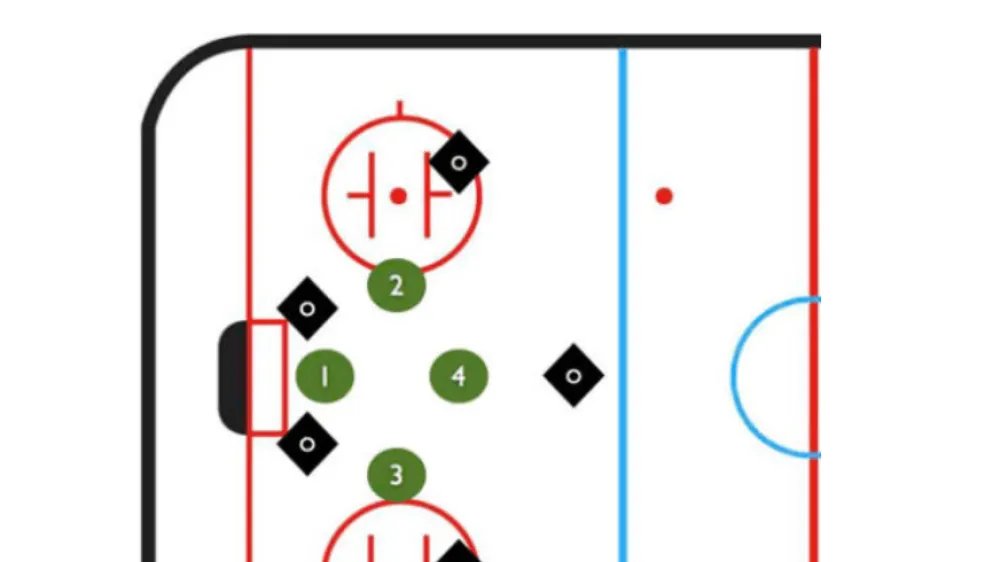
Chicago Blackhawks penalty kill 5-1 win over Detroit Red Wings: Special teams excellence defines the afternoon
The Blackhawks’ penalty kill unit faced its toughest test of the game early in the second period when they had to defend against a carryover power play from the first period. Detroit came out aggressively, moving the puck with purpose and generating quality scoring chances, but Chicago’s penalty killers maintained their structure and discipline. Goaltender Arvid Söderblom anchored the effort with several crucial saves, but it was the work of the forwards and defensemen in front of him that disrupted Detroit’s rhythm.
Connor Murphy, despite taking two penalties in the first period alone, remained a stalwart defensive presence when on the ice at even strength. His physical play set the tone for a Blackhawks team that refused to be intimidated in the hostile road environment. The penalty kill unit effectively clogged shooting lanes, forced perimeter passes, and cleared rebounds with urgency—fundamental aspects of successful penalty killing that Chicago executed to near perfection.
The most critical sequence came late in the second period when Tyler Bertuzzi received a four-minute penalty for roughing and unsportsmanlike conduct against Dylan Larkin. This extended power play gave the Red Wings a golden opportunity to tie or take the lead heading into the final frame. Instead, Chicago’s penalty killers dug in, blocking shots and winning crucial faceoffs to kill momentum. According to The Hockey Writers, the Red Wings managed just 14 shots in the second period despite the extended power play time, a testament to Chicago’s defensive commitment.
By the time the buzzer sounded to end the second period, the Blackhawks had successfully killed off all Detroit power play attempts. The Red Wings’ frustration was palpable, and their inability to convert on these prime opportunities would ultimately define the outcome. Chicago entered the third period with a 2-1 lead and growing confidence that their special teams could withstand any challenge Detroit threw at them.
Arvid Söderblom’s heroics between the pipes anchor the Chicago Blackhawks penalty kill 5-1 win over Detroit Red Wings
While penalty killing is a collective effort, goaltender Arvid Söderblom deserves special recognition for his performance against his former team. The Swedish netminder faced 35 shots throughout the afternoon and made 34 saves, with many of his most impressive stops coming during Detroit’s power play opportunities. His positioning was impeccable, and his ability to track the puck through traffic gave his penalty killers the confidence to be aggressive in challenging shooters.
One of the game’s most memorable moments came in the first period when Söderblom denied his younger brother, Elmer Söderblom, on a prime scoring chance. The sequence, which went viral on social media, highlighted both the personal stakes for Arvid and his unwavering focus on the task at hand. But it was his work during Detroit’s five power plays that truly demonstrated his value to this Blackhawks team.
On multiple occasions, Söderblom faced two-on-one rushes and odd-man situations that could have changed the complexion of the game. His most crucial save came on a dynamic play involving Dylan Larkin and Lucas Raymond, where he read the passing play perfectly and made himself big to deny the shot. These are the types of saves that energize a penalty kill unit and deflate an opposing power play.
The third period saw Detroit desperately trying to claw back into the game, outshooting Chicago 21-5 in the final frame. Söderblom remained calm under the barrage, making save after save to preserve the lead and allow his teammates to add insurance markers. His performance was a reminder that even the best penalty kill units need stellar goaltending to truly excel, and on this afternoon, Chicago had exactly that.
Detroit Red Wings power play struggles compound in the Chicago Blackhawks penalty kill 5-1 win over Detroit Red Wings
For the Detroit Red Wings, the inability to capitalize on five power play opportunities represented a devastating missed opportunity. Coming into the game having scored just one goal in their previous two losses, the Red Wings desperately needed their special teams to provide a spark. Instead, their power play unit looked disjointed and predictable, struggling to generate high-danger scoring chances against Chicago’s aggressive penalty kill.
Dylan Larkin, who had atoned for his early tripping penalty by scoring Detroit’s lone goal at even strength, couldn’t replicate that success on the power play. Lucas Raymond, typically a catalyst for Detroit’s offensive attack, found himself frustrated by Chicago’s tight checking and shot-blocking. The Red Wings’ recent shootout victory over the San Jose Sharks showcased their ability to manufacture offense in tight situations, but none of that creativity was evident against the Blackhawks.
The four-minute power play in the second period should have been a turning point. With momentum on their side and desperation setting in, Detroit needed to execute. Instead, they settled for perimeter shots and failed to establish net-front presence against Söderblom. The Blackhawks’ penalty killers won battles for loose pucks and successfully cleared the zone on multiple occasions, forcing Detroit to reset and waste precious seconds.
By the time Simon Edvinsson took a penalty in the third period that led to Bertuzzi’s goal making it 3-1, the game was effectively over. Detroit received one more power play opportunity when Louis Crevier was called for tripping, but the outcome was already determined. The Red Wings finished 0-for-5 on the power play, a stark contrast to their successful penalty killing in previous games and a primary reason for their lopsided defeat.
The Chicago Blackhawks penalty kill 5-1 win over Detroit Red Wings showcases young core development
Beyond the immediate impact on the standings, this victory provided evidence of the Chicago Blackhawks’ growth as a young team learning to win in different ways. Connor Bedard’s power play goal less than a minute into the game set the tone, but it was the mature, defensively responsible play throughout the remainder of the contest that impressed most. For a franchise in transition, these are the types of complete performances that build winning culture.
The fact that Chicago could withstand Detroit’s third-period surge—being outshot 21-5 yet maintaining composure—speaks to developing playoff-caliber habits. The Red Wings’ impressive five-game winning streak to start the 2025-26 season demonstrated what sustained excellence looks like, and Chicago’s ability to defeat them convincingly shows the Blackhawks are trending in the right direction.
Tyler Bertuzzi’s redemption goal after his penalty was particularly significant. Rather than allowing the penalty to define his afternoon, Bertuzzi responded with a crucial insurance marker that extended Chicago’s lead to two goals. This mental toughness is exactly what head coach Luke Richardson has been trying to instill in his young roster.
The exclamation point came when rookie Oliver Moore scored his first NHL goal with just 16 seconds remaining, a moment of pure joy that encapsulated the positive energy surrounding this Blackhawks team. While the empty-net goal from Burakovsky had already sealed the victory, Moore’s milestone marker provided a fitting conclusion to an afternoon defined by collective effort and special teams excellence.
Looking ahead after the Chicago Blackhawks penalty kill 5-1 win over Detroit Red Wings
As the Blackhawks prepare to return home to face the New Jersey Devils, they do so with renewed confidence in their penalty kill unit. Currently operating at an 80.8 percent efficiency rate this season, Chicago’s special teams continue to improve and provide a foundation for competitive hockey. The ability to shut down opposing power plays becomes increasingly important as the schedule intensifies and playoff races tighten.
For Detroit, the loss serves as a harsh reminder that special teams can determine outcomes regardless of shot totals and territorial play. The Red Wings will need to regroup before hosting the Anaheim Ducks, with particular attention paid to their power play execution. Generating 35 shots against a rebuilding opponent should yield more than one goal, and coach Derek Lalonde will undoubtedly emphasize the need for more traffic in front of the net and quicker puck movement.
The rivalry between these Original Six franchises remains compelling even during transitional periods for both organizations. Chicago’s dominant performance provides a blueprint for success built on goaltending, defensive structure, and opportunistic offense. As both teams navigate the challenging Central Division landscape, games like this take on added significance in the race for playoff positioning.
This complete effort from the Blackhawks—featuring a perfect 5-for-5 penalty kill, stellar goaltending from Arvid Söderblom, and timely scoring from throughout the lineup—represents exactly the type of performance that builds momentum and belief within a young roster. Whether Chicago can maintain this level of play remains to be seen, but for one Sunday afternoon in Detroit, everything clicked at precisely the right moments.

Par Mike Jonderson
Mike Jonderson is a passionate hockey analyst and expert in advanced NHL statistics. A former college player and mathematics graduate, he combines his understanding of the game with technical expertise to develop innovative predictive models and contribute to the evolution of modern hockey analytics.