


The Milano Cortina 2026 Winter Olympics men’s ice hockey quarterfinal between Czechia and Canada is delivering edge-of-your-seat action. Played on February 18 at the Milan arena, this win-or-go-home clash pits the Group A top seed Canada against third-place Czechia. It’s a rematch after Canada’s dominant 5-0 group stage victory last week.[1]
Czechia has flipped the script so far, leading 2-1 heading into the second intermission. Stars from both sides are lighting up the scoreboard, with power plays proving decisive. Fans are glued to ESPN’s live coverage for every pulse-pounding moment.[2]
Canada entered as heavy favorites, boasting NHL superstars like Connor McDavid and Nathan MacKinnon. Yet Czechia’s NHL contingent, led by David Pastrnak, has risen to the occasion in this high-stakes elimination game.
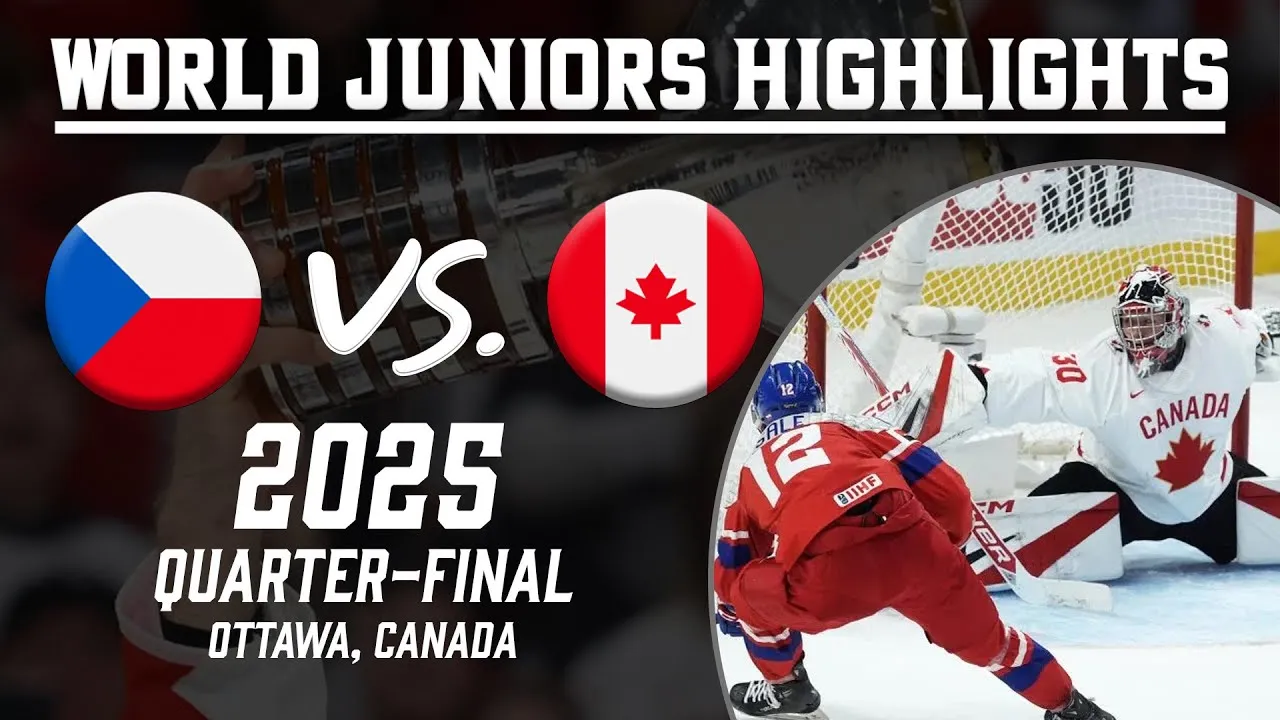
First period: Czechia surges ahead
The opening frame set a frantic tone. Canada struck first at 13:05 when Macklin Celebrini buried a rebound, assisted by McDavid, to make it 1-0.[3]
Czechia responded swiftly. At 14:49, Pastrnak rifled a power-play one-timer past Jordan Binnington, with assists from Filip Hronek and Roman Cervenka, tying the game at 1-1.
Momentum swung fully to the Czechs late in the period. Lukas Sedlak poked home a loose puck at 18:34, getting helpers from Cervenka and Radko Gudas, putting Czechia up 2-1.
Shots favored Canada slightly, but Czechia capitalized on chances. Penalties opened doors, highlighting discipline’s importance.
Canada controlled possession at times, but Czech goaltender Karel Vejmelka stood tall early.
Second period: MacKinnon responds, tension builds
Canada came out aggressive in the middle frame. A power play after a Czech penalty set the stage at 12:16, when MacKinnon snapped a wrister top shelf, assisted by McDavid and Celebrini, pulling Canada within one at 2-1.
The period saw physicality ramp up. Reports emerged of Canada captain Sidney Crosby suffering a leg injury after a hit from Gudas, forcing him to the locker room.[3]
Both teams traded chances, with shots evening out. Czechia clung to their lead, frustrating Canada’s attack.
McDavid now has points on both Canadian goals, showcasing his playmaking prowess amid nine tournament points.
Vejmelka’s glove work kept Canada at bay, while Binnington faced heavy pressure.
Star players lighting it up
This matchup features NHL elite on both benches.
Czechia standouts:
- David Pastrnak: 2 goals in tournament, power-play specialist.
- Roman Cervenka: 2 assists today, key setup man.
- Filip Hronek, Radko Gudas: Defensive backbone with offensive touches.
Canada leaders:
- Connor McDavid: 2 assists today, tournament-leading 9 points.
- Macklin Celebrini: Goal and assist, emerging star.
- Nathan MacKinnon: Timely power-play goal.
McDavid’s vision has been unmatched, while Pastrnak’s shot remains lethal.[1]
Tactical battles and penalties
Power plays have decided key moments. Czechia’s first goal came on the man advantage, as did Canada’s response.
- Czechia: 1/2 PP
- Canada: 1/2 PP
Discipline could swing the third. Crosby’s absence tests Canada’s depth.
Czechia leaned on forecheck, Canada on speed. Shots through two: roughly even, around 20-18 Canada.
Historical edge favors Canada in Olympics, but Czechia’s 2010 bronze shows upset potential.
Path to the semifinals
With the score 2-1 Czechia midway through regulation, anything can happen. A Canadian comeback seems likely given their firepower, but Czechia’s resilience echoes their group stage comeback wins.
The winner advances to face the Sweden-USA victor. Loser heads home.
Canada eyes gold after silver in 2022, Czechia dreams of medaling. Third period promises fireworks—stay tuned for updates.[3]
This quarterfinal underscores Olympics hockey’s magic: nations colliding, stars colliding, history in the balance.
Frequently Asked Questions

Par Mike Jonderson
Mike Jonderson is a passionate hockey analyst and expert in advanced NHL statistics. A former college player and mathematics graduate, he combines his understanding of the game with technical expertise to develop innovative predictive models and contribute to the evolution of modern hockey analytics.