







Darryl Sittler Toronto Maple Leafs captain interview
Now I have gathered enough information to create a comprehensive blog post about Darryl Sittler’s Toronto Maple Leafs captain interview. I’ll write the article in markdown format based on the information from the scraped interviews and searches.
Darryl Sittler remains one of the most beloved figures in Toronto Maple Leafs history, a player whose impact transcended statistics and records to embody the heart and soul of a franchise during the 1970s. When The Hockey Writers recently sat down with the Hall of Famer for an extensive conversation, the 75-year-old legend opened up about his captaincy, the pressures of leading Canada’s team, and his continued commitment to the community. At 75 years old and nearly four decades removed from his playing days, Sittler’s passion for the Maple Leafs organization and the city of Toronto burns as brightly as ever.
The Darryl Sittler Toronto Maple Leafs captain interview revealed a man who has gracefully navigated the transition from on-ice hero to community ambassador, all while maintaining deep connections to the franchise that drafted him eighth overall in 1970. His perspective on leadership, playoff success, and the current state of the team offers invaluable insights from someone who lived through the intense scrutiny that comes with wearing the “C” in hockey’s most demanding market.
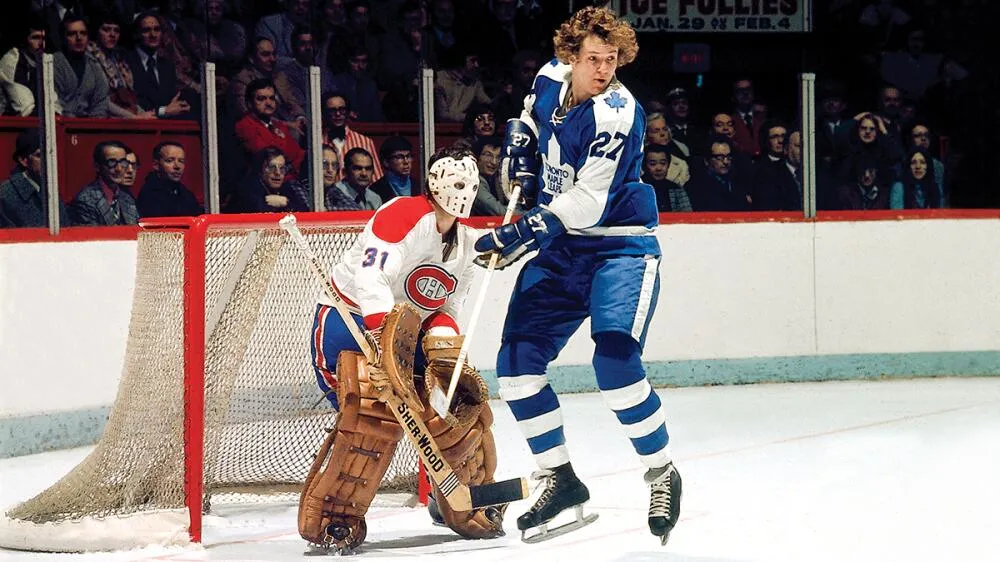
Reflecting on life after the Darryl Sittler Toronto Maple Leafs captain era
When asked about retirement during the Darryl Sittler Toronto Maple Leafs captain interview, the legend emphasized that he’s been away from the game since 1985, spending the past four decades building a fulfilling life beyond hockey. Having just turned 75 this past September, Sittler has immersed himself in business ventures, speaking engagements, and endorsement opportunities that keep him connected to the sport he loves.
Perhaps most importantly, Sittler has devoted considerable time to his six grandchildren, creating new memories at the family cottage north of Toronto where his own children once played. The cottage represents a continuity of family tradition, a place where generations of Sittlers have gathered to escape the pressures of public life and simply enjoy being together.
The Maple Leafs organization has played a significant role in Sittler’s post-playing career, continuing to involve alumni like him and Wendel Clark in community initiatives and corporate partnerships. “I’m a believer you got to get up in the morning and you got to have something that you look forward doing,” Sittler explained, noting that he’s never experienced boredom in retirement. This philosophy has kept him active and engaged, though he did acknowledge dealing with a recent knee replacement surgery that temporarily limited his mobility.
What stands out most in this portion of the Darryl Sittler Toronto Maple Leafs captain interview is his genuine gratitude for the opportunities the franchise has provided. Being a Maple Leaf, he noted, automatically makes you a household name in Canada, and players who achieve longevity with the organization carry that recognition for life. Sittler hasn’t taken this platform for granted, instead leveraging it to make meaningful contributions to causes he cares deeply about.
The connection between his playing days and current life remains strong. MLSE’s continued support allows Sittler and other alumni to maintain visibility in the community while representing the franchise’s storied history. For someone who gave so much during his 12 seasons in blue and white, the organization’s ongoing relationship with him demonstrates a mutual respect that transcends the player-team dynamic.
Community engagement and the legacy beyond hockey in the Darryl Sittler Toronto Maple Leafs captain interview
The Darryl Sittler Toronto Maple Leafs captain interview took on deeper meaning when the conversation shifted to philanthropy and community work. Sittler’s involvement with Ronald McDonald House dates back to the 1980s, and he speaks with evident pride about the organization’s growth over the decades. Watching Ronald McDonald Houses multiply across the country and help countless families dealing with childhood illness has given him a sense of purpose that rivals anything he accomplished on the ice.
Perhaps the most poignant relationship Sittler discussed was his connection to Terry Fox. A photograph of the Canadian hero sits prominently in Sittler’s office, a daily reminder of their brief but impactful friendship. When Fox was running through Ontario during his Marathon of Hope, the young runner admired Sittler as a childhood hero. That dynamic reversed when Sittler met Fox and witnessed his courage, determination, and selflessness firsthand.
Nearly 45 years after Fox’s historic run, the Terry Fox Run continues annually, having raised close to $1 billion for cancer research. Sittler’s grandchildren participate every year, running in memory of Sittler’s late wife, Wendy, who died of cancer, and in honor of countless others affected by the disease. This multi-generational commitment to Fox’s legacy exemplifies the ripple effect one person’s involvement can create.
Sittler’s philosophy on community engagement is straightforward but powerful: “Every day we get up, you have a choice on how you’re going to live that day.” He rejects the notion of sitting on the sidelines hoping something good will happen, instead advocating for active participation in making a positive difference. Whether through charity work, hospital visits, or lending his name and credibility to worthy causes, Sittler believes in using his platform for good.
His work as founding co-chair for Have a Heart for Down Syndrome represents another dimension of his philanthropic efforts. These commitments aren’t about receiving recognition or rewards; they’re about opening doors for organizations that need visibility and support. As Sittler noted in the interview, he’s learned that getting involved in meaningful causes never leads to regret—instead, it often opens additional doors and opportunities to brighten someone’s life or strengthen a charitable organization.
The captaincy years and leading through adversity in the Darryl Sittler Toronto Maple Leafs captain interview
The Darryl Sittler Toronto Maple Leafs captain interview provided fascinating insights into what it meant to wear the “C” during the turbulent 1970s. Named captain at just 24 years old, Sittler led a talented roster that included Lanny McDonald, Borje Salming, and Tiger Williams—players who formed deep bonds that endure today. Their most memorable achievement came in 1978 when they knocked out the heavily favored New York Islanders, though they ultimately couldn’t overcome the dynasty Montreal Canadiens.
When discussing the current captain, Auston Matthews, Sittler offered advice rooted in his own experience navigating the pressures of Toronto’s hockey-obsessed market. He emphasized that successful teams require strong leadership throughout the roster, not just from the captain. Matthews benefits from veteran support including Chris Tanev, John Tavares, and Morgan Rielly—leaders who can shoulder some of the burden.
The expectations in Toronto, Sittler acknowledged, create a unique dynamic where captains receive disproportionate credit when things go well and excessive blame when they don’t. His counsel to Matthews was simple: “Just go out there do the best that you can every night, be prepared.” Control what you can control, lean on teammates who respect you, and trust that everything will work out if you stay focused on your responsibilities.
Sittler expressed admiration for John Tavares’s decision to relinquish the captaincy to Matthews, viewing it as a selfless act aimed at helping the team take the next step toward winning the Stanley Cup. Understanding leadership transitions like this is crucial for any franchise seeking championship success, and Tavares’s willingness to step aside demonstrated the kind of team-first mentality that wins in the playoffs.
The media landscape has changed dramatically since Sittler’s playing days. Without social media, the internet, or the 24-hour news cycle, pressure still existed but manifested differently. Only three beat reporters followed the team regularly, yet the scrutiny remained intense because the Maple Leafs represented Canada’s team, steeped in Original Six history and championship tradition.
The Harold Ballard era: controversy and character testing in the Darryl Sittler Toronto Maple Leafs captain interview
Perhaps the most revealing portion of the Darryl Sittler Toronto Maple Leafs captain interview addressed his tumultuous relationship with owner Harold Ballard and general manager Punch Imlach. Sittler described having to navigate distractions and controversies created by ownership that served no productive purpose. The roster included talented, character-driven players who worked hard and wanted to win, yet they constantly dealt with off-ice drama that added unnecessary complications.
When Ballard fired general manager Jim Gregory and brought in Imlach, the situation deteriorated rapidly. Imlach challenged Sittler despite the captain’s loyalty, strong performance, and leadership both as team captain and vice-president of the players’ union. The new general manager systematically traded away core players who had knocked out the Islanders just two years earlier, including McDonald and Williams—eight or nine players total from that competitive roster.
Faced with pressure to waive his no-trade clause and leave Toronto, Sittler had to make a defining choice: cave to management’s wishes or stand up for what he believed was right for himself and his teammates. His decision to remove the “C” from his jersey wasn’t an act of petulance but a statement about respect and recognition. If management didn’t want him as captain, he would simply focus on playing hockey.
The most powerful validation came from his teammates. When management approached other players about assuming the captaincy, they refused, insisting that Sittler remained their captain regardless of whether he wore the letter. This unified support demonstrated the respect Sittler had earned through his character and leadership, transcending organizational politics.
Looking back, Sittler views those difficult years as formative experiences that taught him about handling adversity beyond the hockey rink. Players aren’t trained to navigate organizational dysfunction and public disputes— they’re expected to figure it out themselves. Sittler’s approach centered on asking himself two questions: What’s the right thing to do, and am I doing it for the right reasons? This moral compass guided him through one of the most challenging periods of his career.
The 10-point game and unbreakable records in the Darryl Sittler Toronto Maple Leafs captain interview
When the Darryl Sittler Toronto Maple Leafs captain interview turned to his legendary 10-point performance against Boston on February 7, 1976, Sittler admitted he never expected the record to last nearly 50 years. With the 50th anniversary approaching in February 2026, the accomplishment remains one of hockey’s most untouchable marks. Six goals and four assists in a single game—an offensive explosion that seemed impossible then and appears even more improbable in today’s NHL.
Sittler honestly thought Wayne Gretzky would break the record during the Great One’s dominant years in the late 1980s and early 1990s when he routinely exceeded 200 points per season. He vividly remembers watching a game where Gretzky had eight points after two periods, thinking the record would finally fall. It never did. Mario Lemieux, another offensive juggernaut of that era, also came close but couldn’t reach double digits.
The rarity of the achievement becomes clear when considering how infrequently teams score 10 goals in a game, even during the higher-scoring 1970s. For one player to be directly involved in all 10 goals—or even more points than goals scored by the team—requires an almost supernatural combination of skill, circumstance, and opportunity. Sam Gagner came closest in 2012 with eight points, but even that extraordinary performance fell short.
Sittler applied the same logic to Alex Ovechkin’s pursuit of Gretzky’s all-time goals record, which seemed unbreakable given the scoring consistency and longevity required. Yet Ovechkin accomplished it through dedication and durability. Still, Sittler maintains that the 10-point game will be extraordinarily difficult to surpass, though he acknowledges that records exist to be broken and that’s what makes sports compelling.
Beyond the 10-point game, Sittler’s career achievements speak for themselves: 389 goals and 916 points in 844 games with Toronto, ranking third in franchise goals and second in points. His number 27 hangs in the rafters at Scotiabank Arena, and his 1989 Hockey Hall of Fame induction cemented his legacy. But when discussing these accomplishments, Sittler remains humble, focusing more on the experiences and relationships than the statistics.
The current Maple Leafs and playoff success in the Darryl Sittler Toronto Maple Leafs captain interview
The Darryl Sittler Toronto Maple Leafs captain interview offered compelling perspectives on the current roster’s championship prospects. Sittler emphasized what both he and fellow Leafs legend Doug Gilmour understand instinctively: regular season success means nothing without playoff performance. Banners hang in the rafters for championships, not for finishing first in the Atlantic Division.
Regarding last year’s second-round exit against Florida, Sittler pointed to the unfortunate loss of goaltender Anthony Stolarz as a potential turning point. While Joseph Woll performed admirably, Stolarz had provided that extra edge throughout the season—the ability to steal games the team had no business winning. In playoff hockey, where margins are razor-thin, losing a hot goaltender can prove devastating.
Sittler views Florida as the league’s benchmark, having reached back-to-back Stanley Cup Finals and demonstrated the physical, grinding style necessary for playoff success. The Panthers’ ability to defeat Edmonton twice in the Finals underscores their dominance. For Toronto to overcome that caliber of team, they need to match Florida’s intensity while leveraging their own skill advantages.
The current Maple Leafs roster, according to Sittler’s analysis, has reached a critical window. With core players aging and the team operating near the salary cap ceiling, the time to win is now. He likes the additions management has made, particularly players who bring tenacity and physical presence. The team plays harder in its own end and makes life more difficult for opponents around the net—necessary adjustments for playoff success.
Each playoff year presents different circumstances, Sittler noted, rejecting the notion that the Leafs repeatedly fail for the same reasons. Variables change—opponents, health, momentum, goaltending—and success requires adapting to each unique challenge. The additions of bigger, more physical forwards should help Toronto better withstand the playoff grind, particularly against teams like Florida that excel at wearing down skilled opponents.
When asked about Mitch Marner’s departure to Vegas, Sittler acknowledged the team will miss the talented winger but believes the incoming players provide elements Toronto lacked. Marner’s playoff inconsistency had become a narrative, and sometimes roster changes benefit all parties involved. The question now is whether the current group can deliver when it matters most, converting regular season excellence into the playoff success that has eluded the franchise since 1967.
Comparing eras and respecting the game’s evolution in the Darryl Sittler Toronto Maple Leafs captain interview
Throughout the Darryl Sittler Toronto Maple Leafs captain interview, the Hall of Famer demonstrated deep respect for players from different generations. When asked about opponents he most enjoyed competing against, Sittler immediately mentioned Bryan Trottier of the New York Islanders. Trottier epitomized everything Sittler admired: clean but physical play, faceoff dominance, exceptional playmaking ability, and unwavering competitiveness.
The talent Sittler faced during his career reads like a who’s who of hockey greatness: Bobby Orr, Gordie Howe, Bobby Hull, and his childhood idol Jean Beliveau. The opportunity to face off against Beliveau at the Montreal Forum—a 20-year-old Sittler versus the 41-year-old legend—created a surreal full-circle moment. Years later, meeting Beliveau at Hall of Fame events and golf tournaments added another layer of meaning to their connection.
Playing for Team Canada in the 1976 Canada Cup represented another career highlight for Sittler. That roster featured 18 players who would eventually be inducted into the Hockey Hall of Fame, arguably the greatest collection of Canadian talent ever assembled. Sittler’s winning goal in that tournament remains a point of pride, representing the pinnacle of international hockey competition.
Sittler’s playing style and the game itself have evolved dramatically since the 1970s. The absence of social media, internet coverage, and 24-hour sports networks created a different kind of pressure—no less intense, but more contained. Today’s players face constant scrutiny from multiple platforms, with every shift analyzed and every comment dissected. Organizations now provide media training and controlled environments for scrums, better preparing players for the inevitable controversial questions.
Despite these changes, certain fundamentals remain constant. Leadership matters. Character matters. Preparation matters. The players and teams that embrace these principles consistently find success, regardless of era. Sittler’s career exemplified these values, and his continued relevance decades after retirement demonstrates their timeless importance.
The extensive Darryl Sittler Toronto Maple Leafs captain interview reveals a man who has never stopped caring about the franchise that shaped his life. From his playing days through his current role as an ambassador and community advocate, Sittler embodies what it means to be a Maple Leaf beyond statistics and records. His wisdom about leadership, perspective on playoff success, and commitment to giving back provide a blueprint for current players navigating similar pressures.
As the Maple Leafs pursue their first Stanley Cup since 1967, they would do well to remember Sittler’s approach: focus on what you can control, support your teammates, and play for the right reasons. The captaincy he held with such distinction from 1975 to 1981 set standards that successors like Mats Sundin, Dion Phaneuf, John Tavares, and now Auston Matthews continue striving to match. Whether discussing his unbreakable 10-point record, his principled stand against Harold Ballard, or his ongoing charity work, Sittler demonstrates that true legends are defined by more than on-ice achievements—they’re measured by character, integrity, and lasting impact on their communities.

Par Mike Jonderson
Mike Jonderson is a passionate hockey analyst and expert in advanced NHL statistics. A former college player and mathematics graduate, he combines his understanding of the game with technical expertise to develop innovative predictive models and contribute to the evolution of modern hockey analytics.