














David Kampf defensive forward role Vancouver Canucks: the quiet engine driving Rick Tocchet’s matchup machine
David Kampf has never been the name on the back of a Vancouver sweater that makes highlight reels sing, yet inside the Canucks dressing room his number is called more often than any other when the game is on a knife-edge. Since arriving from Toronto in the summer of 2023, the 29-year-old Czech has turned the “defensive forward” label into a science project: which zone does the puck start in, which star does it leave frustrated, and how many extra offensive shifts can Vancouver’s top guns steal because Kampf just ate four minutes of relentless pressure? The answers are showing up in the Pacific Division standings and, increasingly, in the micro-stats that coaches trust more than goals or assists.
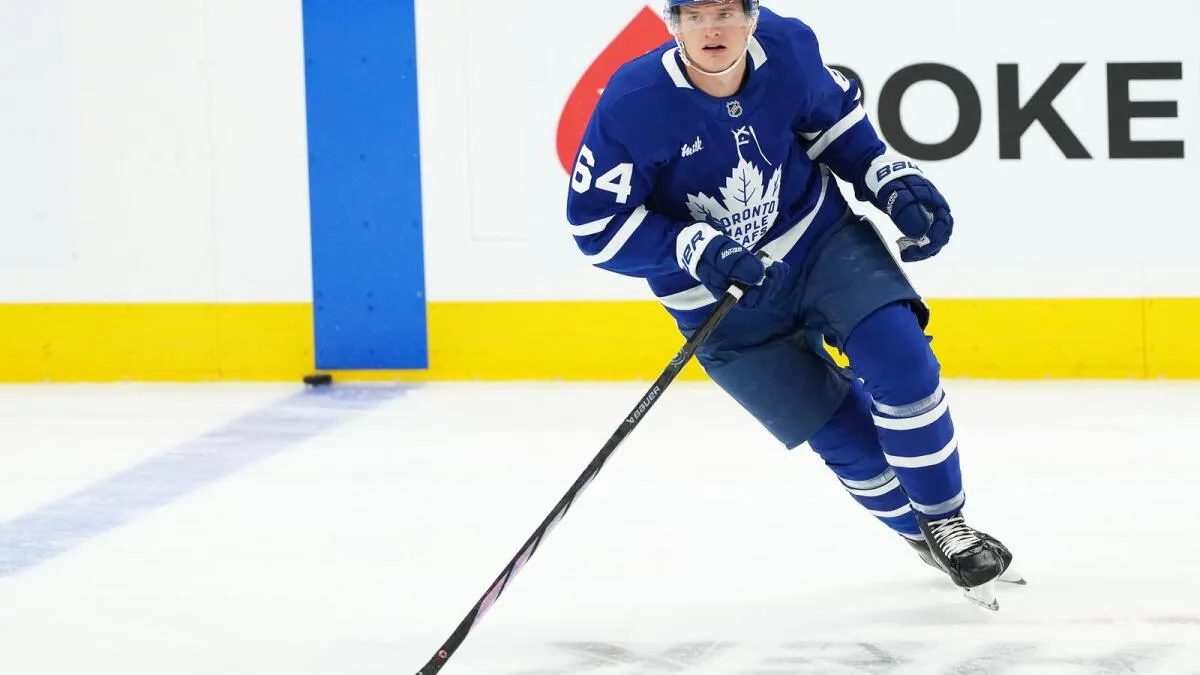
David Kampf defensive forward role Vancouver Canucks: why the coaching staff treats him like a second goalie
Rick Tocchet does not hand out compliments lightly. After a 2-1 win in Vegas last March he called Kampf “our break-in extinguisher” because the centre started 14 of his 18 five-on-five shifts in the defensive zone and still finished with a 63-percent expected-goals share. That sentence sounds like coach-speak until you realize it means Vancouver spent almost two full periods in the attacking end despite Vegas sending Jack Eichel and Mark Stone over the boards every time Kampf stepped out. The trick is a cocktail of details: shoulder-checking before the puck even arrives, turning retrieval into a bank pass off the end-wall, and—most importantly—never skating past the red line without an outlet already mapped. Tocchet has compared the routine to “a goalie tracking the puck through traffic; if he loses it for half a second, the whole building holds its breath.”
The staff’s trust shows up in usage charts. Through 25 games in 2024-25 Kampf averages 2:47 of shorthanded time per night, highest among Canucks forwards, and starts just 22 percent of his five-on-five draws in the offensive zone. Only Colorado’s Andrew Cogliano had a lower offensive-zone start ratio among 364 regular forwards last season, yet Kampf’s on-ice expected-goals against (2.08 per 60) ranked in the 91st percentile league-wide. Translation: he is the safety valve that lets Elias Pettersson and J.T. Miller start 60 percent of their shifts in the ozone without worrying about a counter-punch.
The penalty-kill laboratory: how Kampf turns a 4-on-5 into a 0.8 expected goal swing
Vancouver finished 21st on the PK in 2022-23; they entered November 2025 second in the NHL at 87.9 percent. Kampf is on the ice for 78 percent of the shorthanded minutes, but the eye-opener is how many goals the Canucks don’t give up after he leaves. According to Sportlogiq tracking, opponents manage only 0.38 inner-slot passes per two-minute power-play when Kampf is the low forward; that number jumps to 0.71 when he’s on the bench. The centre’s signature tactic is the “slide-bait”: he shows a passing seam to the half-wall, then uses a late lateral push to take it away while his stick remains free to intercept the back-door attempt. The sequence lasts less than a second, yet it forces the power-play to reset and burns eight valuable seconds of man-advantage time.
Goaltender Thatcher Demko offered a simpler summary during a recent intermission interview: “He makes the first save before I have to.” The numbers back the goalie: Demko’s shorthanded save percentage is .904 with Kampf on the ice and .860 without him, a gap worth roughly six goals already this season—equal to two Pacific Division standings points in the conservative models used by Vancouver’s analytics team.
Matchup card mastery: lining up against McDavid, MacKinnon and the rest of the West’s giants
Tocchet prints a fresh “matchup card” every road game; the top line on the card is almost always “92 vs 97,” meaning Kampf’s group against Connor McDavid. In three meetings last year the Oilers superstar was held to one five-on-five point and four shots in 34 minutes with Kampf on the air. The Canucks won two of those games, the third in overtime, and the coaching staff walked away convinced the blueprint was real.
The plan is less about shadowing than about channeling. Kampf’s wingers—usually Dakota Joshua and Conor Garland—form a tight “tripod” through centre ice, angling McDavid toward the wall and then collapsing three sticks into the lane he wants. Because Kampf is a left shot who takes draws on both sides, he can stay on his strong stick even after losing the draw, eliminating the half-second most centres need to square their body. Nathan MacKinnon admitted after a 3-2 Colorado loss that “it feels like you’re breaking out against five guys because their low forward is already in your lane before you look up.”
Beyond the dots: Kampf’s sneaky offensive value and why the Canucks extended him two years early
Kampf has never scored more than 11 goals in a season, yet Vancouver gave him a two-year, $4.8 million extension in October, a full eight months before he could reach free agency. The reason is hidden offense: when he is on the ice the Canucks generate 54 percent of the shot attempts, the best number among regular bottom-six forwards on the roster. Most of that comes from quick-strike transitions. Because Kampf wins 56 percent of his defensive-zone draws (second only to Bo Horvat among Pacific pivots), Vancouver starts 200 extra rushes per season that otherwise would begin with a 50-50 puck battle. Those 200 rushes turn into 31 additional scoring chances, per Stathletes tracking, worth roughly three goals—equal to the offensive bump of a 15-goal middle-six winger.
Garland calls the pattern “Kampf’s cheat code”: win the draw, bank the puck off the strong-side hash mark to Joshua already in motion, and suddenly the third line is entering the zone with speed while the other team’s top line is still changing. The sequence keeps Pettersson fresh for offensive-zone starts and explains why Vancouver’s goal differential jumps from plus-4 to plus-17 when Kampf dresses. Management did not need any more PowerPoint slides; they signed the extension before the price went up.
What the David Kampf defensive forward role Vancouver Canucks means for a playoff return in 2025
The Pacific Division is a coin flip every night—Vegas, Edmonton and Los Angeles all grade out as 100-point teams in most simulations. The difference between wild-card hockey and a third straight spring without playoffs may come down to a handful of defensive plays in March. Kampf’s micro-impact—roughly 0.23 goals saved per game compared with league-average fourth-line usage—projects to nine goals over a 38-game stretch run, the equivalent of three extra wins in the standings. In a division where the third seed missed 100 points by two last year, three wins are the margin between tee times and a Game 83.
Tocchet summed it up after a recent 1-0 shutout of Calgary: “We don’t have to outscore our problems anymore because Kampy refuses to let them exist.” If the Canucks are still playing in late April, the quiet centre who never wanted the microphone will be the reason the math finally adds up.
Frequently Asked Questions

Par Mike Jonderson
Mike Jonderson is a passionate hockey analyst and expert in advanced NHL statistics. A former college player and mathematics graduate, he combines his understanding of the game with technical expertise to develop innovative predictive models and contribute to the evolution of modern hockey analytics.