







Canucks and Oilers in the mix for Kampf
The Toronto Maple Leafs’ inability to move David Kampf during the offseason has created a cascading effect that’s rippling across the NHL trade market, with both the Vancouver Canucks and Edmonton Oilers emerging as potential landing spots for the veteran defensive center. After clearing waivers in early October and being assigned to the AHL’s Toronto Marlies, Kampf has found himself at a crossroads, contemplating whether to walk away from guaranteed money or wait for a trade opportunity that could salvage his NHL career.
The situation reached a critical juncture when Kampf stepped away from the Marlies to evaluate his options, missing games while weighing his future. With over $4 million remaining on his contract through the 2026-27 season and a proven track record as a shutdown center, the 30-year-old Czech forward has become one of the more intriguing trade chips available as teams look to bolster their depth ahead of the playoff push.
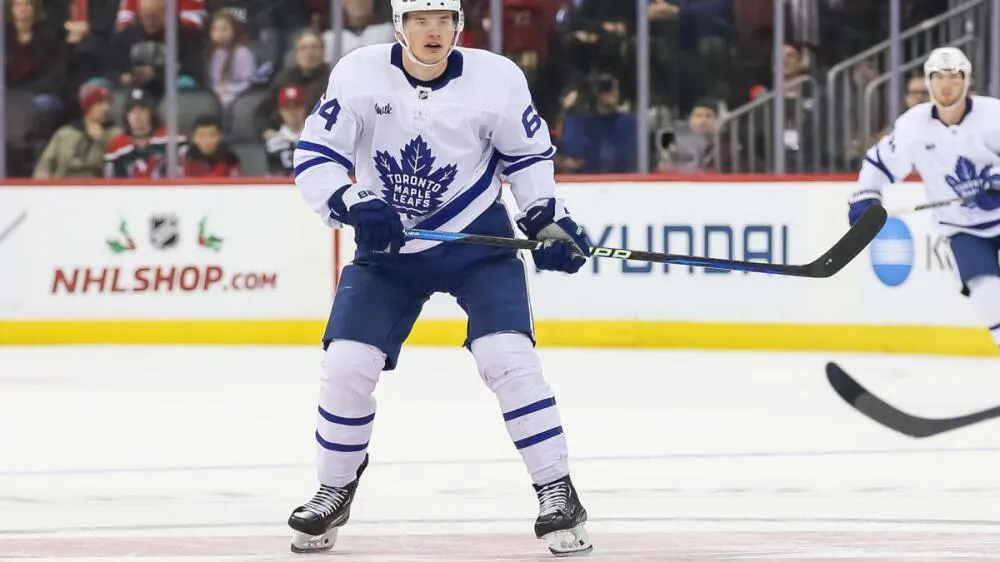
Why David Kampf’s defensive center skills make him trade-worthy
David Kampf’s value proposition extends far beyond his current predicament in Toronto’s organizational depth chart. Throughout his NHL career, he has established himself as one of the league’s most reliable defensive specialists, a player who consistently wins critical faceoffs and neutralizes opposing top lines. His 55.3% career faceoff winning percentage places him among the upper echelon of NHL centers, a skill that becomes invaluable during playoff hockey when possession and defensive zone draws can determine series outcomes.
The Czech center’s penalty-killing prowess has been another defining characteristic of his game. During his tenure with the Maple Leafs, Kampf regularly logged heavy minutes on the penalty kill, using his active stick, intelligent positioning, and relentless work ethic to disrupt opposing power plays. These qualities don’t diminish simply because a player finds himself in the minors due to organizational depth and salary cap constraints.
What makes Kampf particularly attractive to contending teams is his versatility and reliability. He can slot into any bottom-six role, anchor a fourth line, provide insurance at center depth, or even bump up to the third line when injuries strike. His two-way game requires minimal adjustment period, making him a plug-and-play option for teams looking to add defensive stability without disrupting existing chemistry.
Teams like the Canucks and Oilers, both facing their own center depth questions and defensive zone challenges, could benefit immensely from Kampf’s skill set. His ability to shelter more offensively-minded players while providing consistent defensive zone starts would address pressing needs for both Western Conference contenders. Understanding how teams manage salary cap relief and roster depth becomes crucial when evaluating potential trade scenarios involving Kampf.
Canucks’ interest in David Kampf as a defensive center
The Vancouver Canucks have experienced their own roster turbulence this season, dealing with injuries and inconsistent play that has exposed depth concerns down the middle of the ice. While the team boasts offensive firepower with players like Elias Pettersson and J.T. Miller, their third and fourth-line center positions have lacked the defensive reliability needed for sustained playoff success.
General manager Patrik Allvin has shown a willingness to make moves to address weaknesses, and acquiring a proven defensive center like Kampf would align with the team’s competitive timeline. The Canucks are in win-now mode, having invested heavily in their core, and adding a player who can provide immediate impact on the penalty kill and in defensive situations makes strategic sense.
The financial component presents both challenges and opportunities for Vancouver. With approximately $1.5 million in projected cap space, the Canucks would likely require Toronto to retain a portion of Kampf’s $2.4 million cap hit or include a salary dump going the other way. This isn’t insurmountable, especially if the Maple Leafs are motivated to clear the roster spot and resolve the situation before it becomes more problematic.
Vancouver’s penalty kill has shown vulnerability at times this season, ranking in the middle of the pack and occasionally getting exposed by elite power plays. Kampf’s addition would provide head coach Rick Tocchet with a reliable option to deploy in crucial penalty-killing situations, particularly in late-game scenarios when protecting leads becomes paramount. His faceoff expertise would also help the Canucks control possession in defensive zone draws, an area where they’ve struggled periodically.
The cultural fit cannot be overlooked either. Tocchet values players who embrace defensive responsibility and compete relentlessly, characteristics that define Kampf’s approach to the game. His veteran presence and professional demeanor would complement a Canucks locker room that has matured significantly over the past two seasons.
Oilers’ potential pursuit of David Kampf in trade talks
Edmonton’s interest in bolstering their center depth has been an ongoing narrative throughout the season, particularly as the team navigates injury concerns and seeks to optimize their lineup configuration. While Connor McDavid and Leon Draisaitl anchor the top two lines, the Oilers have experimented with various combinations on their third and fourth lines, searching for the right blend of defensive responsibility and offensive contribution.
According to reports from Elliotte Friedman, the Oilers have been exploring roster adjustments as players return from injury, with Troy Stecher potentially becoming expendable on defense. This creates an opportunity for Edmonton to package assets or create cap flexibility for an acquisition like Kampf, who could provide exactly what the team needs in a bottom-six role.
The Oilers’ defensive zone coverage has been inconsistent this season, with lapses occasionally costing them in tight games. Adding a center who specializes in defensive zone work would allow head coach Kris Knoblauch to deploy his offensive stars more strategically, knowing he has a reliable shutdown option to counter opposing matchups. Kampf’s faceoff ability would be particularly valuable for a team that faces elite competition in the Pacific Division.
Edmonton’s penalty kill has shown improvement under Knoblauch’s system, but depth and versatility remain important. Kampf would instantly become one of the team’s primary penalty-killing centers, bringing experience and proven effectiveness to critical situations. His ability to win defensive zone draws during penalty kills would help the Oilers maintain possession and relieve pressure on their goaltenders.
The financial mechanics of an Oilers-Maple Leafs trade would require creativity. Edmonton carries minimal cap flexibility, meaning they would need Toronto to retain salary or potentially send a contract back to the Leafs. The incentive for both sides exists: Toronto gets cap relief and roster clarity, while Edmonton acquires a proven defensive center who could be the difference in playoff series against teams like Vegas and Dallas.
Trade complications and David Kampf contract termination scenarios
The situation surrounding Kampf has grown increasingly complex as multiple potential outcomes remain on the table. The possibility of contract termination represents the nuclear option, one that several NHL players have pursued in recent years when faced with extended AHL stints despite believing they can still contribute at the highest level.
Conor Sheary, Brandon Saad, and Filip Zadina all walked away from guaranteed money to pursue new NHL opportunities, setting precedent for players in Kampf’s position. However, the financial stakes are higher for Kampf, who would be forfeiting over $4 million in remaining salary and bonuses. This decision would require careful consideration of not only immediate career prospects but long-term financial security.
Toronto management faces its own difficult calculus. The team needs to create cap space to accommodate Joseph Woll’s return from long-term injured reserve, adding urgency to the Kampf situation. However, retaining salary on a trade would consume one of the organization’s three retention slots through June 2027, potentially limiting flexibility for future moves. The Maple Leafs are already carrying a $1.25 million dead cap charge while Kampf plays in the AHL, meaning any retention below that figure would actually provide cap relief.
GM Brad Treliving’s willingness to explore all options suggests the organization recognizes the suboptimal nature of the current arrangement. No team benefits from having a frustrated veteran playing in the minors when that cap space could be utilized more effectively. The challenge lies in finding a trade partner willing to absorb enough salary to make the transaction worthwhile for Toronto while also providing fair value in return.
The timing element adds another layer of complexity. If Kampf chooses to wait for a trade rather than pursue contract termination, he risks remaining in the AHL for an extended period with no guarantee that a deal materializes. Conversely, if he terminates his contract prematurely, he might miss out on a favorable trade that could have preserved at least some of his remaining earnings while providing an NHL opportunity. The Canucks and Oilers both represent teams with motivation to add depth before the trade deadline, but whether they’re willing to make a move now or wait closer to March remains uncertain.
The David Kampf situation exemplifies the difficult roster decisions that contending teams face when managing the salary cap while trying to maintain competitive depth. Both the Vancouver Canucks and Edmonton Oilers possess the need and potential motivation to acquire a proven defensive center, but the financial gymnastics required to complete such a transaction create legitimate obstacles. For Kampf, the coming weeks will determine whether patience yields a favorable trade outcome or whether walking away from guaranteed money becomes the necessary path to continuing his NHL career. As teams jostle for playoff positioning and evaluate their roster needs heading toward the trade deadline, this saga serves as a reminder that hockey decisions are rarely simple, involving complex negotiations between player desires, team needs, and financial realities that define the modern NHL landscape.

Par Mike Jonderson
Mike Jonderson is a passionate hockey analyst and expert in advanced NHL statistics. A former college player and mathematics graduate, he combines his understanding of the game with technical expertise to develop innovative predictive models and contribute to the evolution of modern hockey analytics.