The Detroit Red Wings missed the playoffs again in 2025-26, prompting intense scrutiny of GM Steve Yzerman’s offseason blueprint. Max Bultman of The Athletic broke down the roster into clear tiers, from untouchable core pieces to likely departures, highlighting the need for upgrades in scoring and depth to finally break through.[1] With cap space projected around $30 million and draft picks in hand, Yzerman faces pressure to add a top-line winger or second-line center via trade or free agency.[2]
This analysis aligns with broader rumors swirling around Detroit’s rebuild. Recent deadline moves, like acquiring Justin Faulk from St. Louis, signal intent to compete soon, but bottom-six stagnation and aging UFAs demand action.[3] As Yzerman hints at major changes, the Wings balance youth infusion with veteran retention.
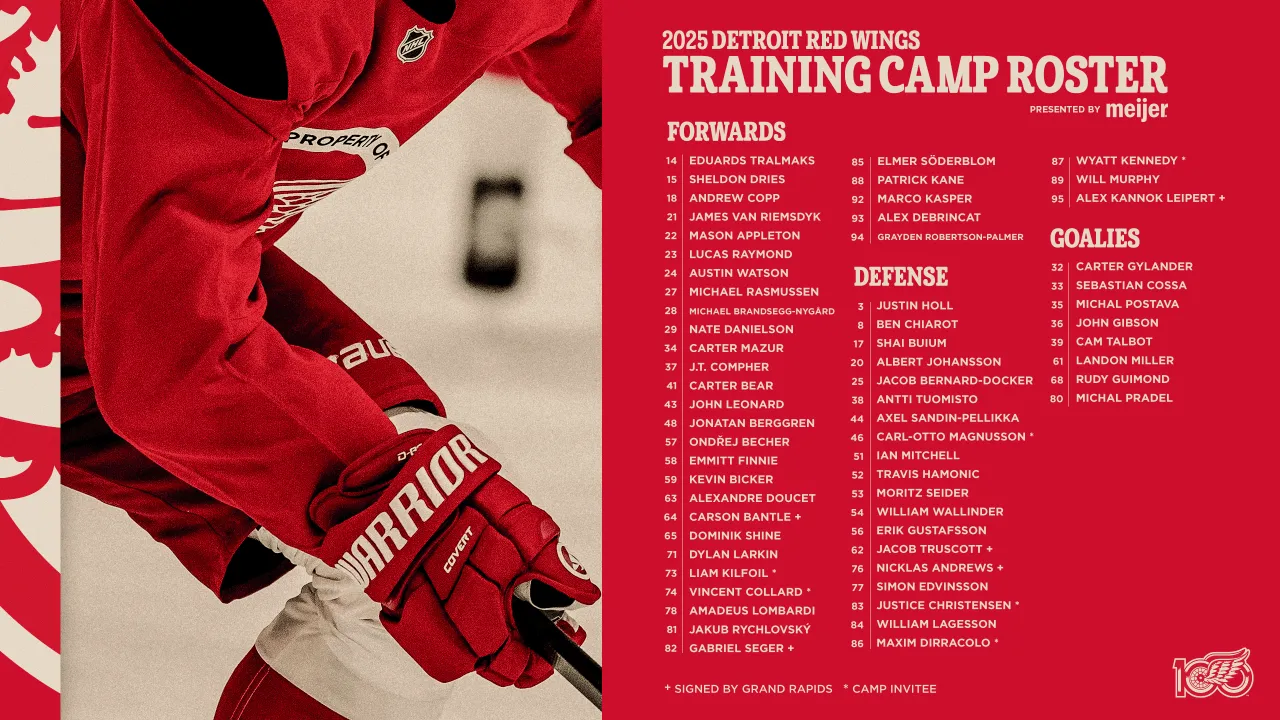
Players not going anywhere
Moritz Seider anchors the defense as Detroit’s best player, posting a career-high 60 points while excelling in his own zone. At 25, he’s the cornerstone Yzerman won’t trade.[1] His emergence allows the team to build around elite two-way play.
Lucas Raymond, just 24, tallied 76 points despite injury concerns and a need for more shot volume. Entering his prime, he’s a top-line fixture with room to grow into a 90-point threat.
Simon Edvinsson bounced back from knee surgeries to log top-pair minutes over 72 games. As a restricted free agent, expect a bridge deal to lock in the 23-year-old’s upside.
Dylan Larkin delivered 34 goals for his fifth straight 30-goal campaign, solidifying his role as the No. 1 center. At 30, five-on-five metrics raise flags, but his leadership remains vital.
Alex DeBrincat led forwards with 40 goals, his first 40-goal season since 2022-23. One year from UFA status, a massive extension looms to keep the tenacious scorer as Detroit’s highest-paid forward.[1]
Likely returnees barring surprises
Marco Kasper’s sophomore dip—from 37 to 19 points—stemmed from bad puck luck and low shooting percentages under 7 percent. Yzerman and coach Todd McLellan back a rebound as a potential No. 2 center.
Emmitt Finnie burst onto the scene with 30 points as a 20-year-old rookie, offering versatility across the top nine. His breakout cements a roster spot.
John Gibson handled 57 starts as the primary goalie, proving capable of a 50-game workload despite a late fade. He’s the steady presence amid prospect development.
Andrew Copp hit career highs with 43 points and a 51.58 percent expected goals share. Questions linger on his line fit with stars like DeBrincat and Kane.
Ben Chiarot’s three-year extension makes him a penalty-kill workhorse and minute-muncher on the second pair.
Trade bait despite contracts
J.T. Compher managed just 28 points, his lowest output recently, though he shone late with a 63.81 percent expected goals share. His $5.1 million AAV over two years holds trade value, especially with center depth from Larkin, Copp, Kasper, and prospect Nate Danielson pushing him out.[1]
Michael Rasmussen’s 14 points marked a career low in scoring and physicality at age 27. At $3.2 million for two more years, he’s a frequent trade rumor target to remake the bottom six.
Mason Appleton started hot with three goals in four games but vanished offensively afterward. His territorial metrics dipped below 43 percent, questioning his fit in Detroit’s plans.
These moves could free cap for blockbuster pursuits, as rumors link the Wings to big splashes this summer.[4] Analysts see seven players potentially done in Motown to accelerate contention.[5]
UFAs facing uncertain futures
James van Riemsdyk chipped in 15 goals at age 37, ranking fifth on the team in scoring. His net-front presence tempts a return, but lack of edge makes it no sure thing.
David Perron, 38, brought puck protection post-trade but managed only three points in 16 games. Beloved in the room, age likely pushes him elsewhere unless he commits to a depth role.
Cam Talbot stabilized as backup with 34 games, often on cold streaks. At 39, with Sebastian Cossa rising, a three-goalie setup is unlikely.
Offseason questions for Detroit echo these dilemmas, weighing veteran savvy against youth.
Expected exits and prospect influx
Travis Hamonic suits up just once post-Olympics, buried by a deep blue line including Seider, Faulk, Bernard-Docker, Sandin-Pellikka, and Anton Johansson. He’s the likeliest casualty.
Recent extensions like Jacob Bernard-Docker’s two-year deal add stability on the third pair.[6] Deadline additions such as Faulk bolster the right side immediately.
Prospects like Carter Mazur (RFA depth forward), Michael Brandsegg-Nygård, Nate Danielson, and goalie Sebastian Cossa loom large for 2026-27 impacts.[7]
Patrick Kane’s consistent five-on-five production keeps him in the fold, with Yzerman praising it and Kane stating he’d “love to be part of the solution” for playoffs.[1]
Yzerman’s end-of-year comments underscore change, per his full Athletic breakdown.[1]
Detroit’s path forward hinges on shrewd trades and re-signings to complement the young core. With odds shortening amid strong stretches earlier, a playoff push in 2026-27 feels within reach if Yzerman remakes the margins effectively.[8] Fans eye summer deals as the key to ending Hockeytown’s drought.
Frequently Asked Questions

Par Mike Jonderson
Mike Jonderson is a passionate hockey analyst and expert in advanced NHL statistics. A former college player and mathematics graduate, he combines his understanding of the game with technical expertise to develop innovative predictive models and contribute to the evolution of modern hockey analytics.