The Eastern Conference Hockey League has emerged from a four-day work stoppage with a landmark five-year collective bargaining agreement that reshapes the financial landscape for minor league players. The deal, ratified on December 30, 2025, brings immediate relief to 30 franchises and hundreds of athletes who had been embroiled in the league’s first significant labor dispute in recent memory. The strike, which began on December 26, had postponed 41 games across the league’s footprint, creating uncertainty for fans and impacting local economies in communities from Fort Wayne to Trois-Rivières.
The Professional Hockey Players’ Association announced the ratification Tuesday afternoon, ending a tense standoff that had threatened to derail the 2025-26 season. The agreement, which extends through the 2029-30 campaign, delivers substantial improvements in player compensation, health and safety protocols, and working conditions that PHPA Executive Director Brian Ramsay described as “meaningful progress” on priorities identified by the membership. Games resumed Tuesday night, with teams scrambling to reschedule the postponed matchups that had created a logistical puzzle for league schedulers.
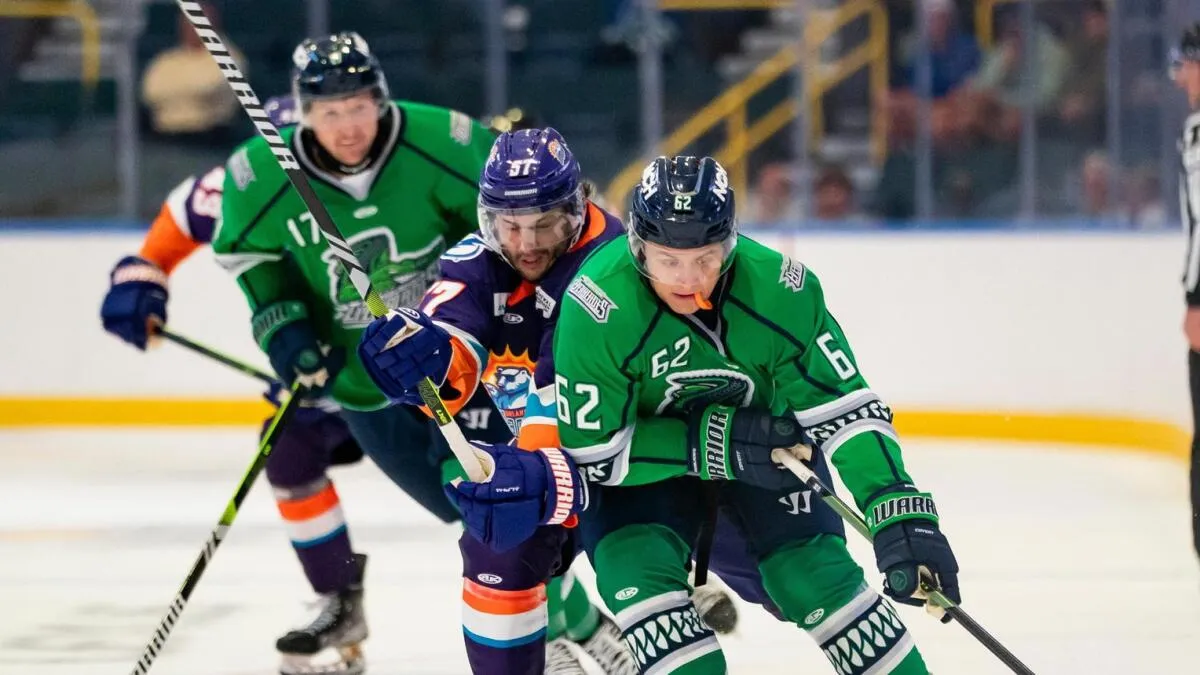
Key provisions of the ECHL five-year collective bargaining agreement ratified after strike
The new CBA fundamentally transforms the economic structure of the league, which operates two tiers below the NHL. While specific contract details remain confidential, the framework builds upon the ECHL’s final pre-strike offer, which included a 20% salary increase in year one and enhanced per diems for travel days. The deal also guarantees more off days and implements a 325-mile travel limit between back-to-back games, addressing longstanding concerns about player welfare and fatigue management.
Financial improvements for players
Player compensation receives the most significant overhaul in league history. The agreement establishes a clear pathway for salary growth through the 2029-30 season, with retroactive pay increases effective from the start of the current season. The weekly salary cap sees immediate expansion, allowing teams to allocate more resources to their rosters. For context, the previous CBA for 2024-25 had set the weekly cap at $14,600 for most of the season, with a higher ceiling during the first 30 days to accommodate an additional roster spot.
The minimum weekly salary structure also receives a substantial boost. Under the expired agreement, rookie players earned as little as $530 weekly, while veterans received a minimum of $575. The new deal compresses these gaps while raising the floor for all players, ensuring that athletes in the developmental ranks can better focus on their on-ice performance rather than financial survival. The rookie salary cap, previously set at $620 weekly, will see adjustments that reward younger talent while maintaining roster flexibility for franchises.
Health, safety, and travel enhancements
Beyond base compensation, the five-year agreement addresses quality-of-life issues that had become flashpoints in negotiations. Travel conditions improve dramatically with the 325-mile limitation on back-to-back game travel, reducing brutal bus journeys that had players arriving at venues in the early morning hours before game day. The per diem allowance, previously pegged at $53 daily during road trips, increases to better reflect actual meal costs in the league’s diverse markets.
Health and safety initiatives expand significantly. The agreement strengthens off-ice insurance coverage, which under the previous CBA had been available to players on active rosters or injured reserve but ceased immediately upon call-up to AHL or NHL affiliates. Dental care provisions, which mandated at least one annual check-up per player with a $25 co-pay, receive enhancement. The new language likely addresses gaps that had left some players vulnerable during transitions between rosters.
How the ECHL strike unfolded and what prompted the work stoppage
The work stoppage began on December 26, 2025, when PHPA leadership informed its membership that negotiations had reached an impasse. The timing proved particularly painful for the league, coinciding with the lucrative holiday season when attendance typically peaks and families pack arenas for promotional games. The strike affected all 30 teams, from the Florida Everblades to the Idaho Steelheads, creating a unified front among players who had spent months negotiating without satisfactory progress.
Timeline of the four-day stoppage
The walkout started abruptly after the ECHL presented what it termed its “last, best, and final offer” on Christmas Day. Players reported to their home arenas on Friday expecting to play, only to be told that games would not proceed. The Fort Wayne Komets, a flagship franchise with deep community ties, saw their Saturday and New Year’s Eve contests postponed, leaving ticket holders scrambling for answers. Similar scenes played out in 21 markets across the United States and Canada, with the Trois-Rivières Lions becoming the lone Canadian team affected by the dispute.
The PHPA bargaining committee maintained unity throughout the four-day period, with Ramsay praising the “resolve, professionalism and discipline” of members who stood firm on their core demands. Support poured in from across the North American sports labor movement, with the AFL-CIO, NHLPA, PWHLPA, NFLPA, and CFLPA offering public solidarity. This backing strengthened the players’ position as they faced pressure from management to accept a less favorable deal.
Games impacted and fan reaction
The 41 postponed games represent a significant disruption to the 72-game regular season schedule. Teams now face a compressed calendar to make up these matchups, with some likely shifting to midweek dates that traditionally draw smaller crowds. The financial impact extends beyond ticket sales to concessions, merchandise, and community events tied to game nights. Local businesses near arenas, from restaurants to parking vendors, experienced immediate revenue losses during what should have been their busiest period of the season.
Fan reaction varied across markets. Season ticket holders expressed frustration on social media about the lack of communication, while some rallied behind players using the hashtag #StandWithThePlayers. The Naples News reported that the strike created “tens of thousands of unhappy ticket holders,” particularly in markets like Florida where the Everblades have cultivated a passionate fanbase. The rapid resolution suggests both sides recognized the long-term damage that an extended work stoppage would inflict on the league’s relationship with its most loyal supporters.
What the new CBA means for the future of minor league hockey
The five-year term of the agreement provides unprecedented labor peace for a league that has historically operated on shorter-term deals. This stability allows teams to engage in long-term planning, secure sponsorship agreements, and invest in facility improvements with greater confidence. For players, the extended timeline ensures that the gains achieved in this negotiation will not be immediately subject to renegotiation, allowing them to focus on development and career advancement.
Comparison with previous ECHL labor agreements
The previous ECHL collective bargaining agreement ran from July 1, 2021, through June 30, 2025, making the new deal a year early and significantly longer. That four-year pact had established modest incremental increases in salary caps and minimums, but failed to keep pace with inflation or the improving financial health of many franchises. The new five-year deal breaks this pattern by front-loading improvements and establishing clearer pathways to middle-class stability for career minor leaguers.
Under the 2021-2025 CBA, weekly salary caps rose from $13,900 to $14,600, an increase of roughly 5% over four years. The new agreement’s reported 20% first-year jump represents a seismic shift in the league’s approach to player compensation. This acceleration reflects both the players’ increased bargaining power and the league’s recognition that sustainable growth requires investing in the talent that drives the on-ice product.
Implications for NHL player development pipeline
The ECHL serves as a critical component of the NHL’s developmental ecosystem, with most teams carrying affiliations that place prospects and veterans in the league. Improved conditions in the ECHL directly benefit NHL organizations by creating a more stable environment for young players to develop. When athletes can focus on skill acquisition rather than financial stress, the quality of play improves, accelerating the development curve for prospects who might otherwise struggle with the lifestyle demands of minor league hockey.
The agreement’s veteran rule provisions, which limit teams to four players with more than 260 professional games, ensure that roster spots remain available for younger talent. This balance between experience and development has always been central to the ECHL’s mission, and the new CBA maintains this structure while improving compensation for the mentors who guide incoming prospects. The Detroit Red Wings and other organizations with multiple affiliates will particularly appreciate the standardized conditions that allow for more predictable player evaluation.
Moving forward after the ECHL five-year collective bargaining agreement ratified after strike
With games resuming and players returning to their routines, the focus shifts to implementation and relationship repair. The PHPA and ECHL leadership must now work together to ensure the agreement’s provisions are applied consistently across all 30 markets, from established franchises to expansion teams like the Tahoe Knight Monsters. The solidarity displayed during the strike could, paradoxically, strengthen the long-term partnership between labor and management if both sides build upon the communication channels that were forged in crisis.
What players and teams said about the resolution
ECHL Commissioner Ryan Crelin expressed appreciation for the “dedication and effort” of the bargaining committee, emphasizing that the deal “significantly increases player compensation, improves health and safety and delivers on new initiatives that are responsive to our players’ needs.” His statement acknowledged the league’s growth trajectory and the importance of maintaining an “entertaining and accessible product” for communities.
Ramsay’s statement highlighted the collective nature of the victory, thanking not only the PHPA bargaining committee and staff but also the broader labor movement that provided support. “This outcome would not have been possible without their engagement and support,” he noted, pointing to the solidarity that became a hallmark of the brief but intense dispute.
Rescheduled games and schedule adjustments
The league now faces the challenge of rescheduling 41 games without overtaxing players or creating competitive imbalances. Options include extending the regular season, converting off days into game days, or scheduling midweek doubleheaders. The agreement likely includes provisions for expanded rosters during compressed periods to prevent injury and fatigue. Teams with fewer remaining home dates may need to get creative with ticketing policies to accommodate displaced season ticket holders while attracting new fans to makeup games.
The Fort Wayne Komets and other teams that had multiple games postponed will feel this impact most acutely. However, the alternative—losing an entire season to labor strife—would have been far more damaging. As the league moves forward, the ECHL five-year collective bargaining agreement ratified after strike will serve as both a blueprint for progress and a reminder of what can be achieved when players stand united for their collective future.
Frequently Asked Questions

Par Mike Jonderson
Mike Jonderson is a passionate hockey analyst and expert in advanced NHL statistics. A former college player and mathematics graduate, he combines his understanding of the game with technical expertise to develop innovative predictive models and contribute to the evolution of modern hockey analytics.