




The Edmonton Oilers suffered one of the most humiliating defeats in franchise history on November 8, 2025, falling 9-1 to the Colorado Avalanche at Rogers Place. The loss tied their largest margin of defeat on home ice, matching a 10-2 drubbing by the Buffalo Sabres years earlier. What was supposed to be a marquee matchup between Western Conference contenders featuring the game’s elite stars—Connor McDavid, Leon Draisaitl, Cale Makar, and Nathan MacKinnon—turned into a one-sided demolition that exposed significant flaws in Edmonton’s game.
The defeat marked the Oilers’ third consecutive loss, dropping them to 6-6-4 on the season and raising serious questions about their defensive structure, goaltending reliability, and overall team cohesion. With Stuart Skinner allowing four goals on just 13 shots before being pulled, and Calvin Pickard faring little better in relief, the Oilers’ defensive breakdowns have become a recurring nightmare. Here are three critical takeaways from this catastrophic loss that demand immediate attention.
The goaltending situation has reached crisis levels for the Oilers
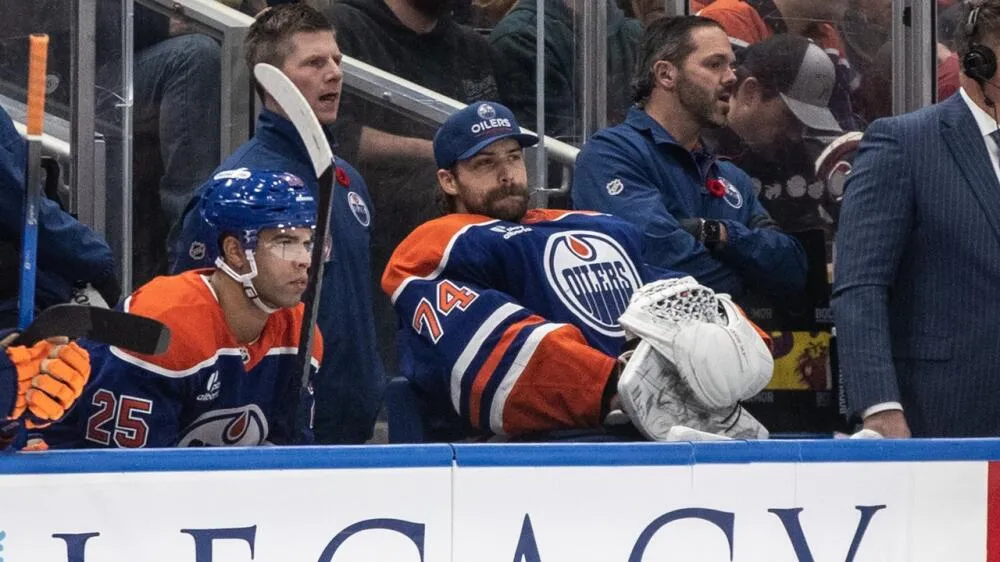
The most glaring issue from this blowout was the abysmal goaltending performance that left Edmonton exposed throughout the night. Stuart Skinner’s night ended mercifully early after allowing four goals on 13 shots, a save percentage that would make even beer league netminders cringe. His positioning on both of Cale Makar’s first-period goals was identical—and identically wrong—as the Norris Trophy-caliber defenseman walked in from the same spot twice in 66 seconds and beat Skinner cleanly.
Calvin Pickard, brought in to provide stability after Skinner’s exit, didn’t fare much better. He surrendered five goals on 21 shots, showing that the problem extends beyond one netminder. The Avalanche found openings with ease, whether through clean looks from the slot, deflections, or rushes where the goaltenders were caught out of position.
Head coach Kris Knoblauch has maintained that the team’s issues run deeper than goaltending, but it’s difficult to ignore when your netminders combine for a .647 save percentage in a single game. The Oilers have now dropped three straight games, and in each one, goaltending has been a significant factor. While Skinner showed promise last season, his inconsistency this year has been alarming. The team needs to decide whether to ride out this storm with their current tandem or explore options that might be available via trade or call-up from the AHL.
The mental aspect cannot be overlooked either. After allowing early goals, neither goaltender seemed capable of making the timely save needed to stop the bleeding. When a team is struggling defensively, they need their goaltender to be a stabilizing force. Instead, the Oilers got the opposite—a revolving door that only accelerated their downward spiral. Championship-contending teams require elite or at least reliable goaltending, and right now, Edmonton has neither.
Defensive zone coverage and structure completely broke down
Beyond the goaltending woes, the Oilers’ defensive zone coverage was nothing short of disastrous. The Avalanche generated quality chances at will, with players finding themselves wide open in dangerous areas repeatedly. Makar’s two goals in the first period weren’t just about poor goaltending—they highlighted a fundamental breakdown in defensive assignment and awareness.
The Oilers allowed Colorado to establish control in the offensive zone with minimal resistance. Forwards failed to track back properly, leaving defensemen in impossible two-on-one situations. The defensive pairs seemed confused about their assignments, particularly in front of the net where Jack Drury and Parker Kelly—depth forwards, not superstar snipers—each scored twice. When your opponent’s fourth line is lighting you up, it’s a systemic problem.
Edmonton’s defensive corps has struggled to find chemistry all season, and this game magnified every flaw. The team’s transition game was non-existent, with turnovers in the neutral zone leading directly to odd-man rushes. The Avalanche’s speed overwhelmed the Oilers’ backchecking efforts, and the gap control was so poor that Colorado forwards had runway after runway to build momentum before attacking.
Brent Burns, at 40 years old, made a highlight-reel defensive play with a diving poke check on Leon Draisaitl that prevented a clear breakaway—then promptly set up a goal at the other end. The contrast between Burns’ veteran awareness and the Oilers’ defensive lapses was stark. Edmonton’s defenders need to communicate better, maintain tighter gaps, and show far more urgency in eliminating second-chance opportunities.
The penalty kill was also exploited, with the Avalanche’s offensive firepower on full display even though they didn’t capitalize on the man advantage. The Oilers actually surrendered a shorthanded goal to Parker Kelly, which perfectly encapsulated their defensive ineptitude. When you’re allowing shorthanded goals in a game where you’re already being demolished, it’s clear that defensive zone structure has completely evaporated.
Offensive depth and McDavid’s supporting cast remain invisible
While Connor McDavid managed to score Edmonton’s lone goal—his 13th point in eight games—the complete absence of secondary scoring was alarming. McDavid and Draisaitl connected for the power-play marker, but beyond that, the Oilers’ offense was completely shut down. In a game where the opposition scores nine times, you’d expect more than one goal in response, regardless of defensive struggles.
The Oilers’ depth forwards were non-existent offensively and provided little defensive support. While Colorado got two-goal performances from Jack Drury and Parker Kelly—players earning less than $1 million per season—Edmonton’s middle-six forwards combined for zero points and were largely invisible. The disparity in depth scoring between the two teams was staggering and represents a significant roster construction issue.
Ryan Nugent-Hopkins, Zach Hyman, and other key contributors need to step up and provide consistent offense to take pressure off the top line. The Avalanche showed how a balanced attack can overwhelm opponents, with scoring coming from all four lines and six different defensemen recording points. Colorado’s Nathan MacKinnon and Cale Makar combined for four goals and six points, showcasing chemistry and execution, while Edmonton’s stars were largely neutralized after McDavid’s lone tally.
The Oilers managed just 24 shots on goal against Scott Wedgewood, who made 23 saves in a relatively stress-free performance. Edmonton struggled to generate sustained offensive zone pressure, winning just 44% of faceoffs and failing to establish any rhythm. Their power play went 1-for-2, but even that success felt hollow given the lopsided final score.
Perhaps most concerning is that McDavid and Draisaitl are producing at their typical elite levels, yet the team is hovering around .500. This suggests that the supporting cast isn’t pulling its weight and that the team’s reliance on two players—no matter how talented—is unsustainable. Other teams have figured out that if they can limit high-danger chances for the dynamic duo and force Edmonton’s depth players to beat them, they’ll win more often than not.
The 9-1 shellacking serves as a wake-up call that the Oilers cannot ignore. With goaltending in crisis, defensive structure nonexistent, and depth scoring invisible, Edmonton faces an uphill battle to right the ship. According to the Denver Gazette’s coverage, the Avalanche are demonstrating why they sit atop the NHL standings with 23 points, while the Oilers are spiraling in the opposite direction.
Knoblauch and the coaching staff must make immediate adjustments to defensive systems, consider goaltending changes, and find ways to unlock secondary scoring. The season is still young enough to correct course, but losses like this—especially at home—can fracture team confidence and create lasting psychological damage. The Oilers need their leadership group to step forward, demand accountability, and ensure this humiliation becomes a turning point rather than a preview of things to come. With the Western Conference as competitive as ever, Edmonton cannot afford many more performances like this if they harbor legitimate Stanley Cup aspirations.

Par Mike Jonderson
Mike Jonderson is a passionate hockey analyst and expert in advanced NHL statistics. A former college player and mathematics graduate, he combines his understanding of the game with technical expertise to develop innovative predictive models and contribute to the evolution of modern hockey analytics.