
















The Edmonton Oilers franchise has seen 18 head coaches walk behind its bench since joining the NHL in 1979. From the high-flying dynasty years through lean rebuilding periods and back to championship contention, the men who’ve guided this organization have faced vastly different challenges. Selecting the top five Edmonton Oilers coaches of all time requires balancing Stanley Cup glory with modern success, player development with tactical innovation, and short-term brilliance with long-term impact.
This list honors the architects of five championships while recognizing those who maximized talent in salary-cap constrained eras. These coaches didn’t just win games—they defined generations of hockey in Alberta’s capital.
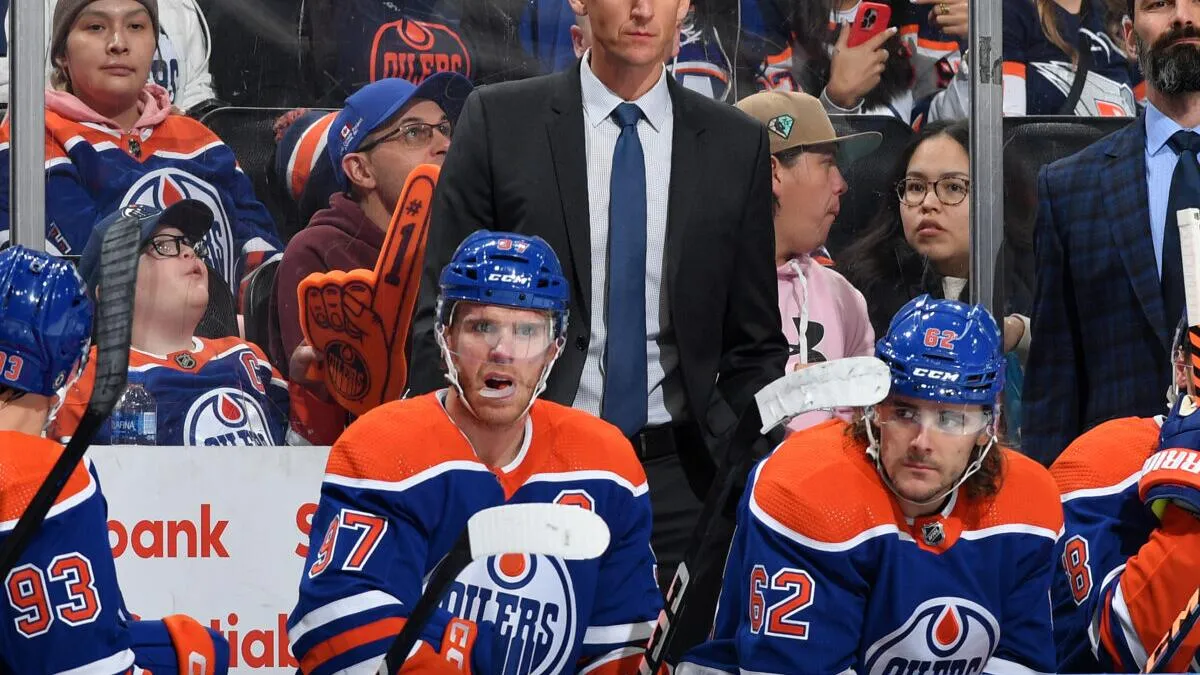
Honorable mentions among top five Edmonton Oilers coaches of all time
Before revealing the elite five, several coaches deserve recognition for their contributions. Ted Green guided the 1990s Oilers through transition years with a .569 winning percentage, bringing stability when the dynasty core departed. Kevin Lowe stepped in for brief but meaningful tenures during two different eras, understanding the organizational culture better than anyone. Todd McLellan modernized the team”s systems during the Connor McDavid era”s early years, establishing a foundation that current coaches build upon today. Jay Woodcroft”s 2022-2023 regular season dominance (.701 winning percentage) showcased tactical brilliance before playoff heartbreak. Ken Hitchcock”s veteran presence in 2018 provided short-term stabilization when the franchise needed direction.
What separates our top five from these accomplished coaches comes down to championship pedigree, sustained success, and transformative impact on the franchise’s identity.
Ron Low: the underdog specialist (1995-1999)
Ron Low’s .466 winning percentage might not impress at first glance, but context matters profoundly in evaluating his impact. Coaching in the pre-salary cap era, Low operated with a roster that saw Edmonton outspent by nearly two-to-one margins against powerhouse franchises. His true genius emerged in the playoffs, where his Oilers became giant-slayers.
The 1997 first-round upset against the Dallas Stars stands as Low’s masterpiece. Behind Curtis Joseph’s spectacular goaltending and Todd Marchant’s series-winning overtime goal, Edmonton shocked a heavily favored Stars squad 4-3. Low’s strategic adjustments neutralized Dallas’s superior firepower, proving that structure and belief could overcome financial disparity.
One year later, Low’s Oilers repeated the feat against the Colorado Avalanche. Joseph outdueled Hall of Fame goaltender Patrick Roy in a decisive Game 7 victory that announced Edmonton’s refusal to accept its small-market limitations. Low’s ability to extract maximum effort while implementing disciplined defensive systems made these upsets possible.
His player relationships defined his tenure. Low connected with role players and stars alike, creating a locker-room culture where every member understood their value. The team bought into his “us against the world” mentality, compensating for talent gaps with cohesion and work ethic. Many hockey historians wonder how Low’s adaptable coaching style would have thrived in the salary-cap era’s parity-driven landscape.
Craig MacTavish: the multi-era leader (2000-2009)
Craig MacTavish’s nine-year run produced a .537 winning percentage and four playoff appearances, but his 2006 campaign cemented his legacy. Guiding the eighth-seeded Oilers to the Stanley Cup Final required MacTavish to push every correct button at precisely the right moment. His motivational tactics transformed a roster featuring Chris Pronger, Ryan Smyth, and a young Shawn Horcoff into a cohesive unit that came within one game of championship glory.
During his tenure, MacTavish’s strengths as a coach extended beyond game strategy. He mentored emerging talents Ales Hemsky and Horcoff through their development phases, demanding defensive responsibility while allowing offensive creativity. His military background informed a disciplined approach that earned universal respect despite his sometimes stern demeanor.
MacTavish’s hockey mind served Edmonton even after his coaching days. As general manager, he selected Darnell Nurse in 2013 and franchise cornerstone Leon Draisaitl in 2014, decisions that continue paying dividends. This draft acumen reveals a coach who understood roster construction at the deepest level, identifying how individual pieces fit within broader team architecture.
His system-oriented style prioritized puck possession and structured breakouts, concepts that seemed ahead of their time in the mid-2000s. While the 2006 run ended in heartbreak against Carolina, MacTavish’s ability to maximize roster potential across different competitive windows earns him a rightful place among the top five Edmonton Oilers coaches of all time.
Kris Knoblauch: the modern maestro (2023-present)
The emergence of Kris Knoblauch represents a new gold standard for Oilers coaching excellence. In barely two seasons, his .656 winning percentage and back-to-back Western Conference championships have redefined expectations. His calm demeanor masks a brilliant tactician who seemingly always knows which player belongs in the lineup at the exact right moment.
Knoblauch’s 2024 playoff run showcased his roster management genius. Inserting Calvin Pickard into Game 4 against Vancouver after starter Stuart Skinner struggled proved decisive; Pickard’s steady performance stabilized the series. More dramatically, placing Kasperi Kapanen into the lineup against Vegas after nine straight healthy scratches resulted in the winger scoring the series-clinching overtime goal in Game 6.
These aren’t lucky guesses—they reflect Knoblauch’s exceptional ability to read his players’ psychology and readiness. He creates an environment where even depth contributors feel valued and prepared, a crucial ingredient for playoff success when injuries and matchups demand lineup flexibility.
His player development philosophy balances structure with freedom, particularly benefiting Edmonton’s star core. Connor McDavid and Leon Draisaitl produce at historic rates while buying into Knoblauch’s defensive systems. This equilibrium between offensive brilliance and team responsibility represents coaching mastery. As he continues building his legacy, the hockey world watches to see if Knoblauch can deliver Edmonton’s sixth championship.
John Muckler: the tactical genius (1989-1991)
John Muckler’s .531 winning percentage as head coach tells only a fraction of his story. Promoted when Glen Sather stepped away from bench duties, Muckler inherited enormous expectations while managing the post-dynasty transition. His 1990 Stanley Cup victory proved he wasn’t just maintaining a machine—he was rebuilding it mid-flight.
The first-round series against Winnipeg tested Muckler immediately. When Grant Fuhr suffered an injury, the coach turned to unproven Bill Ranford with the Oilers trailing 3-1. Muckler’s steady confidence in Ranford, combined with tactical adjustments that protected the young goaltender, sparked a three-game winning streak that saved Edmonton’s season. That resilience defined the entire playoff run.
Muckler’s strategic brilliance shone brightest against Chicago in the Western Conference Final and Boston in the Cup Final. He implemented a neutral-zone trap that slowed the Blackhawks’ speed while unleashing Jari Kurri and Mark Messier in transition space. Against the Bruins, he identified matchup advantages that allowed unheralded winger Petr Klima to become an overtime hero in Game 1’s third extra period.
Former Oilers defenseman Kevin Lowe perfectly captured Muckler’s importance: “I really believe we won because of the systems by John Muckler and (assistant coach) Teddy Green, and supported by Slats (Sather).” This quote reveals how Muckler’s X’s and O’s expertise complemented the organization’s leadership structure. His ability to innovate tactically while managing championship-or-bust pressure secures his spot among the top five Edmonton Oilers coaches of all time.
Glen Sather: the architect of greatness (1979-1989, 1993-1994)
Glen Sather stands alone as the greatest coach in Edmonton Oilers history, and it’s not particularly close. His .616 winning percentage includes four Stanley Cup championships, but numbers fail to capture his transformative impact. Sather didn’t just coach a dynasty—he architected its culture, confidence, and creative brilliance.
The roster featured generational talents: Wayne Gretzky, Mark Messier, Paul Coffey, Jari Kurri, Grant Fuhr. Skeptics claim any coach could have won with that group, but Sather’s genius lay in harnessing their individual greatness into cohesive dominance. He learned from legends like Scotty Bowman and Harry Sinden during his playing days, absorbing how to motivate superstars while maintaining team-first principles.
Sather’s motivational approach balanced toughness with empowerment. He recognized when to push his players and when to let their natural creativity flourish. The Oilers played hockey at a different speed under his watch—not just physically, but mentally. His systems encouraged risk-taking and improvisation within structured frameworks, a revolutionary concept in the conservative 1980s NHL.
Beyond his four Cups as head coach, Sather coached Team Canada to 1984 Canada Cup victory, proving his methods transcended professional ranks. His 25-year organizational run ended in 2000, leaving a legacy that defined Edmonton hockey. Even his later success with the New York Rangers as general manager traces back to lessons learned building the Oilers empire. For his unprecedented championship success, player development mastery, and lasting cultural impact, Glen Sather rightfully tops any list of the top five Edmonton Oilers coaches of all time.
His vision extended beyond the bench. Sather’s understanding of how talent, character, and systems intersect created a template that modern coaches like Knoblauch still follow. The Oilers’ identity as a fast, skilled, resilient franchise traces directly to Sather’s foundational work.
Edmonton’s coaching legacy reflects the franchise’s broader narrative—dynasty brilliance, underdog resilience, and modern reinvention. From Sather’s creative genius to Knoblauch’s tactical precision, these five coaches navigated different challenges while upholding the standard of excellence Oilers fans demand. Their combined achievements include five Stanley Cups, multiple conference championships, and countless playoff memories that define hockey in northern Alberta.
What unites these coaches across four decades is their ability to maximize roster potential while adapting to their era’s unique constraints. Whether managing superstars, overachieving with limited budgets, or balancing generational talent with depth contributions, each left an indelible mark on franchise history. For fans seeking to understand the Oilers’ evolution, studying these coaching careers reveals how a small-market team built and maintained NHL relevance through visionary leadership.
The current Knoblauch era suggests this coaching excellence continues, with the future promising more chapters to add to Edmonton’s rich hockey heritage. As the organization chases its sixth championship, it does so standing on the shoulders of these five giants who defined what it means to coach the Edmonton Oilers.
For more on Oilers history, explore the franchise’s greatest draft classes that supplied talent to these legendary coaches. Additionally, the top goaltenders in Oilers history played crucial roles under these coaches, from Grant Fuhr to Curtis Joseph to modern netminders.
Frequently Asked Questions

Par Mike Jonderson
Mike Jonderson is a passionate hockey analyst and expert in advanced NHL statistics. A former college player and mathematics graduate, he combines his understanding of the game with technical expertise to develop innovative predictive models and contribute to the evolution of modern hockey analytics.