






The Edmonton Oilers have built one of hockey’s most storied franchises through exceptional drafting, particularly during the franchise’s early years when they assembled the core of a dynasty that would dominate the 1980s. While recent draft classes have brought in generational talents like Connor McDavid and Leon Draisaitl, it’s the foundation laid in the late 1970s and early 1980s that truly stands as the benchmark for draft excellence in franchise history. The combination of Hall of Fame caliber players selected over consecutive years created a blueprint that few teams have ever matched.
Understanding which draft classes stand above the rest requires examining not just the star power produced, but the sustained impact these players had on the organization’s success. From multiple Stanley Cup championships to individual accolades and records that still stand today, the greatest Edmonton Oilers NHL draft classes of all time transformed a fledgling WHA franchise into an NHL powerhouse that redefined offensive hockey.
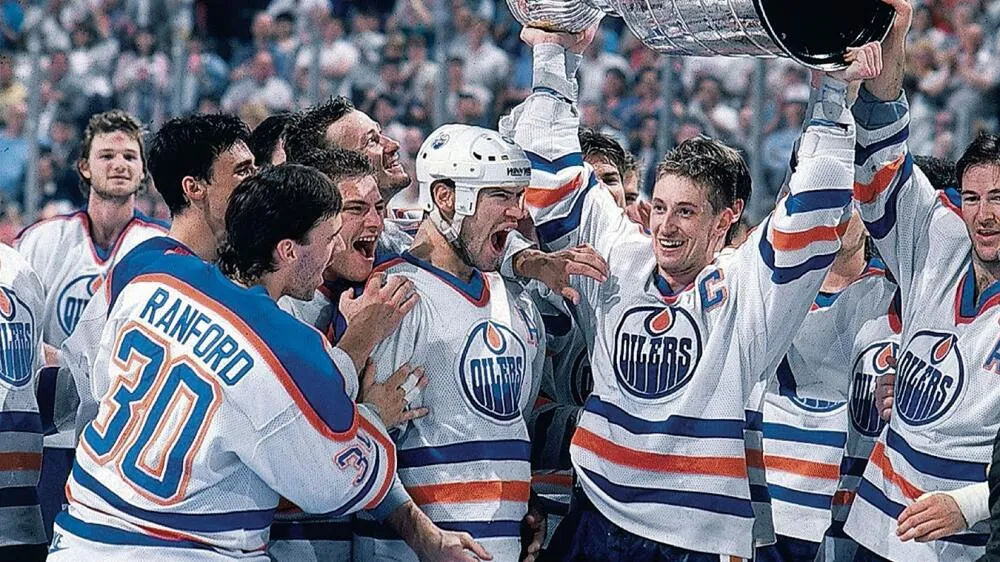
The legendary 1979 draft class that started it all
The 1979 NHL Entry Draft marked the beginning of something special for the Oilers, representing their inaugural draft as an NHL franchise. With their very first selection, 21st overall, Edmonton chose defenseman Kevin Lowe, who would become the cornerstone of their blueline for 15 seasons. Lowe was more than just a draft pick—he was the first building block of a dynasty, scoring the team’s first goal in NHL history and eventually helping the franchise win five Stanley Cup championships between 1984 and 1990.
What makes the 1979 class truly exceptional among the greatest Edmonton Oilers NHL draft classes of all time was the incredible value found in later rounds. Just 27 picks after selecting Lowe, the Oilers took Mark Messier in the third round, 48th overall. This selection alone would justify calling 1979 one of the best drafts in NHL history, not just for Edmonton. Messier went on to be inducted into the Hockey Hall of Fame in 2007 and remains third on the all-time NHL points list with 1,887 points, including 1,034 accumulated during his 12 seasons in Edmonton.
The brilliance continued in the fourth round when Edmonton selected Glenn Anderson at 69th overall. Anderson, like Messier and Lowe, would win five Stanley Cups with the Oilers and was inducted into the Hockey Hall of Fame in 2008. His reputation as a clutch performer was well-earned—Anderson’s five postseason overtime goals are tied for third in NHL history, and his 72 regular-season game-winning goals remain a franchise record, surpassing even Wayne Gretzky’s 61.
Beyond these three future Hall of Famers, the 1979 class also included some depth picks that didn’t pan out, including Max Kostovich, Mike Toal, and Blair Barnes, none of whom made significant NHL impacts. However, when a single draft produces three players who combine for 15 Stanley Cup championships and two Hockey Hall of Fame inductions, the misses become irrelevant. The foundation established through this draft would prove instrumental in creating one of the most dominant teams the NHL has ever witnessed.
The remarkable 1980 draft that completed the dynasty core
If 1979 started the dynasty, 1980 completed it. The Oilers’ 1980 draft class stands alongside their inaugural draft as one of the greatest Edmonton Oilers NHL draft classes of all time, featuring Hall of Fame talent and incredible depth. The draft began with Edmonton selecting Paul Coffey sixth overall, a pick that would yield one of the greatest offensive defensemen in hockey history. Coffey’s seven seasons in Edmonton produced three Stanley Cup championships and some of the most spectacular offensive displays ever seen from a defenseman.
Coffey’s statistics are staggering—1,531 points in 1,409 NHL games, including 396 goals, with 14 All-Star Game selections and three James Norris Trophy wins as the league’s top defenseman. His speed and offensive instincts revolutionized the position, and his 37-point playoff performance in 1985 remains one of the most dominant postseason runs by any defenseman. The synergy between Coffey and Wayne Gretzky created offensive opportunities that opposing teams simply couldn’t contain.
The true genius of the 1980 draft revealed itself in the fourth round when Edmonton selected Finnish winger Jari Kurri at 69th overall, the exact same pick number where they had found Glenn Anderson the previous year. Kurri’s selection represented exceptional international scouting at a time when European players were still relatively rare in the NHL. Over his 17-year career, Kurri scored 601 goals and 1,398 points, with his best seasons coming in an Oilers uniform where he won five Stanley Cup championships during his ten seasons with the team.
Kurri’s 71-goal campaign in 1984-85 showcased his elite finishing ability and perfect chemistry with Gretzky, while his Lady Byng Trophy win that same season demonstrated his ability to play at an elite level without taking penalties. In the seventh round, Edmonton also found value by selecting goaltender Andy Moog at 132nd overall. Though not a Hall of Famer, Moog won three Stanley Cups with Edmonton and went on to post a 372-209-88 record over his 713-game NHL career, eventually winning the William Jennings Trophy with Boston in 1989-90.
The 1981 draft and Grant Fuhr’s arrival
While not possessing the same depth as the 1979 and 1980 classes, the 1981 draft deserves recognition among the greatest Edmonton Oilers NHL draft classes of all time for one singular reason: Grant Fuhr. Selected eighth overall, Fuhr would become one of the most accomplished goaltenders in NHL history and the final piece of Edmonton’s championship puzzle. His selection completed the core that would win five Stanley Cups in seven years.
Fuhr’s acrobatic style and ability to make spectacular saves became legendary throughout the hockey world. Though the Oilers’ offensive firepower often overshadowed their goaltending, Fuhr’s presence in net provided the reliability and big-game performance necessary to win championships. His induction into the Hockey Hall of Fame recognized not just his regular-season excellence but his ability to elevate his game when it mattered most.
The combination of Hall of Fame talent from the 1979, 1980, and 1981 drafts created an unprecedented concentration of elite players. Six players from these three consecutive drafts—Kevin Lowe, Mark Messier, Glenn Anderson, Paul Coffey, Jari Kurri, and Grant Fuhr—have been inducted into the Hockey Hall of Fame. This remarkable achievement demonstrates the organizational scouting prowess under chief scout Barry Fraser, who identified talent throughout the draft that other teams overlooked or undervalued.
These three consecutive draft classes formed the nucleus of a team that won four Stanley Cups in five years (1984, 1985, 1987, 1988) and five in seven years (adding 1990). The synergy between these players, combined with the presence of Wayne Gretzky, created a dynasty that revolutionized offensive hockey and set records that still stand today. No discussion of the greatest Edmonton Oilers NHL draft classes of all time can be complete without recognizing this golden era of talent acquisition.
The 2015 draft class that brought Connor McDavid to Edmonton
Fast forward to the 21st century, and the 2015 draft represents the most impactful single selection in modern Oilers history. When Edmonton won the draft lottery, securing the first overall pick, the entire hockey world knew who they would select: Connor McDavid. While one player alone might not seem sufficient to rank among the greatest Edmonton Oilers NHL draft classes of all time, McDavid’s generational talent and immediate impact justify this class’s inclusion.
McDavid’s resume already includes five Art Ross Trophies, three Hart Trophies, five NHL First-Team All-Star selections, and a Rocket Richard Trophy. He has led Edmonton to back-to-back Stanley Cup Finals appearances and established himself as the consensus best player of his generation. His ability to control games through speed, vision, and skill has drawn comparisons to Gretzky himself, representing the highest compliment any Oilers player can receive.
Beyond McDavid, the 2015 class demonstrated impressive depth. Edmonton selected three defensemen in consecutive rounds who have all established NHL careers: Caleb Jones in the fourth round, Ethan Bear in the fifth round, and John Marino in the sixth round. While none became superstars, all three have played multiple NHL seasons with Marino posting 121 NHL points, providing solid value for mid-round selections.
The combination of a generational franchise centerpiece with three serviceable NHL defensemen makes 2015 one of the strongest draft classes of the modern era for Edmonton. While it may not match the cumulative Hall of Fame talent from the dynasty years, McDavid’s individual brilliance and the practical depth found in later rounds demonstrate that Edmonton’s drafting prowess can still identify and develop elite talent when given the opportunity.
The 2014 draft that delivered Leon Draisaitl
Another contemporary draft class worthy of inclusion among the greatest Edmonton Oilers NHL draft classes of all time is 2014, when Edmonton selected Leon Draisaitl third overall. Though only one player from this class made a significant NHL impact, Draisaitl’s exceptional career trajectory elevates this draft class’s standing. His combination of size, skill, and scoring ability has made him one of the most dominant two-way centers in hockey.
Draisaitl’s accomplishments include a Hart Trophy (2020), an Art Ross Trophy (2020), a Rocket Richard Trophy (2020), and a Ted Lindsay Award (2020). He has recorded multiple 100-point and 50-goal seasons, establishing himself as McDavid’s perfect complement and a superstar in his own right. His recent eight-year extension worth $112 million, carrying an annual average value of $14 million, represents the highest AAV in NHL history at the time of signing.
The partnership between McDavid and Draisaitl has provided Edmonton with the most dangerous one-two punch in hockey. Draisaitl’s ability to drive his own line while also elevating McDavid’s game creates matchup nightmares for opponents. His playoff performances have been particularly impressive, showcasing the clutch gene necessary for championship success.
William Lagesson, selected 91st overall in this draft, represents the only other player to reach the NHL, appearing in 107 games across multiple organizations with limited production. While the lack of depth prevents this class from ranking alongside the dynasty-era drafts, Draisaitl’s elite talent alone provides sufficient value to justify recognition. Having two generational players from consecutive draft years (McDavid in 2015, Draisaitl in 2014) represents a remarkable organizational opportunity to compete for championships.
Recent draft classes showing promise for the future
The 2018 draft class deserves mention when discussing the greatest Edmonton Oilers NHL draft classes of all time, particularly for the selection of Evan Bouchard 10th overall. Bouchard has developed into one of the NHL’s elite offensive defensemen, quarterbacking Edmonton’s power play and consistently finishing in top-tier Norris Trophy voting. His 238 career points through his first several seasons demonstrate his ability to contribute offensively while handling significant defensive responsibilities.
Beyond Bouchard, the 2018 class featured Ryan McLeod (40th overall), who provided solid bottom-six contributions for Edmonton before being traded to Buffalo where he posted a career-high 53 points. Goaltender Olivier Rodrigue (62nd overall) remains in the organization with potential to contribute, while Michael Kesselring (164th overall) has developed into a productive defenseman for the Utah Mammoth organization despite never playing for Edmonton.
The 2011 draft brought Ryan Nugent-Hopkins first overall, a selection that has proven invaluable for organizational stability and consistent production. “Nuge” has compiled 748 career points while approaching 1,000 games played, all with Edmonton. His willingness to accept various roles and consistent two-way play has made him a beloved figure in the organization. Oscar Klefbom, selected 19th overall in the same draft, provided seven seasons of solid defensive play before injuries prematurely ended his promising career.
The 2017 draft yielded Kailer Yamamoto (22nd overall) and Stuart Skinner (78th overall), with Skinner emerging as Edmonton’s starting goaltender. His All-Star selection in 2023 and back-to-back Western Conference Final appearances demonstrate his development into a reliable number-one netminder. These recent classes may not match the dynasty-era talent concentration, but they’ve provided key contributors to Edmonton’s recent championship runs.
The greatest Edmonton Oilers NHL draft classes of all time established a standard of excellence that remains the benchmark for franchise building in professional hockey. The consecutive drafts of 1979 and 1980 produced six Hockey Hall of Famers and the core of a dynasty that won five Stanley Cups in seven years. That level of talent acquisition in such a condensed timeframe represents perhaps the most successful drafting stretch any NHL franchise has ever achieved. Chief scout Barry Fraser’s ability to identify talent throughout the draft, from first-rounders like Paul Coffey to fourth-rounders like Jari Kurri and seventh-rounders like Andy Moog, created sustainable championship-level depth that modern teams strive to replicate.
The modern era has brought different challenges and opportunities, with the 2015 selection of Connor McDavid representing the most impactful single pick since the dynasty years. Combined with Leon Draisaitl from 2014 and supporting cast members like Evan Bouchard and Ryan Nugent-Hopkins, Edmonton has assembled another core capable of contending for championships. While these recent classes may never match the cumulative Hall of Fame talent from the dynasty era, they’ve provided the foundation for Edmonton’s return to championship contention. As the organization continues building around its elite young core, the lessons learned from those legendary early drafts remain relevant—identify talent wherever it exists, develop it properly, and surround generational players with complementary pieces who understand their roles. That formula produced the greatest Edmonton Oilers NHL draft classes of all time and continues guiding the franchise toward future success.

Par Mike Jonderson
Mike Jonderson is a passionate hockey analyst and expert in advanced NHL statistics. A former college player and mathematics graduate, he combines his understanding of the game with technical expertise to develop innovative predictive models and contribute to the evolution of modern hockey analytics.