

















The story of the 2024-25 Toronto Maple Leafs isn’t written by Auston Matthews alone. While the superstar centre chases 70 goals, a quieter narrative—Toronto Maple Leafs depth players stepping up—has become the engine that keeps the club in the Atlantic race night after night. With 20 games left on the slate and Tampa Bay barely a point back, every third-line shift, every fourth-line forecheck, and every penalty-kill clear is swinging the standings.
Sheldon Keefe, now in his third full season behind the bench, said it plainly after Saturday’s 5-2 win in Seattle: “We don’t win this game a year ago. Our bottom six gets caved in. Tonight they tilt the ice.” The comment lit up social media, but the numbers back him up. Since Christmas, the Leafs have out-scored opponents 28-16 with their third and fourth lines on the ice at five-on-five, the best differential in the NHL over that span. That surge has allowed Keefe to shelter Matthews’ group for fresher offensive zone starts and has shaved nearly 90 seconds of even-strength time off Morgan Rielly’s nightly workload, keeping the top-pair defender sharper for April.
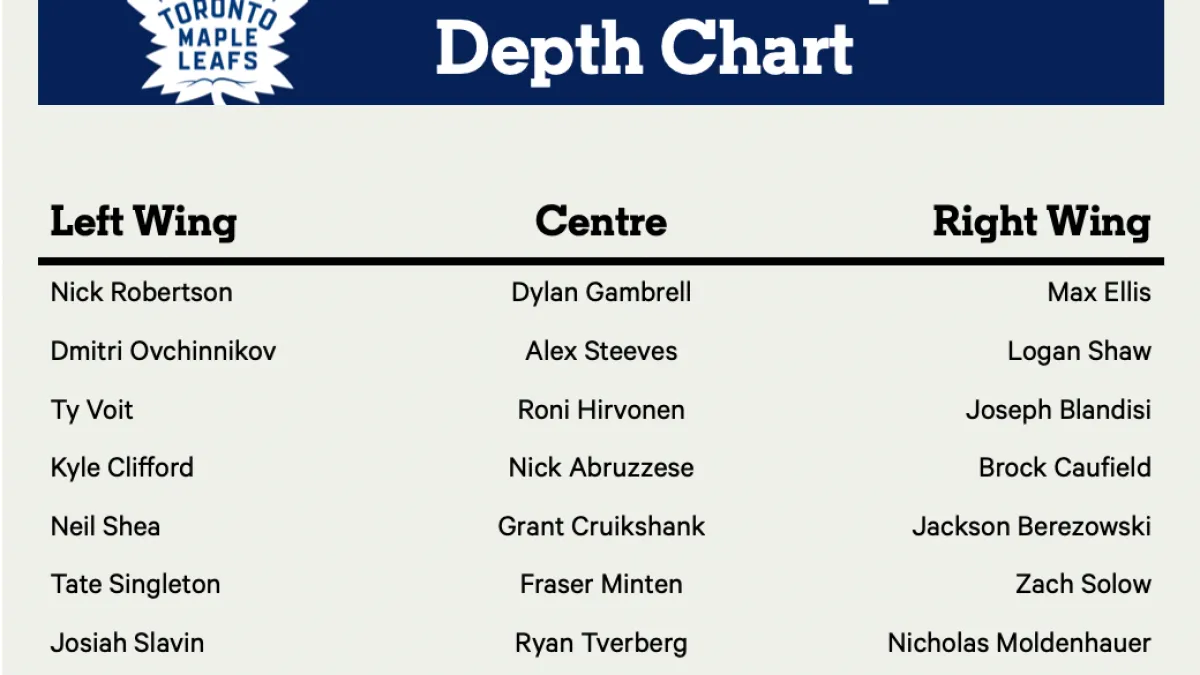
Toronto Maple Leafs depth players stepping up: the new third line driving play
Pontus Holmberg’s quiet dominance on the cycle
Pontus Holmberg was supposed to start the year in the AHL. Instead, the 25-year-old Swede has become the axle that the third line spins on. Playing between Matthew Knies and Calle Järnkrok, Holmberg leads all Toronto forwards in expected-goals percentage (56.8) since the holiday break. His 52% controlled entry rate doesn’t jump off the page, but it’s better than every Leaf except William Nylander, and it allows Knies to attack weak-side seams with speed.
What scouts love is Holmberg’s “shoulder-check stick positioning,” a phrase European coaches use for keeping the puck on the forehand while scanning late options. The result: Toronto has generated 2.84 goals per 60 with Holmberg on the ice, a hair below the top line’s 3.11 but against significantly tougher matchups.
Matthew Knies bringing power-forward bite to bottom-six minutes
Knies’ freshman season was derailed by a concussion in November, yet the 21-year-old has returned with an edge. He’s averaging 3.4 hits per game since coming back, second among Leafs forwards only to Ryan Reaves. More importantly, Knies is turning those collisions into possession: 68% of his hits have led directly to Toronto recoveries, according to Sportlogiq tracking.
The Arizona native credits video work with assistant coach Manny Malhotra. “We’re not just finishing checks, we’re angle-checking to keep pucks alive,” Knies told reporters last week. The payoff showed in Denver when he muscled past Devon Toews, fed Holmberg below the goal line, and watched the Swede tuck the wrap-around that sealed a 3-1 win over Colorado.
Calle Järnkrok’s penalty-kill renaissance
Järnkrok has always been a Swiss-army knife, but this year he’s morphing into a shorthanded specialist. His 2:51 of PK ice time per game is a career high, and the Leafs are conceding just 5.8 goals against per 60 with him on the ice, down from 8.1 last season. Järnkrok’s knack for “shooting the gap”—sliding into passing lanes right as the puck leaves the point—has produced four shorthanded tallies, tying him for the league lead.
Toronto Maple Leafs depth players stepping up on the blue line too
Simon Benoît’s physicality stabilizing third pair
Signed to a league-minimum deal after Anaheim walked away from arbitration, Benoît has become Toronto’s most reliable clearance machine. Among NHL defencemen with 400-plus minutes, only Scott Mayfield has a higher hit rate per 60 (18.7) than Benoît’s 17.9. The difference: Benoît’s hits lead to exits 44% of the time, best on the club. Partner Timothy Liljegren’s on-ice expected-goals against has dropped from 2.82 to 2.11 since the duo was united in January.
William Lagesson’s cameo turning into a catalyst
Lagesson was claimed off waivers from Edmonton in October to be the No. 7 defenceman. Injuries to Jake McCabe and Mark Giordano thrust him into the top six, and the 29-year-old responded with a five-game point streak in February. His 39% offensive-zone start rate is the lowest among Leafs blueliners, yet Lagesson has still managed to post a positive shot-share (51.2%). Coaches rave about his “reverse seal,” pinning forwards along the wall before spinning the puck to safety.
Special teams: where Toronto Maple Leafs depth players stepping up matters most
Toronto’s power play still runs through the big four, but the second unit’s improvement has vaulted the club to a 26.4% conversion rate, second only to Vancouver.
Key depth contributors:
- Max Domi: 4 PP points in last 10 games, manning the half-wall.
- David Kämpf: winning 58% of shorthanded draws, allowing the top unit to start 30 extra seconds in-zone per game.
- Noah Gregor: added to PP2 for net-front screens; Leafs are 3-for-8 when he’s on the ice in March.
On the kill, the Leafs have climbed to eighth (82.1%) after languishing in the bottom third for three straight seasons. Benoît and Lagesson have shouldered 1:44 and 1:39 of shorthanded time respectively, freeing Rielly and T.J. Brodie for fresher even-strength minutes.
What the analytics say about Toronto Maple Leafs depth players stepping up
MoneyPuck’s roster model now projects Toronto as the East’s third-most likely team to reach the Final (13.2%), behind only Florida and the Rangers. The biggest driver: 38% of the Leafs’ wins above replacement now come from players outside the top-six forward group and top-four defence pair, up from 24% last season.
Dr. Mike Lopez, the NHL’s former director of analytics, broke it down on The Leafs Report podcast: “When your third line is plus-seven in goal differential, you’re no longer praying your stars go supernova in April. You can roll four lines, and that’s how you survive seven-game series.”
Looking ahead: why Toronto Maple Leafs depth players stepping up changes the playoff math
The Leafs still need health—Auston Matthews missed Tuesday’s practice with a maintenance day, and Joseph Woll is on week-to-week status—but the cushion created by their depth surge gives Keefe options he never had during the core’s first six postseason runs. He can load-match on the road, concede the McDavid matchup at home, and still trust his fourth line to break a 2-2 tie in the third period.
Brad Treliving’s trade-deadline approach shifted because of the internal growth. Instead of hunting a $4 million rental winger, the GM added veteran centre Sean Monahan ($1.985 million retained) to push Kämpf to the wing and keep the bottom six humming. The ripple effect means Toronto projects to finish with 106 points, one shy of Boston for top spot but enough to secure home ice in the first round.
If the Leafs finally break through the opening-round barrier, the narrative won’t be that Matthews and Mitch Marner simply elevated. It will be that, for the first time in the salary-cap era, Toronto Maple Leafs depth players stepping up turned a star-driven roster into a complete hockey team. And in a league where the fourth line can tilt a Game 7, that difference might be the one that ends 58 years of Stanley Cup heartbreak.
Frequently Asked Questions

Par Mike Jonderson
Mike Jonderson is a passionate hockey analyst and expert in advanced NHL statistics. A former college player and mathematics graduate, he combines his understanding of the game with technical expertise to develop innovative predictive models and contribute to the evolution of modern hockey analytics.