






The Edmonton Oilers’ bold offseason acquisition of Isaac Howard from the Tampa Bay Lightning was always a long-term play, but few expected immediate returns at the AHL level. After a challenging 17-game NHL stint to begin the 2025-26 season, the former Hobey Baker Award winner has found his stride with the Bakersfield Condors, posting an eye-popping four points in just two games. This torrid start isn’t just padding his stats—it’s validating the Oilers’ developmental patience and offering a glimpse of the offensive weapon Edmonton hopes to deploy for years to come.
Howard’s journey from college superstar to AHL standout reflects the modern blueprint for prospect development. Rather than force-feeding talented youngsters into NHL lineups before they’re ready, the Oilers have embraced a methodical approach that prioritizes complete skill development over rushed promotion. The early results suggest this philosophy may pay dividends sooner than anticipated.
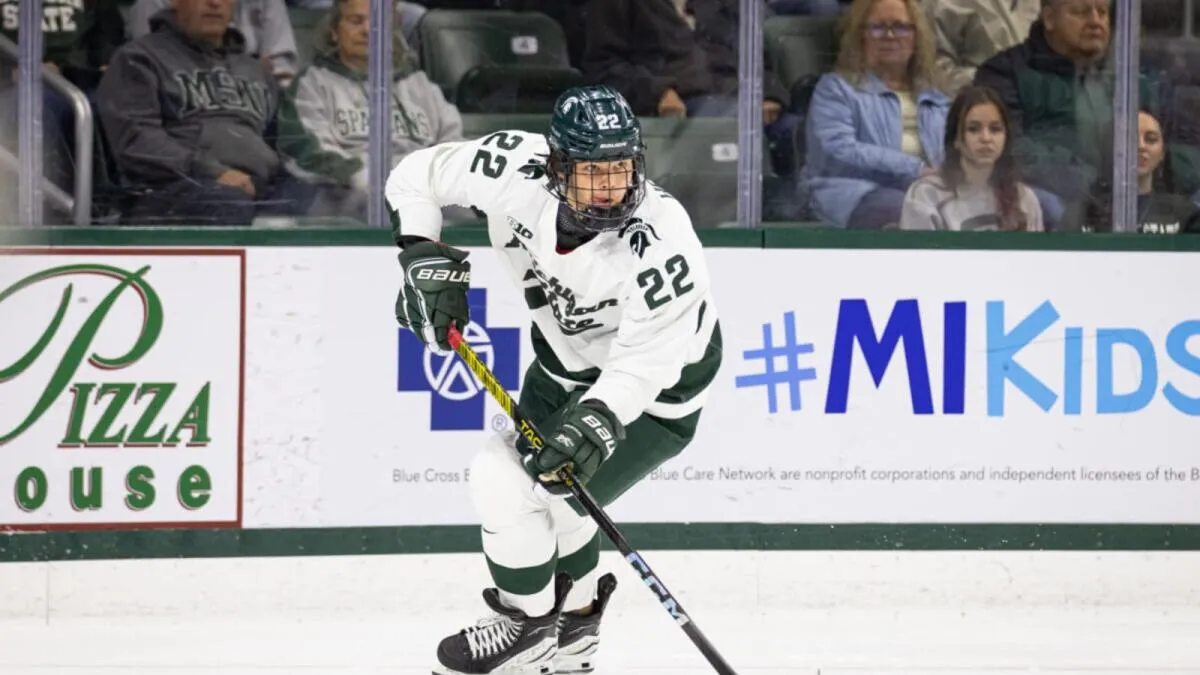
The path from Hobey Baker to Bakersfield
Trade that raised eyebrows across the league
When Edmonton shipped forward Sam O’Reilly to Tampa Bay for Howard this past summer, the hockey world took notice. The Lightning, who had selected Howard 31st overall in the 2022 NHL Entry Draft, were parting with a former first-round pick and recent Hobey Baker winner—a player many viewed as a future top-six fixture. For the Oilers, the gamble represented a belief in Howard’s elite offensive instincts and a willingness to invest in proper development.
The transaction came with inherent risk. Howard had dominated NCAA competition at Michigan State University, posting 24 goals and maintaining a point-per-game pace over 73 contests. His 2024 U20 World Junior Championship performance—seven goals in seven games—further cemented his reputation as a clutch scorer. Yet translating college success to NHL production rarely follows a linear path, a reality Howard would soon discover.
College dominance meets professional reality
Howard’s collegiate credentials are impeccable. After a brief stint at Minnesota-Duluth, he transferred to Michigan State and became the nation’s most dynamic offensive threat. His 2024-25 Hobey Baker Award campaign showcased a player who could control games single-handedly, using his speed and hockey IQ to create chances where none existed.
The United States Hockey League had offered similar dominance years earlier—37 points in 27 games for the U.S. National Development Team. At every level, Howard had been “the guy,” the offensive engine his team relied upon. This history made his NHL struggles all the more jarring, but also perfectly understandable for those who study prospect development.
The learning curve in Edmonton
Seventeen games. Two goals. One assist. Three total points. Howard’s NHL stat line tells only part of the story. Skating primarily on the fourth line under head coach Kris Knoblauch, the rookie averaged minimal ice time and struggled to find rhythm. The game speed overwhelmed him at times, and defensive positioning—the subtle art of preventing goals rather than creating them—proved a steep learning curve.
Concern grew among fans who questioned Howard’s usage, wondering if limited minutes stifled his confidence. The organization, however, maintained perspective. General manager Ken Holland’s staff identified specific developmental needs: improved defensive zone coverage, more responsible backchecking, and a better understanding of NHL systems. The solution wasn’t more NHL reps—it was meaningful AHL minutes where Howard could play through mistakes and receive targeted coaching.
Explosive debut dominance with Bakersfield
Four points in two games grabs attention
The Condors’ faith in Howard was immediate. Unlike his sheltered NHL role, Bakersfield handed him over 18 minutes per game and first-line responsibilities. The results were instantaneous: four points (two goals, two assists) in two contests, good for an absurd two-point-per-game pace. Ten shots on goal in those games demonstrated not just production, but aggressive offensive intent.
This statistical explosion grabbed attention across the AHL. While many elite prospects transition from fourth-line NHL duty to top-line AHL production, Howard’s immediate impact stands out even among that crowd. His ability to process plays faster than opposing defenses creates constant scoring chances for himself and linemates. The offensive instincts that made him a Hobey Baker winner haven’t disappeared—they’ve simply needed the right environment to flourish.
Defensive improvements impress coaching staff
For all the highlight-reel goals and primary assists, the most encouraging development has been Howard’s commitment to the unglamorous parts of the game. Condors coaches have noted significant improvement in his defensive positioning and backchecking effort—precisely the areas Edmonton wanted him to address. He’s not cheating for offense or floating in the neutral zone. Instead, he’s engaging physically and making smart reads in his own end.
This two-way growth suggests Howard is internalizing lessons rather than just dominating inferior competition through raw talent. The Oilers organization has long preached that sustainable NHL careers are built on defensive reliability first, offensive flair second. Howard’s early AHL performance indicates he’s absorbing this philosophy while maintaining the scoring touch that makes him special.
Increased responsibility unlocks creativity
The difference between surviving on an NHL fourth line and thriving as an AHL catalyst cannot be overstated. In Bakersfield, Howard receives power-play time, penalty kill opportunities, and the freedom to make plays without constant fear of benching. This trust has unlocked his creativity. He’s trying high-skill plays, attacking through the middle of the ice, and utilizing his shot in ways that weren’t possible during his conservative NHL deployment.
The psychological impact is equally important. Confidence flows from success, and Howard now has positive reinforcement to build upon. Each shift becomes a learning opportunity rather than a test to avoid mistakes. This mindset shift, combined with increased ice time, creates an ideal development environment.
What this means for the Oilers’ championship window
Depth insurance for playoff contender
Edmonton’s forward depth faces constant pressure. While Connor McDavid and Leon Draisaitl headline one of hockey’s most potent top-six groups, injuries and slumps test roster resilience. Howard’s rapid development provides crucial insurance. If a top-nine forward goes down, the Oilers can now turn to a former Hobey Baker winner playing with swagger rather than a fringe player hoping to survive.
This depth becomes especially critical during playoff pushes when every point matters. A confident, NHL-ready Howard could be the difference between securing home-ice advantage and settling for a wild-card spot. His World Junior Championship performance—seven goals in seven games—proves he can elevate his play when stakes are highest.
Developmental philosophy delivers results
The Oilers’ patient approach reflects broader league trends. Teams increasingly recognize that AHL development time, when managed correctly, produces more complete players. Rushing prospects to the NHL often creates bad habits and shattered confidence. Howard’s two-game sample, while small, validates Edmonton’s commitment to proper seasoning.
This philosophy has worked for other Oilers prospects in recent years, creating a pipeline of players who arrive in Edmonton truly prepared for significant roles. Howard could represent the crown jewel of this system—a former first-round pick given time to become a difference-maker rather than a depth filler.
Timeline for recall remains fluid
The central question now: when does Howard return to Edmonton? The answer depends on multiple factors. If he maintains even a point-per-game pace—far more reasonable than his current two-point clip—he becomes an undeniable call-up candidate. The Oilers’ injury situation and playoff positioning will also influence timing.
History suggests patience usually wins. Players who dominate the AHL for extended periods often arrive in the NHL with permanent staying power. Howard’s current trajectory suggests he’s on that path, addressing specific weaknesses while showcasing elite offensive talent. The organization must balance that long-term development against short-term roster needs.
A future Oilers staple in the making
Isaac Howard’s blazing start with the Bakersfield Condors represents everything Edmonton hoped for when they acquired him. While his NHL cameo exposed the challenges young players face at hockey’s highest level, his AHL dominance demonstrates first-round talent and Hobey Baker pedigree. The two-point-per-game pace catches eyes, but his improved defensive commitment is even more encouraging.
For Oilers fans, this developmental success should inspire excitement. The organization identified a future contributor and is taking proper steps to ensure long-term impact. Howard’s immediate AHL success doesn’t guarantee immediate NHL stardom, but it suggests that when he does return—and that day appears closer by the game—he’ll arrive as a more complete, confident player ready to help Edmonton chase championships. The Condors have given him exactly what he needed: significant minutes, offensive freedom, and targeted defensive coaching. That investment could pay dividends for the Oilers for years to come.
Frequently Asked Questions

Par Mike Jonderson
Mike Jonderson is a passionate hockey analyst and expert in advanced NHL statistics. A former college player and mathematics graduate, he combines his understanding of the game with technical expertise to develop innovative predictive models and contribute to the evolution of modern hockey analytics.