Devante Smith-Pelly appeared on NHL Network recently, delivering a candid assessment of the Detroit Red Wings’ ongoing struggles. He highlighted their lack of scoring depth and suggested trading some younger pieces for proven NHL veterans to boost playoff chances.[1][2] Smith-Pelly noted how the team started strong with hot shooting and solid goaltending, only for both to vanish simultaneously. This flip has become a pattern, especially in March and April.
The Wings’ 2025-26 season encapsulated this frustration. They entered the year with playoff aspirations but faltered down the stretch, missing the postseason for the 10th straight year.[3] Eliminated after a 5-3 loss to the New Jersey Devils, they finished 41-31-10 with 92 points, just short of the wild card.[4] Fans and analysts alike pointed to a third consecutive late-season collapse.
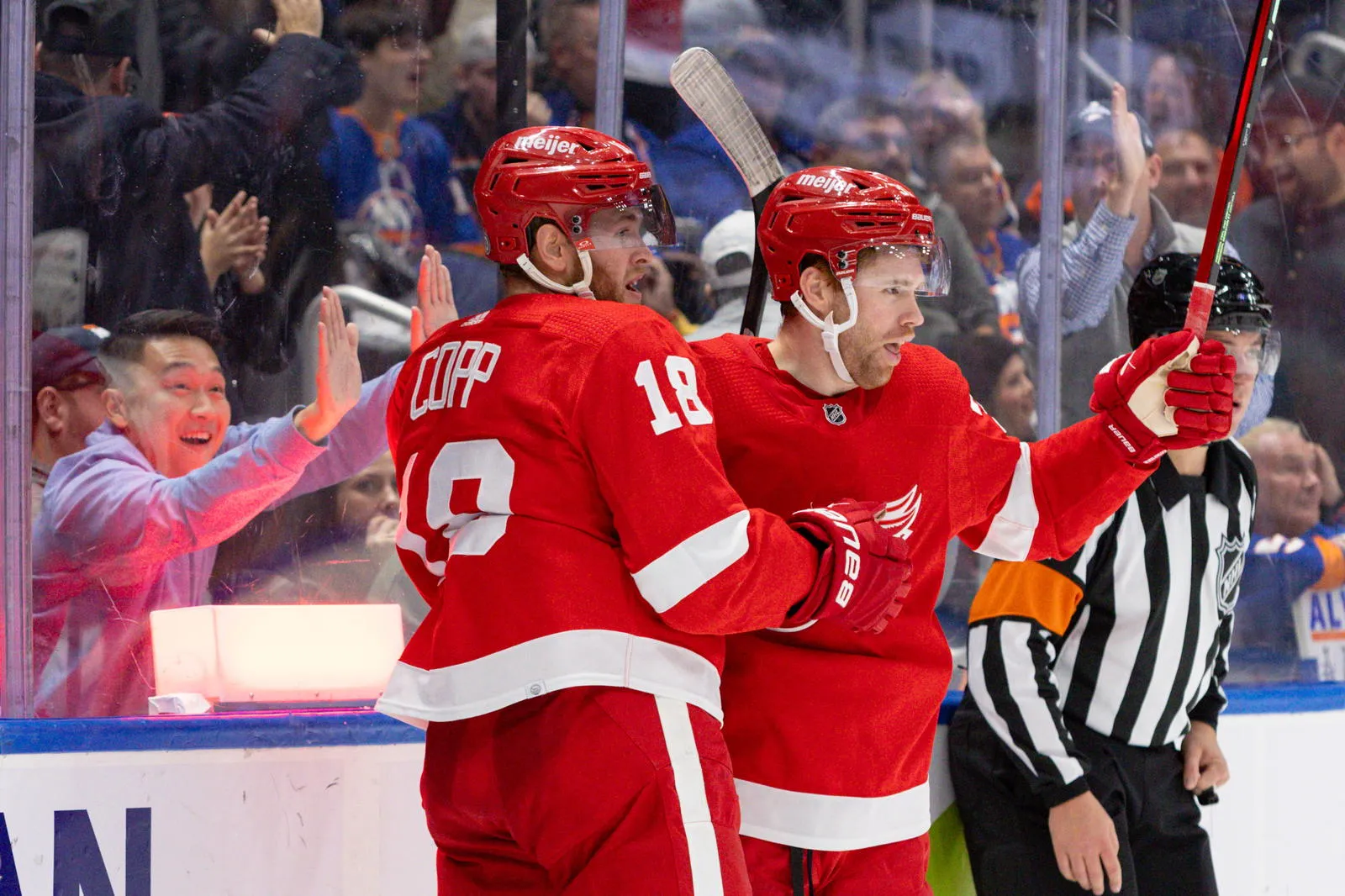
Recurring late-season struggles
The Red Wings put themselves in good positions multiple times, only to unravel when it mattered most. Smith-Pelly questioned why this happens every March and April, despite varying rosters year to year.[5] In 2025-26, they held a 12-point cushion in the playoff race after a January win over Winnipeg but lost five of their final seven games.[6]
Goaltending and offense dried up simultaneously. Early in the season, they shot the lights out, but finishing woes persisted all year, leaving 18.5 goals on the table based on shot quality.[7] Players described the locker room as “deflated, empty and frustrated” after the season ended.[5]
This isn’t isolated. For three straight seasons, Detroit has led divisions or wild-card races before crumbling. Analysts blame a mix of injuries, depth failures, and mental lapses under pressure.[8]
Steve Yzerman addressed the media post-season, acknowledging the disappointment. The GM emphasized a full organizational review to break the cycle.[9]
A deeper look reveals patterns in five-on-five play. The Wings struggled to close out games, allowing opponents to capitalize late. Coach Todd McLellan called out the bottom-six as mere “jersey wearers” on most nights—a red flag for depth scoring.
Star power versus depth issues
Detroit boasts undeniable talent up top. Dylan Larkin centers Lucas Raymond effectively, while Alex DeBrincat notched 40 goals this season.[10] On defense, Moritz Seider and Simon Edvinsson anchor a promising blue line.
Yet, Smith-Pelly stressed that stars alone aren’t enough. “There has to be a full kind of look through the whole organization,” he said, sparing core pieces like Seider, Larkin, and Edvinsson but calling for conversations elsewhere.
The support cast failed to deliver. McLellan’s “jersey” comment underscored bottom-six woes, where production evaporated in crunch time. Even with DeBrincat’s scoring, the team ranked poorly in secondary offense.
Yzerman’s deadline splash—acquiring Justin Faulk from the St. Louis Blues—added experience but didn’t spark the needed depth scoring. It was a moderate move, not the game-changer some hoped for.
Final grades reflected this divide: A’s for top performers, D’s for the supporting role players in another playoff-free year.[10]
The prospect hoard and trade potential
Detroit’s AHL affiliate, the Grand Rapids Griffins, boasts a loaded roster. Prospects like Nate Danielson made NHL debuts this year, scoring his first goal against Seattle.[11] Sebastian Cossa headlines a top-four prospect pool per Scott Wheeler rankings.[12]
Smith-Pelly argued these young players “can’t all come and play at once.” He advocated packaging them for “real proven guys” to contend now. Names like Michael Brandsegg-Nygård, Carter Mazur, and Axel Sandin-Pellikka recently returned to Grand Rapids, highlighting trade bait.[13]
The Wings’ system is deep in forwards and goalies. Trading mid-tier prospects could net a top-six scorer without touching the untouchables.
This approach aligns with Yzerman’s patient rebuild. But after a decade without playoffs, fans question if hoarding delays contention. Will Steve Yzerman change the roster this summer? Recent analyses suggest it’s time.
High-value assets like a first-round pick could sweeten deals for young NHLers. Detroit ranks well positioned for such moves.
Tough conversations ahead
Yzerman faces pressure after 10 straight misses. Smith-Pelly called for “tough conversations” across the organization, sparing the elite but scrutinizing the rest.
McLellan’s depth critique lingers. The coach’s frustration peaked amid late collapses, pointing to support players’ inconsistencies.
Offseason moves loom large. With RFAs and UFAs approaching, Yzerman must balance youth and vets. Faulk’s addition showed willingness to act, but more is needed.
Analysts predict trades involving prospects for scoring help. The playoff drought extension after the Devils loss amplified calls for change.[14]
Fans crave contention. As projecting the Red Wings’ 2026 playoff chances evolves, bold trades could shift odds.
Detroit’s window feels open with the core intact. Prioritizing wins now over future promise might finally end the streak.
The Wings stand at a crossroads. Trading young assets for established NHLers could provide the depth punch missing in recent collapses. Yzerman’s next steps will define if 2026-27 breaks the decade-long drought or extends it further. Tough decisions await, but contention demands action.
Frequently Asked Questions

Par Mike Jonderson
Mike Jonderson is a passionate hockey analyst and expert in advanced NHL statistics. A former college player and mathematics graduate, he combines his understanding of the game with technical expertise to develop innovative predictive models and contribute to the evolution of modern hockey analytics.