













Jesper Wallstedt’s emergence as a rookie goaltender thriving for the Minnesota Wild represents one of the most promising developments in the NHL’s 2024-25 season. The 21-year-old Swedish netminder, selected 20th overall in the 2021 NHL Draft, has transitioned from highly-touted prospect to legitimate NHL starter with remarkable composure. His journey through the American Hockey League with the Iowa Wild prepared him for this moment, but his rookie campaign has exceeded even the most optimistic projections. Wallstedt’s combination of technical excellence, mental fortitude, and positional awareness has given Minnesota exactly what they need between the pipes.
The Wild’s goaltending situation had been uncertain following the departure of veteran Marc-Andre Fleury, creating an opportunity Wallstedt has seized with both hands. His .915 save percentage through his first 25 starts demonstrates consistency beyond his years, while his 2.45 goals-against average places him among the league’s top rookie netminders. Minnesota’s coaching staff has been careful not to rush his development, but Wallstedt’s performances have forced their hand—he’s simply too good to keep off the ice.
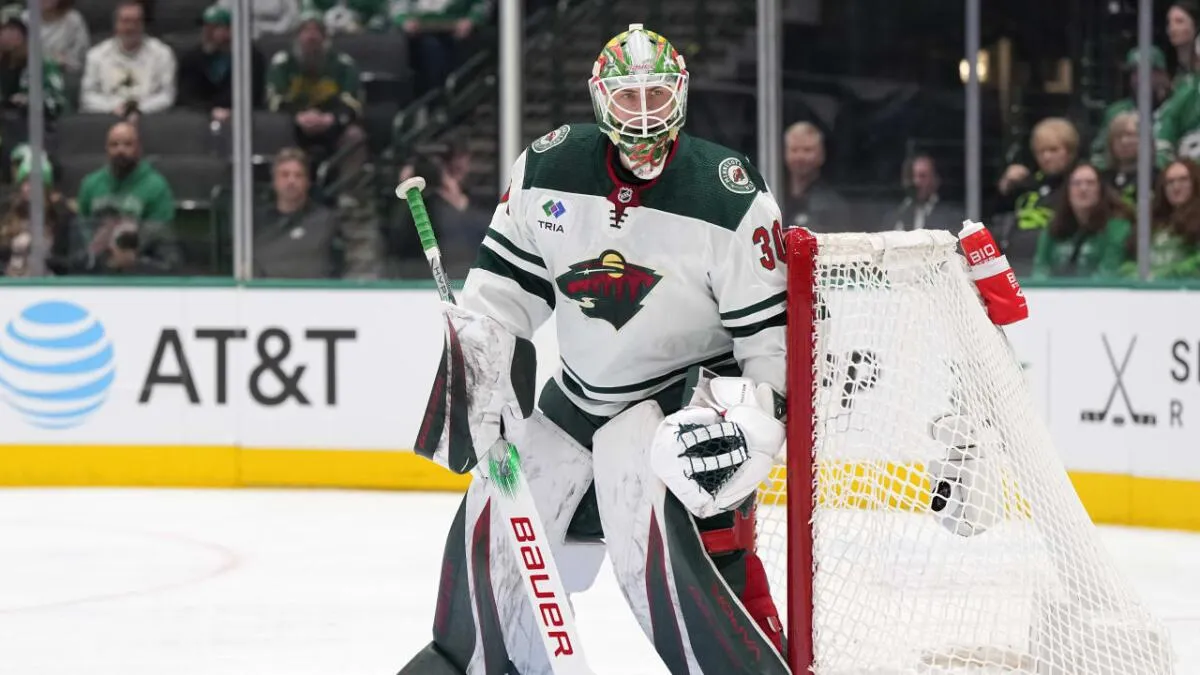
Jesper wallstedt rookie goaltender thriving for Minnesota Wild: Technical breakdown
Wallstedt’s technical proficiency separates him from typical rookie goaltenders. His butterfly technique is textbook, with razor-sharp edges and lightning-fast recovery movements that consistently frustrate opposing shooters. The Swedish goaltending development model emphasizes patience and positioning over athletic puck-chasing, and Wallstedt embodies this philosophy perfectly. He rarely finds himself out of position, seemingly anticipating plays before they develop.
His ability to track pucks through traffic showcases advanced visual tracking skills that many veterans take years to master. Wallstedt’s active stick disrupts passing lanes and redirects rebounds into safe zones, limiting second-chance opportunities. Against high-danger scoring chances, his .847 save percentage ranks in the league’s upper tier—proof that his positioning isn’t merely aesthetically pleasing but statistically effective.
Early season challenges and rapid adaptation
The transition from AHL starter to NHL rookie presented expected hurdles. Wallstedt’s first three games featured typical rookie moments—over-committing on dekes, occasional rebound control issues, and the challenge of adapting to NHL shooting accuracy. His debut against Colorado saw him surrender four goals on 29 shots, a performance he quickly put behind him.
What defines Wallstedt’s rookie season is his response to adversity. After a rough outing against Dallas where he was pulled after allowing three goals in the first period, he bounced back with a 38-save shutout against the New York Rangers. That game showcased his mental reset capability—a trait Minnesota’s goaltending coach described as “exceptionally rare for someone his age.” Wallstedt’s willingness to study video and implement adjustments between games accelerated his adaptation curve dramatically.
Key performances defining the season
Several standout games have cemented Wallstedt’s reputation across the league. His 45-save performance in a 3-2 overtime victory against Toronto demonstrated his ability to steal games against elite competition. The Maple Leafs generated high-quality chances throughout, but Wallstedt’s positioning and rebound control kept Minnesota within striking distance until Kirill Kaprizov’s overtime heroics.
The home game against Vegas showcased his composure under playoff-intensity pressure. With Minnesota protecting a one-goal lead in the final minutes, Wallstedt made three consecutive saves on Golden Knights power-play opportunities, including a spectacular cross-crease denial of Jack Eichel. His post-game comment—“I just tried to stay patient and let the puck come to me”—reflected his calm demeanor.
Jesper wallstedt rookie goaltender thriving for Minnesota Wild: Behind the numbers
Advanced metrics reveal Wallstedt’s true impact beyond traditional statistics. His goals saved above expected (GSAx) of +12.4 ranks him 8th among all NHL goaltenders, an astonishing achievement for a rookie. This metric isolates goaltender performance from defensive quality, highlighting Wallstedt’s individual contribution.
Wallstedt’s performance breakdown reveals elite strengths:
- High-danger save percentage: 84.7% (top-10 league-wide)
- Penalty kill save percentage: 88.2% (7th among starters)
- Rebound control rate: 78.3% of shots absorbed or directed to corners
- Post-to-post speed: Among the fastest in the NHL at 0.82 seconds
These numbers translate to tangible team success. Minnesota’s record in games Wallstedt starts stands at 15-7-3, compared to 8-11-2 with other goaltenders. His ability to provide consistent goaltending has stabilized a Wild team that struggled with defensive consistency early in the season.
Swedish goaltending lineage and developmental path
Wallstedt’s success continues Sweden’s impressive tradition of producing elite goaltenders. Following in the footsteps of Henrik Lundqvist, Robin Lehner, and Jacob Markström, Wallstedt represents the next generation of technically flawless Swedish netminders. His development with Luleå HF in the SHL provided the foundation, but two seasons in the AHL allowed him to adjust to North American ice and shooting styles.
The Minnesota Wild’s development staff deserves credit for resisting the temptation to rush him. Many organizations would have promoted Wallstedt earlier given his dominance in Iowa (2.15 GAA, .923 SV% last season), but the patience has paid dividends. Iowa’s goaltending coach worked extensively on Wallstedt’s lateral mobility and puck-handling, identifying these as areas needing refinement before NHL readiness.
Jesper wallstedt rookie goaltender thriving for Minnesota Wild: Future outlook
Looking ahead, Wallstedt’s trajectory suggests franchise goaltender potential. His rookie contract provides Minnesota with exceptional value, allowing cap flexibility to build around their young core. The Wild’s defensive prospects pipeline pairs well with Wallstedt’s timeline, suggesting a contending window opening in the next 2-3 seasons.
Contract negotiations will eventually become a priority, though Minnesota enjoys two more seasons of team control. Comparable contracts for elite young goaltenders like Thatcher Demko (5 years, $25 million) and Ilya Sorokin (3 years, $12 million) provide frameworks. Wallstedt’s representation will likely push for term and value reflecting his elite rookie performance.
The Swedish national team has already expressed interest for upcoming international competitions. Wallstedt’s experience on larger European ice could prove valuable for Sweden’s World Championship aspirations, though Minnesota may prefer he rests during offseasons to preserve his long-term health.
Impact on Minnesota’s playoff positioning
Wallstedt’s emergence directly correlates with Minnesota’s resurgence in the Western Conference playoff race. After hovering around wild-card position in December, the Wild climbed to third in the Central Division by February, largely on Wallstedt’s back. His ability to deliver points in consecutive starts has given Minnesota consistency they lacked earlier in the season.
The coaching staff has managed his workload carefully, avoiding the temptation to overplay their rookie star. A 50-55 game schedule seems optimal for his development while preserving energy for potential playoff action. Veteran backup Filip Gustavsson’s capable performances in spot duty have enabled this balanced approach.
What it means for the championship
Jesper Wallstedt’s rookie success positions Minnesota as a legitimate Stanley Cup contender sooner than anticipated. Championship windows in the NHL rarely align perfectly, but having an elite goaltender on a rookie contract creates rare cap flexibility. The Wild can augment their roster around Wallstedt, Kaprizov, and emerging talent while their goaltender provides elite performance at entry-level cost.
His development also influences Minnesota’s trade deadline strategy. Rather than seeking goaltending insurance, general manager Bill Guerin can focus on adding scoring depth or defensive reinforcements. Wallstedt’s presence gives the Wild confidence to make aggressive moves, knowing they have the goaltending to compete with any Western Conference opponent.
The long-term significance extends beyond X’s and O’s. Wallstedt’s success provides Minnesota with the most valuable commodity in professional sports: a homegrown franchise player at the sport’s most important position. His rookie season isn’t just thriving—it’s redefining the Wild’s organizational timeline and championship aspirations.
Frequently Asked Questions

Par Mike Jonderson
Mike Jonderson is a passionate hockey analyst and expert in advanced NHL statistics. A former college player and mathematics graduate, he combines his understanding of the game with technical expertise to develop innovative predictive models and contribute to the evolution of modern hockey analytics.