




The debate surrounding Jordan Binnington and his place in St. Louis Blues history has reached a fever pitch following his recent achievement of becoming the franchise’s all-time leader in games played by a goaltender. With 348 games and counting, Binnington surpassed Mike Liut’s 40-year-old record and cemented another milestone in what has been a remarkable career donning the Blue Note. But breaking a longevity record is one thing—being the greatest is another. When you consider the legendary netminders who have protected the Blues’ crease over the decades, determining whether Binnington truly deserves the crown of greatest goaltender in franchise history requires a deep dive into statistics, achievements, and those intangible qualities that define greatness.
The Blues have been blessed with exceptional goaltending throughout their history, from Hall of Fame inductees to clutch playoff performers and consistent workhorses. Each brought something unique to the organization, but only one has accomplished what every franchise dreams of: hoisting the Stanley Cup. As Binnington continues to add to his resume, the question becomes less about whether he belongs in the conversation and more about whether any other Blues goaltender can match what he’s already achieved.
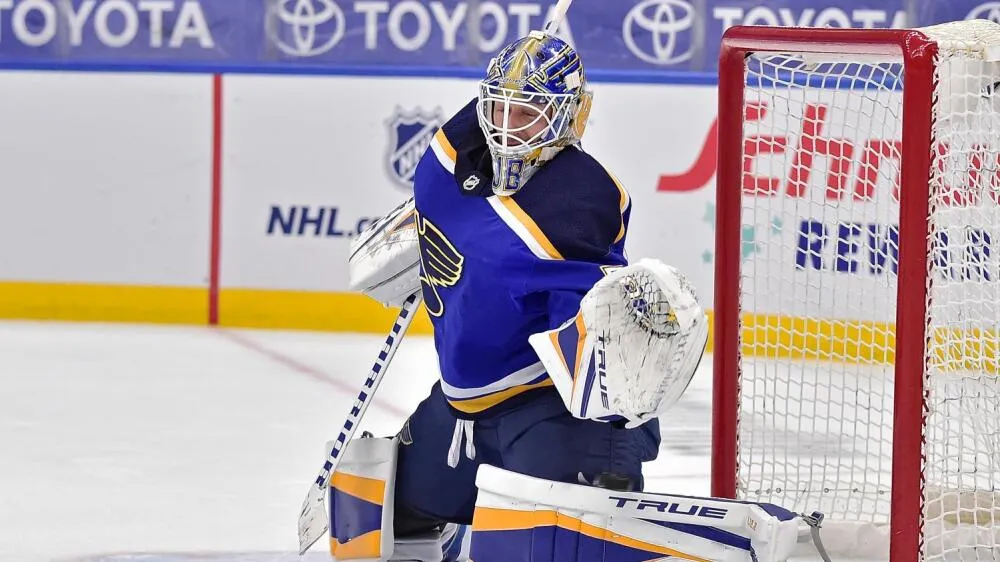
How Jordan Binnington’s Stanley Cup heroics define his legacy with the Blues
The 2019 Stanley Cup run remains the defining chapter not just in Jordan Binnington’s career, but in the entire history of the St. Louis Blues franchise. When Binnington was called up from the AHL in January 2019, the Blues were languishing in last place in the NHL standings. What followed was nothing short of miraculous. The rookie goaltender posted a 24-5-1 record during the regular season, accompanied by a sparkling .927 save percentage and a 1.89 goals-against average.
But it was the playoffs where Binnington truly made his mark. He became the only rookie goaltender in NHL history to win all 16 games required to capture the Stanley Cup. His 16-10 playoff record with a .914 save percentage showcased his ability to perform under the brightest lights and most intense pressure. In the Cup-clinching Game 7 against the Boston Bruins, Binnington stopped 38 of 39 shots, delivering the city of St. Louis its first championship in 52 years of trying.
The mental fortitude required to achieve what Binnington did cannot be overstated. He entered a team in crisis and immediately became the stabilizing force they desperately needed. Veterans around him spoke of his unshakeable confidence, his refusal to be rattled, and his ability to make the big save when it mattered most. This wasn’t just a hot streak—it was a sustained level of excellence over a grueling six-month period.
Prior to Binnington’s arrival, the Blues had come tantalizingly close to championship glory on multiple occasions. Legendary goaltenders had given their all, but none could finish the job. Binnington did what Hall, Liut, Joseph, and Elliott could not: he won the final game of the season and brought the Stanley Cup home to St. Louis. In a city that had waited generations for hockey’s ultimate prize, that accomplishment alone places him in a category by himself.
The championship wasn’t a fluke or a product of an exceptional team carrying an average goaltender. Binnington was the backbone of that Cup run, and his performance earned him recognition as one of the clutch performers in playoff history. When the conversation turns to the greatest Blues goaltender of all time, it must begin with the reality that only one name can claim to be a Stanley Cup-winning starting goaltender for the franchise.
Comparing Jordan Binnington’s statistical dominance to other Blues goalies
Beyond the championship glory, Binnington has established himself as the statistical leader in several key categories for Blues goaltenders. His 152 career wins surpassed Mike Liut’s previous franchise record of 151, making him the winningest goaltender in team history. Combined with his record for games played at 348 and climbing, Binnington has demonstrated both excellence and longevity—two qualities that separate the good from the great.
When examining his overall body of work, Binnington’s numbers tell the story of a consistently competitive goaltender. His career goals-against average of 2.79 and save percentage of .905 may not jump off the page in the modern NHL, but context matters enormously. During recent seasons, Binnington has played behind a Blues defensive corps that has been in transition, with younger players learning their craft and the team undergoing a partial rebuild. Despite these challenges, he has maintained a level of play that keeps the Blues competitive night after night.
The 2023-24 season marked a strong return to form for Binnington after a few seasons of turbulence. He posted a save percentage above .910 for the first time since 2021, and his 2.84 GAA was his lowest in three years. These numbers came while facing one of the highest shot volumes among NHL starting goaltenders, a testament to his ability to handle heavy workloads and keep his team in games even when the defensive structure breaks down.
Mike Liut, whose records Binnington has surpassed, was one of the premier goaltenders of the 1980s. He finished second in Hart Trophy voting in 1981, posting a 33-14-13 record during a season where his performance elevated the entire franchise. Liut’s consistency was legendary—he routinely started 60 or more games per season during an era of higher scoring. His 347 games played stood as the franchise benchmark for four decades until Binnington eclipsed it.
Jake Allen, who ranks third in franchise history with 289 games played, had several excellent seasons with the Blues but never quite achieved the sustained success or championship glory that defines legendary careers. Curtis Joseph, who sits fourth with 280 games, brought athleticism and excitement to the position during the 1990s, keeping the Blues competitive despite playing behind a thin defensive group. Grant Fuhr, a Hall of Famer who arrived in St. Louis late in his career, contributed 249 games of veteran leadership.
When comparing statistical achievements across eras, adjustments must be made for scoring environments, equipment changes, and team defensive systems. What remains constant, however, is the ability to win games and give your team a chance to compete every night. By that measure, Binnington’s combination of wins, games played, and win percentage places him at or near the top of every meaningful category in Blues goaltending history.
The intangible qualities that separate Binnington from Blues netminders of the past
Statistics and championships provide the foundation for any greatest-of-all-time discussion, but the intangibles often define how players are remembered and revered. Jordan Binnington possesses a competitive fire and mental toughness that has become synonymous with Blues hockey. His willingness to engage with opponents, his demonstrative celebrations, and his refusal to back down from any challenge have made him a polarizing figure around the league but a beloved one in St. Louis.
Binnington’s on-ice demeanor mirrors the intensity that Curtis Joseph brought to the position. “CuJo” was known for his athleticism and his ability to will his team to victory through sheer determination. Like Joseph, Binnington plays with an edge that energizes his teammates and sends a message to opponents that they’ll have to work for every goal. This competitive spirit has occasionally led to controversy—confrontations with opposing players, animated reactions to goals against—but it’s also a reflection of how deeply he cares about winning.
The consistency that defined Mike Liut’s career can also be seen in Binnington’s approach. Despite occasional struggles and the pressure of being the face of a franchise rebuild, Binnington has remained the undisputed number-one goaltender for the Blues season after season. When Ville Husso briefly challenged for the starting role during the 2021-22 season, Binnington responded by reclaiming his position and proving he could handle adversity.
Brian Elliott’s story mirrors Binnington’s in some ways—both were unexpected sources of excellence who emerged to become franchise pillars. Elliott’s efficiency and ability to steal games during his tenure from 2011 to 2016 helped define a successful era for the Blues. He won the Jennings Trophy alongside Jaroslav Halak in 2012 and played a key role in the team’s 2016 Western Conference Final appearance. Yet even Elliott’s impressive resume lacks the championship pedigree that Binnington possesses.
Glenn Hall’s legacy rests on his Conn Smythe Trophy-winning performance during the 1968 Stanley Cup Final, despite the Blues being swept by the Montreal Canadiens. Hall faced 535 shots during that playoff run and made 490 saves, keeping the Blues competitive in every game even as they faced a dynasty in its prime. His ability to keep the Blues in games against superior competition established a standard for goaltending excellence that future Blues netminders would aspire to match.
What Binnington brings to the equation is an embodiment of all these qualities rolled into one package. He has Liut’s consistency, Joseph’s fire, Elliott’s unexpected brilliance, and he achieved what Hall could not—winning the championship. His mental toughness, particularly during that 2019 run when the pressure was immense, showed a maturity beyond his years. As one writer noted when discussing his rookie season, Binnington may have been a rookie, but he certainly did not look nervous.
Why the championship factor tilts the scales in Binnington’s favor
In professional sports, championships matter. They’re not the only measure of greatness, but they’re often the deciding factor when comparing players of similar caliber. The St. Louis Blues existed for 51 years before winning their first Stanley Cup in 2019. During that span, legendary players came and went, excellent teams fell short in the playoffs, and heartbreak became a familiar companion for Blues fans. Jordan Binnington ended that drought, and that achievement cannot be overstated in any discussion of franchise greatness.
Every goaltender who wore the Blue Note before Binnington faced the same ultimate goal: bring a championship to St. Louis. Glenn Hall reached three consecutive Stanley Cup Finals from 1968 to 1970 but ran into dynasty teams that were simply too powerful. Mike Liut elevated the Blues to competitive status in the early 1980s but couldn’t deliver playoff success. Curtis Joseph had clutch playoff moments but never advanced past the second round with St. Louis. Brian Elliott reached the Western Conference Final in 2016 but fell short against the eventual champion San Jose Sharks.
The burden of championship expectations weighs heavily on franchise goaltenders, and the ability to perform in elimination games separates the good from the legendary. Binnington’s Game 7 performance in the 2019 Stanley Cup Final stands as the single greatest goaltending performance in franchise history when considering the stakes involved. With everything on the line in Boston, facing a hostile crowd and an opponent desperate to force a Game 8, Binnington was unflappable.
That championship run also featured numerous other high-pressure moments where Binnington delivered. The Blues’ first-round series against the Winnipeg Jets went six games and required Binnington to outplay Connor Hellebuyck, one of the league’s elite goaltenders. Against the Dallas Stars in the second round, he remained steady through seven games of physical, defensive hockey. The Western Conference Final against the San Jose Sharks featured the controversial hand-pass goal that forced a Game 6, and Binnington responded by winning the decisive game on the road.
Some may argue that peak performance should outweigh championship success, that Mike Liut’s Hart Trophy-finalist season or Glenn Hall’s Conn Smythe Trophy despite losing the Final represent higher individual achievements. There’s merit to that argument—individual awards recognize excellence in ways that team success cannot fully capture. However, when a player combines individual excellence, team success, and championship glory, the combination becomes unassailable.
Binnington’s 2019 season earned him Calder Trophy consideration, his performances have made him an All-Star, and he holds multiple franchise records. Most importantly, he delivered when the stakes were highest. In a results-oriented profession where legacy is defined by winning, Binnington has done what no other Blues goaltender accomplished, and that tips the scales decidedly in his favor.
The ongoing legacy and what the future holds for Binnington
At 31 years old, Jordan Binnington still has several productive seasons ahead of him. His career trajectory suggests that he’ll continue adding to his franchise records, potentially reaching 400 games played and approaching 200 career wins. The 2024-25 season has seen Binnington help guide a Blues team through an accelerated rebuild, maintaining competitive form even as younger players develop around him. His presence provides stability and veteran leadership to a franchise navigating transition.
The question of whether Binnington can add to his championship legacy remains open. The Blues’ roster is younger now than during the 2019 Cup run, and the path back to championship contention requires patience and development. However, Binnington has shown he can elevate his game when the team around him improves, and another deep playoff run would only strengthen his case as the franchise’s greatest goaltender.
Recent seasons haven’t been without challenges. From 2020 to 2023, Binnington experienced stretches of inconsistency, on-ice incidents that drew criticism, and even temporarily lost the starting role to Ville Husso. These struggles led some to question whether his championship run was an aberration rather than a true reflection of his abilities. His response—regaining his form in 2023-24 and reestablishing himself as the undisputed starter—demonstrated the resilience and competitive character that define his career.
The modern NHL demands more from goaltenders than ever before. Puck-handling skills, the ability to play the puck behind the net, and communication with defensemen are now as important as making saves. Binnington has adapted his game to meet these demands, developing into a more complete goaltender than the rookie who burst onto the scene in 2019. His evolution mirrors the franchise’s own development, growing from unexpected champion to established contender.
Looking at the trajectory of Binnington’s career, parallels can be drawn to other franchise-defining goaltenders across the NHL. Henrik Lundqvist’s Rangers career was defined by consistent excellence and one championship appearance. Roberto Luongo’s Canucks tenure featured statistical dominance but no championship. Marc-Andre Fleury’s Penguins legacy included three Stanley Cups and franchise records. Each is remembered first and foremost for the combination of what they won and how they won it.
Binnington’s place in that pantheon of franchise goaltenders is secure. Whether he adds another championship or simply continues his current trajectory of solid performance and franchise record-setting, his legacy as the greatest Blues goaltender of all time appears increasingly unassailable. The combination of championship success, statistical dominance, longevity, and competitive character creates a profile that no other Blues goaltender can match.
The verdict on whether Jordan Binnington is the St. Louis Blues’ greatest goaltender of all time comes down to how one defines greatness. If the definition emphasizes peak statistical performance, Mike Liut’s Hart Trophy-finalist season and Glenn Hall’s Conn Smythe Trophy performance demand consideration. If longevity and consistency matter most, Liut’s 347 games and workhorse mentality set a high bar. If clutch playoff performances define greatness, Curtis Joseph and Brian Elliott both have memorable moments. But if greatness requires the complete package—individual excellence, franchise records, longevity, competitive fire, and championship glory—then only one name emerges as the clear choice. Binnington didn’t just play for the Blues; he transformed their franchise history by delivering the one achievement that had eluded every goaltender before him. He brought the Stanley Cup to St. Louis, and in doing so, he earned his place at the top of the franchise’s goaltending pantheon. The records he continues to set are merely confirmations of what Blues fans already know: Jordan Binnington is the greatest goaltender in franchise history, and he’s still adding to that legacy with every game he plays.

Par Mike Jonderson
Mike Jonderson is a passionate hockey analyst and expert in advanced NHL statistics. A former college player and mathematics graduate, he combines his understanding of the game with technical expertise to develop innovative predictive models and contribute to the evolution of modern hockey analytics.