






The New York Islanders face a potential season-altering setback as veteran forward Kyle Palmieri went down with a suspected torn ACL during Friday’s matchup against the Philadelphia Flyers. The 34-year-old winger, who somehow managed to contribute a highlight-reel assist despite suffering the injury, underwent imaging on Saturday that will determine the severity of the damage and whether the team will lose one of its most reliable veterans for the remainder of the campaign.
Sources close to the organization expressed concern immediately following the game, with head coach Patrick Roy telling reporters that the injury “did not look good” after Palmieri failed to return for the third period. The Islanders now await official confirmation from medical staff as they brace for what could be a significant blow to their forward depth and playoff aspirations in the tightly contested Metropolitan Division.
How the injury unfolded: A collision and a courageous assist
The incident occurred midway through the second period when Palmieri got tangled along the boards with Flyers defenseman Jamie Drysdale while battling for puck possession. As the two players engaged in a routine puck battle, Palmieri’s leg appeared to twist awkwardly, causing immediate distress. The veteran forward crumpled to the ice but demonstrated remarkable resilience by not only getting to his feet but immediately re-engaging in the play.
What happened next epitomized Palmieri’s warrior mentality. Despite hobbling toward the New York bench in obvious pain, he intercepted a pass intended for Philadelphia defenseman Emil Andrae, stole the puck, and delivered a crisp pass to Jonathan Drouin. Drouin then fed captain Anders Lee, who set up Emil Heineman for a crucial goal that cut the Flyers’ lead to 3-1. Palmieri was officially credited with an assist on the play—a testament to his hockey instincts and determination—even as trainers immediately escorted him to the locker room upon his reaching the bench.
“He somehow managed to make a play while clearly injured,” noted one team observer. “That’s just the kind of player he is.” Islanders captain Anders Lee praised his teammate’s fortitude after the game, stating, “What a gutsy effort for him on that. Going through a lot of pain, he’s one of the toughest teammates that I know. Takes a lot for him to feel pain and get keeled over, but you can also see how strong he is to battle through and make a huge play.” The Islanders eventually forced overtime before falling 4-3 in a shootout, but the postgame conversation centered squarely on Palmieri’s status.
Kyle Palmieri torn ACL update Islanders imaging: What doctors are looking for
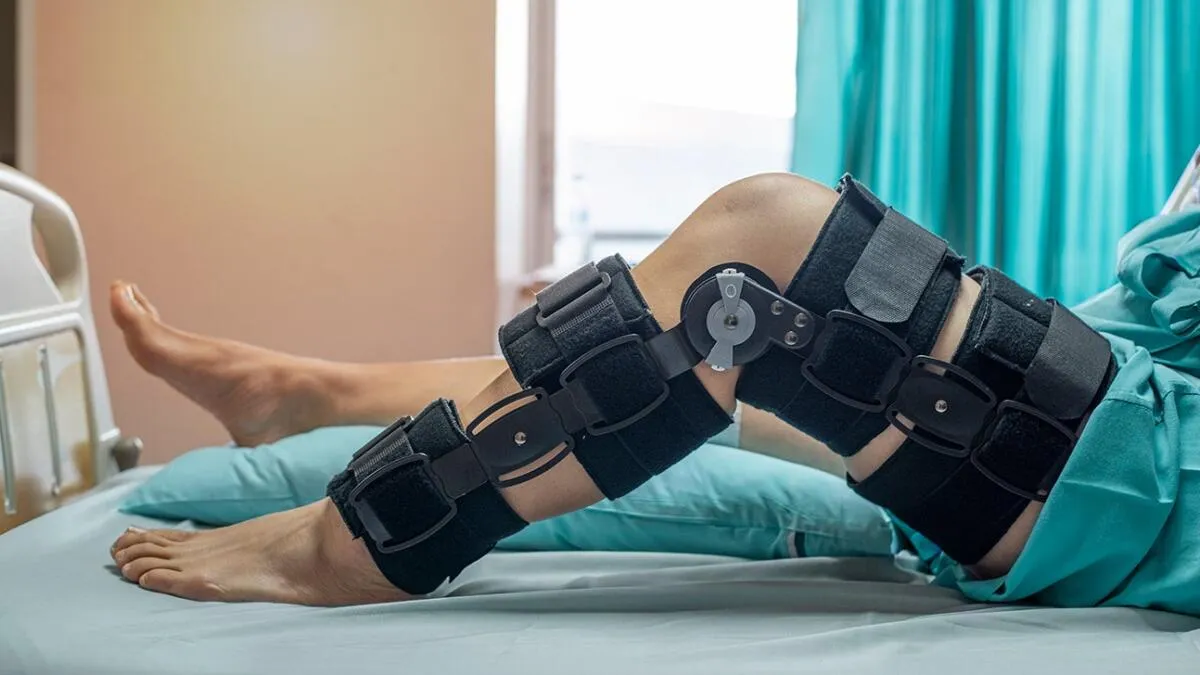
The term “imaging” in this context specifically refers to magnetic resonance imaging (MRI), the gold standard for diagnosing soft tissue injuries like ACL tears. Unlike X-rays that only show bone structure, MRI scans provide detailed images of ligaments, tendons, and cartilage, allowing orthopedic specialists to assess the extent of damage to the anterior cruciate ligament and surrounding knee structures. The Islanders medical team likely scheduled the scan for Saturday morning to get answers before determining their next roster moves.
During the MRI evaluation, radiologists will examine several key factors beyond just the ACL itself. They’ll look for concurrent damage to the medial collateral ligament (MCL), meniscus tears, or articular cartilage lesions—injuries that commonly accompany ACL trauma. A 2016 study of NHL injury surveillance data published in the National Institutes of Health database found that players with comorbid meniscus tears often face more complicated recoveries and extended timelines. The imaging will also reveal whether Palmieri suffered a complete tear, which typically requires surgical reconstruction, or a partial tear that might offer a more conservative treatment pathway.
Results from Saturday’s imaging could come quickly, often within hours of the scan. The Islanders organization faces a waiting game that will determine whether they need to make immediate roster adjustments or potentially explore trade options to fill the void left by their veteran scorer. With the team battling for positioning in a competitive Eastern Conference, the timeline for both diagnosis and recovery becomes critical for management’s strategic planning.
The statistical and leadership void Palmieri leaves behind
Through 25 games this season, Palmieri has been a consistent offensive contributor, ranking second on the Islanders with 18 points (six goals, 12 assists). His production has been particularly valuable on a team that relies on balanced scoring rather than superstar-driven offense. The Long Island native has evolved into a reliable two-way forward who contributes in all situations, including crucial penalty kill minutes and power play opportunities where his hockey IQ and shot release create mismatches for opposing defenses.
Beyond the stat sheet, Palmieri represents a veteran presence in only his sixth season with the organization but his 16th overall NHL campaign. Having previously suited up for the Anaheim Ducks and New Jersey Devils, he brings playoff experience and locker room stability to a relatively young Islanders forward group. His 276 career goals and 545 points across 925 games demonstrate a track record of consistency that cannot easily be replaced through internal promotion or minor-league call-ups.
The timing compounds the challenge, as Palmieri is in year one of a two-year, $9.5 million contract signed last May. This financial commitment reflects the organization’s belief in his ability to contribute through the 2026-27 season, making a potential long-term absence both a salary cap management issue and an on-ice performance concern. The Islanders must now evaluate whether their forward depth can absorb this loss or if general manager Lou Lamoriello needs to explore external options to maintain playoff positioning.
ACL recovery timeline for NHL players: What medical research shows
Historical data on NHL players recovering from ACL reconstruction surgery reveals a challenging road ahead if Palmieri’s imaging confirms the worst-case scenario. While modern surgical techniques and rehabilitation protocols have improved outcomes significantly, the typical recovery timeline ranges from six to nine months before a player can safely return to game action. This window would effectively end Palmieri’s 2025-26 season and potentially impact his availability for training camp next September.
Research published in the Journal of Orthopaedic & Sports Physical Therapy outlines a structured return-to-sport progression that typically spans 4 to 6 weeks or longer once medical clearance is granted. This phase includes on-ice skating drills without contact, gradually progressing to full practice participation. However, there’s growing evidence within sports medicine circles that while players may return to competition within one year, full biomechanical recovery and confidence in the reconstructed knee can take up to 24 months. A 2020 analysis by Dr. Michael Abene noted, “While a player usually can return to the field in less than one year, there is a belief that it usually takes about 2 years to fully recover.”
The rehabilitation journey follows distinct phases:
- Initial recovery (0-3 months): Focus on reducing swelling, restoring range of motion, and protecting the graft
- Strength building (3-6 months): Progressive resistance training to rebuild quadriceps and hamstring strength
- On-ice progression (6-9 months): Sport-specific drills, skating mechanics, and eventually contact situations
- Return to play (9+ months): Full medical clearance and game readiness evaluation
For a 34-year-old player like Palmieri, the recovery timeline may trend toward the longer end of this spectrum. Age-related factors in healing and the physical demands of his position as a top-nine forward who plays a gritty, board-battle style could influence both the surgical approach and rehabilitation intensity.
Islanders roster adjustments while awaiting official word
As the organization processes the potential loss of Palmieri, several internal options emerge to fill his roster spot in the short term. Young forwards like Maxim Tsyplakov or Oliver Wahlstrom could see increased ice time and potentially elevated line assignments. The Islanders also have depth players such as Casey Cizikas and Matt Martin who can absorb some of the penalty killing responsibilities, though neither replicates Palmieri’s offensive upside.
The team may also look to its AHL affiliate, the Bridgeport Islanders, for reinforcements. Prospects like Ruslan Iskhakov or Aatu Räty could receive call-ups to provide energy and skill, though lacking Palmieri’s veteran experience. General manager Lou Lamoriello has historically been patient with roster moves, preferring to evaluate internal options before exploring trades, but the team’s position in the playoff race may accelerate his timeline.
New York’s upcoming schedule includes critical divisional matchups against the Carolina Hurricanes and New Jersey Devils—games where Palmieri’s absence will be felt most acutely. The Islanders have built their identity around defensive structure and rolling four lines, so maintaining that depth becomes paramount. How coach Patrick Roy redistributes his forward ice time and whether he consolidates talent onto fewer lines or spreads minutes more evenly could define the team’s performance over the next several weeks.
Interestingly, Palmieri’s last notable contribution before the injury was a clutch shootout winner against the Seattle Kraken earlier in the week, a performance that highlighted his ability to deliver in high-pressure moments. That game-winning skill set is precisely what the Islanders stand to lose if imaging confirms a season-ending injury.
The organization and its fans now wait for the official diagnosis, hoping for positive news but preparing for the challenging reality that their veteran winger may have played his last shift of the 2025-26 campaign.
Frequently Asked Questions

Par Mike Jonderson
Mike Jonderson is a passionate hockey analyst and expert in advanced NHL statistics. A former college player and mathematics graduate, he combines his understanding of the game with technical expertise to develop innovative predictive models and contribute to the evolution of modern hockey analytics.