











The Los Angeles Kings have discovered an unusual recipe for success this season, and it comes with a twist that has baffled coaches, players, and analysts alike. While their performance at Crypto.com Arena has been disappointingly tepid, their away games have been nothing short of exceptional. With a 7-1-2 record on the road through their first ten away contests, the Kings are proving that sometimes the best home-ice advantage is having none at all.
This remarkable road dominance isn’t just a minor statistical curiosity—it’s the lifeline keeping Los Angeles firmly in the playoff conversation. In a Western Conference where every point matters and the margin between contention and disappointment is razor-thin, the Kings’ ability to consistently collect points in hostile arenas has transformed what could have been a disastrous start into a legitimate playoff push. The question isn’t whether their road success matters; it’s whether they can sustain it and, more importantly, whether they can figure out how to replicate it at home before it’s too late.
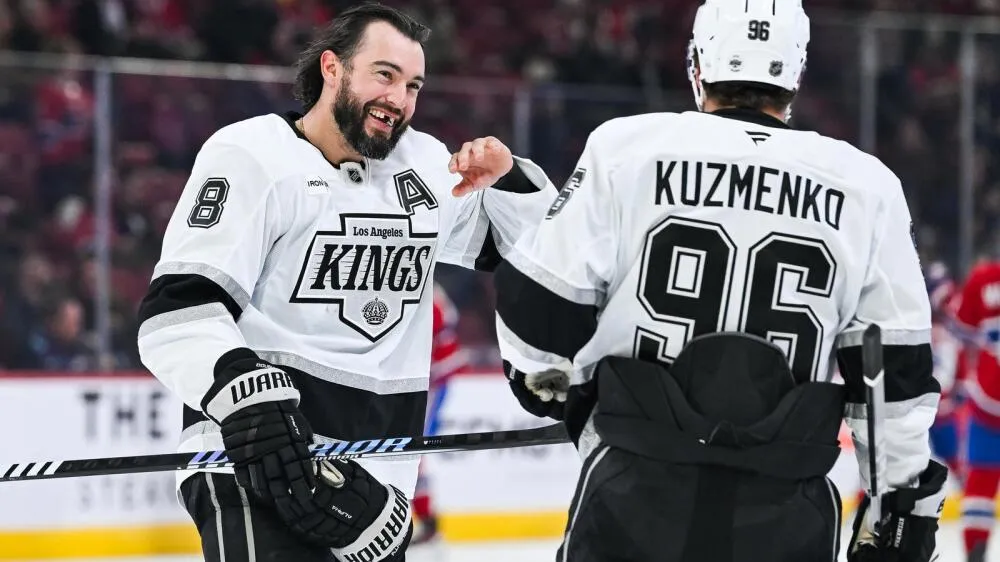
How the Los Angeles Kings road performance keeps them in contention through elite away statistics
The numbers tell a compelling story that goes beyond simple wins and losses. Through ten road games, the Kings have posted a .800 winning percentage away from home, trailing only the New York Rangers who have played one fewer game. No team in the NHL has collected more road points than Los Angeles, making them the league’s premier traveling squad.
The goal differential paints an even clearer picture of their dominance. The Kings have outscored opponents 34-25 on the road, posting a plus-9 differential that ranks among the league’s best. They possess one of the top road goals-per-game averages while simultaneously maintaining one of the stingiest goals-against numbers. This balanced approach—scoring efficiently while defending responsibly—is the hallmark of a team built for playoff success.
Their current road point streak has reached eight games, including four consecutive victories. This run includes quality wins against teams like Pittsburgh and Montreal, demonstrating that their success isn’t limited to bottom-feeders or struggling franchises. The Kings are beating playoff-caliber opponents on their home ice, which is precisely the type of performance that translates to postseason success.
What makes these statistics even more remarkable is the stark contrast with their home performance. Through the same stretch, Los Angeles has managed just a single victory at Crypto.com Arena. This split is so dramatic that it defies conventional hockey wisdom, which typically suggests teams should dominate at home where they have last change, crowd support, and the comfort of familiar surroundings.
The goal-scoring efficiency on the road has been particularly impressive. Recent performances, including their commanding 5-1 victory over Montreal, showcase a team capable of explosive offensive outbursts when playing away from Los Angeles. In that game alone, the Kings demonstrated their ability to respond to adversity, erasing a 1-0 deficit by scoring three goals in the first 5:22 of the second period.
This statistical dominance isn’t just about padding numbers against weak opponents. The Kings have won the territorial battle, controlling possession and generating high-danger chances at rates that would make any coaching staff proud. Their ability to execute their game plan consistently in different arenas, against varying styles, and under pressure speaks to a mental toughness that championship teams require.
Why simplicity and focus define the Los Angeles Kings road performance keeps them in contention strategy
When asked to explain their road success, players and coaches offer responses ranging from tactical insights to genuine bewilderment. Yet within their varied answers lies a consistent theme: simplicity trumps complexity when playing away from home. This isn’t about dumbing down the game plan; it’s about executing fundamental hockey without overthinking.
Veteran defenseman Joel Edmundson provided perhaps the most insightful analysis. He noted that on the road, the team is together 24/7, which naturally builds chemistry and allows them to get into a rhythm. More tellingly, he contrasted this with their home performances, speculating that in front of their own fans, they might be “trying to do too much,” which opponents can easily exploit. The road forces them to play a simple, direct game—the KISS principle in action.
Goaltender Darcy Kuemper echoed this sentiment from a different angle. He observed that the team plays “complete games” on the road, staying tight and executing their desired style for a full 60 minutes. The consistency Kuemper describes is crucial: it’s not about spectacular plays or individual brilliance, but about disciplined team hockey that grinds down opponents through relentless execution.
Head coach Jim Hiller’s system seems to click more effectively when the Kings are visitors. The team’s forecheck becomes more aggressive, their defensive zone coverage tightens, and their transitions become crisper. There’s an edge to their play on the road that occasionally goes missing at home, where perhaps the expectation to entertain or the pressure to perform creates hesitation.
The psychological component can’t be ignored either. Edmundson admitted there’s a certain satisfaction in playing the villain role—silencing hostile crowds early and feeding off the negative energy directed at them. This adversarial dynamic can be galvanizing, giving the team a clear “us versus them” mentality that simplifies focus and sharpens execution.
Forward Alex Laferriere offered the most humble assessment, suggesting it might just be “a couple of puck bounces” going their way on the road. While luck always plays a role in hockey, the consistency of their road success suggests something more systematic is at work. Puck luck might explain one or two wins, but not a sustained eight-game point streak.
What’s fascinating is that this isn’t a new phenomenon for the Kings organization. The 2021-22 team set a franchise record for road points. The 2023-24 squad set an NHL record for consecutive road wins to begin a season. Yet last season, they posted one of the worst road records among playoff teams while dominating at home. This cyclical pattern suggests organizational factors beyond simple explanation—perhaps roster construction, coaching philosophy, or even psychological factors embedded in the team culture.
Recent victories showcase how the Los Angeles Kings road performance keeps them in contention with resilience
The Kings’ 2-0 start to their current five-game Eastern road trip perfectly illustrates the two ways they’re winning away from home: through resilience and through dominance. These aren’t one-dimensional victories built on lucky bounces or opponent mistakes.
The 3-2 victory over Pittsburgh demonstrated their ability to win tight, competitive games. After falling behind 2-1 in the second period—a moment where a fragile team might crumble—the Kings regrouped and responded. Corey Perry tied the game, and Kevin Fiala scored the game-winner, which also happened to be his 500th NHL point. They didn’t panic when trailing; they trusted their system and were rewarded.
The Montreal victory showed their capacity for overwhelming opponents. Despite the Canadiens scoring first to take a 1-0 lead, the Kings responded with a devastating three-goal barrage in just over five minutes of second-period play. Joel Edmundson, Quinton Byfield, and Fiala all found the net as Los Angeles completely seized control. Joel Armia added a goal against his former team, and Warren Foegele capped the scoring in what became a 5-1 rout.
What makes these wins significant is how they were constructed. Against Pittsburgh, the Kings won faceoffs, controlled special teams, and executed defensively when protecting a lead. Against Montreal, they played what LA Kings Insider described as perhaps their most emphatic victory of the season, delivering the kind of complete 60-minute effort that had been missing earlier in the campaign.
The second period explosion against Montreal particularly exemplified the “Kings style” that coaches and players reference. Both the Byfield and Fiala goals came from tenacity—winning puck battles in the offensive zone and attacking high-danger areas to finish. This is the blueprint the organization envisions: forecheck relentlessly, win small battles, and convert chances when they present themselves.
Forward Quinton Byfield’s assessment after the Montreal game captured the team’s mindset. “Can’t say anything about that, it’s kind of just how it goes sometimes,” he said regarding their road success. “Obviously, you want to make it both home and away, get some wins at home, but [for now] we’ve got to finish this roadtrip strong.” That focus on the immediate task—finishing the trip—rather than overthinking the home-road split demonstrates a mature approach to a complex situation.
These victories also showcased contributions throughout the lineup. It wasn’t just the stars carrying the load; depth players like Edmundson and Foegele contributed crucial goals. This balanced scoring makes the Kings difficult to defend, as opponents can’t simply focus on shutting down one line. When any line can hurt you, defensive game plans become exponentially more complicated.
The goaltending has been steady as well, with Darcy Kuemper and David Rittich providing the consistent netminding required for road success. While neither has posted gaudy save percentages, both have made key saves at critical moments, preventing momentum shifts that could derail games. In tight road games, timely goaltending is often the difference between two points and none.
The championship implications of how the Los Angeles Kings road performance keeps them in contention long-term
The Kings are positioning themselves as a dangerous dark horse in the Western Conference playoff race. Their ability to consistently earn points away from home is invaluable, particularly in a tight division where road games against direct competitors could determine playoff seeding. Every two points earned in hostile territory is worth its weight in gold come April.
However, Stanley Cup champions don’t build their success solely on road prowess. The inescapable reality is that you cannot win a championship without also winning at home. Home-ice advantage throughout the playoffs can be the difference between a first-round exit and a deep run. If the Kings can’t solve their home struggles, their impressive road record becomes a fascinating footnote rather than a foundation for playoff success.
The current situation presents both opportunity and urgency. The opportunity lies in the fact that the Kings have proven they can play winning hockey—they just need to transfer that mentality and execution to their home building. The urgency comes from the fact that this split cannot continue indefinitely without damaging their playoff positioning. Dropping points at home that should be banked eventually catches up with even the best road teams.
Coach Jim Hiller noted that during their recent four-game homestand—despite posting just a 1-2-1 record—the team actually played some of their best hockey of the season. He maintained that the team was doing things better and that results would eventually come. Perhaps the recent road success represents those positive efforts finally being rewarded, suggesting the team is on the upswing overall.
Historical precedent offers both encouragement and caution. The 2021-22 Kings set a franchise record for road points, and the 2023-24 team started the season with an NHL-record road winning streak. These accomplishments are impressive, but neither team lifted the Stanley Cup. Road success alone doesn’t guarantee championship glory—it must be paired with consistent home performances.
The remaining schedule presents both challenges and opportunities. With upcoming matchups against Toronto, Ottawa, and Washington to close their current trip, the Kings face teams that made the playoffs last season but have struggled early in 2025-26. These are exactly the types of games where strong road teams separate themselves from pretenders, building point cushions that provide playoff security down the stretch.
What happens when the Kings return home will be telling. Can they maintain the simplicity and focus that serves them so well on the road? Can they ignore the pressure to entertain or produce highlight-reel plays and instead trust the systematic approach that wins games? The answers to these questions will determine whether Los Angeles is a legitimate contender or simply a team with an interesting statistical quirk.
The psychological advantage of knowing they can win anywhere is real. Playoff hockey often requires winning multiple road games in a series, and the Kings have proven they’re more than capable of that. If they can just become even average at home—not dominant, just competent—their road excellence positions them as a team no opponent wants to face in a seven-game series.
For now, the Los Angeles Kings are surviving and even thriving thanks to their road warrior mentality. They’ve climbed into playoff positioning despite their home struggles, proving that elite performance away from home can indeed keep a team in contention. The next chapter of their season will reveal whether they can solve the home-ice puzzle and become the complete team their talent suggests they should be. If they do, this road-dominated first quarter of the season will be remembered as the foundation of something special. If they don’t, it will serve as a cautionary tale about the limitations of excelling in only half your games.

Par Mike Jonderson
Mike Jonderson is a passionate hockey analyst and expert in advanced NHL statistics. A former college player and mathematics graduate, he combines his understanding of the game with technical expertise to develop innovative predictive models and contribute to the evolution of modern hockey analytics.