






The Toronto Maple Leafs’ struggles continued on Wednesday night as they fell 4-3 in overtime to the Los Angeles Kings at Scotiabank Arena, extending their losing streak to four games. Despite a valiant effort from captain John Tavares, who scored twice, and backup goaltender Dennis Hildeby, who made 33 saves, the Maple Leafs couldn’t overcome their defensive deficiencies and ultimately surrendered the extra point when Quinton Byfield fired home the overtime winner just 35 seconds into the extra frame.
The loss dropped Toronto to 8-9-1 on the season and exposed continuing concerns about their ability to protect leads and play sound defensive hockey. With Auston Matthews and Anthony Stolarz both sidelined due to injuries, the Maple Leafs needed contributions from throughout the lineup, but aside from a few standout performances, Craig Berube’s squad was outshot 37-15 and outplayed for significant stretches. Here are the key Maple Leafs 4-3 overtime loss to Los Angeles Kings takeaways from another frustrating night at home.
John Tavares delivers when Toronto needs him most in Maple Leafs 4-3 overtime loss to Los Angeles Kings takeaways
With Auston Matthews ruled out of the lineup, John Tavares stepped into an even more prominent leadership role and delivered one of his finest performances of the season. The 35-year-old captain scored both of Toronto’s first two goals and was a constant presence in the offensive zone, throwing his body around and refusing to back down from the physical Kings lineup. Tavares led all Maple Leafs forwards in shots, goals, and individual expected goals, demonstrating the type of two-way commitment that his team desperately needed.
His first goal came midway through the opening period when he worked a strong two-man game with Oliver Ekman-Larsson after Bobby McMann had opened the scoring. Tavares used his veteran positioning to push his way into the slot and beat Darcy Kuemper to give Toronto a 2-0 lead. The captain wasn’t finished there, as he restored the Leafs’ advantage in the second period with a net-front finish after Matthew Knies won a crucial puck battle behind the Kings’ goal.
What stood out most about Tavares’ performance wasn’t just the production but the intensity he brought to every shift. Known more for his skill and hockey IQ than his physicality, Tavares was noticeably aggressive throughout the contest, getting in opponents’ faces and battling for every loose puck. He finished the game with four shots on goal and was constantly buzzing in dangerous areas, creating opportunities for his linemates as well.
“He was our best player, no doubt,” Tavares said of Hildeby post-game, but the sentiment could easily have been reversed. At a time when the Maple Leafs are searching for consistency and leadership amid mounting injuries and a four-game slide, their captain delivered exactly what was required. While the result wasn’t what Toronto wanted, Tavares proved once again why he remains such a vital piece of this organization, continuing what has been an outstanding season to date.
The performance also highlighted how crucial Tavares remains to Toronto’s offensive structure, especially when Matthews is unavailable. His ability to drive play from the middle of the ice and provide a physical presence in the dirty areas remains invaluable, even as he enters the latter stages of his career. If there’s a silver lining in this defeat, it’s that Tavares is playing some of his best hockey in years.
Dennis Hildeby earns praise despite the outcome in Maple Leafs 4-3 overtime loss to Los Angeles Kings takeaways
For the second consecutive game, Dennis Hildeby was thrust into action due to Anthony Stolarz’s injury, and once again, the young Swedish netminder gave his team every chance to win. Facing a relentless barrage from one of the NHL’s hottest road teams, Hildeby stopped 33 of 37 shots and kept Toronto in the game even as they were thoroughly outplayed for long stretches. His performance was a bright spot in an otherwise disappointing evening and may have earned him another start in the near future.
Hildeby’s best work came in the third period when the Kings were pressing hard for the equalizer. He made several excellent saves to preserve Toronto’s 3-2 lead, including a crucial stop on Corey Perry that kept the momentum on the Leafs’ side temporarily. The performance was reminiscent of his previous strong showing and demonstrated that he’s capable of handling NHL-caliber pressure despite his limited experience at this level.
While not flawless—Warren Foegele’s goal that cut Toronto’s lead to 2-1 should have been stopped—Hildeby wasn’t the culprit on the Kings’ other three tallies. Kevin Fiala’s tying goal came after an extended sequence where multiple Maple Leafs defenders failed to clear the crease, allowing Fiala multiple cracks at the net before finally jamming one past Hildeby. Similarly, Alex Laferriere’s tying goal in the third was a perfectly executed tip-in that would have beaten most goaltenders, and Byfield’s overtime winner was a one-timer off a Drew Doughty feed that left Hildeby with little chance.
According to Natural Stat Trick, Hildeby saved 1.13 goals above expected in all situations, meaning he actually prevented more than one goal that the advanced metrics suggested he should have allowed based on shot quality. That’s an impressive performance for any goaltender, let alone a backup filling in during a difficult stretch. Joseph Woll is working his way back into form and could be an option for upcoming games, but Hildeby has done nothing to suggest he can’t handle another start if called upon.
With Stolarz’s timeline for return still uncertain, the Maple Leafs need Hildeby to continue providing competent goaltending when his number is called. Based on his last two outings, he’s proven more than capable of doing just that. The question now is whether Craig Berube will give him another opportunity to build on these strong performances or turn back to Woll as the veteran rounds into shape.
Defensive breakdowns plague Toronto again in Maple Leafs 4-3 overtime loss to Los Angeles Kings takeaways
The most concerning Maple Leafs 4-3 overtime loss to Los Angeles Kings takeaways center on Toronto’s continued inability to play sound defensive hockey. Head coach Craig Berube stated after Sunday’s loss to Carolina that his team doesn’t value the defensive side of the puck, and while there were incremental improvements early in this game, his assessment remains accurate. The Maple Leafs were hemmed in their defensive zone for extended periods and allowed a staggering 15 high-danger scoring chances at five-on-five.
Toronto’s defensive struggles have been well-documented this season, and Wednesday’s game provided more evidence of systemic issues. The sequence leading to Fiala’s game-tying goal in the second period was particularly egregious: Fiala circled the offensive zone with ample time and space, fired an initial shot, collected his own rebound, generated another dangerous chance, and then watched as the puck trickled out to Quinton Byfield before finally burying it himself. During this entire sequence, Simon Benoit did nothing to clear the danger, Jake McCabe remained stationary while ostensibly tying up a crashing forward, and Matthew Knies, William Nylander, and other forwards failed to provide adequate defensive support.
The statistics paint an ugly picture. Toronto has now allowed a league-worst 50 goals at five-on-five through 18 games, a staggering number for a team with playoff aspirations. While injuries have certainly played a role—Matthews, Stolarz, and other key players have missed time—the defensive breakdowns are often about effort, positioning, and attention to detail rather than personnel. Forwards are slow to track back, defensemen are leaving dangerous players uncovered in front of the net, and communication appears lacking.
“I think that defensively we have been struggling, and that is something that can be fixed and you can adjust and make changes to be better at that, better attention to details,” William Nylander said before the game, according to The Leafs Nation. “I would be more worried if we weren’t scoring goals, because that’s harder to do. Not letting in goals has been hard for us this year and that’s something we can change and adjust and do better at.”
Nylander’s optimism is admirable, but actions need to follow words. The Maple Leafs’ effort waned significantly after Foegele’s first-period goal, and they managed to deny the Kings’ zone effectively only in sporadic bursts. McCabe nearly scored an own goal in the dying moments of regulation when the puck deflected off his skates and dangerously ricocheted toward the net. These are the types of mistakes that championship-caliber teams simply don’t make with regularity.
The Kings’ road success—they improved to 8-1-2 away from home with this victory—came partly because they consistently won battles in front of the net and generated high-quality chances through sustained pressure. Toronto, meanwhile, allowed Los Angeles to dictate terms for most of the game despite holding leads at multiple points. Unless Berube can instill a more defensive-minded mentality into his forwards and get his defensive pairs to communicate better, the Maple Leafs will continue to hemorrhage goals and points in the standings.
Kings’ overtime heroics extend Toronto’s misery in Maple Leafs 4-3 overtime loss to Los Angeles Kings takeaways
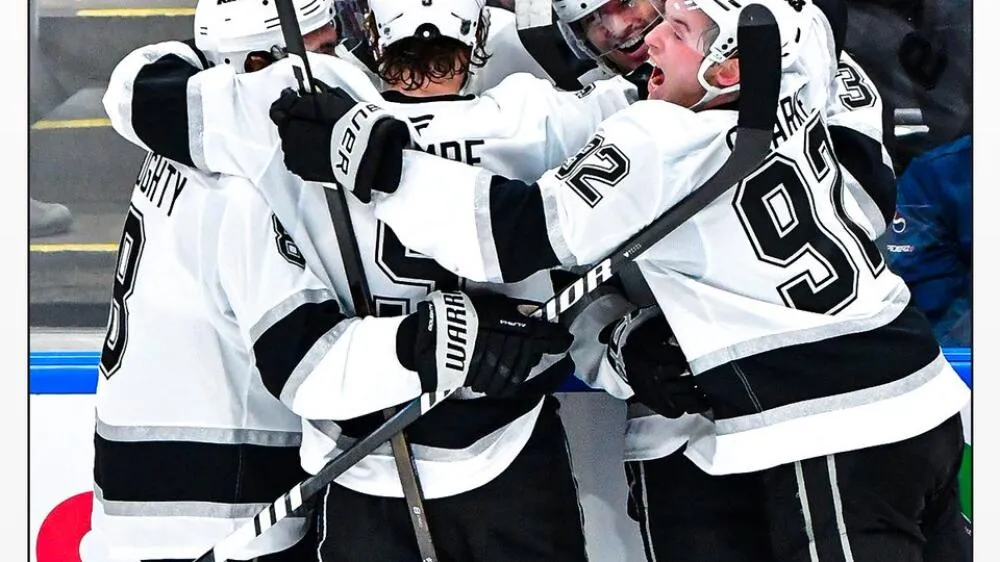
The overtime period was mercifully short for Maple Leafs fans, as Quinton Byfield needed just 35 seconds to end Toronto’s hopes of salvaging a point. The former second-overall pick, playing in his hometown, wired home a one-timer off a Drew Doughty feed to give Los Angeles a 4-3 victory and send the Scotiabank Arena crowd home disappointed. It was a fitting conclusion to a game where the Kings demonstrated superior puck possession and offensive zone time throughout the night.
Byfield’s winner capped off what was an impressive road performance by the Kings, who came from behind twice to secure the victory. Warren Foegele, Kevin Fiala, and Alex Laferriere also scored for Los Angeles, with each goal exposing different weaknesses in Toronto’s game. The Kings entered the game having won eight of their previous nine road contests, and they showed why they’ve been so successful away from home with their disciplined, physical style of play.
For Toronto, the overtime loss marked their fourth straight defeat and dropped them below .500 on the season. More concerning than the record is the manner in which they’re losing games. The Maple Leafs have been outshot consistently, struggled to maintain leads, and failed to execute defensively when it matters most. With Matthews’ return timeline uncertain and Anthony Stolarz also dealing with an injury, the path forward doesn’t get any easier.
The schedule doesn’t offer much relief either, as Toronto will need to regroup quickly before facing the Chicago Blackhawks on Saturday. While Chicago has struggled this season, the Maple Leafs cannot afford to overlook any opponent given their current form. Craig Berube will likely spend the next few days drilling defensive zone coverage and emphasizing the importance of finishing games strong, according to The Hockey Writers.
The silver lining, if one exists, is that several players stepped up in difficult circumstances. Tavares and Hildeby both delivered strong performances, and Bobby McMann continued to show improvement with the opening goal. However, when a team is outshot 37-15 and allows 15 high-danger chances at five-on-five, those individual efforts simply aren’t enough. Toronto needs a collective commitment to playing better defensively, and they need it soon if they hope to turn this season around.
The Maple Leafs 4-3 overtime loss to Los Angeles Kings takeaways reveal a team at a crossroads. While John Tavares and Dennis Hildeby provided glimpses of what this team can accomplish when everyone pulls in the same direction, the defensive deficiencies and inability to close out games continue to undermine Toronto’s efforts. With injuries mounting and a four-game losing streak weighing on the locker room, the Maple Leafs must find answers quickly or risk watching their playoff hopes slip away before American Thanksgiving—traditionally a critical benchmark for postseason contention. The talent is there, but until the commitment to defensive hockey matches the offensive skill, nights like Wednesday will continue to be the norm rather than the exception in Toronto.
Frequently Asked Questions

Par Mike Jonderson
Mike Jonderson is a passionate hockey analyst and expert in advanced NHL statistics. A former college player and mathematics graduate, he combines his understanding of the game with technical expertise to develop innovative predictive models and contribute to the evolution of modern hockey analytics.