















The Toronto Maple Leafs have been quietly exploring trade options for young forward Nick Robertson since the summer, and fresh details have emerged about a potential deal that never came to fruition. According to Sportsnet’s Elliotte Friedman, the Maple Leafs pitched a one-for-one trade to the Columbus Blue Jackets that would have sent Robertson to Ohio in exchange for 24-year-old Russian winger Yegor Chinakhov. The Blue Jackets, however, weren’t interested in the proposal, leaving both players in their current situations and the trade file still open.
This rejected trade proposal speaks volumes about the current market value for both forwards and the challenges facing two young players who have struggled to find consistent roles with their respective organizations. With Robertson being made a healthy scratch for the first time this season on October 25th against Buffalo, the Maple Leafs’ frustration with their 2019 second-round pick has reached a new level. Meanwhile, Chinakhov’s relationship with Blue Jackets head coach Dean Evason has reportedly deteriorated, creating a situation where multiple NHL teams have kicked tires on the former first-round selection.
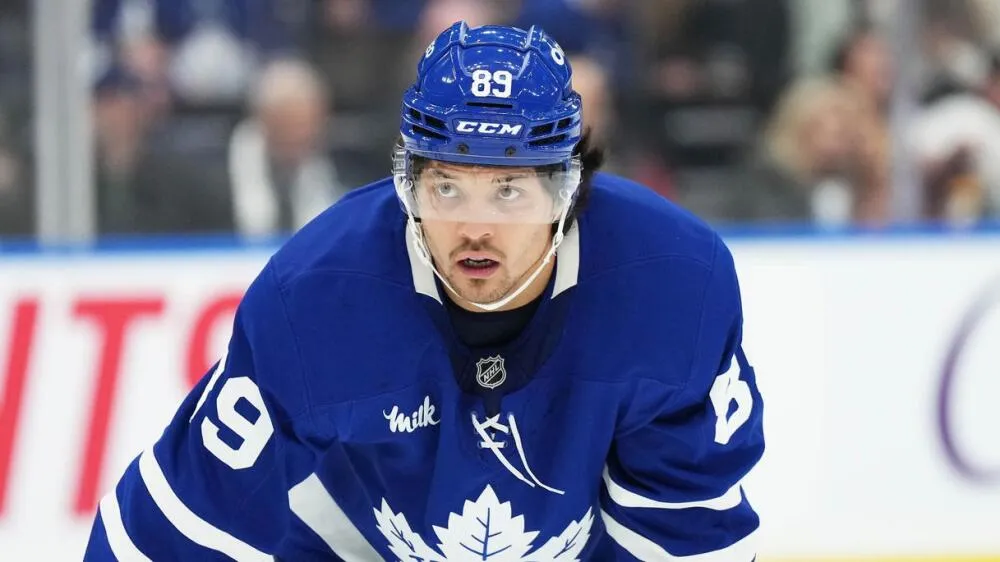
Why the Maple Leafs Nick Robertson for Yegor Chinakhov trade made sense on paper
On the surface, a straight-up swap involving these two players seemed like a logical hockey trade. Both Robertson and Chinakhov are in nearly identical situations—young, talented forwards who were once highly-touted draft picks but have failed to establish themselves as consistent contributors at the NHL level. Robertson, selected 53rd overall in 2019, has shown flashes of offensive ability throughout his career with Toronto, most notably last season when he scored a career-high 15 goals in 69 games.
Chinakhov arrived with considerable expectations as Columbus’s first-round pick (21st overall) in the 2020 NHL Draft. His best campaign came in 2023-24 when he registered 29 points (16 goals, 13 assists) in 53 games, demonstrating the offensive potential that made him a first-round selection. Over 178 NHL games with the Blue Jackets, he’s compiled 34 goals and 38 assists across five seasons, respectable numbers for a player who has often found himself battling for ice time.
The appeal for Toronto would have been acquiring a player with a slightly higher draft pedigree who might benefit from a change of scenery in a larger market. The Hockey News reported that the trade file “remains open in Columbus,” suggesting there’s still potential for something to develop between these two organizations. For Columbus, Robertson would have represented an opportunity to acquire a younger player with a lower cap hit who could grow within their rebuilding framework.
Both players are in contract years, adding urgency to their respective situations. Robertson signed a one-year, $1.825 million deal after electing arbitration this summer, while Chinakhov is in the final season of a two-year contract paying him $2.1 million annually. Both will be restricted free agents at season’s end, creating complicated decisions for their current teams about whether to invest further in their development or move on entirely.
The change-of-scenery factor cannot be understated in trades like these. Sometimes a talented player simply needs a fresh start in a different system with different coaches and different expectations. The failed Maple Leafs Nick Robertson for Yegor Chinakhov trade proposal represented exactly that type of opportunity—two organizations giving up on young players who might thrive elsewhere.
Columbus’s rejection reveals Robertson’s diminishing value
The Blue Jackets’ decision to decline the Maple Leafs Nick Robertson for Yegor Chinakhov trade offer provides telling insight into how Robertson is currently valued around the NHL. Despite Chinakhov’s well-documented struggles in Columbus and his apparent desire for a fresh start, general manager Don Waddell and his staff determined that Robertson wasn’t an adequate return for their disgruntled winger.
Pierre LeBrun reported that multiple teams have expressed interest in Chinakhov, including Detroit, Florida, Buffalo, and Calgary, in addition to Toronto. The Blue Jackets have made it clear they’re not interested in simply dumping Chinakhov for draft picks or an underwhelming return—they want a hockey trade that provides immediate value. Their rejection of Robertson suggests they view him as falling into that “underwhelming” category, a harsh assessment for a player who scored 15 goals just last season.
Robertson’s value has steadily declined since he requested a trade from Toronto in the summer of 2024. At that point, he had some leverage as a young forward with offensive upside who was simply seeking more opportunity. The Maple Leafs couldn’t find a deal they liked, ultimately convincing Robertson to sign a one-year extension through arbitration. Now, with minimal ice time and his first healthy scratch of the season already in the books, his market value appears to be at an all-time low.
The comparison to Chicago’s recent trade of Lukas Reichel is particularly instructive. The Blackhawks moved the 22-year-old forward to Vancouver for just a fourth-round pick, a return that reflects how little value struggling young forwards can command in today’s NHL. If the Maple Leafs wait too long to move Robertson, they risk being forced into a similar position where they’re giving him away for pennies on the dollar just to clear roster space.
Toronto may have already missed their window to extract significant value from Robertson. His diminishing ice time under head coach Craig Berube—averaging just 11:01 per game through six contests, second-lowest among Maple Leafs forwards—signals that the organization has lost faith in his ability to contribute meaningfully. When teams around the league see a player being healthy scratched and relegated to fourth-line minutes, they adjust their trade offers accordingly.
What went wrong for Nick Robertson in Toronto
Understanding why the Maple Leafs Nick Robertson for Yegor Chinakhov trade discussions even occurred requires examining Robertson’s tumultuous tenure with the organization. Drafted in 2019, Robertson arrived with considerable fanfare as a goal-scoring winger who had posted 55 goals in 46 games with the OHL’s Peterborough Petes in his draft year. The hope was that his offensive instincts and quick release would translate to the NHL level.
Injuries plagued Robertson’s early development, limiting his ability to establish consistency at either the NHL or AHL level. A shoulder injury cost him significant time, and when he did play, he struggled to earn the trust of the coaching staff. In 163 NHL games with Toronto, he’s accumulated 32 goals and 25 assists for 57 points—decent production when given opportunities, but never enough to secure a permanent role in the lineup.
The fundamental issue for Robertson has been his inability to find a natural fit within Toronto’s forward structure. He’s not skilled enough defensively to warrant a bottom-six checking role, but he hasn’t produced consistently enough to justify top-six minutes on a team with established stars like Auston Matthews, Mitch Marner, and William Nylander. This roster construction issue has left Robertson in perpetual limbo, bouncing between the press box, fourth line, and occasional opportunities in the top nine when injuries occur.
His public trade request last summer revealed the depth of his frustration. Robertson clearly believed he deserved more opportunity than Toronto was willing to provide, and from his perspective, that assessment had merit. However, the Maple Leafs’ inability to find a suitable trade partner—including Columbus’s rejection of the Chinakhov swap—suggests the rest of the NHL doesn’t value him as highly as he values himself.
New head coach Craig Berube has shown little patience for players who don’t commit defensively or fit his physical, straightforward style of hockey. Robertson, at 5-foot-9 and lacking elite defensive instincts, doesn’t naturally align with Berube’s preferred lineup construction. His healthy scratch against Buffalo marked a turning point in the relationship, signaling that the organization is actively seeking exit strategies rather than development plans.
The Columbus perspective on Yegor Chinakhov’s situation
While much attention has focused on Robertson’s struggles, Chinakhov’s situation in Columbus provides equally compelling context for why the Maple Leafs Nick Robertson for Yegor Chinakhov trade fell apart. The Russian winger arrived with significant expectations as a first-round pick who had dominated the KHL as a teenager. His combination of size, skill, and shooting ability made him an intriguing prospect for a Blue Jackets team desperate to add offensive talent.
Chinakhov’s development has been inconsistent, showing promising stretches followed by extended periods where he seemed completely overwhelmed by NHL competition. His 29-point campaign in 2023-24 represented his best professional season, but even then he played only 53 games and struggled to maintain his spot in the lineup during Columbus’s late-season playoff push. Being scratched repeatedly during crucial games damaged his confidence and relationship with the coaching staff.
The reported falling out with head coach Dean Evason has created an untenable situation. According to The Hockey Writers, Chinakhov has appeared in just four of the team’s games this season, a clear indication that the organization has moved on from viewing him as a core piece of their future. When a first-round pick becomes a healthy scratch three years into his NHL career, it’s rarely a good sign for either party.
Columbus’s willingness to entertain trade offers for Chinakhov demonstrates their recognition that the relationship has run its course. However, their rejection of Robertson suggests they believe they can do better than swapping one struggling young forward for another. General manager Don Waddell has reportedly told interested teams that he wants a hockey trade rather than draft picks, meaning he’s seeking an NHL-ready player who addresses a specific need rather than futures.
The Blue Jackets’ organizational philosophy under Waddell emphasizes patient development and acquiring players who fit their culture. Robertson, with his public trade request and diminishing performance, may not have aligned with that philosophy. Additionally, Columbus already has several small, skilled forwards in their system—they likely preferred to target a different type of player if they’re moving Chinakhov.
Chinakhov’s restricted free agent status at season’s end complicates matters further. If Columbus can’t find an acceptable trade before the deadline, they risk losing him for minimal return through the arbitration process or having to commit term and money to a player they’ve clearly soured on. This timeline creates urgency that could eventually make them more flexible in their trade demands.
Where both players go from here in potential trade scenarios
With the Maple Leafs Nick Robertson for Yegor Chinakhov trade off the table, both players and organizations face uncertain futures. Friedman’s report that Toronto is “investigating options” for Robertson suggests the team remains committed to finding an exit strategy. The healthy scratch against Buffalo likely serves as both a message to Robertson and a showcase of sorts to other teams that the player is available.
Robertson’s next landing spot will likely be a team outside playoff contention that can afford to give him significant ice time without pressure to win immediately. Organizations like San Jose, Chicago (despite just trading Reichel), or Anaheim could make sense as destinations where Robertson might finally get the sustained opportunity he’s been seeking. However, the return for Toronto will almost certainly be disappointing—likely a mid-round pick or a similarly struggling prospect.
The Maple Leafs also face the possibility of simply retaining Robertson through the season and letting him walk as a restricted free agent. Given his arbitration award of $1.825 million, Toronto could choose not to qualify him, making Robertson an unrestricted free agent where he can pursue opportunities elsewhere without costing the Leafs anything in trade. This outcome seems increasingly likely if no acceptable trade materializes.
For Chinakhov, the broader interest from multiple teams gives Columbus more leverage and options. A contending team looking for depth scoring might view him as a low-risk acquisition who could benefit from structured, limited minutes on a winning roster. His $2.1 million cap hit is manageable, and his pedigree as a former first-round pick still carries some appeal around the league.
The trade deadline in March represents the most likely timeline for movement on both players. By then, contending teams will have clearer pictures of their needs, and struggling teams will be more willing to take chances on reclamation projects. Both Robertson and Chinakhov could find themselves as deadline-day afterthoughts, moved in minor deals that barely register compared to the blockbuster transactions dominating headlines.
Ultimately, the failed Maple Leafs Nick Robertson for Yegor Chinakhov trade serves as a reminder that not every struggling young player commands significant trade value, regardless of draft pedigree or occasional flashes of talent. Both organizations will need to adjust their expectations and accept modest returns if they’re committed to moving on from these once-promising prospects.
The NHL landscape is littered with former high picks who never found their footing with the teams that drafted them. Sometimes those players rediscover their careers elsewhere, as Mathieu Olivier did after leaving Columbus for Nashville and then returning. Other times, they fade from the league entirely, cautionary tales about the razor-thin margin between success and failure at hockey’s highest level. Robertson and Chinakhov both hope to avoid the latter fate, but their paths forward have never been more uncertain than they are today.

Par Mike Jonderson
Mike Jonderson is a passionate hockey analyst and expert in advanced NHL statistics. A former college player and mathematics graduate, he combines his understanding of the game with technical expertise to develop innovative predictive models and contribute to the evolution of modern hockey analytics.