













The Toronto Maple Leafs’ pursuit of roster upgrades continues to hit roadblocks, with the latest revelation exposing a failed summer trade proposal that could have reshaped their forward depth. According to Sportsnet’s Elliotte Friedman, the Maple Leafs pitched a straight-up deal to the Columbus Blue Jackets that would have sent Nick Robertson to Ohio in exchange for Russian winger Yegor Chinakhov. The Blue Jackets, however, weren’t interested, declining the offer despite Chinakhov’s reported unhappiness with his current situation and Columbus’ openness to exploring trade options for the 24-year-old forward.
The rejection speaks volumes about Robertson’s current standing in the NHL trade market and raises questions about the Maple Leafs’ ability to extract meaningful value from a player who requested a trade just over a year ago. With Robertson now a healthy scratch and his role in Toronto increasingly uncertain, the failed deal represents a missed opportunity for both organizations to address their respective roster challenges while two young forwards seek fresh starts.
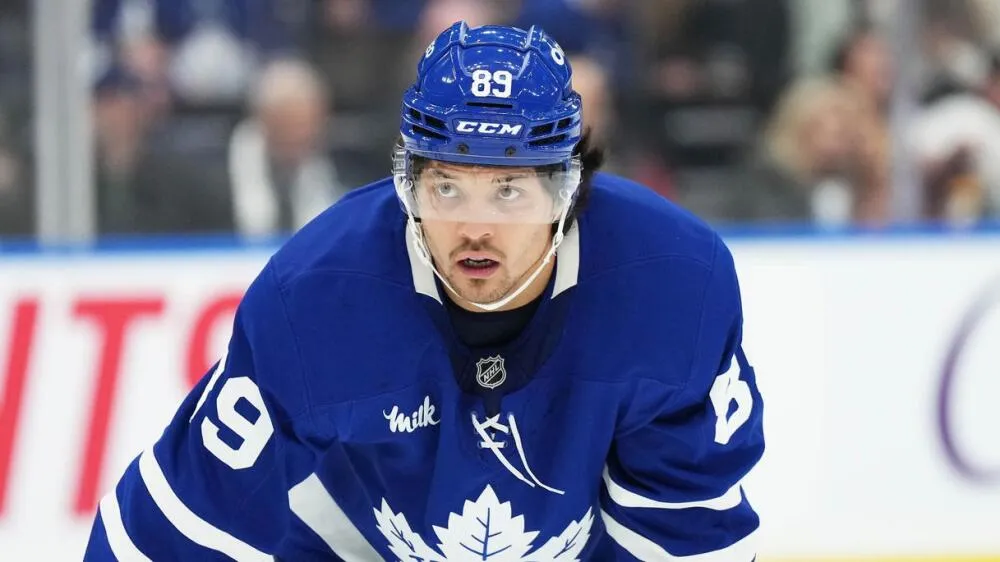
Why the Maple Leafs trade Nick Robertson for Yegor Chinakhov declined proposal made sense
The proposed swap between Robertson and Chinakhov appeared logical on paper, addressing needs for both franchises while giving two disgruntled young players opportunities to reset their careers. Robertson, 23, has been vocal about his frustrations with limited playing time in Toronto, going so far as to request a trade during the summer of 2024. Despite signing a one-year, $1.825 million contract through arbitration, his role remains undefined, and he was recently made a healthy scratch for the first time this season.
Chinakhov, meanwhile, has found himself on the outside looking in under head coach Dean Evason. The 2020 first-round pick (21st overall) appeared in just four games this season before the trade discussions became public. His best NHL campaign came in 2023-24 when he registered 29 points (16 goals, 13 assists) in 53 games, demonstrating the offensive upside that made him a first-round selection. That production represented a significant step forward for a player who has compiled 72 points across 178 NHL games.
The stylistic differences between the two players added intrigue to the potential exchange. Robertson brings a high-energy, shoot-first mentality with a powerful release, while Chinakhov offers more size at 6-foot-1 and possesses strong two-way instincts that could have fit Toronto’s systems. For Columbus, acquiring Robertson would have provided another skilled forward to complement their young core at a reasonable cap hit.
From a contract perspective, the deal aligned perfectly. Both players are in the final years of their current agreements, with Robertson earning $1.825 million and Chinakhov set to become a restricted free agent after his two-year, $2.1 million deal expires. Neither player represents a significant financial commitment, making the swap a low-risk proposition for both organizations.
The timing seemed opportune as well. Both franchises appeared ready to move on from players who no longer fit their immediate plans. Robertson’s request for a trade and subsequent healthy scratch indicated the Maple Leafs’ patience was wearing thin, while Chinakhov’s sparse playing time under Evason suggested Columbus was willing to explore alternatives. A change of scenery could have benefited both forwards, offering them the fresh starts they reportedly desired.
Columbus’ perspective on rejecting the Maple Leafs trade Nick Robertson for Yegor Chinakhov declined offer
The Blue Jackets’ decision to decline the Robertson-for-Chinakhov swap reveals their evaluation of both players and their trade philosophy under general manager Don Waddell. Despite Chinakhov’s reported dissatisfaction and limited playing time, Columbus clearly views him as the more valuable asset, or at minimum, believes they can extract greater value elsewhere. Multiple teams have expressed interest in the Russian winger, including Detroit, Florida, Buffalo, and Calgary, according to reports from Pierre LeBrun.
Columbus’ stance reflects a broader strategy of seeking “hockey trades” that provide immediate roster value rather than simply dumping unhappy players for futures or underwhelming returns. The Blue Jackets are attempting to navigate a delicate transition period, having missed the playoffs for four consecutive seasons while developing young talent. Trading Chinakhov for Robertson wouldn’t have moved the needle significantly in their rebuild, essentially swapping one struggling young forward for another without addressing their core needs.
The rejection also suggests Columbus has concerns about Robertson’s NHL trajectory. Despite being selected 53rd overall in 2019, Robertson has struggled to establish himself as a consistent NHL contributor, managing just 17 goals and 14 assists across 87 career games. His 5-foot-9 frame and defensive limitations make him a challenging fit for many teams, and his public trade request may have damaged his reputation around the league.
Athlonsports reported that Friedman’s revelation about the failed trade came amid broader discussions about both players’ futures. The fact that Columbus received inquiries from multiple organizations suggests they’re actively shopping Chinakhov but holding out for a package that better addresses their organizational needs. They may be seeking a defensive prospect, draft capital, or a more established player rather than another project forward.
The Blue Jackets’ patient approach contrasts with the urgency surrounding Robertson in Toronto. While both players face uncertain futures, Columbus has the luxury of time and leverage, knowing that multiple suitors provide options. The Maple Leafs, conversely, risk watching Robertson’s value continue to deteriorate as he sits in the press box, potentially limiting their return to draft picks or salary cap relief.
Nick Robertson’s diminishing trade value and the Maple Leafs’ dilemma
Robertson’s situation has evolved from promising prospect to organizational headache in remarkably short order. After requesting a trade in summer 2024 due to limited opportunities, he appeared in all of Toronto’s games to start this season before being made a healthy scratch. That benching signaled that head coach Craig Berube has concerns about Robertson’s fit in his system, potentially related to defensive responsibilities or lineup chemistry.
The trade request itself likely damaged Robertson’s market value significantly. General managers around the league now know he’s unhappy in Toronto and that the Maple Leafs are motivated to move him, reducing the urgency to offer premium assets. The failed Columbus trade represents just one example of Toronto’s inability to extract fair value for a player they selected in the second round just six years ago.
Comparisons to recent trades involving similar players paint a troubling picture for Robertson’s potential return. When the Chicago Blackhawks moved Lukas Reichel to Vancouver, they received only a fourth-round pick despite Reichel being a first-round selection with NHL experience. If Robertson’s value has fallen to a similar level, the Maple Leafs face a difficult decision: accept minimal return or hold onto a disgruntled player taking up a roster spot and cap space.
Toronto’s front office, led by general manager Brad Treliving, must now weigh several unappealing options. They could continue trying to showcase Robertson in games, hoping strong performances revive trade interest. They could retain him through the season and allow him to reach unrestricted free agency, receiving nothing in return. Or they could accept whatever minimal package becomes available, clearing the roster spot for another player.
The situation highlights the challenges teams face when highly-drafted prospects fail to develop as anticipated. Robertson possesses undeniable offensive tools—his shot remains NHL-caliber and he’s shown flashes of scoring ability when given opportunities. However, the complete package hasn’t materialized, and at 23 years old, teams are beginning to view him as what he is rather than what he might become. Without the appeal of untapped potential, Robertson’s trade value rests solely on his current ability to contribute, which Columbus deemed insufficient to part with Chinakhov.
What’s next for both players and their respective teams
The path forward for Robertson remains murky following the failed trade proposal. The Maple Leafs continue exploring options, but with his value at its lowest point, they may need to significantly lower their asking price or expand their search to teams outside the usual contenders. Teams facing injury issues or desperate for depth scoring before the trade deadline could emerge as potential suitors, though Toronto shouldn’t expect more than a mid-round pick in return.
Robertson’s immediate future likely depends on Toronto’s injury situation and performance over the coming weeks. If the Maple Leafs struggle to generate offense or suffer injuries to their forward group, Robertson could receive another opportunity to prove his worth. However, his tenure in Toronto appears to be reaching its natural conclusion, with a trade or departure via free agency seeming inevitable before the end of the 2025-26 season.
For Chinakhov, the marketplace appears more robust despite his current scratch status in Columbus. Multiple teams have expressed interest, and the Blue Jackets’ willingness to field offers while maintaining their standards suggests they believe they can secure a favorable return. A team looking for a right-shot forward with first-round pedigree and offensive upside could view Chinakhov as an ideal change-of-scenery candidate.
The Blue Jackets’ patience may prove prudent if a team suffers injuries or decides to make a mid-season push for playoff positioning. Chinakhov’s combination of size, skill, and affordability makes him an attractive option for teams looking to add depth without surrendering premium assets or taking on significant cap commitments. Unlike Robertson, Chinakhov’s value hasn’t cratered despite limited playing time, suggesting teams view his benching as a coaching decision rather than an indictment of his abilities.
The broader implications of the Maple Leafs trade Nick Robertson for Yegor Chinakhov declined deal
The failed trade attempt illustrates the challenges contending teams face when trying to convert struggling prospects into useful roster pieces. The Maple Leafs have invested significant development resources into Robertson, including AHL assignments and varied NHL roles, yet haven’t been able to unlock consistent production. The inability to recoup even modest value in a trade compounds the organizational loss.
This situation also reflects the modern NHL’s ruthless efficiency in evaluating young players. The days of prospects receiving three or four seasons to develop at the NHL level have largely passed, replaced by accelerated timelines and heightened expectations. Robertson’s 87 games across multiple seasons would have represented a longer runway in previous eras, but today’s cap-constrained environment forces teams to make quicker decisions about player development and roster construction.
The rejection from Columbus sends a clear message about how rival organizations view Robertson’s NHL future. If a rebuilding team with an unhappy player wasn’t willing to make a swap, it suggests widespread skepticism about Robertson’s ability to become a consistent contributor. That assessment may prove premature—change-of-scenery trades occasionally work wonders for players who simply needed the right fit—but it reflects the current consensus around the league.
For Toronto, the failed trade represents another challenge in an already complicated season. The Maple Leafs entered 2024-25 with championship aspirations but have faced injury issues, inconsistent play, and now the distraction of an unhappy player seeking opportunities elsewhere. While Robertson’s situation isn’t critical—he carries a reasonable cap hit and isn’t a core piece of their playoff plans—it adds another item to general manager Brad Treliving’s lengthy to-do list.
The contrast between how the two organizations are handling their disgruntled players offers an instructive lesson in asset management. Columbus is taking its time, fielding multiple offers and waiting for the right deal rather than accepting the first proposal that clears a roster spot. Toronto, meanwhile, appears more anxious to resolve the situation, perhaps explaining why they were willing to offer Robertson straight-up for Chinakhov despite the Blue Jackets’ first-round pedigree. That desperation rarely produces favorable trade returns, as other general managers recognize leverage when they see it.
As the season progresses, both Robertson and Chinakhov will likely find new homes, whether through trades before the deadline or via free agency in the offseason. The Maple Leafs’ failed proposal won’t be the last attempt to move Robertson, but it may be remembered as the moment when Toronto’s front office realized they had waited too long to capitalize on whatever trade value he once possessed. For Columbus, the patience to decline a deal that didn’t meet their standards could pay dividends if they ultimately secure a more favorable package from one of the several interested teams. The tale of this declined trade serves as a reminder that timing, leverage, and organizational evaluation play crucial roles in determining which trades happen and which become footnotes in a season’s rumor mill.

Par Mike Jonderson
Mike Jonderson is a passionate hockey analyst and expert in advanced NHL statistics. A former college player and mathematics graduate, he combines his understanding of the game with technical expertise to develop innovative predictive models and contribute to the evolution of modern hockey analytics.