











Mark Stone made his long-awaited return to the Vegas Golden Knights lineup on Wednesday night, delivering exactly what his team needed when they needed it most. After missing 16 games with an upper-body injury, the captain scored a crucial power-play goal in the third period to tie the game against his former Ottawa Senators squad. Unfortunately for Vegas, the heroic comeback wasn’t enough to secure two points, as the Senators prevailed 4-3 in a shootout at T-Mobile Arena.
The loss extended the Golden Knights’ frustrating streak to three consecutive defeats (0-1-2) and marked their seventh straight loss in games that go past regulation. While Stone’s presence immediately elevated his team’s performance, particularly on the power play, Vegas continues to struggle with closing out tight contests. The team now sits at 1-8 in games decided in overtime or shootouts this season, leaving valuable points on the table in an increasingly competitive Pacific Division race.
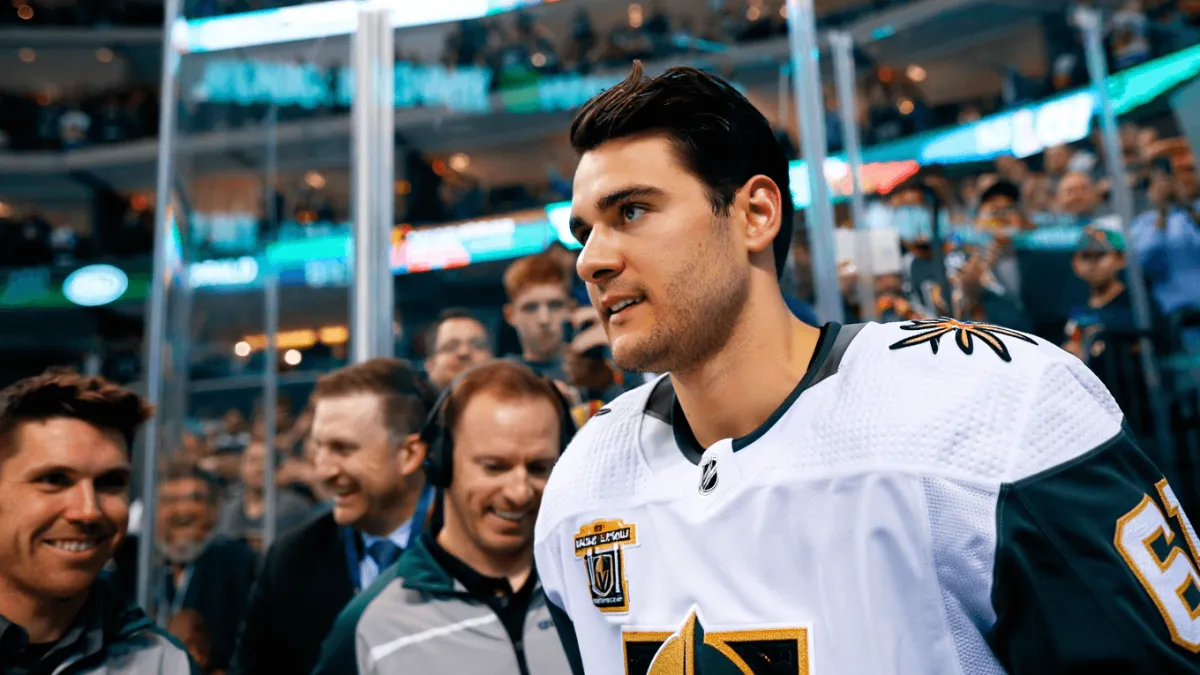
Stone’s triumphant return energizes T-Mobile Arena
Wednesday’s game marked exactly five weeks since Stone sustained a wrist injury during a contest against the Calgary Flames on October 18. The captain had been sidelined on a week-to-week basis, leaving a significant leadership and offensive void in the Golden Knights lineup. His return against the Senators, the franchise that traded him to Vegas in 2019, added an extra layer of narrative to an already anticipated comeback.
From his first shift, Stone’s impact was evident. He logged just under 20 minutes of ice time, a remarkable workload for someone returning from a month-long absence. The captain recorded three shots on goal, delivered two hits, and showcased his trademark defensive awareness with three takeaways. Perhaps most importantly, his line with Brett Howden and Mitch Marner generated consistent offensive pressure throughout the night.
Coach Bruce Cassidy made a strategic decision to keep Stone with Howden and Marner rather than immediately reuniting him with Jack Eichel, who has developed strong chemistry with rookie Braeden Bowman. The move paid dividends as the trio maintained possession in the offensive zone and created several scoring chances. Cassidy praised the line’s performance, noting Stone’s ability to draw defenders and open space for his teammates.
The clutch power-play goal that gave Vegas hope
The moment everyone had been waiting for arrived at 6:40 of the third period. With the Golden Knights trailing 3-2 and on the power play, Stone positioned himself in his customary spot near the net. The play developed quickly as Pavel Dorofeyev attempted to feed Stone for a one-timer. The pass wasn’t perfect—Stone whiffed on his initial attempt—but the hockey gods smiled upon the returning captain.
The puck deflected off Senators forward Tim Stutzle’s skate and slid past goaltender Linus Ullmark, tying the game at 3-3. The T-Mobile Arena erupted as Stone raised his arms in celebration, his teammates mobbing him along the boards. It was the kind of fortuitous bounce that often seems to find players who work hardest and position themselves best.
“Got a really lucky bounce, but you take those and run,” Stone said after the game. “We had some chances. It’ll come. It’ll get better.”
The goal was Stone’s first point of the season and came at a critical juncture. The Senators had built a 2-0 lead in the first period and extended it to 3-1 late in the opening frame. Vegas had battled back with goals from Brett Howden and Jack Eichel in the second period, but Ottawa’s defense and Ullmark’s goaltending appeared poised to preserve the lead until Stone’s intervention.
Ottawa’s resilience and timely scoring
The Senators came out flying in the opening period, staking themselves to a two-goal advantage before many fans had settled into their seats. Shane Pinto opened the scoring just 51 seconds into the game, capitalizing on his own rebound after his initial pass attempt caromed back to him. The sharp-angle shot slipped under Akira Schmid’s pad, a goal the young goaltender would likely want back.
Jake Sanderson doubled the lead at 13:04 with a power-play one-timer that rang off the post and in. The defenseman’s blast from the point demonstrated Ottawa’s commitment to a shot-first mentality with the man advantage, a strategy that paid immediate dividends.
Drake Batherson pushed the advantage to 3-1 with just 17 seconds remaining in the first period, converting a beautiful feed from Tim Stutzle during a rush play. The late goal could have been deflating for the Golden Knights, but they showed resilience in the middle frame.
Goaltender Linus Ullmark was stellar when it mattered most, stopping 32 of 35 shots and remaining perfect in the shootout. His save on Ivan Barbashev’s overtime attempt—which rang off the crossbar—proved particularly crucial. “We battled right through to the end,” Ullmark said. “It wasn’t pretty, but two points is two points.”
Golden Knights’ ongoing overtime struggles
Despite controlling large stretches of the second and third periods, Vegas couldn’t find the decisive fourth goal. The team outshot Ottawa 35-23 and generated numerous high-danger scoring chances, particularly in the final frame. Coach Cassidy noted the territorial dominance, but emphasized the need to finish.
“We totally controlled the second and third period,” Stone said. “I’m not sure they had as much as a scoring chance, especially in the third. We have every opportunity to end the game. We had the puck on our stick and just couldn’t capitalize.”
The overtime period followed a familiar pattern for the Golden Knights. Deadlocked at 3-3, Vegas pressed for the winner but couldn’t solve Ullmark. The team has now scored just one goal on 17 shots in overtime situations this season, a concerning statistic that suggests both bad luck and missed opportunities.
Concerning trend past regulation
The shootout loss dropped Vegas to 1-8 in games decided beyond regulation time. While earning a single point keeps the team competitive in the Pacific Division standings, the pattern of failing to secure the second point is becoming costly. The Golden Knights have left seven potential points on the table in these situations—a significant total in what’s expected to be a tight playoff race.
Defenseman Noah Hanifin acknowledged the frustration: “We’re leaving a lot of points on the table. It’s not going to be easy to make those up.”
The shootout itself was anticlimactic for Vegas fans. Linus Ullmark stopped all three Golden Knights attempts, while Akira Schmid managed to stop two of three Senators shooters. The lone goal came from Claude Giroux, whose veteran savvy proved the difference in the skills competition.
What it means for the championship picture
The Golden Knights enter the Thanksgiving holiday in a three-way tie for second place in the Pacific Division with 28 points. Anaheim leads with 29, while Seattle and Los Angeles also have 28. The parity in both the division and the Western Conference means every point carries heightened importance as teams jockey for positioning.
While Stone’s return provides a significant boost, the team’s goaltending situation remains uncertain. Akira Schmid performed admirably but allowed two soft goals in the first period. The impending return of Carter Hart on December 1st should stabilize the position, though questions remain about Adin Hill’s longer-term absence.
Stone’s successful comeback demonstrates that the team’s core remains intact and capable of high-level play. His immediate chemistry with new linemates and his power-play impact suggest the Golden Knights can climb the standings if they solve their overtime woes and tighten up defensively.
Stone’s veteran perspective on the comeback
Having experienced multiple injuries throughout his career, Stone has developed a methodical approach to returning to action. He credited the Golden Knights’ medical and training staff for preparing him thoroughly during his absence.
“I’ve had some experience with this,” Stone noted. “It’s not what I want but I think the staff we have here care so much and do a ton of research on what’s the best way to come back and you just have to trust them. They do a great job so you give credit where it’s due.”
The captain’s self-assessment was characteristically modest. Despite scoring the tying goal and playing heavy minutes, Stone focused on his conditioning and the team’s overall performance rather than individual accolades.
“Not bad,” he said when asked to evaluate his game. “I’ve been skating quite a bit so I felt pretty good though my legs started to go toward the end of the game.”
The return against his former team added emotional weight to the occasion. Stone spent his first seven NHL seasons with the Senators before being traded to Vegas, where he immediately signed an eight-year extension and was named captain. The standing ovation he received during pre-game introductions underscored his status as a franchise cornerstone.
Looking ahead: Integrating Stone back into the lineup
With Stone’s successful return, Coach Cassidy faces pleasant lineup decisions moving forward. The immediate question is whether to keep Stone with Howden and Marner or reunite him with Eichel on the top line. Bowman’s impressive production alongside Eichel—extending his point streak to five games—complicates the decision.
Stone’s versatility allows Cassidy to experiment with different combinations. His defensive responsibility and playmaking ability make him effective in various roles, whether driving a scoring line or matching up against opponents’ top players. The Mark Stone effect is alive and well for the Vegas Golden Knights, as his presence alone elevates the play of those around him.
The captain’s leadership and impact as Vegas navigates overtime woes will be crucial in the coming weeks. His ability to perform in clutch moments, demonstrated by Wednesday’s tying goal, gives the team confidence during tight contests.
Stone’s veteran perspective on the comeback
Having experienced multiple injuries throughout his career, Stone has developed a methodical approach to returning to action. He credited the Golden Knights’ medical and training staff for preparing him thoroughly during his absence.
“I’ve had some experience with this,” Stone noted. “It’s not what I want but I think the staff we have here care so much and do a ton of research on what’s the best way to come back and you just have to trust them. They do a great job so you give credit where it’s due.”
The captain’s self-assessment was characteristically modest. Despite scoring the tying goal and playing heavy minutes, Stone focused on his conditioning and the team’s overall performance rather than individual accolades.
“Not bad,” he said when asked to evaluate his game. “I’ve been skating quite a bit so I felt pretty good though my legs started to go toward the end of the game.”
The return against his former team added emotional weight to the occasion. Stone spent his first seven NHL seasons with the Senators before being traded to Vegas, where he immediately signed an eight-year extension and was named captain. The standing ovation he received during pre-game introductions underscored his status as a franchise cornerstone.
Looking ahead: Integrating Stone back into the lineup
With Stone’s successful return, Coach Cassidy faces pleasant lineup decisions moving forward. The immediate question is whether to keep Stone with Howden and Marner or reunite him with Eichel on the top line. Bowman’s impressive production alongside Eichel—extending his point streak to five games—complicates the decision.
Stone’s versatility allows Cassidy to experiment with different combinations. His defensive responsibility and playmaking ability make him effective in various roles, whether driving a scoring line or matching up against opponents’ top players. The Mark Stone effect is alive and well for the Vegas Golden Knights, as his presence alone elevates the play of those around him.
The captain’s leadership and impact as Vegas navigates overtime woes will be crucial in the coming weeks. His ability to perform in clutch moments, demonstrated by Wednesday’s tying goal, gives the team confidence during tight contests.
Conclusion
Mark Stone’s return provided the Vegas Golden Knights with exactly the spark they needed, even if the final result didn’t reflect his heroic effort. His tying goal in the third period against his former team showcased why he’s considered one of the league’s premier two-way forwards and the emotional leader of his franchise. The performance offered a glimpse of what Vegas can achieve with their captain healthy and integrated into the lineup.
However, the shootout loss highlighted persistent concerns that extend beyond any single player. The Golden Knights’ inability to secure second points in overtime situations has become a troubling pattern that could significantly impact their playoff positioning come April. With nearly every team in the Western Conference playoff hunt separated by just a handful of points, the seven potential points left on the table in extra-time losses represent a margin that could determine home-ice advantage or even a postseason berth.
For the Golden Knights, the path forward involves building upon the positives from Stone’s return while addressing the defensive lapses and finishing issues that have plagued them. With Stone back in the fold and Hart’s return imminent, the team has the talent to compete with any opponent. The challenge lies in translating territorial dominance and scoring chances into victories, particularly when games extend beyond regulation. If Wednesday’s performance is any indication, Stone’s presence may be the catalyst that helps Vegas finally get over the hump and turn those frustrating single points into the crucial second points they’ll need in the competitive Western Conference race.
Frequently Asked Questions

Par Mike Jonderson
Mike Jonderson is a passionate hockey analyst and expert in advanced NHL statistics. A former college player and mathematics graduate, he combines his understanding of the game with technical expertise to develop innovative predictive models and contribute to the evolution of modern hockey analytics.