


Milan-Cortina 2026 Olympic hockey arena readiness delay threatens Winter Games preparations
Time is running dangerously short for organizers of the Milan-Cortina 2026 Winter Olympics as construction delays at the primary ice hockey venue have left the event in a precarious position. With no backup plan in place, officials are counting on the Santagiulia Ice Hockey Arena to be completed with potentially only hours to spare before the first puck drops on February 5, 2026.
The 16,000-seat venue, which represents a crucial centerpiece for hockey’s return to the Olympic stage after a 12-year absence, has fallen behind schedule, forcing officials into what they describe as a “down to the wire” race against time. Andrea Francisi, the chief games operations officer for Milan Cortina, confirmed the grim reality in a recent briefing: “There is no plan B. So necessarily we have to be able to organize the competition in an impeccable manner at Santagiulia.”
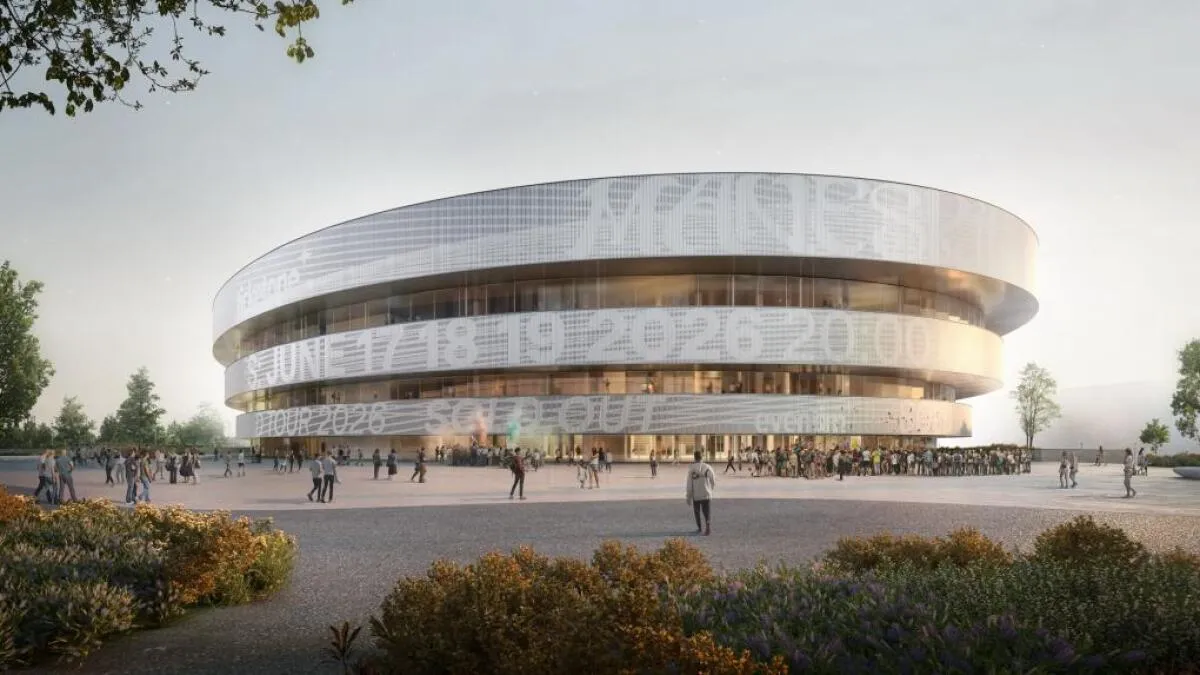
Understanding the Milano Santagiulia ice hockey arena construction crisis
Construction challenges at the new facility on the outskirts of Milan have created a cascade of problems for Olympic planners. A scheduled test event at the arena had to be relocated, and replacement testing is now slated for January 9-11—dangerously close to the start of competition. This truncated timeline represents a significant departure from standard Olympic protocols, which typically require venues to be tested at least a year before hosting medal events.
The facility’s importance cannot be overstated. For the first time since the 2014 Sochi Games, NHL players will compete in the Olympic tournament, bringing the world’s top talent back to the international stage. Sidney Crosby, Connor McDavid, and other superstars are expected to represent their nations, making the venue’s readiness critical not just for logistics but for the global appeal of the Games themselves.
Francisi’s team is conducting daily monitoring of construction progress, working in close coordination with contractors who have accelerated their work significantly. “There are daily updates in the sense that our team is there working every day,” Francisi explained. “The companies which are involved with the building of the facility have sped up their work significantly.”
Why test events matter for Olympic hockey arenas
The postponement of test events raises red flags beyond just the ice surface itself. Modern Olympic venues require rigorous testing of numerous systems that spectators and broadcasters take for granted. Concession operations, bathroom facilities, security screening, broadcast cabling, lighting systems, and emergency evacuation procedures all need thorough vetting before the world’s attention focuses on the facility.
Typically, these test events serve as dress rehearsals that identify logistical bottlenecks and technical problems. Without adequate testing time, organizers risk discovering critical failures during actual competition, potentially disrupting live broadcasts and compromising athlete safety. The tight schedule leaves virtually no margin for fixing problems that emerge during the January test events.
NHL players returning to Olympics face uncertain venue conditions
The return of NHL players to Olympic competition represents one of the most anticipated storylines of the 2026 Winter Games. After skipping the 2018 PyeongChang and 2022 Beijing Olympics due to scheduling conflicts and financial disputes, the league’s renewed participation hinges on having world-class facilities ready for its stars.
Defenseman Cale Makar expressed the players’ cautious optimism: “We all grew up dreaming of representing our countries on this stage. The opportunity to compete for gold alongside the best players in the world is what hockey is all about.” However, the uncertainty surrounding the venue adds an unwelcome variable to athletes’ preparation.
The men’s tournament runs from February 11-22, while the women’s competition extends from February 5-19. The first Olympic hockey game scheduled at the arena is a women’s preliminary round match between Italy and France, taking place just one day before the opening ceremony.
What makes Santagiulia arena critical for 2026 success
Unlike other Olympic sports that can utilize temporary or existing facilities, ice hockey requires specialized infrastructure that cannot be improvised. The Santagiulia arena was conceived as a permanent legacy facility for Milan’s growing hockey community, designed to meet NHL specifications for player safety and broadcast requirements.
The venue’s 16,000-seat capacity dwarfs the alternative Rho Ice Hockey Arena, which will operate in a repurposed pavilion at the Fiera Milano Rho exhibition centre. While the Rho facility provides some flexibility, it cannot accommodate the marquee matchups and medal rounds that require the larger, primary venue.
Timeline pressure and construction challenges explained
Organizers have declined to specify an exact handover date for the completed arena, citing ongoing negotiations with contractors. This ambiguity concerns international hockey federations, which need time to install sport-specific equipment and conduct technical rehearsals.
Construction industry experts point to several factors contributing to the delays. Supply chain disruptions for specialized materials, labor shortages affecting skilled trades, and the complexity of building ice-making systems that meet Olympic standards have all played roles. The venue’s location on Milan’s developing eastern edge also presented infrastructure challenges that extended the timeline.
Francisi remains publicly optimistic despite acknowledging the pressure. “We’re monitoring all that daily together with them, there’s great collaboration between us, we’re creating a coordinated plan between their work and our preparations and for the moment we’re healthily optimistic, but 100% we’ll do it.”
International Olympic Committee response to venue delays
The situation has drawn scrutiny from the International Olympic Committee, which typically requires host cities to present contingency plans for critical infrastructure delays. The apparent lack of alternatives for ice hockey represents an unusual vulnerability in the Games’ risk management strategy.
IOC officials have reportedly increased monitoring of the project, dispatching technical experts to assess progress weekly. While the committee has not issued public statements about potential contingency scenarios, insiders suggest that discussions have included options ranging from scheduling adjustments to relocating certain preliminary round games.
The optics of potential failure weigh heavily on Italian organizers, who want to showcase Milan’s modernization and infrastructure capabilities. A venue failure would contrast sharply with the success of past Winter Games in Vancouver, Sochi, and PyeongChang, all of which delivered their hockey facilities on schedule.
Risk assessment for February competition schedule
With only weeks remaining before competition, the margin for error has vanished. Weather in Milan during January and February can complicate final construction work, particularly for roof completion and exterior finishes. Any additional delays could force organizers to make unprecedented last-minute decisions about competition venues.
The紧凑的时间 line leaves athletes and coaches in limbo. Team Canada’s staff have reportedly begun scouting alternative practice venues in case the primary facility faces limited availability during training periods. Similarly, equipment managers require venue access to confirm locker room configurations and storage logistics.
Television broadcasters, who have invested heavily in Olympic rights, face uncertainty about camera positions and technical infrastructure. Modern hockey broadcasts rely on dozens of camera angles and specialized equipment that requires installation and testing weeks in advance.
What happens if the arena isn’t ready
While Francisi insists completion is certain, sports management experts question the viability of proceeding without alternatives. Potential scenarios include:
- Postponing early-round games and compressing the tournament schedule
- Moving all games to the smaller Rho arena, limiting spectator capacity
- Using existing facilities in other Italian cities, though this would compromise the Olympic village concept
- Delaying the entire hockey program, an unprecedented move in modern Olympic history
Each option carries significant consequences for athletes, broadcasters, sponsors, and fans. The compressed schedule could force teams to play on consecutive days, raising injury concerns. Reduced capacity would disappoint ticket holders and diminish atmosphere. Relocation would fragment the Games and increase transportation costs.
Implications for Olympic hockey tournament integrity
The uncertainty surrounding the venue threatens to overshadow what should be a celebration of hockey’s Olympic return. After a decade-long absence, the sport needs a seamless execution to cement its place in future Games. Any disruption could reignite debates about whether the NHL should prioritize its regular season over Olympic participation.
Team USA coach Mike Sullivan, who helmed Pittsburgh Penguins teams during his NHL tenure, acknowledged the situation while maintaining focus on preparation. “Our job is to control what we can control,” Sullivan noted. “We trust the organizers will deliver a world-class facility, and we’re preparing as if everything will be ready on schedule.”
Women’s hockey faces particular scrutiny given the arena’s first scheduled use for their competition. After the success of the PWHL and growing investment in women’s professional hockey globally, any perceived second-class treatment would draw criticism.
The broader ice hockey community watches nervously. Fans who have waited 12 years to see best-on-best Olympic competition worry that administrative failures could tarnish the tournament’s integrity before it begins.
Despite the challenges, the prospect of watching Canada’s Connor McDavid alongside Nathan MacKinnon, or seeing Sweden’s Erik Karlsson quarterback a power play against Finland, remains tantalizing. The quality of competition promises to be extraordinary—if the venue can accommodate it.
A successful resolution would provide Milan with a world-class hockey facility that serves local communities for decades. The Santagiulia arena could host future IIHF World Championships, European league championship events, and become a hub for Italian hockey development. For now, though, that vision remains contingent on workers completing a race against time, with the sporting world watching anxiously.
Frequently Asked Questions

Par Mike Jonderson
Mike Jonderson is a passionate hockey analyst and expert in advanced NHL statistics. A former college player and mathematics graduate, he combines his understanding of the game with technical expertise to develop innovative predictive models and contribute to the evolution of modern hockey analytics.