




Milan Lucic’s attempt to resurrect his NHL career has hit another roadblock. The St. Louis Blues officially terminated the veteran forward’s professional tryout agreement with their AHL affiliate, the Springfield Thunderbirds, on Tuesday, bringing an abrupt end to a comeback bid that lasted just over three months. The 37-year-old former Stanley Cup champion had been battling both injuries and inconsistent production since signing with the organization in August.
The decision comes after Lucic appeared in only five games for the Thunderbirds, during which he managed just a single assist and four penalty minutes. His final appearance came on November 21 in a 2-1 victory over the Utica Comets. The Blues’ front office determined that the combination of limited offensive contribution and the team’s current roster situation made continuing the relationship untenable.
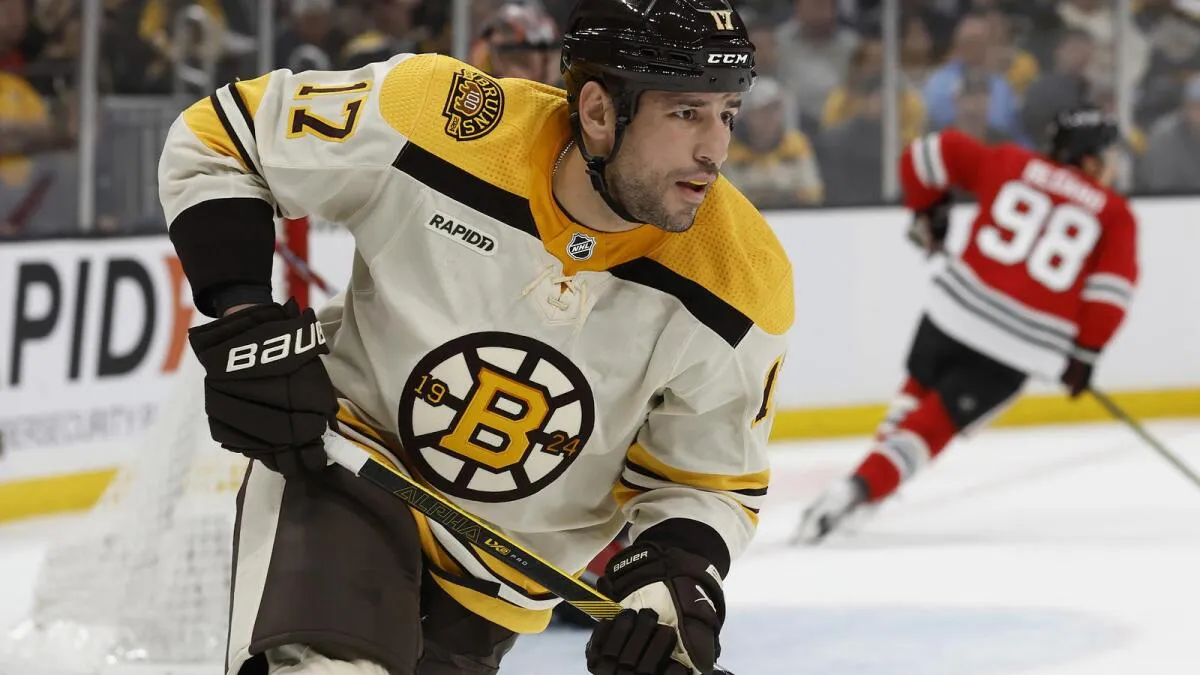
The beginning of Lucic’s comeback attempt with the Blues organization
The story began on August 19 when St. Louis signed Lucic to a professional tryout prior to training camp, giving him an opportunity to prove he could still contribute at the NHL level. The Blues were taking a calculated gamble on a player with 1,177 games of NHL experience and a reputation as a formidable power forward who had helped the Boston Bruins capture the Stanley Cup in 2011.
During the preseason, Lucic showed glimpses of his former self, posting a goal and an assist across four exhibition games. The 6-foot-3, 240-pound winger demonstrated he could still handle the physical demands of professional hockey, using his size and strength to create space and win battles along the boards. However, his momentum was derailed by a lower-body injury that sidelined him for several weeks and required extensive rehabilitation.
After recovering from the injury, Lucic’s path to the NHL roster became more complicated. The Blues, dealing with their own early-season struggles, opted to sign him to a second professional tryout agreement—this time with their AHL affiliate in Springfield rather than keeping him with the parent club. This move signaled that the organization wanted to see more from the veteran before committing a roster spot at the NHL level.
Performance struggles and offensive limitations in Springfield
Lucic’s production with the Thunderbirds never reached the level needed to force the Blues’ hand. In five games, he recorded just one assist and failed to register a shot in four of those contests. His minus-7 rating underscored the defensive challenges he faced while adjusting to AHL competition.
The lack of offensive output was particularly concerning given the Blues’ need for scoring depth. While Lucic had never been a prolific point-producer in his later NHL seasons, the organization hoped his physical presence and veteran leadership would translate to the minor leagues. Instead, he struggled to generate chances and often found himself a step behind the play in a league that prioritizes speed and skill.
His playing time diminished as the tryout progressed, with coaches reportedly concerned about his ability to keep pace with younger, faster competition. The AHL has evolved significantly since Lucic last played regularly in the minors nearly two decades ago, and the veteran forward appeared unable to adapt his game to the current style of play.
The Blues’ perspective: A difficult but necessary decision
St. Louis Blues President of Hockey Operations and General Manager Doug Armstrong made the official announcement on Tuesday, citing the organization’s need to focus on developing younger talent and addressing roster flexibility. The Blues currently have 14 healthy forwards on their NHL roster, creating a logjam that left little room for a project like Lucic.
The timing of the decision reflects the Blues’ precarious position in the Western Conference standings. With a 7-10-6 record through 23 games, St. Louis sits 29th in the league, seven points behind Utah and Vegas for the final wild-card spot. The team simply cannot afford to wait for a 37-year-old forward to find his game while they struggle to stay competitive.
Coaching staff had also expressed concerns about roster balance. Veterans Mathieu Joseph and Nick Bjugstad were healthy scratches in Monday’s 3-2 loss to the New York Rangers, illustrating the surplus of forwards already under contract. Adding Lucic to the mix would have complicated lineup decisions further without providing a clear upgrade over existing options.
The road that led to this moment
Lucic’s journey to this point has been marked by both triumph and turbulence. After establishing himself as one of the NHL’s most feared power forwards with Boston, recording three seasons of 20-plus goals, he embarked on a journeyman career that included stops in Los Angeles, Edmonton, and Calgary. His style of play, predicated on physical dominance and intimidation, became increasingly difficult to maintain as the league shifted toward speed and skill.
His return to Boston for the 2023-24 season seemed like a homecoming story, but it unraveled quickly. Lucic played just four games before suffering a serious ankle injury that landed him on long-term injured reserve. More significantly, he entered the NHL/NHLPA Player Assistance Program in November 2023 after being charged with assault and battery stemming from an alleged domestic dispute. Those charges were eventually dropped when his wife declined to testify, and the league reinstated him, but the incident cast a shadow over his final NHL appearance.
The Blues took a chance on Lucic despite these red flags, believing that a change of scenery and the presence of head coach Jim Montgomery—who had coached him briefly in Boston—might help revive his career. However, the combination of injury, age-related decline, and competition from younger players proved too much to overcome.
What this means for Lucic’s future in hockey
The termination of his AHL tryout leaves Lucic’s professional future in serious doubt. At 37 years old, with diminishing production and a game that no longer fits the modern NHL style, opportunities will be scarce. Few teams are willing to invest roster spots or development time in aging forwards who cannot contribute offensively.
Lucic now faces a critical decision point in his career. Options include:
- Exploring opportunities in European leagues where his size and experience might be more valued
- Considering retirement after 17 professional seasons
- Waiting for another NHL organization to take a flier on him, likely through another PTO opportunity
- Transitioning into coaching or player development roles
The veteran forward has not publicly commented on his release or future plans. His agent has remained similarly quiet, suggesting that Lucic may need time to process this setback before determining his next steps. The harsh reality is that most players in his position choose retirement rather than continue pursuing increasingly unlikely opportunities.
The broader implications for veteran players seeking comebacks
Lucic’s failed comeback attempt serves as a cautionary tale for aging NHL veterans hoping to extend their careers. The league continues to trend younger and faster, leaving little room for players whose primary value lies in physical play. Teams increasingly prioritize skill over intimidation, making traditional enforcers and power forwards obsolete.
This situation also highlights the challenges facing the NHLPA in supporting veteran players through career transitions. While the union provides resources for retirement planning and career development, many players struggle to accept when their playing days are over. The allure of one more season, one more chance at glory, often clouds judgment.
For the Blues, this decision reinforces their commitment to rebuilding while remaining competitive. Armstrong and his staff recognized that sentimentality has no place in roster construction when a team is fighting for playoff positioning. The organization will likely continue evaluating younger talent in Springfield, giving prospects like Zachary Bolduc and Zach Dean opportunities to prove they deserve NHL consideration.
Milan Lucic released from St. Louis Blues pro tryout in the AHL marks the likely end of an era for one of hockey’s most recognizable power forwards. While his contributions to the game, particularly during Boston’s championship run in 2011, remain undeniable, the modern NHL has moved on. For Lucic, the challenge now becomes finding peace with a remarkable career and determining how to write its final chapter—whether on the ice or off it.
Frequently Asked Questions

Par Mike Jonderson
Mike Jonderson is a passionate hockey analyst and expert in advanced NHL statistics. A former college player and mathematics graduate, he combines his understanding of the game with technical expertise to develop innovative predictive models and contribute to the evolution of modern hockey analytics.