






Montreal Canadiens potential goalie trade 2025 season: Inside Friedman’s latest interview revelations
The Montreal Canadiens are facing a crisis of confidence between the pipes, and nobody in hockey cuts through the noise quite like Elliotte Friedman. The veteran insider’s recent comments have sparked intense speculation about a potential goaltending shakeup in Montreal, painting a picture of an organization at a crossroads as the 2025 season unfolds. With the team’s playoff hopes hanging in the balance, every save and every soft goal carries the weight of expectation in a market where goaltending isn’t just a position—it’s a way of life.
Friedman’s latest insights suggest general manager Kent Hughes and his staff are walking a tightrope between patience and urgency. The Canadiens are not yet in full crisis mode, but they are asking the kinds of questions that typically precede major moves. In a season where development was supposed to be the priority, the crease has become the team’s most pressing question mark, forcing management to reconsider their timeline and perhaps their entire philosophy.
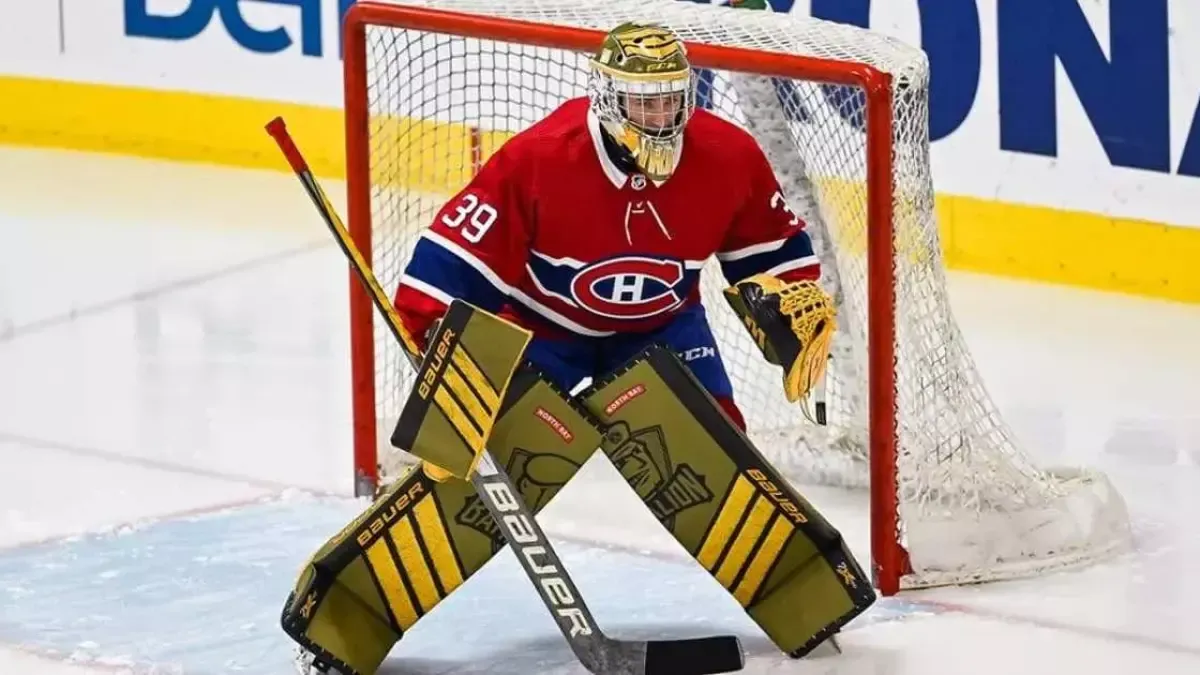
Friedman’s assessment: The Canadiens are “taking stock” of their netminders
The quiet evaluation behind closed doors
According to Friedman’s recent appearance on the FAN Hockey Show, the Canadiens aren’t panicking—they’re evaluating. This distinction matters in a market where every losing streak feels like Armageddon. Friedman emphasized that Montreal isn’t storming the goalie market with desperation; instead, they’re engaging in uncomfortable but necessary conversations about what they actually have in their current tandem.
The insider’s grandmother used to say, “You can plan all you want—God just laughs.” That sentiment perfectly captures the Canadiens’ current reality. Management’s plan entering the season centered on Sam Montembeault building on his career-best campaign and Jakub Dobes establishing himself as a reliable NHL backup. Instead, they’ve watched Montembeault’s numbers crater while Dobes has struggled to maintain his early-season momentum. These internal discussions aren’t about assigning blame—they’re about determining whether this is a temporary blip or evidence of a fundamental problem.
The curveball: Ukko-Pekka Luukkonen enters the conversation
The most intriguing nugget from Friedman’s commentary involved Buffalo Sabres goaltender Ukko-Pekka Luukkonen. While acknowledging that the Sabres aren’t necessarily shopping him, Friedman noted that “people are watching” the situation closely. Buffalo’s three-goalie rotation—featuring Luukkonen, Colten Ellis, and Alex Lyon—creates natural tension, and NHL teams are doing their homework just in case.
Friedman’s framing was deliberate and measured. He didn’t report active trade talks, but rather highlighted Luukkonen as “the one interesting guy” in a landscape of limited options. The 26-year-old Finn, listed at 6-foot-5 and 223 pounds, brings a pedigree that fits Montreal’s timeline. With a career record of 72-67-16, a 3.05 goals-against average, and .898 save percentage, he’s hardly a guaranteed savior, but his talent and untapped potential make him exactly the type of project a development-focused organization like Montreal might target.
The crease crisis: How Montreal’s tandem lost its way
Montembeault’s free fall from grace
The numbers tell a brutal story for Samuel Montembeault. After posting career bests last season—61 games played, 2.80 GAA, and .902 save percentage—the 29-year-old has watched his performance evaporate. Through the first quarter of the 2025 campaign, he carries a dismal 4-5-1 record with a 3.56 goals-against average and an .858 save percentage that ranks among the league’s worst.
What makes Montembeault’s struggles so concerning is their timing. This was supposed to be the season he cemented his status as a reliable NHL starter. Instead, his confidence appears shattered, and his mechanics look increasingly suspect. The Canadiens have continued giving him opportunities, perhaps hoping to rebuild his trade value or simply because the alternatives haven’t been dramatically better. Either way, every rough outing intensifies the spotlight and pushes management closer to a decision they hoped to avoid.
Dobes’ sophomore slump and lost momentum
Jakub Dobes presented a compelling case for more playing time after a brilliant October that earned him third-star-of-the-month honors. The 24-year-old went 6-0-0 with a 1.97 GAA and .930 save percentage, looking every bit the future starter Montreal envisioned when they signed him as an undrafted free agent. Then coaching decisions disrupted his rhythm, and he hasn’t won a game since October 28th.
The handling of Dobes has drawn criticism from fans and analysts alike. After his hot start, head coach Martin St. Louis turned back to Montembeault, forcing Dobes to wait eight days for his next start. The young Czech netminder hasn’t been the same since, posting a 6-1-2 record overall but struggling to recapture his early magic. This mismanagement raises questions about whether the coaching staff truly believes in Dobes or is simply going through the motions while waiting for Jacob Fowler’s arrival.
The Luukkonen factor: Why Buffalo’s surplus could solve Montreal’s deficit
A three-goalie logjam ready to break
Buffalo’s goaltending situation is unsustainable. Carrying three NHL-caliber netminders creates division of playing time, complicates practice schedules, and prevents any one goalie from finding a rhythm. The Sabres know this, and the rest of the league knows they know it. That dynamic gives Montreal potential leverage if they decide to pursue Luukkonen.
Friedman’s mention of Luukkonen wasn’t random. Insiders don’t casually link players to teams without reason. The fact that he highlighted Luukkonen on his “32 Thoughts” segment suggests legitimate interest from Montreal’s front office, or at least serious consideration. At 26, Luukkonen fits Montreal’s competitive window better than Montembeault, and his size and technical ability align with what modern goaltending coaches covet.
The acquisition cost and fit in Montreal’s system
Trading for Luukkonen wouldn’t be cheap, but it might be more affordable than other options. His $2.75 million cap hit through 2027 provides cost certainty, and his RFA status at contract’s end gives Montreal control. The Sabres would likely want a defenseman or forward prospect in return—someone like Logan Mailloux or Emil Heineman could make sense as a starting point.
The fit extends beyond finances. Luukkonen’s Finnish background might appeal to a team increasingly built around European skill and composure. More importantly, he’s young enough to grow with the core but experienced enough to handle Montreal’s pressure. He wouldn’t be expected to be Carey Price, but rather a stabilizing presence while the organization continues developing Jacob Fowler at the proper pace.
The Fowler dilemma: Why the future can’t fix the present
The development-first philosophy that binds management’s hands
Jeff Gorton’s front office has made one thing abundantly clear: they will not rush prospects. Jacob Fowler’s AHL performance with the Laval Rocket has been impressive, but the organization remains committed to a deliberate development path. As Friedman noted, “this was never the season” for Fowler, and Gorton isn’t the type to “yank a goalie out of the oven half-baked.”
This philosophy is both admirable and frustrating. Admirable because history is littered with ruined goalie prospects thrown into the fire too early. Frustrating because the current NHL tandem is actively hurting the team’s competitiveness. The Canadiens must weigh the long-term damage of rushing Fowler against the short-term pain of watching Montembeault and Dobes struggle. So far, they’re choosing patience, but that resolve will be tested if the team falls further out of the playoff race.
The timeline tension: When does “not yet” become “now”?
Fowler’s ascent to the NHL feels inevitable, but the timing remains uncertain. His strong AHL play suggests he’s adapting well to professional hockey, but the gap between the AHL and NHL—especially in Montreal—is substantial. The organization must decide whether giving Fowler a brief NHL stint would accelerate his development or create unnecessary pressure.
Friedman’s sources suggest the Canadiens are thinking about this constantly. If Fowler were to get a call-up, it would be managed carefully—perhaps a single game in a controlled environment, not a baptism by fire against Toronto or Boston. The front office understands that the quickest way to ruin a promising young goalie is to make him the emergency patch for a veteran problem. Until then, they must find a solution that doesn’t involve Fowler’s premature arrival.
Trade scenarios: Matching Montreal’s needs with market opportunities
Edmonton and the Canadian team connection
One of the more intriguing possibilities involves Edmonton, where the Oilers’ goaltending has been disastrous. Both Stuart Skinner and Calvin Pickard have posted sub-.890 save percentages, and the pressure to support Connor McDavid’s prime years creates desperation. Montembeault, despite his struggles, might represent an upgrade for Edmonton, and the Canadiens could potentially extract value from their provincial rival.
The Oilers have assets Montreal would covet—draft picks, prospects, and perhaps a young forward who could use a change of scenery. More importantly, Edmonton general manager Ken Holland’s job security might force him to make a move, giving Montreal leverage they wouldn’t have against more patient suitors. A Montembeault-for-prospects deal could solve problems for both organizations while allowing the Canadiens to hand the crease to Dobes and Kaapo Kahkonen in the interim.
The showcasing strategy and its implications
David Pagnotta of The Fourth Period recently suggested the Canadiens might be showcasing both goalies, noting their pattern of starting Montembeault despite his struggles “either they’re trying to get him going… or they’re trying to… say hey… we have two decent goalies, we’ll listen on one.” This assessment aligns with Friedman’s observations about management taking stock.
The showcasing theory explains some curious coaching decisions. Why keep going back to Montembeault when Dobes showed early promise? Why split starts so evenly when one goalie clearly needs rhythm? The answer might be that they’re simultaneously trying to rebuild Montembeault’s trade value while proving to potential partners that they have depth to spare. It’s a delicate balance—trying to win games while also operating as a stealth seller.
Internal options and the waiver wire as safety nets
Kaapo Kahkonen’s role in the equation
Montreal’s foresight in signing Kaapo Kahkonen provides crucial flexibility. The veteran netminder has posted a 4-2 record with a 2.35 GAA and .919 save percentage in Laval, making him a viable NHL backup if Montembeault or Dobes gets moved. This insurance policy allows Hughes to make a trade from a position of strength rather than desperation.
Kahkonen’s presence means the Canadiens don’t need to rush into a bad deal. They can patiently evaluate the market, knowing they have a proven NHL goalie waiting in the wings. His experience and steady play make him an ideal bridge solution while Fowler continues developing and the organization searches for a long-term answer.
The broader roster management picture
The goaltending questions don’t exist in isolation. As detailed in recent analysis of the Canadiens’ 2025-26 goaltending market, the organization is juggling multiple priorities: developing young talent, remaining competitive, and managing cap space. Any goalie trade must align with these broader objectives. The front office cannot afford to make a panic move that compromises their long-term vision, even if the current situation tests fan patience. Finding the right balance between internal development and external upgrades remains the central challenge as they navigate this roster crisis.
What it means for Montreal’s competitive timeline
The playoff push versus the master plan
Montreal entered the season with modest expectations, but no team wants to waste a year of its core’s development. Players like Nick Suzuki, Cole Caffrey, and Kaiden Guhle are improving, and they need competent goaltending to translate their growth into wins. The longer the crease remains a liability, the more this season risks becoming a lost opportunity.
Friedman’s reporting suggests management recognizes this tension. They’re not ready to sacrifice future assets for a quick fix, but they’re also not content to ride out the storm indefinitely. The “taking stock” phase has a natural endpoint—either the current tandem rights the ship, or external help arrives. With each passing week, the pressure to act increases.
The decision point rapidly approaching
The Canadiens face a fascinating inflection point. If they acquire Luukkonen or another external option, they’re signaling that their internal development timeline has accelerated. If they stand pat, they’re betting that either Montembeault rediscovers his form or Dobes can handle a heavier workload until Fowler is ready. Neither path is risk-free.
History suggests they'll err on the side of patience, but history also shows that Montreal’s front office isn’t afraid to act when the situation demands it. The next three weeks likely determine their approach. If the team continues bleeding goals and falling in the standings, even Gorton’s disciplined approach might yield to the reality that NHL jobs are won and lost in the crease.
The Canadiens’ goaltending saga represents something larger than just one position. It’s a test of whether a rebuilding team can stick to its principles when those principles produce painful results. Friedman has given fans a window into management’s thinking, revealing an organization caught between its idealistic development model and the harsh realities of professional sports. Whatever decision they make will reverberate far beyond the crease, shaping the franchise’s trajectory for years to come.
Frequently Asked Questions

Par Mike Jonderson
Mike Jonderson is a passionate hockey analyst and expert in advanced NHL statistics. A former college player and mathematics graduate, he combines his understanding of the game with technical expertise to develop innovative predictive models and contribute to the evolution of modern hockey analytics.