






Now I have enough information to write a comprehensive article about the Montreal Canadiens’ power of belief under Martin St. Louis. Let me craft the article with proper structure, SEO-friendly titles, and integrate the internal and external links naturally.
When Martin St. Louis took over as head coach of the Montreal Canadiens partway through the 2021-22 season, he arrived with no prior NHL coaching experience but carried something far more valuable: an unwavering belief in the power of self-conviction. Throughout his Hall of Fame playing career, St. Louis had defied the odds at every turn, going undrafted before clawing his way to NHL stardom. Now, as the leader of one of hockey’s most storied franchises, he’s instilling that same philosophy into a young Canadiens roster that has embraced his message with remarkable results.
The transformation under St. Louis hasn’t been about X’s and O’s alone. It’s been about fundamentally changing how players view themselves, their capabilities, and their collective potential. In an era where analytics and systems dominate hockey discourse, St. Louis has dared to emphasize something more intangible: the belief that success begins in the mind, not just on the ice. This approach has turned a rebuilding franchise into a team that not only competes but increasingly expects to win.
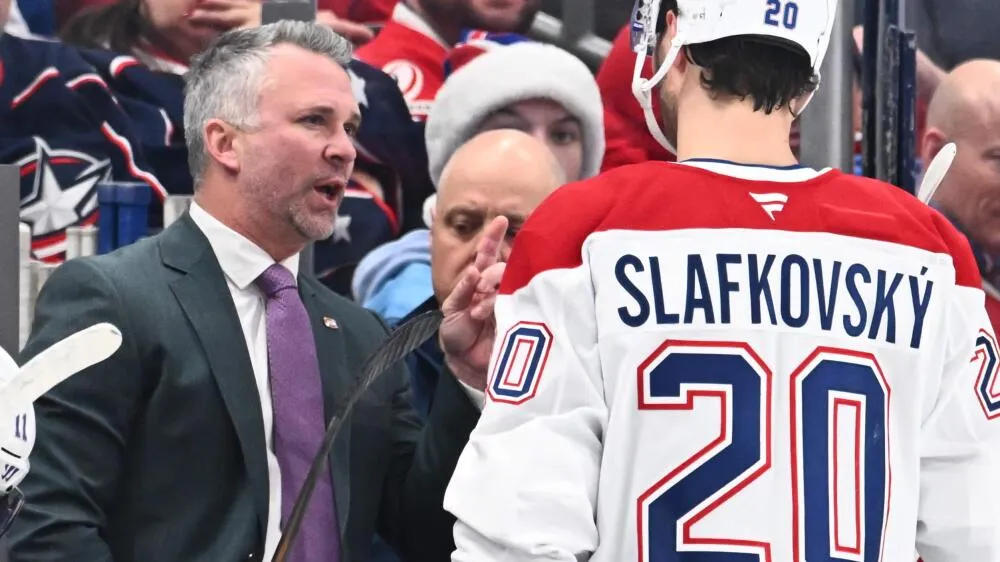
How the Montreal Canadiens’ power of belief under Martin St. Louis transformed a rebuild
The Canadiens were at their lowest point when St. Louis inherited the team. Coming off a Stanley Cup Final appearance in 2021, the organization had cratered spectacularly, sitting at the bottom of the NHL standings with a demoralized roster and an unclear path forward. Previous head coach Dominique Ducharme had been unable to stem the bleeding, and the franchise desperately needed someone who could connect with young players while navigating the treacherous waters of a full-scale rebuild.
St. Louis brought a coaching philosophy rooted in his own experiences as a player who constantly had to prove himself. He understood what it meant to be doubted, overlooked, and underestimated. “Respect is never given, it has to be earned,” St. Louis explained in an interview with BMO, outlining his leadership approach. “Right from the get-go, you have to lead by example by proving your work ethic and showing how you treat others.”
This philosophy created immediate buy-in from players who saw their coach not as someone barking orders from on high, but as someone who understood their struggles intimately. Captain Nick Suzuki and budding superstar Cole Caufield responded particularly well to St. Louis’ approach, with both players elevating their games significantly under his guidance. The team’s culture shifted from one of resignation to one of possibility.
For a franchise in transition, establishing this foundation of belief proved essential. St. Louis didn’t make promises about immediate success or playoffs. Instead, he focused on building daily habits, fostering accountability, and creating an environment where young players felt empowered to take risks and grow. On the locker room wall, he hung a simple poster: “Win the Day.” The message was clear—focus on the present moment, control what you can control, and trust that the results will follow.
The impact became visible in how the Canadiens competed night after night, even when losses piled up. They rarely got outplayed, which gave St. Louis reason to remain positive despite disappointing results. “Do I like to win? Absolutely,” he said. “But I feel like the last couple of years I’ve been OK, I guess, to lose because we rarely got outplayed. Rarely got outplayed.” This mindset prevented the kind of toxic negativity that can derail a rebuild, keeping players engaged and confident even during difficult stretches.
Building a culture based on respect, accountability, and enthusiasm for the Montreal Canadiens’ power of belief under Martin St. Louis
St. Louis identified three pillars as essential to the Canadiens’ culture transformation: respect, accountability, and enthusiasm. These weren’t just buzzwords displayed in the locker room—they became the operating principles that governed everything from lineup decisions to practice structure.
Respect meant treating everyone equally, whether it was a star player earning millions or equipment staff working behind the scenes. This egalitarian approach fostered genuine team unity, eliminating the hierarchy and cliques that can fracture locker rooms. Players noticed that St. Louis didn’t play favorites, that ice time and opportunities were earned through performance and attitude rather than reputation or salary.
Accountability came next, and this proved particularly important as expectations began to rise. St. Louis demanded that players take ownership of their roles and responsibilities, but he also modeled this himself. When the team struggled, he looked inward first, examining his own decisions and adjustments rather than immediately blaming players. This created a culture where mistakes became learning opportunities rather than sources of fear or finger-pointing.
Enthusiasm represented perhaps the most challenging element, especially during the darkest days of the rebuild. St. Louis defined enthusiasm not as false cheerfulness but as the commitment to show up and work hard regardless of circumstances. “Coming to the arena in the morning after a loss—when you got blasted by reporters the day before—and working hard on the ice, is enthusiasm,” he explained. This reframing helped players understand that belief wasn’t about denying reality but about maintaining commitment despite setbacks.
The November 2022 game against Boston crystallized how this culture manifested on the ice. After a discouraging 5-2 loss to the Bruins in which the Canadiens looked thoroughly outmatched, St. Louis identified poor forechecking as the root issue. Rather than dwelling on the result or making sweeping changes, he spent the next week focusing exclusively on that one element. The team bought into the adjustment, and their forechecking became an identity piece—a way of imposing their will on opponents regardless of talent differentials.
Brendan Gallagher, one of the team’s veteran leaders, recognized the significance of this approach. “When you’re talking about creating an identity as a group, it’s not going to be easy; it’s going to take a bit of time,” Gallagher noted. “Rightfully so, he was frustrated with us because we probably weren’t picking it up as quickly as he would have liked. But we stuck with it, and eventually you get results, players understand this is the way it’s going to be to have success.”
The evolution of expectations and the Montreal Canadiens’ power of belief under Martin St. Louis
As the 2023-24 season approached its conclusion, something remarkable happened: the Canadiens’ internal expectations began matching their improved performance. Veteran defenseman David Savard, entering what might be his final year with the team, articulated what many players were thinking. “I believe next year we have the group to make the playoffs,” he declared. “That’s my goal in September: to get here, stay in Montreal and get to the playoffs.”
This represented a seismic shift. For two years, the organization had carefully managed expectations, with general manager Kent Hughes even referring to the playoffs as the “p-word” and avoiding any suggestion that making the postseason was a goal. But the players themselves—having internalized St. Louis’ message about belief and capability—were no longer content to simply compete. They expected to win.
The Montreal Canadiens’ start to the 2025-26 season validated this confidence, as the team opened with a surprising 7-3-0 record through their first ten games. Young stars like Lane Hutson emerged as legitimate impact players, Cole Caufield continued his offensive ascension, and rookie goaltender Jakub Dobes provided stellar netminding. The belief St. Louis had been cultivating for years was now manifesting as tangible results.
St. Louis acknowledged that this transition to higher expectations would test him as a coach. “I don’t want to lose myself with results, because you lose your sanity,” he admitted. “For me next year? I don’t know. If we’re getting outplayed, I’m probably not going to be positive much.” This honest self-assessment revealed his understanding that coaching a team with playoff aspirations requires different approaches than coaching one focused purely on development.
The challenge became balancing development with winning, managing veteran urgency alongside youth patience, and maintaining the positive culture he’d built while demanding more consistency. Players like Gallagher, with limited years remaining, needed to see progress immediately. Meanwhile, cornerstone pieces like Juraj Slafkovský and Nick Suzuki required continued nurturing despite increasing pressure to produce.
Adapting leadership philosophy to the next generation for the Montreal Canadiens’ power of belief under Martin St. Louis
One of St. Louis’ most significant coaching innovations has been his willingness to adapt his leadership style to the current generation of players. At 49 years old, he grew up in an era where authority was rarely questioned and fear of the coach served as primary motivation. But he recognized early that this approach wouldn’t work with today’s young athletes.
“Despite my leadership position, I have to convince my players every day,” St. Louis acknowledged. “I have to sell them my ideas to get them on board. Unlike in my day, young people are no longer motivated by their fear of the coach. Once they’re convinced, however, they work harder.” This philosophy requires constant communication, explanation, and dialogue—a more time-intensive approach but ultimately more effective for building genuine buy-in.
This adaptive leadership proved crucial during difficult stretches. When the Canadiens struggled early in the 2024-25 season, facing criticism and calls for changes, St. Louis maintained his commitment to empowering rather than dictating. He listened to his players, observed their body language and morale, and adjusted his messaging accordingly. Some days required accountability and harsh truth; others needed encouragement and positive reinforcement.
The approach resonated particularly well with the team’s young core. Players like Slafkovský, Caufield, and Suzuki weren’t simply told what to do—they were involved in understanding why certain systems and strategies would help them succeed. This intellectual engagement created players who could think the game at a higher level, adapting to different situations rather than simply executing predetermined instructions.
St. Louis also embraced modern coaching concepts around player wellness and recovery. He understood that pushing young players too hard could backfire, that mental health mattered as much as physical conditioning, and that creating sustainable success required patience. This holistic approach distinguished him from old-school coaches who might have rushed prospects or overworked key players during a rebuild.
What the Montreal Canadiens’ power of belief under Martin St. Louis means going forward
The true test of St. Louis’ belief-centered philosophy lies ahead. The Canadiens are no longer a team happy to simply compete—they’re now a team that expects to win consistently and make the playoffs. The strong play through the early 2025-26 season demonstrates that the foundation is solid, but maintaining success requires continued growth and adaptation.
St. Louis’ journey from Hall of Fame player to NHL head coach mirrors the journey he’s asking his young players to make: believe in yourself despite doubters, work relentlessly to improve, and trust that the process will yield results. His own career—going undrafted, fighting for opportunities, eventually winning a Stanley Cup and countless individual honors—provides the perfect template for players navigating their own obstacles and setbacks.
The partnership between St. Louis and general manager Kent Hughes has been essential to this transformation. Hughes has provided the talent through shrewd drafting and trades, while St. Louis has maximized that talent through development and culture-building. Players like Hutson, Dobes, and Slafkovský have flourished under this organizational alignment, becoming key contributors far sooner than many expected.
As expectations rise, St. Louis will need to evolve without abandoning the core principles that created success. The balance between maintaining a positive, development-focused culture and demanding playoff-caliber consistency represents his next challenge. Players like Gallagher and Savard, in the twilight of their careers, deserve to see their window for success maximized. Meanwhile, the young core needs continued patience and support as they mature into stars.
The Montreal Canadiens’ transformation under Martin St. Louis stands as a testament to the power of belief—not blind optimism, but the deep conviction that preparation, culture, and confidence can overcome talent gaps and expectations. St. Louis arrived as an unproven coach taking over a broken team, yet he never wavered in his philosophy that success begins with believing you can achieve it.
This approach has created something special in Montreal. The Canadiens aren’t just rebuilding—they’re establishing an identity and culture that should sustain success for years to come. Young players have learned to trust themselves, embrace challenges, and compete with confidence regardless of opponent or circumstance. The Athletic reported that St. Louis has “laid a solid foundation” that positions the franchise for sustained success, with the hard part now beginning as expectations shift from development to winning. As St. Louis himself said, “I’ll see my lineup and I’ll go with that, and I won’t make excuses.” For a team and a coach built on belief, that mindset makes all the difference.
Frequently Asked Questions

Par Mike Jonderson
Mike Jonderson is a passionate hockey analyst and expert in advanced NHL statistics. A former college player and mathematics graduate, he combines his understanding of the game with technical expertise to develop innovative predictive models and contribute to the evolution of modern hockey analytics.