











In the ever-fluctuating world of NHL goaltending, backup netminders have become far more than insurance policies. The 2024-25 season proved once again that the difference between a starting job and a backup role can be razor-thin, with several second-string goalies outperforming their supposed superiors. As teams navigate the 2025-26 campaign, the depth behind the starter has never been more critical, especially given the physical toll and unpredictability that comes with playing between the pipes.
Evaluating backup goaltenders requires a nuanced approach that goes beyond traditional statistics. Goals saved above expected (GSAE), quality start percentage, and the ability to maintain consistency in limited action have become essential metrics for understanding a backup’s true value. This ranking examines the top 10 backup goaltenders heading into 2025, considering their performance data, opportunity for increased playing time, and potential to impact both their teams’ success and fantasy hockey rosters.
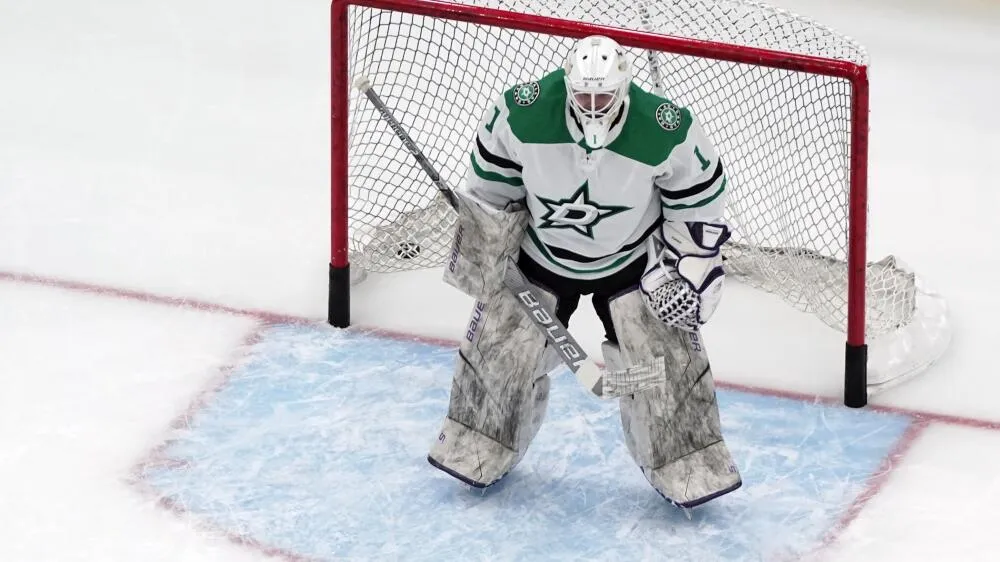
The elite backup netminders shaping the top 10 nhl backup goaltenders 2025 ranking
Jake Allen continues his resurgence with the Devils
Jake Allen has experienced a remarkable career renaissance with the New Jersey Devils, establishing himself as one of the league’s most reliable backup options. The 35-year-old veteran ranked third in goals saved above expected per 60 minutes last season, trailing only Anthony Stolarz and Vezina Trophy winner Connor Hellebuyck. When Jacob Markstrom went down with an MCL sprain, Allen seized the opportunity, posting an impressive .932 save percentage over nine games that kept the Devils competitive during a crucial stretch.
What makes Allen particularly valuable is his consistency and mental fortitude. Unlike many backups who struggle with irregular playing time, Allen has mastered the art of staying sharp while seeing limited action. His 13-16-1 record might not jump off the page, but his 2.66 goals-against average and .906 save percentage came while playing behind inconsistent defensive coverage. The Devils have committed to Allen through 2029-30 at a team-friendly $1.8 million cap hit, recognizing his value as both a mentor and a capable starter when called upon.
The relationship between Allen and Markstrom creates an intriguing dynamic heading into 2025-26. While Markstrom remains the nominal starter, he’s also 36 years old and in the final year of his contract. Should Markstrom’s consistency waver, don’t be surprised if head coach Sheldon Keefe leans more heavily on Allen. The two veteran netminders possess similar skill sets, but Allen’s recent performance metrics suggest he might actually be the more reliable option at this stage of their careers.
Allen’s experience in high-pressure situations cannot be overstated. With over 400 career NHL games under his belt, including playoff appearances with both Montreal and New Jersey, he brings a calming presence to the crease. His positioning remains fundamentally sound, and his ability to read plays has only improved with age. For fantasy hockey managers employing the “Zero G” drafting strategy, Allen represents the type of waiver wire pickup who can become a season-changing asset if circumstances break his way.
Anthony Stolarz’s move creates opportunities in the crease hierarchy
Though now a Toronto Maple Leaf starter, Anthony Stolarz’s performance last season fundamentally altered how teams view the backup position. His league-leading goals saved above expected per 60 established a new benchmark for what elite backup play looks like in the modern NHL. This success story has inspired general managers across the league to invest more resources in securing quality depth at the position, recognizing that a capable backup can be the difference between making the playoffs and missing out entirely.
The ripple effects of Stolarz’s ascension continue to shape goaltending markets. Teams that previously viewed backups as interchangeable parts now understand the strategic advantage of carrying two legitimate starting options. This philosophical shift has elevated the entire backup position, creating more opportunities for second-string goalies to showcase their abilities and potentially earn expanded roles. The 2024-25 season saw numerous backups receive 30-plus starts, a trend that appears likely to continue.
Charlie Lindgren thrives in Washington’s balanced approach
Charlie Lindgren’s situation in Washington represents the ideal scenario for a backup goaltender looking to maximize his fantasy value and career trajectory. Despite Logan Thompson receiving a six-year, $35.1 million extension, head coach Spencer Carbery has shown no inclination to abandon the balanced rotation that worked so effectively last season. Lindgren appeared in 39 games compared to Thompson’s 43, essentially functioning as a 1B option rather than a traditional backup.
The Capitals’ commitment to load management makes sense from both a performance and health perspective. Thompson may have earned the bigger contract, but Washington’s success came from having two fresh, confident goaltenders rotating throughout the season rather than running one netminder into the ground. Lindgren posted respectable numbers in his own right, and his familiarity with the team’s defensive systems makes him an invaluable insurance policy.
What sets Lindgren apart from typical backups is his ability to start games in clusters without showing significant performance decline. Many second-string goalies struggle when thrust into extended starting duty, but Lindgren has demonstrated he can handle three or four consecutive starts while maintaining his form. This reliability gives Carbery the flexibility to ride the hot hand or rest Thompson during particularly grueling stretches of the schedule.
For those tracking NHL 2025-2026 goaltending analytics, Lindgren’s consistency in limited action provides an interesting case study. His quality start percentage remained strong throughout the season, and his ability to steal games kept Washington competitive even when the offense sputtered. As backup goalies go, few offer the combination of steady playing time and winning team context that Lindgren provides in the nation’s capital.
Emerging backup goaltenders with significant upside in the 2025 ranking
Pyotr Kochetkov waits for his moment in Carolina
The Carolina Hurricanes have found themselves in an enviable yet complicated position with Pyotr Kochetkov. The 26-year-old Russian netminder has consistently outperformed expectations in limited action, yet 36-year-old Freddie Andersen remains head coach Rod Brind’Amour’s preferred option in crucial situations. This dynamic creates one of the more fascinating storylines among backup goaltenders heading into 2025-26, especially with Andersen entering the final year of his contract.
Kochetkov’s per-game performance metrics during the 2024-25 regular season actually exceeded Andersen’s, raising questions about whether the veteran’s playoff experience is the only factor keeping him atop the depth chart. With just 116 regular-season games of NHL experience, Kochetkov remains relatively unproven by traditional standards, but his athleticism and quick reflexes suggest a higher ceiling than what Andersen can currently provide. The challenge lies in demonstrating that potential during the limited opportunities available behind a workhorse starter.
Injuries have complicated Kochetkov’s path to more playing time, with a lower-body issue forcing him to miss the start of the 2025-26 season. However, these absences also create urgency around his development timeline. With Andersen’s contract expiring next summer and Kochetkov having only one season remaining on his own deal, the Hurricanes face a crucial decision point. Can they afford to commit long-term to a goaltender who has never played more than 42 games in an NHL season?
The physical tools are undeniable. Kochetkov’s lateral movement ranks among the best in the league, and his ability to track pucks through traffic has improved dramatically since his rookie campaign. What he needs now is volume—the sustained opportunity to prove he can handle a true starter’s workload over 50-plus games. If Andersen suffers another injury absence and Kochetkov seizes the opportunity, the Hurricanes’ crease hierarchy could flip permanently.
Casey DeSmith provides elite support in Dallas
While Jake Oettinger rightfully claims the spotlight in Dallas, Casey DeSmith deserves recognition for assembling one of the most impressive backup campaigns of 2024-25. His fourth-place finish in goals saved above expected per 60 minutes (0.634) significantly outpaced Oettinger’s respectable but less spectacular mark of 0.188. This performance disparity doesn’t diminish Oettinger’s status as a franchise goaltender, but it does highlight DeSmith’s elite-level play when given the opportunity.
The Stars’ defensive structure deserves some credit for DeSmith’s success, but the statistics account for shot quality and expected goals against. DeSmith genuinely outperformed his expected numbers by a considerable margin, suggesting his positioning and decision-making have reached an optimal level. At 33 years old, he’s hitting his prime as a backup, having finally found stability after bouncing between organizations earlier in his career.
DeSmith’s value extends beyond traditional statistics. His presence allows head coach Pete DeBoer to rest Oettinger strategically during the regular season, keeping the franchise goalie fresh for the playoff push. With Dallas firmly in Stanley Cup contention, having a backup capable of winning 25-30 games removes enormous pressure from the starter. Teams that trust their backup tend to perform better over 82 games, and the Stars have that luxury with DeSmith.
For fantasy purposes, DeSmith represents one of the safest backup options available. He plays for an elite team, receives consistent playing time, and performs at a level that often exceeds starter quality on weaker rosters. His goals-against average and save percentage will remain strong as long as he’s wearing a Stars uniform, making him an ideal spot-start option or emergency replacement if Oettinger faces any injury concerns.
Kevin Lankinen’s dual role in Vancouver creates intrigue
The Vancouver Canucks’ decision to sign Kevin Lankinen to a five-year, $22.5 million extension sends a clear message about their goaltending philosophy moving forward. This isn’t a backup contract—it’s a commitment to a true 1B option who can seamlessly transition into a starting role when needed. Thatcher Demko’s injury history looms large over this arrangement, having been limited to just 23 games last season while struggling badly when healthy.
Lankinen earned his extension through consistent excellence during Vancouver’s turbulent 2024-25 campaign. Appearing in 51 games with a top-20 finish in quality starts (29), he provided the reliability that Demko couldn’t due to injury. His 34.8% quality start percentage outpaced Demko’s concerning 30.4% really bad start percentage, highlighting just how far apart the two netminders were in terms of consistency. Those numbers suggest Lankinen might actually be the safer option, regardless of perceived hierarchy.
The Finnish goaltender’s style complements Vancouver’s defensive system perfectly. He doesn’t rely on spectacular athleticism but rather positions himself optimally to make saves look routine. This technical soundness has allowed him to maintain strong performance metrics even when the team in front of him struggles. His ability to stay composed during high-volume shooting nights has proven particularly valuable on a Canucks team that occasionally allows extended periods of territorial disadvantage.
Looking ahead, Lankinen’s contract structure ensures he’ll remain a significant part of Vancouver’s plans through 2029-30. If Demko continues to battle injuries, the Canucks may ultimately decide to flip the depth chart permanently, making Lankinen the starter and finding a cheaper backup option. For now, he represents one of the safest backup investments in fantasy hockey, offering both security through guaranteed playing time and upside if Demko’s health situation doesn’t improve.
Veteran stability among the top 10 nhl backup goaltenders 2025 ranking
Cam Talbot’s experience anchors Detroit’s goaltending
At 38 years old, Cam Talbot defies conventional wisdom about aging goaltenders. While many netminders see their performance decline sharply in their late thirties, Talbot has remained remarkably durable and effective, logging 101 games over the past two seasons. His 20th-place finish in goals saved above expected (12.8) during 2024-25 demonstrated that he can still perform at a high level, even as younger goalies vie for playing time around the league.
The Red Wings’ acquisition of John Gibson from Anaheim appeared to signal a changing of the guard in Detroit’s crease, but Gibson’s injury history and inconsistency over the past six seasons create significant uncertainty. While Gibson finished sixth in goals saved above expected per 60 during his renaissance 2024-25 campaign, it marked his only strong season in a lengthy stretch of mediocrity. Talbot, meanwhile, has consistently provided above-average goaltending regardless of the team in front of him.
Gibson’s shaky Detroit debut, allowing five goals on just 13 shots before being pulled, hints at the challenges he faces adapting to a new defensive system. Talbot knows how to win games in various situations and brings a veteran presence that younger teammates can learn from. His technical fundamentals remain sound, and his ability to read developing plays hasn’t diminished with age. If Gibson continues to struggle or suffers another injury, Talbot stands ready to reclaim starting duties.
The Red Wings desperately need goaltending stability as they push to end their nine-year playoff drought. General manager Steve Yzerman won’t hesitate to ride the hot hand if it means finally breaking through to the postseason. Talbot’s track record suggests he can handle that pressure, having started 60-plus games as recently as 2023-24 with the Los Angeles Kings. For fantasy managers seeking a high-floor backup with clear upside, Talbot checks every box.
Calvin Pickard’s opportunity in Edmonton’s volatile crease
Edmonton’s goaltending situation ranks among the league’s most precarious, creating both risk and opportunity for Calvin Pickard. Stuart Skinner holds the starting job on paper, but his sub-.900 save percentage (.896) and negative goals saved above expected per 60 minutes (-0.031) from last season leave considerable room for competition. The Oilers’ Stanley Cup aspirations demand better goaltending than what Skinner provided during the regular season.
Pickard’s own numbers from 2024-25 (.900 save percentage, -8.74 goals saved above average) weren’t particularly inspiring, but the Oilers have shown they trust him in important situations. He appeared in 44 games last season, a substantial workload for a backup on a contending team. The recent acquisition of Connor Ingram from Utah adds another layer to Edmonton’s goaltending puzzle, though the plan calls for Ingram to begin the season in the AHL.
What makes Pickard valuable is his proven ability to handle pressure in Edmonton’s high-stakes environment. Playing behind a sometimes porous defense requires mental toughness and the ability to make timely saves even when the odds aren’t favorable. Pickard has demonstrated both qualities, earning the respect of his teammates and coaching staff. If Skinner falters again, Pickard will get the first opportunity to seize the starting role before the organization turns to Ingram.
The Oilers’ championship window remains wide open as long as Connor McDavid and Leon Draisaitl are in their prime. Management will exhaust every option to improve their goaltending, and Pickard represents the most immediate solution if changes become necessary. His fantasy value depends entirely on Skinner’s performance, making him a speculative add for managers with roster flexibility but potentially a league-winner if circumstances break favorably.
Young backup goalies positioned for breakout seasons in the 2025 ranking
Jet Greaves’ electrifying finish demands attention
Jet Greaves authored one of the most remarkable five-game stretches in recent NHL history to close out last season, posting a mind-bending 5-0-0 record with a .975 save percentage, 0.80 goals-against average, and 11.9 goals saved above average in Columbus’ final five games. These aren’t just impressive numbers—they’re historically elite, the kind of performance that forces everyone to take notice. While small sample sizes require caution, Greaves demonstrated the potential to be far more than a career backup.
The challenge facing Greaves is simple: Elvis Merzlikins holds the starting job, and despite his struggles, the Blue Jackets have significant financial investment in the Croatian netminder. Merzlikins finished tied for third-most really bad starts leaguewide last season (14), showcasing the volatility that has plagued his game. Columbus cannot afford another season of inconsistent goaltending if they hope to take the next step in their rebuild. That instability creates opportunity for Greaves.
At just 23 years old, Greaves possesses the athleticism and reflexes typical of modern NHL goaltenders. His positioning has improved dramatically over the past year, and his ability to track pucks through traffic suggests a high hockey IQ. The Columbus development staff deserves credit for his rapid progression, but Greaves’ work ethic and coachability have been equally important factors. He’s absorbed feedback and implemented changes quickly, a crucial trait for young goaltenders.
If Merzlikins struggles out of the gate in 2025-26, head coach Dean Evason won’t hesitate to give Greaves extended opportunities. The organization needs to determine whether they have a long-term solution already in house or if they need to invest resources in acquiring a proven starter. Greaves’ ability to seize those opportunities will define both his career trajectory and Columbus’ goaltending future. For fantasy managers looking for a high-upside lottery ticket, few options offer more intrigue than Greaves.
Jakub Dobeš shows promise in Montreal’s crease
Jakub Dobeš put together a solid rookie campaign for the Montreal Canadiens in limited action, posting a 7-4-3 record with a .909 save percentage and 2.74 goals-against average across 16 games. More impressively, his fifth-place finish in goals saved above expected per 60 minutes (0.617) placed him ahead of established stars like Andrei Vasilevskiy (0.468) and Darcy Kuemper (0.454), suggesting his performance represented genuine quality rather than simply good fortune.
The 23-year-old Czech goaltender currently serves as the clear backup behind Sam Montembeault, but Montreal’s ongoing rebuild creates uncertainty about every position on the roster. If the Canadiens stumble out of the gate and Montembeault struggles, management might decide to give Dobeš extended evaluation time to determine whether he represents a long-term solution. His development timeline aligns perfectly with the team’s competitive window, making him an intriguing asset for the organization.
Dobeš’s technical foundation appears sound, with particular strength in his butterfly positioning and recovery speed. These attributes serve modern goaltenders well in an era of increased slot traffic and quick cross-ice passes. His glove hand has shown impressive quickness, and his ability to track pucks cleanly suggests good vision and concentration. Areas for improvement include consistency on second-chance opportunities and communication with defensemen, both coachable skills that typically improve with experience.
For fantasy purposes, Dobeš represents a deep sleeper with intriguing upside if circumstances align favorably. He won’t provide consistent value in standard leagues given his backup role, but in deeper formats or keeper leagues, he’s worth monitoring closely. Montreal’s patient approach to their rebuild means they have no reason to rush Dobeš’ development, but if he forces their hand with strong play, the opportunity for expanded minutes exists. His advanced metrics suggest the talent is genuine, making him worth tracking throughout 2025-26.
Scott Wedgewood capitalizes on Colorado’s injury situation
Scott Wedgewood finds himself in an envious position as the Colorado Avalanche navigate Mackenzie Blackwood’s week-to-week lower-body injury. With Blackwood’s availability for opening night in jeopardy, Wedgewood could inherit significant playing time for a legitimate Stanley Cup contender. Head coach Jared Bednar hasn’t ruled Blackwood out entirely, but the uncertainty surrounding his timeline creates immediate opportunity for Wedgewood to prove his worth.
The 32-year-old journeyman has bounced between organizations throughout his career but has consistently delivered solid performance when given opportunities. Playing behind Colorado’s talented roster provides ideal circumstances for compiling wins and strong statistics, even if his underlying metrics don’t match elite starters. Wedgewood understands his role perfectly—keep games close, don’t lose games singlehandedly, and capitalize on the offensive firepower in front of him.
What makes Wedgewood particularly valuable right now is simply timing. If Blackwood misses significant time to start the season, Wedgewood could appear in 15-20 games before the calendar turns to November. Those starts carry enormous fantasy value, especially on a team as talented as Colorado. Even after Blackwood returns, Wedgewood has shown enough to potentially maintain a larger share of playing time than traditional backups receive.
Understanding the evolution of goaltending analytics in the 2025-26 NHL season helps contextualize Wedgewood’s value. While his goals saved above expected metrics might not match elite backup options like Jake Allen or Casey DeSmith, his situation provides the opportunity for fantasy production through volume. Wins, starts, and save opportunities matter as much as save percentage in many fantasy formats, making Wedgewood a must-add player while Blackwood’s injury situation remains unclear.
Specialized situations impacting the top 10 nhl backup goaltenders 2025 ranking
Joseph Woll’s ceiling creates uncertainty in Toronto
The Toronto Maple Leafs boast one of the league’s most intriguing goaltending tandems, with both Anthony Stolarz and Joseph Woll demonstrating elite performance last season. Stolarz led all goalies in goals saved above expected per 60, but Woll finished seventh—both netminders proved capable of starter-quality play. Their nearly identical contract values reflect the organization’s understanding that these roles could easily flip based on health and performance.
Woll’s checkered injury history remains his primary obstacle to claiming the starting role outright. When healthy and in rhythm, his athleticism and ceiling arguably exceed Stolarz’s more technical, calming approach. The 26-year-old American goaltender can take over games with spectacular saves that energize his teammates, providing a different dynamic than Stolarz’s steady competence. Toronto’s coaching staff values both styles, utilizing whichever goalie fits the matchup and circumstances.
The current situation, with Woll away from the team tending to personal family matters, adds another layer of uncertainty to Toronto’s goaltending picture. These circumstances prevent him from building on last season’s success and potentially challenging for more playing time. Once he returns, the competition between him and Stolarz should create fascinating storylines throughout the season, with the hot hand likely earning expanded opportunities.
For fantasy purposes, both Leafs goaltenders carry significant risk and reward. Neither can be relied upon for consistent starts, but both offer elite-level performance when active. Managers with roster flexibility can stream starts based on matchups, while those in deeper formats might consider rostering both to ensure they capture Toronto’s goaltending production. The Leafs’ commitment to load management means this tandem will likely continue flip-flopping between 1A and 1B designations throughout their contracts.
Joel Hofer awaits his opportunity in St. Louis
Joel Hofer enters 2025-26 as one of the most intriguing backup options flying under the radar. While Jordan Binnington remains the undisputed starter in St. Louis, his notorious streakiness creates regular opportunities for the backup to steal playing time. Binnington’s 25% really bad start percentage last season means he delivered a clunker once every four games, the kind of volatility that tests any coaching staff’s patience.
In contrast, Hofer posted a miniscule 9.7% really bad start percentage, proving to be a steady presence during his limited opportunities. At just 25 years old, Hofer brings youth and upside to the equation, along with an impressive AHL resume that includes a 27-15-5 record with a .921 save percentage and 2.50 goals-against average during the 2022-23 season. His development trajectory suggests he’s ready for expanded NHL responsibilities.
New head coach Jim Montgomery may approach the Blues’ goaltending situation differently than his predecessors. With Binnington now 32 and prone to prolonged slumps, Montgomery might lean more heavily on Hofer to keep the veteran sharp and provide the team with a reliable alternative when Binnington’s game goes sideways. The Blues’ playoff hopes depend on consistent goaltending, something Binnington hasn’t always provided despite his undeniable talent.
Hofer’s fantasy value remains speculative but carries real upside. He won’t provide weekly value in most formats, but managers in deeper leagues or those seeking high-upside bench stashes should monitor his situation closely. If Binnington stumbles early in the season and Hofer responds with strong play, the Blues might commit to a more balanced timeshare than they’ve employed in recent years. For a young goalie looking to establish himself as an NHL starter, Hofer’s path forward requires capitalizing on every opportunity Binnington’s inconsistency provides.
The backup goaltender position has evolved dramatically over recent seasons, transforming from an afterthought to a strategic asset that can define a team’s success. Organizations now recognize that carrying two legitimate starting options provides competitive advantages throughout an 82-game season, particularly given the physical demands and inherent unpredictability of goaltending. The netminders ranked here represent the cream of the crop among second-string options, each offering unique value propositions based on their situations.
For fantasy hockey managers, these backup goaltenders present both challenges and opportunities. The “Zero G” drafting strategy continues to gain popularity precisely because quality goaltending can be found throughout the season on waiver wires, especially when backup situations remain fluid. Monitoring these ten goaltenders closely throughout 2025-26 could provide significant competitive advantages, as several will inevitably earn expanded roles through stellar play or starter injuries. The difference between playoff success and failure often comes down to identifying these opportunities before the competition, making backup goaltender evaluation an essential skill for serious fantasy competitors.

Par Mike Jonderson
Mike Jonderson is a passionate hockey analyst and expert in advanced NHL statistics. A former college player and mathematics graduate, he combines his understanding of the game with technical expertise to develop innovative predictive models and contribute to the evolution of modern hockey analytics.