The debate over fighting in professional hockey has intensified over the past two decades as the sport continues to evolve. What was once considered a fundamental element of the game now faces scrutiny from medical professionals, analysts, and even some fans. As fights per game have declined from a peak of 0.64 in 2002 to just 0.18 in 2020, according to research published in the National Institutes of Health, the question becomes increasingly relevant: are NHL fights a waste of time, or do they serve a legitimate purpose in modern hockey?
The answer isn’t as straightforward as purists or critics might suggest. While traditional arguments claim fighting provides entertainment value, momentum shifts, and player protection, contemporary data tells a more complex story that challenges these long-held beliefs.
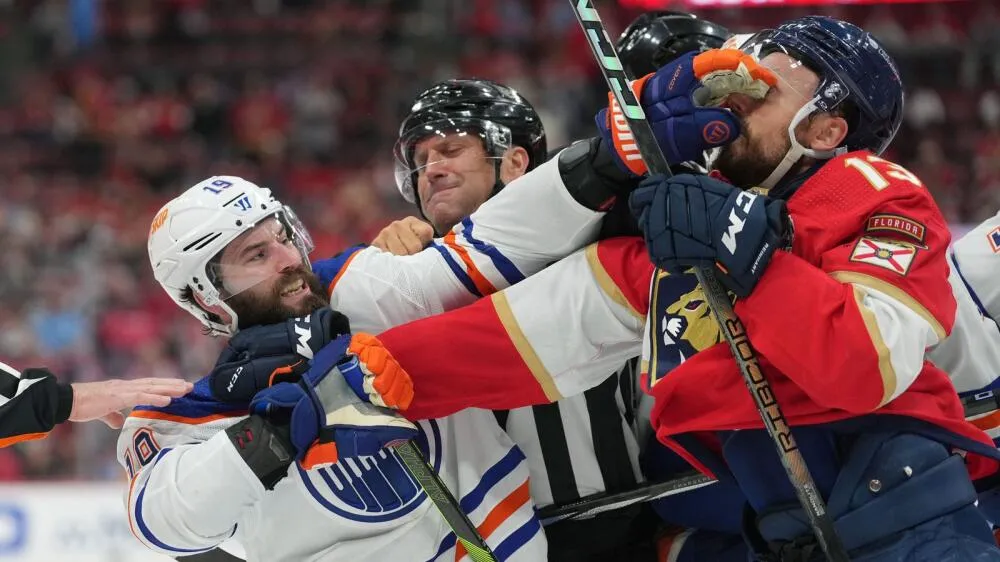
Are NHL fights a waste of time when examining attendance trends?
The economic argument for fighting has historically been one of its strongest defenses. For decades, league executives and team owners believed that fisticuffs put fans in seats and generated revenue. However, recent statistical analysis reveals a surprising trend that contradicts this conventional wisdom.
Research examining NHL data from 2000 to 2020 found a statistically significant negative correlation between attendance and fights per game, with a correlation coefficient of -0.6617. This means that as fighting decreased, fan attendance actually increased. Average attendance climbed from a low of 16,549 in 2004 to a peak of 17,768 in 2013, all while fighting rates plummeted by more than 70 percent during the same period.
The implications are profound. If fans were truly drawn to violence on ice, attendance should have declined as fights became scarcer. Instead, the opposite occurred, suggesting that modern hockey audiences may prefer skill-based competition over physical altercations. This shift in fan preferences reflects broader changes in how we consume sports entertainment in the 21st century.
Additionally, the data showed a positive correlation between attendance and goals per game, though not statistically significant. What is significant is the inverse relationship between goals scored and fights—as fighting decreased, goal scoring increased. This suggests that fighting may actually detract from the offensive excitement that fans genuinely want to see.
The old studies from the 1980s and 1990s that showed positive correlations between fighting and attendance no longer apply to today”s NHL. The sport has evolved, and so have its spectators. The modern fan appears more interested in speed, skill, and scoring than in watching two players drop their gloves.
Are NHL fights a waste of time in terms of momentum and strategy?
One of the most persistent myths surrounding hockey fights is their supposed ability to shift momentum during a game. Players, coaches, and commentators frequently reference this concept, believing that a well-timed bout can energize a team or intimidate opponents. But does the data support this widely held conviction?
The momentum argument suggests that enforcers challenge opponents to fights when their team is losing, with the expectation that winning the fight will swing momentum to their side. It”s a romantic notion that fits the narrative of hockey as a gritty, physical sport where toughness matters. However, scientific research contradicts this belief.
A comprehensive study examining the effect of home advantage, momentum, and fighting on winning in the NHL found that winning fights did not translate to winning more games. The research demonstrated no statistical advantage for teams whose players won fights, effectively debunking the momentum theory that has persisted for generations.
Players themselves remain convinced that fighting boosts momentum despite the evidence to the contrary. This disconnect between perception and reality highlights the powerful influence of tradition and anecdotal experience in sports culture. When asked, many players will passionately defend fighting”s role in changing game dynamics, even though objective analysis fails to support their claims.
From a strategic standpoint, fighting also creates tactical disadvantages. Both participants receive five-minute major penalties, leaving their teams to play four-on-four. This neutralizes any potential momentum gain, as neither team benefits from a power play opportunity. Furthermore, if one player receives an instigator penalty, their team actually plays shorthanded, directly contradicting the idea that fighting helps your team win.
The rise of analytics in hockey has exposed many traditional beliefs that don”t withstand statistical scrutiny. Just as teams have moved away from the “dump and chase” strategy in favor of controlled zone entries, the momentum argument for fighting has been revealed as more myth than reality. Teams seeking competitive advantages increasingly rely on speed, skill, and possession metrics rather than physicality and intimidation.
Are NHL fights a waste of time considering player health and safety?
Perhaps the most compelling argument against fighting centers on the serious health consequences for players who regularly engage in on-ice altercations. The medical evidence has become increasingly difficult to ignore, particularly as more research emerges about long-term brain injuries in professional athletes.
Fighting carries significant health risks including hand fractures, oculofacial trauma, and most concerning, concussions. Approximately nine percent of all concussions in the NHL result from fighting, contributing to an estimated $42.8 million in annual salary loss due to games missed. These immediate injuries represent only the tip of the iceberg compared to the long-term neurological damage fighters may sustain.
Chronic traumatic encephalopathy (CTE) has emerged as a frightening reality for many former NHL enforcers. This degenerative brain disease, caused by repetitive head trauma, presents symptoms including depression, irritability, aggression, short-term memory loss, and increased suicidal ideation. In advanced stages, CTE leads to dementia, gait disturbances, speech abnormalities, and parkinsonism.
The tragic deaths of three prominent NHL enforcers in 2011—two by suicide and one by drug overdose—brought national attention to this issue. All three were subsequently diagnosed with CTE on postmortem examination, as were numerous other former enforcers in recent years. These deaths sparked a class action lawsuit involving over 300 former players against the NHL over its management of concussions, which eventually settled for $19 million in 2018.
Medical professionals have repeatedly called for the elimination of fighting from hockey. Experts at the Mayo Clinic Ice Hockey Summit voted in 2011, 2013, and 2017 to eliminate fighting in an effort to prevent concussions. Their recommendations align with International Ice Hockey Federation rules, which mandate game misconduct penalties (ejections) for fighting—a standard followed by nearly all European professional leagues.
The current NHL policy creates a dangerous contradiction. While the league”s Concussion Protocol dictates that players experiencing head trauma should be evaluated in a “quiet room,” fighters are sent directly to the penalty box after their altercation. This means potential brain injuries from fights often go undiagnosed and untreated in the immediate aftermath, when proper evaluation is most critical. The policy effectively prioritizes tradition over player safety.
Are NHL fights a waste of time in the modern evolution of the game?
The NHL has undergone dramatic transformation over the past two decades, evolving from a grinding, physical league to one that emphasizes speed, skill, and offensive creativity. Fighting”s decline reflects this broader evolution rather than any single rule change or policy decision.
Multiple factors have contributed to the reduction in fighting rates. The addition of a second referee in 1998-1999 coincided with decreased fighting and increased scoring. Following the 2004-2005 lockout, the league implemented rules banning fighting in the final five minutes of regulation and in overtime, while placing new emphasis on enforcing interference, obstruction, and hooking penalties. These changes benefited skilled players and reduced the effectiveness of intimidation tactics.
The 2005 salary cap introduction also fundamentally altered team construction strategies. With limited financial resources, teams had to prioritize players who could contribute offensively and defensively. Enforcers who specialized primarily in fighting became luxury items that many teams could no longer afford. The economics of roster building shifted dramatically toward players with versatile skill sets.
The influx of European-trained players has also influenced fighting culture. In 1980, European-born players accounted for just 9.1 percent of NHL rosters. By 2020, that number had grown to 31.3 percent. Since fighting results in game ejections and potential suspensions in European leagues, these players typically lack experience with and appreciation for fighting as part of hockey. Their increasing presence has naturally reduced the frequency of on-ice altercations.
Interestingly, research suggests that fighting rates decreased several years before corresponding rule changes, indicating that community enforcement by players themselves drove the decline. NHL players may have become more aware of concussion consequences and collectively decided to fight less frequently, with the league”s rules committee responding to rather than dictating these behavioral changes.
The collegiate hockey model provides an instructive alternative. NCAA rules mandate one-game suspensions for any player who participates in a fight. As a result, only 20 fights occurred over a recent four-year period, compared to 3,091 NHL fights during the same timeframe. Despite this dramatic difference, collegiate hockey remains popular and exciting, demonstrating that the sport thrives without fighting.
Are NHL fights a waste of time compared to what fans actually want?
Understanding fan preferences requires looking beyond traditional assumptions about what makes hockey entertaining. The data suggests that modern audiences have different priorities than previous generations of hockey fans, with implications for how the league should position itself going forward.
The significant inverse correlation between goals per game and fights per game (-0.521) reveals an important trade-off. When teams employ fighters and emphasize physicality, offensive production tends to suffer. Conversely, when rosters prioritize skilled forwards who can create scoring chances, goal production increases and fighting decreases. Fans appear to have voted with their wallets in favor of the latter approach.
Goals scored per game reached 3.08 immediately following the 2004-2005 lockout, when the league implemented offensive-minded rule changes. Recent seasons have shown an upward trend, with 2018-2020 all averaging 2.97 goals per game or higher. This increased offensive output has coincided with some of the lowest fighting rates in NHL history, yet attendance and overall revenue have remained strong.
The contrast with European hockey leagues provides additional context. Despite game misconduct penalties for fighting in leagues across Finland, Sweden, Czech Republic, Switzerland, and Russia, these competitions maintain passionate fan bases and generate substantial revenue. The sport clearly doesn”t require fighting to succeed commercially, as demonstrated by thriving hockey markets where fighting is effectively banned.
Social media and highlight culture have also changed how fans engage with hockey. Spectacular goals, skillful plays, and athletic saves dominate viral content and generate excitement online. Fights occasionally make highlights, but they compete for attention in an entertainment landscape that increasingly values artistry over aggression. The NHL”s most marketable stars—players like Connor McDavid, Auston Matthews, and Cale Makar—are celebrated for their skill, not their toughness.
Broadcasting partners and advertisers increasingly prefer family-friendly content that appeals to broader demographics. Fighting presents challenges for networks trying to market hockey to casual fans, parents, and international audiences. As the league seeks to expand its footprint and compete with other major sports, the perception of hockey as violent and dangerous becomes a liability rather than an asset.
The economic model for optimizing NHL profitability has shifted. A 2016 study found that fighting had a negative effect on attendance and did not promote profit maximization. This represents a complete reversal from earlier decades when fighting was considered essential for business success. Modern NHL franchises understand that sustained success requires drafting and developing skilled players who can compete at high speeds, not collecting enforcers who provide little value beyond occasional fights.
The evidence overwhelmingly suggests that NHL fights have become a waste of time in the modern era of professional hockey. They don”t increase attendance, they don”t provide momentum advantages, they cause serious health problems for players, and they detract from the skill-based entertainment that contemporary fans prefer. As the sport continues evolving toward speed and creativity, fighting increasingly appears as a relic of hockey”s past rather than a component of its future.
The question isn”t whether fighting will eventually be banned from the NHL—the trajectory seems inevitable. Rather, the question is how long the league will maintain this outdated tradition before implementing the game misconduct penalties that have proven effective in European leagues, international competitions, and collegiate hockey. Player safety, fan preferences, and competitive strategy all point toward the same conclusion: it”s time for the NHL to follow the data and eliminate fighting from professional hockey.

Par Mike Jonderson
Mike Jonderson is a passionate hockey analyst and expert in advanced NHL statistics. A former college player and mathematics graduate, he combines his understanding of the game with technical expertise to develop innovative predictive models and contribute to the evolution of modern hockey analytics.