







Understanding NHL helmet mandatory during pre-game warmups Rule 9.6 for players entering since 2019-20: A complete guide
The NHL has sent a league-wide reminder about a player safety rule that’s been causing confusion in arenas across North America. Rule 9.6, which mandates helmet use during pre-game warmups for newer players, has been in the spotlight after several high-profile violations. This regulation represents a significant shift in hockey culture while protecting those who entered the league from the 2019-20 season onward.
What Rule 9.6 states and which players must comply
Rule 9.6 is explicit in its language: “It is mandatory for all players who entered the NHL beginning with the 2019-2020 season or later to wear their helmet during pre-game warm-up. To be clear, all players who entered the League prior to the 2019-2020 season and who are currently playing are exempt from this mandate.” This grandfather clause creates a unique two-tier system where veteran players retain the freedom to choose while rookies and younger players face strict requirements.
The policy took effect in 2022, though it applies retroactively to anyone who debuted in or after the 2019-20 campaign. This means hundreds of current players, including many established names, must keep their helmets on during warmups. The rule emerged from collective bargaining between the NHL and NHLPA, prioritizing safety without stripping longtime veterans of their established routines.
The grandfather clause and veteran exemptions
Players like Sidney Crosby, Alex Ovechkin, and other pre-2019 veterans can still take the ice without head protection during warmups. This exemption acknowledges their lengthier service and the traditional culture of helmetless skating. The approach mirrors the league’s 2013 visor mandate, which also grandfathered in existing players. Four current players remain without visors entirely, highlighting how these safety implementations respect veteran status while pushing new standards forward.
How teams identify compliant players
Coaches and equipment managers maintain detailed knowledge of which players fall under Rule 9.6. The NHL’s hockey operations department tracks player entry dates meticulously, and teams receive regular updates about roster compliance requirements. During official warmups, referees and linesmen observe helmet usage patterns, though they don’t typically intervene directly. The league relies on teams to self-police and enforce the rule internally.
Recent violations that prompted league action
Three separate incidents in late November and early December 2025 triggered the NHL’s recent memo to all 32 clubs. Each case involved different motivations but shared the common thread of teams ignoring the 2019-20 cutoff date for helmet requirements.
Ottawa Senators attempt to break Vegas curse
The Senators organized a helmetless warmup before facing the Vegas Golden Knights on November 26, hoping to snap a six-game losing streak at T-Mobile Arena. Forward Shane Pinto explained the team made the decision during a dinner the previous night, viewing it as a superstition-breaking exercise. “It was pretty cool to do,” Pinto told reporters after Ottawa’s 4-3 shootout victory. While the gamble paid off in the standings, it put the team in direct violation of Rule 9.6 since multiple 2019-20+ players participated.
San Jose Sharks follow Vegas trend
Two days later, the San Jose Sharks employed the same tactic before their game against Vegas, though with less favorable results. Forward Will Smith confirmed “it was a team decision” and noted the appeal of going helmetless on “Saturday night in Vegas.” The Sharks fell 4-3 to the Golden Knights, proving the ritual doesn’t guarantee victory. More importantly, both the Sharks and Senators incidents demonstrated how teams were either unaware of or intentionally ignoring the rule’s specifics.
New Jersey Devils honor milestone helmetless
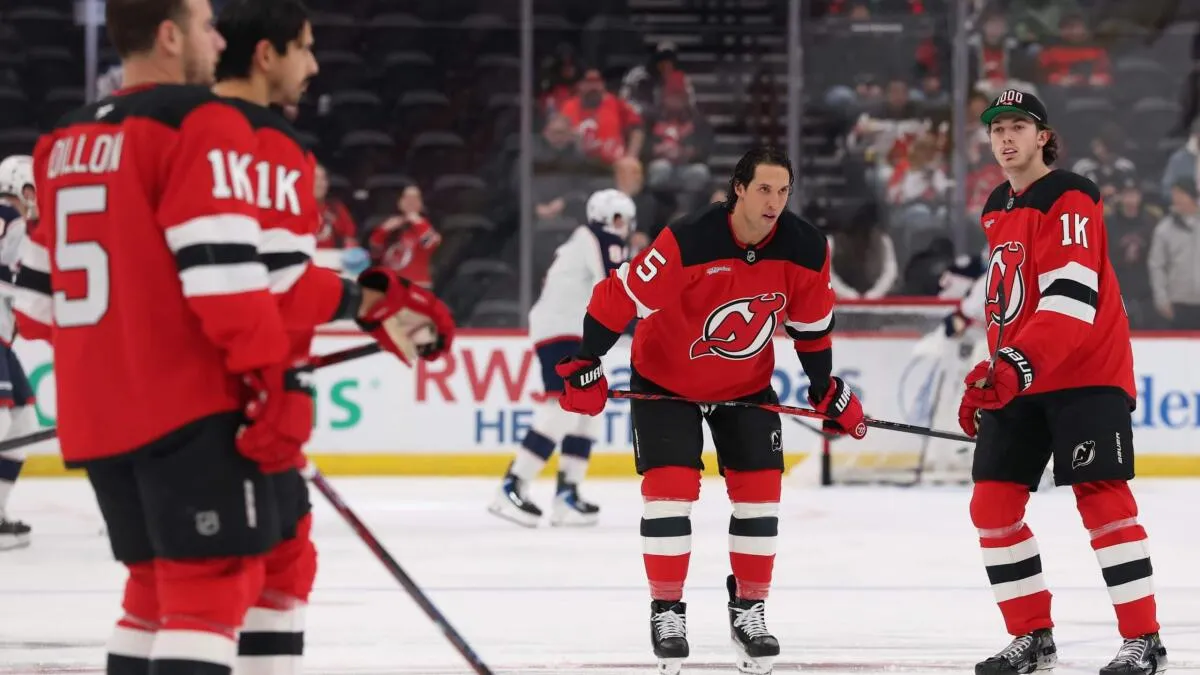
The New Jersey Devils violated Rule 9.6 on December 2 when they wore hats instead of helmets to celebrate defenseman Brenden Dillon’s 1,000th NHL game. The headwear read “1,000 Dilly” and created a festive atmosphere, but league officials noted the infraction. Deputy commissioner Bill Daly acknowledged the sentimental motivation while emphasizing that safety protocols remain non-negotiable for newer players.
The safety data driving enforcement
The NHL’s renewed focus on warmup head protection stems from documented injury risks. While warmups might seem less dangerous than game action, they present unique hazards that have caused significant injuries over the years.
Taylor Hall’s 2012 skate cut incident
The most cited example remains Taylor Hall’s frightening collision during Edmonton Oilers warmups in 2012, when a teammate’s skate blade cut Hall’s forehead. The injury required multiple stitches and could have been catastrophic without quick medical attention. That incident prompted internal league discussions that eventually led to Rule 9.6’s creation. Hall himself later became an advocate for enhanced warmup safety measures.
Puck and collision dangers
Errant shots, collisions between skating players, and falls on hard ice all pose threats during the 16-minute warmup period. With 40+ players on the ice simultaneously at the start of warmup, the risk multiplier becomes substantial. Goaltenders face additional risks from high shots, though Rule 9.6 applies to all skaters regardless of position.
Statistical trends in warmup injuries
Though the NHL doesn’t publish specific warmup injury statistics, team medical staffs report that approximately 15-20% of minor pre-game injuries involve head contact. Most are preventable through proper protective equipment. The league’s hockey operations research showed a correlation between rookie status and warmup injury risk, as younger players often skate more aggressively during these informal sessions.
Tradition versus progress in hockey culture
Rule 9.6 represents another incremental step in the NHL’s evolving approach to player safety, but it clashes with deeply rooted traditions that many veterans cherish.
The rookie lap ritual
One notable exception written into Rule 9.6 is the traditional rookie lap, where a player appearing in his first NHL game takes the ice alone before teammates join him. This singular lap may be completed without a helmet, preserving a rite of passage that dates back decades. The exemption acknowledges hockey’s cultural heritage while maintaining the rule’s core safety mission.
Team bonding through helmetless warmups
Veterans often describe helmetless warmups as a bonding experience, a moment of freedom before donning full battle armor. The shared experience creates locker room camaraderie and connects current players to hockey’s rougher, less regulated past. However, safety advocates argue that nostalgia shouldn’t outweigh brain protection for young players who represent the league’s future.
Changing generational attitudes
Younger players entering the league since 2019-20 have grown up in an era of heightened concussion awareness. Many played youth hockey under mandatory helmet rules that extend beyond the ice, including locker room requirements. For them, Rule 9.6 feels natural rather than restrictive. This generational shift makes enforcement easier, as compliance aligns with their established habits.
Enforcement mechanisms and future implications
The NHL’s December 2025 memo represents a soft enforcement approach, prioritizing education over punishment. However, the league has made clear that continued violations could trigger stricter measures.
Current penalty structure
No team has faced formal fines or discipline for Rule 9.6 violations as of early December 2025. The league’s initial response involves warnings and reminders to coaching staff and team management. Deputy commissioner Bill Daly stated the memo serves to “remind all Clubs as to the applicable rules,” suggesting a grace period for full compliance.
Potential escalation paths
If violations continue, the NHL could implement structured penalties similar to other equipment violations. These might include:
- Fines ranging from $25,000 to $100,000 for repeat team offenses
- Minor penalties assessed at the start of games for non-compliant players
- Mandatory safety training sessions for violators
- Increased oversight from hockey operations staff
Long-term outlook for the rule
As more pre-2019 veterans retire, Rule 9.6 will gradually cover the entire player population. Within 5-7 years, helmetless warmups could become extinct across the league, much like helmetless game play vanished after the 1979 Craig MacTavish era. The grandfather clause ensures a smooth cultural transition rather than an abrupt mandate that veterans might resist.
What this means for teams and players moving forward
The NHL helmet mandatory during pre-game warmups Rule 9.6 for players entering since 2019-20 fundamentally changed how teams approach pre-game routines. Organizations must now balance tradition with compliance, ensuring younger players understand their obligations while respecting veteran freedoms.
Coaches face new pre-game checklist items, equipment managers must verify proper helmet fit for warmups, and players need to internalize which rules apply to them individually. The December memo signals that the league intends consistent application across all markets, from traditional Canadian franchises to newer Sun Belt teams.
For fans, the visual distinction between helmeted younger players and bare-headed veterans creates a visible generation gap on the ice. It serves as a constant reminder of hockey’s ongoing safety evolution and the NHL’s commitment to protecting its emerging stars while honoring its heritage.
Eventually, as the pre-2019 cohort ages out of the league, Rule 9.6 will protect every player equally. Until then, it stands as a measured, pragmatic approach to cultural change in professional hockey—one helmet at a time.
Frequently Asked Questions

Par Mike Jonderson
Mike Jonderson is a passionate hockey analyst and expert in advanced NHL statistics. A former college player and mathematics graduate, he combines his understanding of the game with technical expertise to develop innovative predictive models and contribute to the evolution of modern hockey analytics.