








The NHL rumor mill continues to churn as the 2025-26 season hits its stride, with several significant storylines developing across the league. From young prospects fighting for their NHL futures to superstars facing uncertain paths, the landscape is rapidly evolving. The New York Rangers have made a critical decision regarding prospect Brennan Othmann, calling him up from Hartford after recent trade speculation. Meanwhile, the Dallas Stars face crucial contract negotiations with two cornerstone players, and the Nashville Predators’ blockbuster signing of Steven Stamkos may already be showing cracks.
These developments represent more than just routine roster moves and contract discussions. They reflect the broader challenges teams face in balancing prospect development, salary cap management, and the expectations that come with high-profile acquisitions. As October unfolds, general managers across the league are carefully monitoring these situations, knowing that decisions made now could reverberate throughout the season and beyond.
Brennan Othmann gets his opportunity with the Rangers
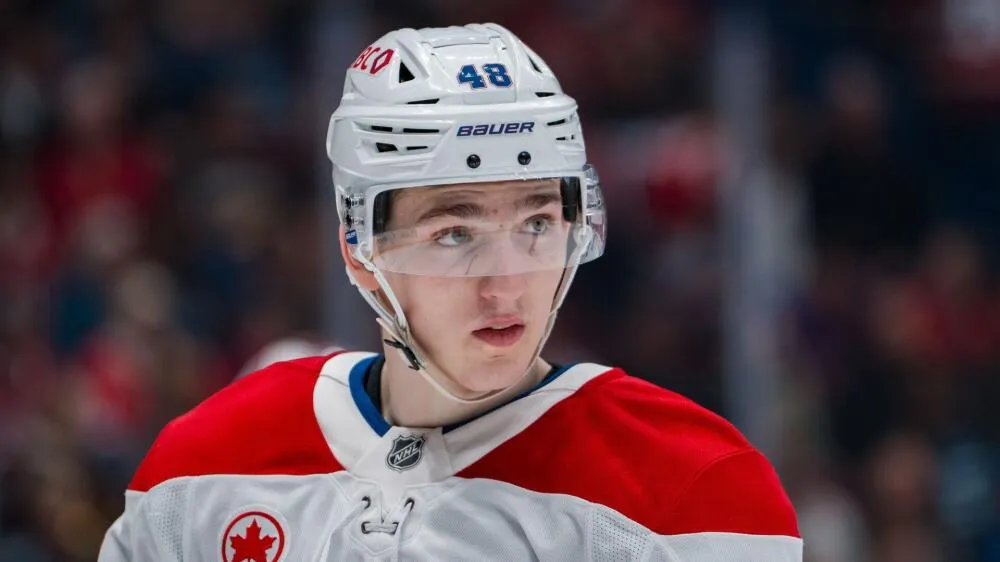
The New York Rangers recalled forward Brennan Othmann from the Hartford Wolf Pack on October 24, marking a pivotal moment for the 2021 first-round pick. The move came after Matt Rempe suffered an upper-body injury, creating an unexpected opening in the lineup. For Othmann, this represents what could be his final opportunity to prove he belongs in the Rangers’ long-term plans.
Less than two weeks before his recall, insider Elliotte Friedman reported that Othmann had begun attracting interest from other teams after failing to make the Rangers’ opening night roster. The speculation intensified when Friedman noted in his “32 Thoughts” column that “when asked, the Rangers have requested good AHL prospects in exchange for Brennan Othmann.” The Rangers’ willingness to entertain offers suggested that management’s patience with the young forward might be wearing thin.
Selected 16th overall in the 2021 NHL Draft, Othmann showed tremendous promise in junior hockey and has been productive at the AHL level. Through his time in Hartford this season, he recorded one assist, six penalty minutes, and seven shots on goal in limited action. The 22-year-old possesses an intriguing combination of skill, size, and offensive instincts that made him such an appealing prospect. However, translating those attributes to consistent NHL production has proven challenging.
The Rangers’ roster construction has made it difficult for Othmann to find a natural fit. With established players occupying top-six roles and a fourth line that prioritizes physicality and defensive responsibility, there hasn’t been an obvious entry point. This recall could provide Othmann with middle-six minutes and potential power-play time, giving him the platform he needs to showcase his offensive capabilities. The question remains whether he can seize this moment or if it becomes another brief NHL stint before an inevitable trade materializes.
The pressure is mounting on both sides. The Rangers invested significant draft capital in Othmann and have devoted development resources to his growth. Trading him now without giving him a legitimate opportunity would represent an admission that the pick didn’t pan out as planned. Conversely, holding onto a prospect who doesn’t fit the team’s current structure while his trade value potentially diminishes isn’t an ideal scenario either. This call-up serves as a critical evaluation period that could determine Othmann’s future in a Rangers uniform.
Dallas Stars navigate complex extension talks with Robertson and Harley
The Dallas Stars face a delicate balancing act as they attempt to lock up two of their most important young players before they hit free agency. Jason Robertson and Thomas Harley are both in the final year of their respective contracts, set to become restricted free agents next summer. However, the Stars hope to secure long-term extensions that would buy out unrestricted free agent years, ensuring these core pieces remain in Dallas for the foreseeable future.
According to The Fourth Period’s David Pagnotta, contract discussions with both players remain at “status quo,” with negotiations not having picked up significant momentum. The challenge for Stars general manager Jim Nill is substantial. Robertson, 26, has established himself as one of the league’s premier goal scorers, averaging over a point per game during his current four-year bridge deal that pays him $7.75 million annually. Sports consulting firm AFP Analytics has projected that a maximum-length extension could reach approximately $11.5 million per season, reflecting Robertson’s elite production and the current market for top-tier forwards.
Harley, 24, experienced a breakout campaign last season that earned him widespread recognition as one of the league’s most dynamic young defensemen. His ability to quarterback the power play and contribute offensively while maintaining solid defensive metrics has made him an integral component of Dallas’s blue line. Recent comparable contracts, including the extensions signed by Quinn Hughes and Jackson LaCombe, are expected to set precedents for Harley’s negotiations. The defenseman is likely seeking a deal that reflects his emergence as a true number-one caliber player.
The financial implications are staggering. Industry observers estimate that Robertson and Harley could command a combined annual cap hit approaching $20 million. For a Stars team that already invested heavily in acquiring and extending Mikko Rantanen last offseason, fitting both players under the salary cap presents a significant challenge. Earlier in the year, speculation emerged that Dallas might consider trading Robertson to create financial flexibility, though subsequent reports indicated the organization prefers to retain him and work out a deal.
The Stars’ success has been built on the foundation these two players provide. Robertson’s goal-scoring prowess gives Dallas a legitimate offensive threat who can carry play and produce in crucial situations. Harley’s evolution into a top-pairing defenseman has solidified a blue line that needed a young star to build around. Losing either player would represent a substantial step backward for a franchise that views itself as a legitimate Stanley Cup contender. While there’s no immediate urgency to complete these extensions, the longer negotiations drag on, the more uncertainty creeps into the equation. Both players could test the restricted free agent market next summer, potentially complicating matters further. The Stars must balance their desire to keep costs manageable with the reality that elite talent commands premium compensation in today’s NHL.
Steven Stamkos and the Nashville Predators face uncertain future
The Nashville Predators’ aggressive pursuit of Steven Stamkos in free agency was supposed to elevate the franchise into contention. Instead, the early returns have been concerning, raising questions about whether the veteran forward can recapture his elite form and whether the marriage between player and team makes sense long-term. With two years remaining on his contract after this season at an $8 million cap hit, the possibility of a divorce is already being discussed.
Stamkos signed a four-year deal with Nashville after spending his entire career with the Tampa Bay Lightning, where he became a franchise icon and won two Stanley Cups. The Predators envisioned him as a game-breaking presence who could provide leadership, goal-scoring, and power-play expertise. The reality has been far different. Stamkos has struggled to make the impact Nashville anticipated, looking less dynamic than during his Lightning tenure.
According to The Hockey Writers, Elliotte Friedman addressed Stamkos’s situation on a recent episode of the “DMase, Vingan & Dauni” podcast. When asked about his concerns regarding the veteran forward, Friedman stated: “I think the thing I’m most concerned about is that he’s not making an impact on the power play… Stamkos’s bread and butter was always the power play… That is the thing that stands out to me.” The power play has historically been where Stamkos does his most devastating work, particularly from his office on the left circle where his one-timer has been nearly unstoppable throughout his career.
The conversation took a more serious turn when Friedman was asked whether a trade could materialize if the situation doesn’t improve. He responded: “If this continues the way it’s going, I could see a situation where both sides sit down and talk and say, what are our options here?… If, if, if it doesn’t get better, could you not see a situation where it is beneficial to both the team and player to explore it?” The possibility that both Stamkos and the Predators might mutually agree to part ways represents a stunning development given that he signed just months ago.
The Predators’ struggles extend beyond Stamkos individually. The team entered this season with heightened expectations after also signing Jonathan Marchessault and Brady Skjei in free agency. Despite the influx of talent, Nashville has failed to find consistent success, raising questions about roster construction, coaching, and whether the veteran-heavy approach was the right strategy. Stamkos’s decline has become symbolic of the larger issues plaguing the organization.
Any potential trade would be complicated by several factors. Stamkos’s full no-movement clause gives him complete control over his destination, meaning he would need to approve any deal. His $8 million cap hit would require Nashville to either retain salary or find a team with sufficient cap space willing to take on that commitment. Additionally, Stamkos’s diminished production makes him a less attractive trade target than he would have been even a year ago. Teams interested in acquiring him would likely be gambling that a change of scenery could rejuvenate his game.
Despite the current struggles, it’s worth remembering Stamkos’s illustrious career. He was one of the most dominant goal scorers throughout the 2010s, winning two Rocket Richard Trophies and consistently producing at an elite level. His leadership and experience helped guide Tampa Bay to back-to-back championships. The respect he commands around the league remains substantial, even as his on-ice performance has declined. If the Predators and Stamkos do eventually decide to explore a trade, there will undoubtedly be teams willing to take a chance on the future Hall of Famer, believing they can unlock whatever remains of his considerable talent.
Contract negotiations define the current NHL landscape
The situations involving Robertson, Harley, and Stamkos highlight the complex contract dynamics that define today’s NHL. Teams must balance rewarding homegrown talent with maintaining salary cap flexibility, all while managing the expectations that come with veteran acquisitions. The Stars’ negotiations with Robertson and Harley exemplify the challenges of retaining elite players developed through the draft. Both players have earned significant raises, but accommodating those increases requires careful financial planning and potentially difficult roster decisions elsewhere.
The salary cap environment has created a league where tough choices are inevitable. Every dollar committed to one player is a dollar unavailable for addressing other roster needs. Dallas has built a competitive team through smart drafting and player development, with Robertson and Harley representing two of their greatest success stories. Losing either player due to financial constraints would be a bitter pill to swallow, yet the reality of the cap makes such outcomes possible.
Nashville’s situation with Stamkos demonstrates the risks inherent in pursuing established veterans. The Predators committed significant term and money to a player in his mid-30s, betting that his production would remain strong enough to justify the investment. When those bets don’t pay off, teams find themselves with limited options. Trading the player often requires retaining salary or accepting a less-than-ideal return. Keeping the player means living with underperformance while that cap space could be deployed more effectively elsewhere.
These contract scenarios also reflect broader trends in NHL roster construction. Teams increasingly prioritize youth and cost-controlled contracts, recognizing that building through the draft provides better long-term value than chasing big-name free agents. The Stars’ efforts to extend Robertson and Harley align with this philosophy, attempting to lock up their best young players before they become prohibitively expensive. The Predators’ struggles with Stamkos serve as a cautionary tale about the perils of deviating from that approach.
What these NHL rumors mean moving forward
As the season progresses, these storylines will continue to develop and potentially reshape multiple franchises. Brennan Othmann’s opportunity with the Rangers could determine whether he remains part of New York’s future or becomes a trade chip used to address other roster needs. His performance over the coming weeks will be scrutinized intensely, with every shift potentially influencing management’s decision-making process.
The Robertson and Harley negotiations will test Jim Nill’s ability to navigate complex contract discussions while maintaining roster depth. The Stars remain Stanley Cup contenders, and preserving their core is essential to sustaining that status. Finding contract structures that satisfy both players while maintaining cap flexibility requires creativity and compromise. The outcomes of these negotiations will significantly impact Dallas’s championship window.
In Nashville, the Stamkos situation serves as a reminder that even the most carefully constructed plans can unravel quickly. The Predators’ aggressive offseason moves were designed to vault them into contention, but hockey rarely unfolds according to script. If the team and Stamkos do eventually explore trade possibilities, it would represent one of the most significant midstream course corrections in recent memory. The ripple effects would extend beyond Nashville, potentially impacting playoff races and trade deadline strategies across the league.
The common thread linking these stories is uncertainty. Othmann’s NHL future hangs in the balance, Robertson and Harley’s long-term homes remain undetermined, and Stamkos faces questions about whether his best days are behind him. Such uncertainty is endemic to professional sports, where careers can pivot on single opportunities, negotiations can stall over seemingly minor details, and high-profile signings can quickly turn sour. As October gives way to November and the season’s narrative continues to unfold, these situations will demand resolution, one way or another. The decisions made now will echo throughout the remainder of the season and potentially for years to come, defining careers, shaping rosters, and ultimately determining which teams emerge as legitimate contenders and which fall short of their ambitions.

Par Mike Jonderson
Mike Jonderson is a passionate hockey analyst and expert in advanced NHL statistics. A former college player and mathematics graduate, he combines his understanding of the game with technical expertise to develop innovative predictive models and contribute to the evolution of modern hockey analytics.