













Nick Robertson’s emergence as a candidate for the Toronto Maple Leafs’ top-line right wing position has become one of the most intriguing storylines of the 2025-26 season. After years of struggling to secure a consistent role and facing trade speculation throughout his tenure, the 24-year-old forward is finally showing why the organization believed in his potential when they drafted him. His recent performances alongside Auston Matthews have demonstrated not just offensive capability, but the two-way commitment and consistency that head coach Craig Berube demands from his players.
The narrative surrounding Nick Robertson and the Maple Leafs’ top-line right wing dilemma has evolved significantly over the past weeks. What began as another chapter in a frustrating career marked by limited ice time and healthy scratches has transformed into a legitimate opportunity to claim a coveted spot in the lineup. With the team searching for the perfect complement to Matthews and Matthew Knies, Robertson has stepped forward at precisely the right moment to make his case.
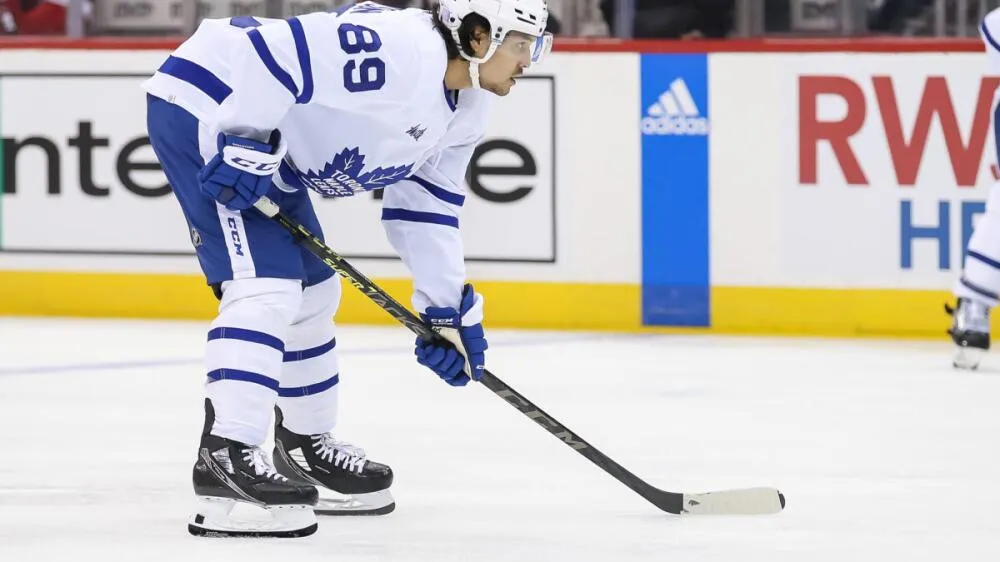
Nick Robertson’s top-line right wing breakout with the Maple Leafs
The timing of Robertson’s surge couldn’t be more critical for Toronto’s championship aspirations. After managing just one assist through his first seven games of the season, Robertson has exploded with three goals and five points over a four-game stretch, including consecutive multi-point performances against Columbus and Philadelphia. This production surge coincided with increased ice time alongside Matthews, giving him the platform he’s long craved to showcase his abilities.
The statistical evidence supporting Robertson’s top-line audition is compelling. In 10:22 of ice time against Columbus at five-on-five, the line featuring Robertson and Matthews posted a 72.73% Corsi percentage and an impressive 81.66% expected goals percentage. Against Philadelphia, despite limited even-strength time together, they maintained a 71.09% expected goals share while converting chances into actual results. Robertson’s goal in the 5-2 victory over the Flyers exemplified everything that makes him dangerous when he’s engaged and confident.
What makes this recent stretch particularly encouraging is the complete nature of Robertson’s game. He’s not simply benefiting from playing with elite talent—he’s actively contributing through board battles, defensive zone coverage, and timely backchecking. Berube praised his effort after the Philadelphia game, specifically noting the defensive plays that preceded his offensive production. This two-way commitment has been the missing ingredient that previously kept Robertson from earning trust in high-leverage situations.
Robertson’s lethal shot remains his calling card, but his improved play away from the puck has elevated his entire performance. His skating allows him to recover when caught out of position, and his willingness to engage physically along the boards creates the kind of loose pucks that skilled players like Matthews can capitalize on. The energy and competitiveness Robertson brings when fully engaged makes the top line more dangerous and unpredictable for opposing defenses.
The small sample size caveat remains important—two strong games don’t erase three seasons of inconsistency. However, the urgency with which Robertson is playing suggests he understands the stakes. Earlier this season, trade discussions involving Robertson for Columbus’s Yegor Chinakhov highlighted how tenuous his position had become. He’s playing like someone who knows this might be his final opportunity to establish himself as more than a depth piece in Toronto.
The competition for the Maple Leafs’ top-line right wing role
Robertson isn’t operating in a vacuum as he makes his case for permanent top-line deployment. The emergence of 20-year-old rookie Easton Cowan has complicated the situation considerably. Cowan’s fearless play and immediate chemistry with Matthews initially pushed Robertson further down the depth chart, averaging just 8:40 against Detroit and highlighting how quickly opportunities can evaporate in a competitive lineup.
William Nylander represents the ultimate wild card in Toronto’s top-line right wing equation. While Berube prefers to spread offensive talent throughout the lineup to create balance, Nylander’s injury created the opening that both Cowan and Robertson have sought to exploit. Once Nylander returns to full health, the coaching staff will face a difficult decision about whether to reunite him with Matthews or maintain whatever chemistry has developed in his absence.
The philosophical tension between loading up the top line versus maintaining depth throughout the lineup will ultimately determine Robertson’s fate. Berube has been clear about wanting four lines that can contribute offensively while maintaining defensive responsibility. If Robertson continues producing at his current pace, he makes the case for keeping skill distributed across multiple lines rather than concentrating firepower with Matthews and Nylander together.
Previous speculation about Robertson’s trade value and potential destinations underscored how precarious his situation had become. Teams like San Jose and Seattle were mentioned as potential landing spots where he could receive more opportunity in a less pressurized environment. However, his recent performance may have quieted those discussions, at least temporarily, while simultaneously increasing his value should Toronto ultimately decide to move him.
The reality is that multiple players are auditioning for limited spots, and roster management will force difficult choices. When Steven Lorentz and other injured forwards return, roster space will become even tighter. Robertson needs to make himself indispensable through consistent production and reliable play in all three zones. His recent games suggest he’s capable of meeting that standard, but sustaining it over weeks and months remains the challenge.
Why consistency defines Nick Robertson’s top-line right wing opportunity with the Maple Leafs
The recurring theme throughout Robertson’s NHL career has been inconsistency—flashes of brilliance interrupted by extended stretches where he fades into the background or commits defensive miscues that erode coaching confidence. His 15 goals last season represented a career-high, yet the seven assists accompanying them suggested a player who wasn’t consistently involved in offensive play beyond shooting opportunities. For a top-six winger, that production profile requires improvement.
Robertson’s tendency to do too much with the puck when things aren’t flowing has been a persistent issue. When confidence wanes, he holds the puck too long seeking perfect scoring chances rather than making simple plays that maintain offensive pressure. This habit disrupts line chemistry and puts additional defensive burden on teammates who must cover for his risk-taking. The discipline to make the right play rather than the highlight-reel play separates consistent contributors from streaky ones.
The defensive side of the puck has historically been Robertson’s Achilles heel in earning top-line trust. Missed assignments and poor positioning have resulted in goals against that erase the offensive contributions he provides. What’s encouraging about his recent play is the visible commitment to tracking back, breaking up plays, and maintaining proper defensive structure. These unglamorous plays don’t appear on highlight reels but earn the ice time that creates scoring opportunities.
Perhaps the most significant obstacle Robertson faces is the mental challenge of maintaining intensity and focus when results don’t come immediately. Professional hockey demands consistency regardless of whether the puck is finding the net. The best players impact games through forecheck pressure, defensive zone coverage, and smart puck management even when they aren’t scoring. Robertson must prove he can be that player night after night, not just when everything clicks offensively.
The opportunity in front of Robertson with the Maple Leafs’ top-line right wing is both clear and fleeting. Matthews needs a reliable running mate who can finish plays, create space, and not become a defensive liability. Over a small sample, Robertson has checked those boxes. The question is whether he’s genuinely evolved as a player or whether this is another temporary surge before regression to old patterns. Only sustained performance over the coming weeks will answer that question definitively.
What Nick Robertson’s top-line right wing success means for the Maple Leafs
If Robertson genuinely has turned a corner in his development, the implications for Toronto’s roster construction are significant. The Maple Leafs have invested considerable resources in addressing their forward depth through free agency and trades, but developing internal options always provides better value and roster flexibility. Robertson on a $1.825 million cap hit producing at a top-six rate would represent exceptional value in a salary cap environment where every dollar matters.
The alternative scenario—that Robertson cannot sustain this level of play—forces Toronto into difficult decisions about whether to trade him while his value is elevated or continue hoping for consistency that has eluded him throughout his career. General Manager Brad Treliving has shown willingness to make tough calls on young players who don’t fit the team’s timeline or needs. Robertson’s contract status and trade speculation earlier this season suggested the organization’s patience might be exhausted.
From a pure hockey perspective, having multiple viable options for the top-line right wing position provides Toronto with valuable flexibility. Matchup considerations, injury situations, and form fluctuations all become easier to manage when depth exists at every position. Robertson’s emergence—if sustainable—gives Berube legitimate choices rather than forcing him to plug holes with players unsuited for high-leverage minutes.
The coming weeks will be telling as the season settles into its rhythm and early-season variance gives way to established patterns. According to The Hockey Writers, Robertson’s expected goals percentage of 58.3% alongside Matthews through two games represents strong underlying numbers, but small samples can be misleading. Maintaining that level of shot share and scoring chance generation over 20 or 30 games would represent genuine evidence of sustainable performance.
Ultimately, Nick Robertson’s pursuit of the Maple Leafs’ top-line right wing role is about seizing the moment when opportunity presents itself. Professional hockey careers are defined by these inflection points—the brief windows where circumstances align to provide a chance for players to establish themselves. Robertson has that chance right now, and his recent play suggests he understands the stakes. Whether this represents a genuine breakthrough or another false dawn will be determined by what comes next, but for now, he’s making the most of his opportunity and giving Toronto something to think about as they search for the perfect complement to their superstar center.

Par Mike Jonderson
Mike Jonderson is a passionate hockey analyst and expert in advanced NHL statistics. A former college player and mathematics graduate, he combines his understanding of the game with technical expertise to develop innovative predictive models and contribute to the evolution of modern hockey analytics.