















The Toronto Maple Leafs’ quest to resolve the Nicholas Robertson situation took an interesting turn this past summer, as reports have emerged that the organization attempted to orchestrate a one-for-one trade with the Columbus Blue Jackets. According to Sportsnet’s Elliotte Friedman, the Maple Leafs pitched a deal that would have sent the disgruntled Robertson to Columbus in exchange for Russian winger Yegor Chinakhov. However, despite both players being in complicated situations with their respective clubs, the Blue Jackets rejected the proposal, keeping the door open for future discussions but ultimately deciding that Robertson wasn’t the right return for their asset.
This failed trade pitch reveals much about the current landscape surrounding both young forwards and highlights the challenges Toronto faces as they attempt to navigate Robertson’s uncertain future with the organization. With Robertson now becoming a healthy scratch and his trade value seemingly declining, the Maple Leafs find themselves in a precarious position regarding one of their former top prospects.
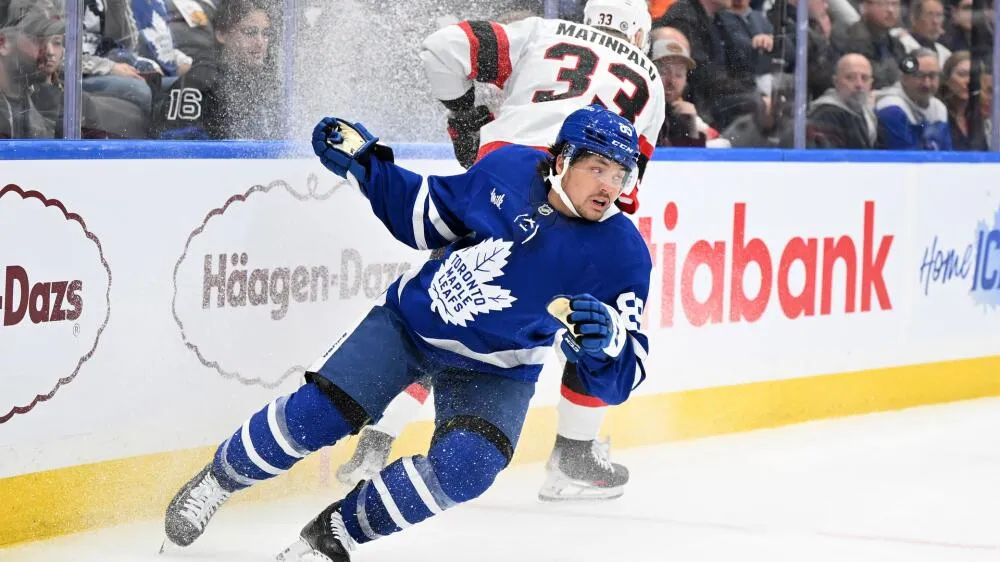
Why the Maple Leafs trade pitch Nicholas Robertson for Yegor Chinakhov made sense on paper
The proposed swap between Robertson and Chinakhov represented a classic change-of-scenery deal that could have benefited both organizations. Both players are 24-year-old former first or second-round picks who have struggled to establish themselves as consistent NHL contributors despite flashes of genuine talent. Robertson, selected 53rd overall by Toronto in 2019, has been vocal about his frustration with his limited role and inconsistent deployment. Meanwhile, Chinakhov, the 21st overall pick in 2020, reportedly requested a trade from Columbus due to a strained relationship with head coach Dean Evason.
From Toronto’s perspective, acquiring Chinakhov would have provided them with a right-shot winger who demonstrated significant upside during the 2023-24 season when he tallied 29 points in 53 games. The Russian forward brings a different skill set than Robertson, with a more established track record of producing when given opportunity. His 178 NHL games over five seasons, while not spectacular, show more consistency than Robertson’s 163-game tenure that has been marked by frequent healthy scratches and fourth-line deployments.
The financial aspects of the deal also made sense for both sides. Chinakhov carries a $2.1 million cap hit through the end of this season before becoming a restricted free agent, while Robertson signed a one-year, $1.825 million deal after electing arbitration this summer. The salary difference of $275,000 would have been manageable for Toronto’s cap structure, and both players would have arrived at similar contract crossroads next summer.
For Columbus, the appeal would have been acquiring a player with untapped potential who desperately needed a fresh start. Robertson’s career-high 15 goals in 69 games last season demonstrated he possesses NHL-caliber finishing ability when given consistent ice time. The Blue Jackets, sitting near the bottom of the standings and in rebuild mode, could have afforded to take a chance on Robertson’s upside without the same pressure cooker environment that exists in Toronto.
Understanding Columbus’s rejection of the Maple Leafs trade pitch
Despite the surface-level logic of the swap, Columbus’s decision to decline the offer speaks volumes about how NHL teams currently value Nicholas Robertson. The Blue Jackets’ unwillingness to accept Robertson as a return for Chinakhov suggests they view the Toronto winger as damaged goods whose trade value has deteriorated significantly over the past year. General manager Don Waddell and his front office clearly believe they can extract better value for Chinakhov from other suitors, even as their own relationship with the Russian forward continues to deteriorate.
According to reports, multiple teams have expressed interest in Chinakhov, including Detroit, Florida, Buffalo, and Calgary. This competitive market gives Columbus leverage to be selective about their return package. The Blue Jackets organization has reportedly made it clear they’re not interested in simply dumping Chinakhov for draft picks or marginal assets—they want a hockey trade that provides immediate NHL value. Their assessment that Robertson doesn’t meet that threshold is damning for the young forward’s perceived worth around the league.
The rejection also reflects broader concerns about Robertson’s ability to translate his AHL success to the NHL level. While he dominated in the minor leagues with explosive offensive performances, his inability to secure a consistent role in Toronto despite roster opportunities has raised red flags. Scouts and executives around the league recognize that Robertson’s size limitations (5-foot-9, 164 pounds) combined with defensive deficiencies make him a challenging fit for most NHL systems. His 11:01 average ice time this season, second-lowest among Toronto forwards, illustrates the coaching staff’s lack of confidence in deploying him in meaningful situations.
Furthermore, Columbus likely questioned Robertson’s attitude and professionalism after his public trade request last summer. While players requesting trades has become more commonplace in the modern NHL, some organizations remain wary of acquiring individuals who have already demonstrated a willingness to force their way out. The Blue Jackets may have wondered whether acquiring Robertson would simply result in another disgruntled young player seeking an exit rather than embracing the opportunity to prove himself with a new organization.
The declining value of Nicholas Robertson in the trade market
Robertson’s trade value has plummeted dramatically over the past 18 months, transforming from a promising prospect with legitimate top-six upside to a player the Maple Leafs may struggle to move for even a mid-round draft pick. The Chicago Blackhawks recently traded Lukas Reichel, a comparable young forward with similar struggles, to Vancouver for merely a fourth-round selection. This transaction sets an ominous precedent for what Toronto might realistically expect in return for Robertson, especially after the failed Chinakhov pitch became public knowledge.
The public nature of Robertson’s discontent has further eroded his value. His 2024 trade request, while understandable from a player development perspective, signaled to the rest of the league that he’s unhappy and desperate to leave. This significantly weakens Toronto’s negotiating position, as other general managers know the Leafs are motivated to move him rather than face another contentious arbitration hearing next summer. Teams can effectively sit back and wait for Toronto’s asking price to drop further as the season progresses.
Robertson’s on-ice performance this season hasn’t helped matters. Through seven games, he’s registered just one assist while averaging minimal ice time and now finding himself as a healthy scratch. His deployment on the fourth line alongside Steven Lorentz and other depth players hasn’t allowed him to showcase the offensive skills that made him a notable prospect. Without power-play time or meaningful even-strength minutes, Robertson has had virtually no opportunity to demonstrate his value to potential trade partners.
The situation has created a vicious cycle: Robertson’s lack of production leads to reduced ice time, which prevents him from building value, which in turn makes him harder to trade, which further frustrates both player and organization. Head coach Craig Berube’s decision to healthy scratch Robertson for Friday’s game against Buffalo represents a significant escalation, suggesting the relationship between player and coaching staff has reached an untenable point. Every game Robertson spends in the press box further diminishes whatever remaining trade value he possesses.
What Yegor Chinakhov could have brought to Toronto
Had Columbus accepted the Maple Leafs trade pitch, Chinakhov would have represented an intriguing addition to Toronto’s middle-six forward group. The Russian winger possesses a shooting mentality that the Leafs have sought to add beyond their core four forwards, and his right-handed shot would have provided valuable balance to Toronto’s predominantly left-shot forward corps. At 6-foot-1 and 187 pounds, Chinakhov also brings more size and reach than Robertson, physical attributes that typically translate better to playoff hockey.
Chinakhov’s 2023-24 campaign, where he posted 16 goals and 29 points in 53 games, demonstrated he could be a legitimate middle-six contributor when given consistent opportunity and trust. His shooting percentage that season hovered around league average, suggesting his production was sustainable rather than the result of an unsustainable hot streak. Extrapolated over a full 82-game season with similar ice time, Chinakhov’s pace would project to approximately 25 goals and 45 points—exactly the type of secondary scoring Toronto has struggled to generate.
The change of scenery to Toronto could have unlocked additional offensive potential in Chinakhov’s game. Playing alongside more skilled linemates and receiving power-play opportunities with elite playmakers like Auston Matthews, William Nylander, or Mitch Marner could have elevated his production significantly. The Maple Leafs’ offensive system, which generates high-quality scoring chances through cycles and quick puck movement, might have suited Chinakhov’s shooting-oriented skill set better than Columbus’s more structured, defensively-focused approach under Evason.
Additionally, acquiring Chinakhov would have provided Toronto with cost-controlled depth through this season with the opportunity to evaluate whether he merited a long-term extension. As a restricted free agent next summer, the Leafs would have retained his rights and the ability to negotiate exclusively before he could explore unrestricted free agency. This contractual control represents significant value compared to pursuing more expensive veteran options on the trade or free agent markets.
The path forward for both players and organizations
With the Chinakhov trade pitch rejected and Robertson now sitting as a healthy scratch, the Maple Leafs face difficult decisions about their next steps. General manager Brad Treliving must balance the desire to extract value for Robertson against the reality that his trade market has virtually evaporated. Toronto may need to accept a minimal return—perhaps a conditional mid-round pick or a similarly struggling prospect—simply to resolve the situation and free up a roster spot for a player who actually wants to be there.
Another possibility involves Toronto attempting to showcase Robertson by returning him to the lineup in a more favorable role, though this approach carries significant risks. Giving Robertson increased ice time and better linemates could potentially rebuild some trade value, but it also means taking opportunities away from other players who have earned their ice time and aren’t actively seeking exits. The Maple Leafs’ current forward depth provides coach Craig Berube with multiple options, making it difficult to justify allocating prime minutes to a disgruntled player who may not be part of the long-term plans.
For Columbus, the situation with Chinakhov remains equally complicated despite their rejection of Toronto’s offer. The Russian winger has appeared in just four of the team’s games this season, and his relationship with Evason shows no signs of improving. With multiple teams reportedly interested, including several contenders who could offer more attractive packages than Robertson, the Blue Jackets likely feel comfortable waiting for a better deal. However, the longer the situation drags on, the more it becomes a distraction for a young team trying to establish its identity.
The failed trade discussions between Toronto and Columbus highlight how challenging it can be to execute change-of-scenery deals in today’s NHL. Despite both players clearly needing fresh starts and both organizations being motivated to facilitate moves, the differences in how teams value these assets prevented a deal from materializing. As the season progresses and roster needs evolve, perhaps circumstances will align for these trades to eventually happen—just not with each other as the primary pieces.
The saga surrounding the Maple Leafs trade pitch of Nicholas Robertson for Yegor Chinakhov serves as a cautionary tale about prospect development and asset management. Both players entered the NHL with significant pedigrees and expectations, yet find themselves as organizational problems rather than solutions just a few years later. Whether either can resurrect their careers and fulfill their potential likely depends on finding the right fit with organizations willing to invest in their development. For now, both Robertson and Chinakhov remain in limbo, waiting for opportunities that may never fully materialize with their current clubs. The Leafs’ inability to move Robertson for even a similarly struggling player like Chinakhov signals that their window to maximize his value has likely closed, leaving them with few attractive options beyond hoping his game improves enough to justify re-signing him next summer or accepting whatever minimal return the market eventually offers.

Par Mike Jonderson
Mike Jonderson is a passionate hockey analyst and expert in advanced NHL statistics. A former college player and mathematics graduate, he combines his understanding of the game with technical expertise to develop innovative predictive models and contribute to the evolution of modern hockey analytics.