








November 10 has witnessed some of the most remarkable moments in the sport’s history, from unbreakable streaks ending to scoring records being shattered. The date stands as a testament to hockey’s rich tradition of excellence, perseverance, and historic achievement. From the goalie crease to the scoring sheet, this particular day on the calendar has been etched into the annals of the game time and time again.
The significance of November 10 in hockey history spans decades, encompassing everything from the NHL’s first penalty shot to legendary players cementing their status among the all-time greats. These moments have shaped the sport we know today and continue to inspire new generations of players and fans alike.
The ironman streak that will never be broken on november 10 in hockey history
Glenn Hall’s consecutive games streak remains one of the most incredible accomplishments in all of professional sports. On November 10, 1962, for the first time in over seven years, the Chicago Blackhawks took the ice without their legendary goaltender in the lineup. Three nights earlier, Hall had been forced to leave a game against the Boston Bruins due to back problems, ending his remarkable run of 502 consecutive starts.
The streak had begun back in the opening game of the 1955-56 season when Hall was still with the Detroit Red Wings. For every single game across seven-plus seasons, Hall had been between the pipes from the opening faceoff to the final buzzer. The physical and mental toll of such a streak is almost incomprehensible by today’s standards, where goaltenders regularly share duties and rest is considered essential to peak performance.
Denis DeJordy stepped in to replace Hall on that November night at the Montreal Forum, making 33 saves in a 3-1 victory over the Canadiens. While DeJordy performed admirably, starting the next three games as well, the spotlight remained on Hall’s incredible achievement. The Hockey News and other publications of the era struggled to find adequate superlatives to describe what Hall had accomplished.
Hall would return to action on November 17, 1962, but the consecutive games streak was over. Modern hockey analytics and sports science make it clear that such a streak will never be approached again, let alone broken. Goaltenders today typically start 50-60 games in an 82-game season, with backup goalies playing crucial roles. Hall’s 502 consecutive starts stand as a monument to a different era of hockey and to one man’s extraordinary durability and commitment.
Gordie Howe’s coronation as the NHL’s all-time goal king on november 10 in hockey history
Exactly one year after Hall’s streak ended, November 10, 1963, another piece of hockey history unfolded at Detroit’s Olympia Stadium. Gordie Howe, already considered one of the game’s greatest players, scored his 545th career goal to surpass Maurice “Rocket” Richard as the NHL’s all-time leading goal-scorer. The milestone came in fitting fashion – a shorthanded goal against the Montreal Canadiens, Richard’s longtime team.
The goal came at 15:06 of the second period against goaltender Charlie Hodge, and the crowd of 15,077 erupted in celebration. The ovation lasted a full 10 minutes, with fans refusing to let the game continue until they had properly honored their hero. Mr. Hockey had climbed to the top of the mountain, breaking a record many thought would stand forever when Richard retired with 544 goals just three years earlier.
The timing held special significance beyond just the record-breaking moment. November 10, 1963, marked exactly 17 years to the day since Howe first centered a line with Ted Lindsay and Alex Delvecchio – the trio that would become known as “The Production Line.” That legendary combination had terrorized opposing defenses throughout the late 1940s and 1950s, helping establish Detroit as one of hockey’s premier franchises.
While the goal-scoring record garnered the headlines, Terry Sawchuk’s performance that night deserves recognition as well. The Red Wings’ goaltender stopped all 39 shots he faced to record his 94th career shutout, tying George Hainsworth’s then-record for most shutouts in NHL history. The 3-0 victory was a complete team triumph, but Howe’s achievement would resonate throughout the sport for generations.
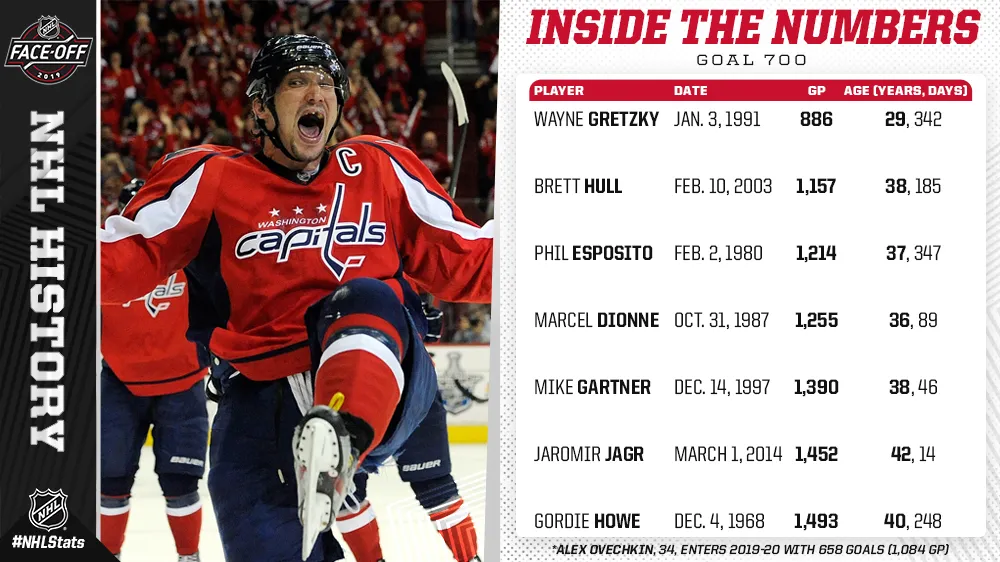
Howe would continue adding to his goal total for many years to come, eventually finishing with 801 regular-season goals in the NHL alone (and 174 more in the World Hockey Association). His record stood until Wayne Gretzky surpassed it in the 1990s, but on that November night in 1963, Howe stood alone at hockey’s summit. Understanding these November 8 in NHL history milestones helps contextualize the significance of consecutive historic dates in the league’s evolution.
The NHL’s first penalty shot on november 10 in hockey history
November 10, 1934, marked the debut of one of hockey’s most exciting plays – the penalty shot. Armand Mondou of the Montreal Canadiens became the first player in league history to be awarded a penalty shot during a game against the Toronto Maple Leafs at Maple Leaf Gardens. The NHL had introduced the penalty shot rule that season to address situations where players were fouled on clear breakaways, giving the offensive team a fairer chance at compensation.
Mondou’s opportunity came with high stakes and enormous pressure. No one had ever taken a penalty shot in NHL competition before, meaning there was no precedent, no strategy to follow, no history to guide him. He skated in alone against George Hainsworth, one of the era’s premier goaltenders, as 8,000 fans held their collective breath.
Hainsworth made the save, denying Mondou and establishing himself as the answer to a trivia question that would be asked for the next 90 years: Who stopped the first penalty shot in NHL history? The Maple Leafs went on to win the game 2-1 in overtime, adding another layer of drama to an already historic evening.
The introduction of the penalty shot changed hockey strategy and added a new dimension of individual skill competition to the team game. While the rules governing penalty shots would evolve over the decades – including changes to when they’re awarded and how they’re taken – that first attempt on November 10, 1934, opened a new chapter in hockey history. Today, penalty shots remain one of the sport’s most thrilling moments, capable of shifting momentum and deciding critical games.
The final overtime before the long intermission on november 10 in hockey history
November 10, 1942, featured a unique piece of hockey history that few modern fans would even recognize as significant. The New York Rangers defeated the Chicago Blackhawks 5-3 in a game that went to overtime, with Bryan Hextall Sr. and Lynn Patrick each scoring in the extra period. The Rangers’ victory seems routine enough until you understand the context – this was the last NHL regular-season game to feature overtime for more than 41 years.
The NHL at that time used a full 10-minute overtime period rather than the sudden-death format familiar to today’s fans. Teams would play the entire 10 minutes regardless of how many goals were scored, leading to unusual scenarios like the Rangers scoring twice in overtime yet only winning by two goals overall. This format had been in place since the league’s earliest days, but circumstances were about to force a dramatic change.
Just 11 days after this game, the NHL eliminated overtime entirely due to wartime restrictions during World War II. Train travel was being rationed for the war effort, and the league couldn’t justify extending games with overtime periods when transportation was needed for military purposes. Teams had to be able to catch their trains on tight schedules, making overtime an unaffordable luxury.
Overtime wouldn’t return to the NHL regular season until the 1983-84 season, when the league introduced the five-minute sudden-death format still used today (with modifications). For four decades, regular-season games that were tied after 60 minutes simply ended in ties. The November 10, 1942 game between the Rangers and Blackhawks thus represents the end of an era, the last gasp of old-school overtime before the necessities of war and the realities of modern scheduling changed the game forever, similar to how November 9 hockey history milestones capture the evolution of the sport across different eras.
Steve Yzerman’s single-team loyalty record on november 10 in hockey history
November 10, 1999, celebrated a different kind of hockey milestone – one that honored loyalty, consistency, and sustained excellence with a single organization. Steve Yzerman scored a goal in the Detroit Red Wings’ 4-2 victory over the Dallas Stars to give him 1,495 career points, moving him past Mario Lemieux (1,494 with Pittsburgh) as the all-time scoring leader among players who spent their entire careers with one team.
Yzerman’s achievement stood out in an era when player movement had become increasingly common. Free agency, trades, and salary cap considerations meant fewer players were staying with one organization for their entire career. Yet Yzerman, who had been drafted fourth overall by Detroit in 1983, never wore another NHL jersey in regular-season competition.
The significance went beyond mere numbers. Yzerman had transformed himself from a high-scoring offensive dynamo in the 1980s to a complete two-way player and leader who captained the Red Wings to three Stanley Cup championships. He had stuck with Detroit through lean years in the mid-1980s and early 1990s when the team struggled, never demanding a trade despite offers and speculation.
According to NHL.com’s official records, Yzerman would retire with 1,755 points, every single one earned while wearing the Winged Wheel. In today’s NHL, where team loyalty is often measured in contract lengths rather than career spans, Yzerman’s achievement seems almost quaint. Yet it represents an ideal that still resonates with fans – the idea of a superstar who finds a home and stays there, building a legacy that becomes inseparable from the franchise itself.
Expansion teams and historic firsts on november 10 in hockey history
November 10, 1973, marked a significant milestone for the post-1967 expansion era when the St. Louis Blues defeated the Montreal Canadiens 5-0 to become the first expansion team to reach 200 victories. Wayne Stephenson recorded the shutout as the Blues achieved this milestone early in their seventh NHL season. The victory demonstrated that expansion franchises could compete with and overcome the Original Six teams that had dominated the league for decades.
The Blues’ achievement paved the way for expansion teams to see themselves as equals rather than inferior additions to the league. St. Louis had reached the Stanley Cup Finals in each of their first three seasons (though they were swept all three times), and the 200th victory proved their staying power and competitiveness.
Four years later, on November 10, 1977, the Buffalo Sabres finally broke through at one of hockey’s most intimidating venues. The Sabres’ 3-2 victory over the Philadelphia Flyers at the Spectrum ended an 0-15-2 streak in Philadelphia dating back to Buffalo’s inaugural 1970-71 season. For seven years, the Sabres had been unable to win on Flyers ice, making the breakthrough victory particularly sweet.
The significance of these franchise milestones cannot be overstated. In both cases, relatively young teams proved they belonged in the NHL elite. The Blues showed expansion teams could achieve sustained success, while the Sabres demonstrated that even the most intimidating road venues could be conquered. These victories represented more than just two points in the standings – they were psychological breakthroughs that helped reshape the competitive landscape of the NHL.
November 10 in hockey history: A day of milestone goals
November 10 has seen numerous players score significant career milestones, creating a who’s who of hockey legends connected to this single date. Michel Goulet, who would go on to score 548 career goals and earn induction into the Hockey Hall of Fame, netted his first NHL goal on November 10, 1979, in the Quebec Nordiques’ 5-4 loss to the New York Rangers at Madison Square Garden.
Exactly eight years later, on November 10, 1987, Brendan Shanahan scored his first career goal to help the New Jersey Devils beat the Rangers 3-2. Shanahan would eventually retire with 656 goals and 1,354 points across 21 NHL seasons, earning his own Hall of Fame induction. The symmetry of both players scoring their first goals exactly eight years apart, both against the Rangers, adds an interesting footnote to hockey history.
The milestone moments continued with Jeremy Roenick’s 500th career goal on November 10, 2007, which The Hockey Writers documented as helping the San Jose Sharks defeat the Phoenix Coyotes 4-1. Roenick became just the second U.S.-born player to reach 500 NHL goals, joining a very exclusive club and cementing his status as one of American hockey’s all-time greats.
Roberto Luongo added to the November 10 milestone collection when he recorded his 455th career victory on November 10, 2017, leading the Florida Panthers past the Buffalo Sabres 4-1. The win moved Luongo past Curtis Joseph into fourth place on the NHL’s all-time wins list, a testament to his longevity and consistent excellence over nearly two decades in the league. Each of these milestones represents years of dedication, skill development, and perseverance, all culminating on the same calendar date across different eras of hockey.
November 10 in hockey history stands as one of the sport’s most significant dates, featuring an extraordinary collection of records, milestones, and memorable moments spanning nearly a century. From Glenn Hall’s unbreakable ironman streak to Gordie Howe claiming the goal-scoring crown, from the NHL’s first penalty shot to Steve Yzerman’s loyalty record, this single date has witnessed the full spectrum of hockey excellence.
What makes November 10 particularly special is the diversity of achievements it encompasses. We see individual brilliance, team accomplishments, scoring records, goaltending excellence, and franchise milestones all compressed into one remarkable day across multiple years. The date serves as a reminder that hockey history is constantly being written, with each generation of players adding new chapters to the story while honoring the legends who came before them. As the NHL continues to evolve, November 10 will undoubtedly witness more historic moments, ensuring this date remains forever linked to the greatest achievements in the sport.

Par Mike Jonderson
Mike Jonderson is a passionate hockey analyst and expert in advanced NHL statistics. A former college player and mathematics graduate, he combines his understanding of the game with technical expertise to develop innovative predictive models and contribute to the evolution of modern hockey analytics.